
+++ CUPRA will aim higher than ever before as it tries to break into the US market with a plus-sized electric SUV that will also be sold in Europe. Speaking at the global premiere of the Terramar, CEO Wayne Griffiths told us the brand will need something completely new to launch its American assault towards the end of the decade. Yet economic pressures from within the Volkswagen Group would mean any such product would also need to find customers closer to home. While a large SUV may not have the mainstream appeal of compact EV crossovers, the margins are greater, signalling the potential for strong profits for the Spanish brand. “We would have to sell it in Europe, we can’t just sell in the US”, Griffiths told. “The US on its own wouldn’t be big enough for us”. The car’s exact form is still under discussion. Werner Tietz, vice-president for research and development at Cupra, said he is working on “multiple concepts; concepts that are different”, suggesting that the as-yet-unnamed car could form part of a range of new models. Sven Schuwirth, Cupra’s executive VP for sales and marketing, told: “There will be something in our portfolio which you haven’t seen so far. There is a growing mindset of people who say ‘Okay, it’s game over for what we have written for decades. Here is something different’. It’s needed in the market, and we try to apply it. It’s a challenge, but I think it’s a huge opportunity for the brand. We are not ones for being a bit more rational, or building more function-oriented cars”, Schuwirth told. “We keep emotional body styles; we continue to somehow reinvent existing body styles. What we did with Formentor, or what we did with DarkRebel: we merged a shooting brake with a coupé. We will continue to do the same”. Given the popularity of SUVs, both in the US and Europe, that part of the design is all but guaranteed. The new car will be a 5-seater, however, as Griffiths confirmed in no uncertain terms. He told: “For the second generation of electric cars on the new platform, for the US, we would need a bigger crossover-SUV. But not in terms of 7 seats. We have other brands in the VW Group that can do that; Volkswagen Commercial Vehicles or whatever”, he said. So while the wheelbase would most likely stretch to as much as 3 metres, and the overall length to a Porsche Cayenne or VW Touareg-challenging 4.9 metres, the priority for Cupra would be to offer superior cabin space and a large boot. Dismissing the need to fit a third row of seats would allow the brand’s designers to offer a Lotus Eletre-like sloping roof, tailing off beyond the C-pillars for a coupé-style rear end. Despite this being a “second-generation” electric Cupra, I expect the new model to look to the likes of the upcoming Raval small car (as well as the recently revealed Tavascan) for design inspiration. That means a similarly sharp front end, with triangular elements embedded in the car’s LED lights, plus more acute angles down the flanks contrasting with a set of flush door handles. Extensive copper detailing (a brand signature for more than a decade) will also mark this car out as a Cupra. But as with the electric-only Tavascan, I don’t expect Cupra to shout too loudly about its flagship’s EV credentials. We may see a slightly smoother nose, but vents and air intakes are likely to form part of the brand’s design language long into the electric era. The rear should see the continued use of a full-width led light bar, as well as the now-familiar illuminated Cupra logo. Rather than being emblazoned on the bootlid (that space will be reserved for the ‘Cupra’ lettering) the model name is set to be subtly referenced in a small font on the outer edge of the tail-lights. An active spoiler may feature at the base of the rear window, much like the one found on the Cayenne Coupé. The dynamism in the car’s design will be reflected in the way it drives, too. Dr Tietz told: “For me, the basis of Cupra is fun to drive, so this is what will always be in our product; the sportiest offer in the segment. This story has to continue, this link has to be there. Otherwise you end up doing what everyone else is doing”. At this stage, the car’s platform and powertrain layout are unconfirmed, but it’s likely (given Griffiths’ comments) that the super-sized Cupra will sit on the VW Group’s forthcoming SSP (Scalable Systems Platform) architecture. These underpinnings will eventually replace the well-utilised MEB (mainstream) and PPE (premium) tool kits, and be the “single backbone for the Group”, as former VW boss Herbert Diess confirmed in 2021. As Cupra’s new flagship, the large SUV is sure to get the Group’s most cutting-edge technology, including a range of rear and dual-motor models; possibly with 500bhp or more. It’ll also feature new-generation battery and charging tech, with range-toppers featuring units with a capacity of up to 100 kWh. That should mean a quoted range of at least 650 km, possibly a little more if VW and its subsidiaries can reduce weight and improve efficiency. It’s impossible at this stage to comment with any confidence on how Cupra’s new-age interior might look, but given the brand is, according to Griffiths, selling to an audience “on average, one generation younger than the rest of the VW Group” it’s certain to trade heavily on integrated in-car tech and significant screen real estate; both for the instruments and infotainment. Elsewhere, we can expect the driver-oriented layout, figure-hugging sports seats and dark theme with copper accents to be carried over, along with extensive use of ambient cabin lighting. The car’s reveal date is still firmly under wraps, but Griffiths has said it’ll be ready “by the end of the decade, which will fit with the next-generation of electric cars”. Given its positioning, a price well north of €60.000 is possible, without Cupra stepping on sister brand Audi’s toes. VZ versions with the biggest battery and most powerful motors, could reasonably stray closer to €75.000 when fully loaded with a few options. Before the company’s large SUV launches, Cupra will turn its attention to the Raval supermini; a car measuring a fraction longer than 4 metres, but with the interior space of a Leon. It’s due to be unveiled in the next 18 months, and will sit alongside similar offerings from Skoda and Volkswagen. But if all this sounds a bit sensible, Schuwirth told me not to write off an electric Cupra sports car, possibly in the vein of last year’s DarkRebel concept. “We still have that dream, so let’s see”, he told. “We need to find the right time, and to be honest, now is time to earn more money and to look at the financial sustainability of the whole company. Then, once we’ve done that, we have enough money to invest in an extension of the portfolio”, he said. +++
+++ FORD ’s CEO Jim Farley first sounded the warning back in May, after his visit to China, but it’s been quietly happening in the background for far longer; Chinese electric vehicles, or EVs, are gobbling up the Chinese domestic market. They may even be on pace to do the same globally. In an interview, Farley described the situation as an “existential threat” to Ford, highlighting the rapid pace at which Chinese automakers are advancing in the EV race. Not a few years ago, China was a net importer of automobiles, serving as a highly lucrative destination for many international manufacturers including Japanese, German and American. In 2022, however, the Chinese economy was exporting nearly as many cars by-value as it was importing. Not only that, but that market share of foreign firms selling within China was rapidly being consumed by a slew of young, nimble, and domestic challengers. It is abundantly clear that China is on-pace to continue expanding, with no clear indicator of where its zenith might be. Chinese EV manufacturers are making inroads into Europe, Asia, Africa and even South America. As many as 20% of auto sales in Mexico this year being of Chinese make and model. There are several forces driving these changes, both propelling Chinese firms forward and keeping the brakes pressed firmly on more established manufacturers. In China, there is a general lack of regulation and bureaucratic red tape on start-up auto companies, which allows them to more easily experiment with and integrate Artificial Intelligence and other helpful technological innovations that make their cars stand out among competitors. There is also a general advantage enjoyed by China against other more mature economies, one of PPP, or Purchase Power Parity. A comparatively cheap labour pool allows every step in making a car to be less expensive, giving a competitive edge. Consider just some of the many steps where paying lower wages saves money which can be reflected in lower prices for the end user: There is R&D for new technologies, design for the cars themselves, building the actual plants, operating expenses and management salaries, not to mention materials and assembly line manufacturing wages, maintenance and upgrades installed by skilled technicians, marketing and dealerships, and even they actual act of transporting of the final product, all which can be done with less cost thanks to the powerful economic advantage of PPP. This is all before considering the fact that the Chinese government and business sector are very closely tied together, one being almost the economic policy extension of the other. Over the last 15 years China’s EV makers have received over $230 Billion in grants and subsidies, which further allows them to undercut and undermine other car manufacturers. While all of these advantages may be throwing gas into the engine of Chinese carmakers, it only paints half of the picture. China was quick to secure rare earth mineral rights around the world and invest in their extraction, ensuring a steady supply of lithium and other components for their tech-heavy, cost-light cars. In contrast, many mature manufacturing firms are or have in the past struggled to similarly secure their Lithium stockpiles and supply chains, stalling their initial jump into EVs. Labour in these economies is comparatively expensive, regulations are tougher, and of course for many, there are also friction with Unions to contend with, eating time and energy which might have been used to innovate. There is also the question of infrastructure. While China has, seemingly, invested in simple and elegant charging solutions for their modern cities (if not quite so effective in rural areas), in much of Europe and the USA in particular, EV charging infrastructure is more of a mixed bag, if not a nightmare. It also doesn’t help that many manufacturers have chosen to mitigate these challenges by the old adage ‘bigger is better’. Large SUVs and trucks have increasingly become the staple of the American market, despite their added cost to build, high prices, and generally lower fuel/charge mileage. Jim Farley acknowledges that “executing to a Chinese standard is going to be the most important priority”. Meanwhile, EV development and sales have stalled for the old giants, with high wages, high prices, charging woes, and the consequences of previously all but abandoning the small and medium car market all proving to be significant barriers to the speed of future growth. At present, Chinese EVs are unable to penetrate the US and much of the European market due to tariffs and a lack of a distribution and dealership network to make these cars an option. There is also a lingering stigma against Chinese manufacturing in general for being shoddy, cheap, and often unreliable. Concerns relating to privacy and information collection from the CCP also dissuade many from considering Chinese EVs, even in markets where they are available. Nevertheless, Farley warns that these barriers may not be sufficient to keep the Chinese EV industry from dominating the global market in the long term. The urgency felt by Ford and other U.S. and European automakers is palpable. According to Farley, the Chinese EV industry is the ‘biggest threat’ to his business, highlighting the pressing need for established automakers to rethink their strategies and adapt quickly to the changing landscape. +++
+++ GEELY is on the lookout for a site to establish a large production facility in Europe, although it has cautioned that it’s yet to fully commit to the plan. Like several other Chinese car manufacturers, Geely is eager to grow its presence in new markets, and Europe presents a compelling option for it. While recently speaking in Frankfurt, Geely Auto Group vice president Li Chuanhai was asked if the brand would build a plant in the region. “It is not 100% yet”, he responded. However, Geely is known to have had extensive talks with the Polish government earlier this year. The administration’s deputy minister of development funds and regional policy, Jan Szyszko, has said that either a new EV factory will be built in the country that will manufacture EVs and sell them to locals, or a new EV factory will be positioned in another EU county, yet still sell them in Poland. It’s obvious which of those 2 options is preferable for the country. The current state of these talks is unclear, but sources say the Polish government does not view Geely as an ideal partner. According to Geely’s Li, the company has “a lot of possibilities” as it looks to expand in Europe. The European chief executive of Geely’s Lynk & Co brand, Nicolas Appelgren, told the marque is actively scouting locations across the continent without providing further details. Geely recently opened a new base in Frankfurt, where it will test and develop 13 new-energy vehicles to see how they perform and comply with European certification standards. In April, fellow Chinese automotive juggernaut Chery announced it would produce battery-electric vehicles at a plant in Barcelona, Spain. The cars will be built at a plant formerly operated by Nissan through a joint venture with Ebro-EV Motors. Chery plans to be able to produce 50.000 vehicles per year by 2027 and 150.000 units by 2029. +++
+++ MASERATI is having a rough time. Through the first half of the year, sales at the brand slumped from 15.300 to 6.500, despite the brand having one of the newest line-ups it’s had in several years. According to Stellantis chief executive Carlos Tavares, it’s marketing that is holding Maserati back. Serving as the halo to the current Maserati range is the mid-engined MC20. But it’s out-muscled by hybrid rivals from the likes of McLaren, Lamborghini and Ferrari. The latest-generation GranTurismo is a significant improvement over the car it replaced, but both the Levante and Grecale are less popular with customers than expected. Still, Tavares believes Maserati has the right cars in its range and just needs the correct marketing so the world knows about them. “With Maserati, we have the right cars and we have the right technologies”, he said. “We can offer thermal or 100% electric luxury sports cars. If sales are sluggish right now, it is a matter of marketing. We have also improved a lot on the quality front, but now we need to work on marketing. We lack prospects and leads, we need to reach potential customers and deliver the right message for the right positioning”. Tavares didn’t say if there are plans in place to boost Maserati’s marketing budget, but something needs to be done. And it needs to be done fast. Between January and June, the Italian brand lost €82 million and while Stellantis has walked back previous threats from Tavares to shut down underperforming brands, the conglomerate can’t cope with disappointing financial results like these for long. Several new Maserati models are in the works. These include an electric version of the MC20, as well as a flagship new SUV. An all-electric replacement to the outdated Quattroporte is also scheduled to arrive in 2028. +++
+++ The new MINI ACEMAN only went on sale a couple of months ago, but a souped-up, John Cooper Works version is already heading our way. It will make its world debut on 14 October at the 2024 Paris Motor Show, alongside the new JCW hot hatchback. However, images and technical details for the new Aceman JCW have surfaced online, providing us with an early look at the hot electric SUV that will soon rival some of the more potent family EVs around, such as the Volkswagen ID.3 GTX, Cupra Born VZ and incoming Abarth 600e.
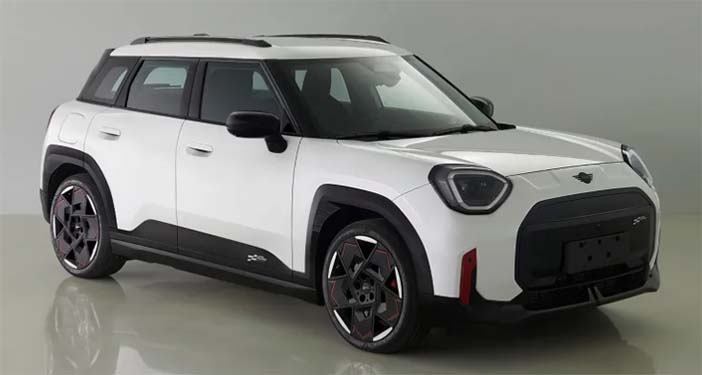
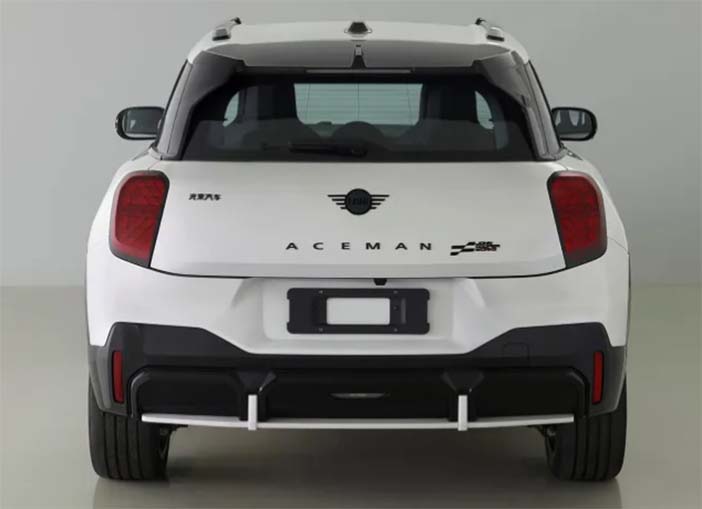
The information was published by China’s Ministry of Industry and Information Technology (MIIT). Among the details shared was the Aceman JCW produces 262 hp from a single electric motor; up from the 184 hp to 218 hp offered by the regular Aceman, which should allow it to sprint from 0-100 kph in less than 7 seconds. However, that won’t be enough to beat the Aceman JCW’s aforementioned rivals in a game of top trumps, because the VW and Cupra both deliver 328 hp and accelerate from 0-100 kph in 5.9 seconds. Even the less sporty Volvo EX30 is capable of 0-100 kph in 5.7 seconds in its base form, or 3.6 seconds when fitted with a dual-motor, all-wheel-drive powertrain. A range figure for the Aceman JCW hasn’t been confirmed yet, but I’m certain it will feature the same 54.2 kWh battery found in the higher-spec Aceman SE, which offers a range of up to 400 km. The same goes for the 90kW maximum charging speed, which isn’t class-leading, but allows for a 10 to 80 per cent top-up in less than half an hour. The Aceman JCW doesn’t appear to have received a huge amount of styling changes, but nonetheless has a sportier look courtesy of its new front and rear bumper (the latter featuring a contrasting diffuser), a distinctive set of 19-inch alloy wheels and a roof spoiler with airblades. There’s also some John Cooper Works badging dotted around and the JCW should have upgraded sport suspension and brakes as well. +++
+++ VINFAST ’s launch in the Unites States has been far from easy. It had grandiose plans to become a serious player in the local market, went public on Wall Street, and broke ground on a massive assembly plant in North Carolina last year. However, the rollout of the VF 9 has hit significant snags, with its launch delayed, prices for the existing VF 8 slashed, and the opening of its American plant postponed from July 2024 to 2028. Now, the Vietnamese car manufacturer faces another headache: an investigation by the National Highway Traffic Safety Administration’s Office of Defects Investigation (ODI). The department has received 14 reports from 2023-2024 VF 8 owners in the United States that allege there are issues with the Lane Keep Assist system. They claim this technology suite can activate in error and doesn’t function as it should. It’s also said to have difficulty detecting lanes, provides improper steering inputs, and can be difficult for the driver to override. A summary of the probe notes that improper steering inputs can increase the likelihood of a crash or injury. In one complaint, an owner alleges the system caused a crash, although the ODI notes it doesn’t yet have any evidence to support this claim. The investigation encompasses an estimated 3.118 VinFast VF 8s which is presumably all examples sold in the U.S. to this date. The probe will assess the scope, frequency, and severity of the potential problem and determine if a safety-related defect exists. If such a defect is found, VinFast will likely be forced to issue a recall and improve the Lane Keep Assist system. 2 weeks ago, VinFast announced that it had slashed prices for the VF 9 in the U.S. by as much as $16.000 just days before the start of deliveries. While it didn’t provide a reason for the cuts, it likely hopes lower prices will lead to greater sales. +++
+++ VOLKSWAGEN has given an exclusive sneak peek at its current and upcoming driver assistance functions which aim to not only boost safety for occupants in a vehicle, but also vulnerable road users as well. 1) Proactive Pedestrian Protection (coming soon): For a while now, so-called ‘active bonnets’ have been a key element of pedestrian safety, popping up to increase the distance between relatively soft human bodies and the comparatively rock-solid metal engine block, thus decreasing the chance and severity of injury. Volkswagen’s new solution, titled Proactive Pedestrian Protection will, like most active bonnets, work in tandem with the autonomous emergency braking system (AEB). Yet, while most systems utilise accelerometers to detect movement and pyrotechnics to deploy the bonnet, VW’s alternative instead incorporates the sensors from the AEB set-up to detect the size of an obstruction and (if it identifies something it believes could be a vulnerable road user – the bonnet will pop up utilising a spring-loaded mechanism). This might not seem all too different at face value, but it does mean that if the active bonnet system is activated, it won’t require a technician and new actuators; something that can cost from a few hundred euros to well over a thousand. VW says if a collision does occur, then the lack of pyrotechnics should make the set-up easy to repair, too. 2) Proactive Occupant Protection: Picture this: you’re sitting in a car, knowing full well that you’re about to be crashed into. Thankfully, on this occasion, the incoming vehicle is nothing more than the world’s most expensive soft play set, and you’ve got VW’s Proactive Occupant Protection (POP) system to keep you firmly in place. To demonstrate this system, Volkswagen decided to crash its appropriately-named ‘soft car’ (essentially some foam pieces and tarpaulin attached to an €900.000 robotic platform into a Volkswagen Passat, with me in the driver’s seat. As the vehicle collided, the pre-tensioning seatbelts ripped me back into my seat like an overly-aggressive bear hug, while the windows closed to a crack to optimise airbag effectiveness; these, as you’d expect, were turned off for this experiment for our own safety. The car also put on the hazard lights and, in the event of a real crash, would automatically call the emergency services. 3) Emergency Assist (coming soon): Imagine you’ve fallen asleep at the wheel, or worse: you’ve had a medical emergency leaving you incapacitated. In this scenario, Volkswagen’s upcoming ‘Emergency Assist’ system aims to not only protect the driver, but also those around them. Once it detects that there haven’t been any inputs on the steering wheel for more than 20 seconds, the driver is given a notification on the gauge cluster to regain control of the vehicle. If no response is given, the car will create small jolts from the brakes and via the pre-tensioning seatbelts to try and wake the driver. A further lack of input will result in the car pulling over to the side of the road and onto the hard shoulder, utilising the various sensors around it to safely change lanes if necessary. The car will display the hazard lights and honk the horn to make other drivers aware, calling the emergency services whilst also ensuring the doors are unlocked and the dome lights are switched on to provide easy access in case the driver is seriously ill. 4) Intersection assist: Pulling out of a junction can be difficult, especially when a car appears from seemingly out of nowhere. VW’s Intersection Assist aims to avoid collisions by employing the radar detectors on each side of the front bumper to identify any cross traffic and apply the brakes. Within 400 milliseconds, the vehicle is able to determine whether a collision could be possible and thus apply the brakes. Such a quick reaction means it’s also possible for this function to work at blind junctions and at speeds of up to around 60 kph. 5)Automatic Cyclist Evasion (coming soon):
Laws in Europe mean an autonomous safety system cannot move into oncoming traffic in order to avoid a collision. With VW’s safety tech boffins explaining that “braking is only useful to avoid a crash at speeds of up to 60 kph”, the team have developed a new system utilising pre-existing hardware that will be able to accurately thread the needle between a cyclist or other vulnerable road user and the central markings on the road; all without driver intervention. Volkswagen tells me that the system could come as an over-the-air update further down the line, although it’s currently in its pre-developmental stage. Once again, the car can deliver jolts through the braking system to make the driver aware of a potential hazard, while one can also override the system if further steering over the central markings is required. 6) Connected Travel Assist: Volkswagen, like most manufacturers, has its own version of Level 2 autonomous driving, which incorporates elements such as adaptive cruise control, automatic lane centering and even automatic lane changing. What perhaps makes VW’s take on this type of system unique is its integration of so-called ‘swarm’ data; there are millions of VWs on the streets and this technology will be able to observe the speed and direction of movement of other surrounding vehicles in order to predict hazards, stay in lanes without road markings or redirect sat-nav routes to avoid traffic. All of this data is, as you’d hope, kept anonymous in order to preserve owners’ privacy. More features are on the way, including traffic light detection which will bring the car to a stop at a red light, but also allow it to proceed without the need for intervention whenever the light goes green. +++
+++ VOLVO may not be transitioning to an all-electric line-up as quickly as it had once promised, but that doesn’t mean it’s going to kick up its feet and let its cars age and die off. Far from it. The Swedish automaker confirmed plans to introduce a wave of new models. During a meeting with dealers, Volvo Cars CEO Jim Rowan and Chief Commercial Officer Bjorn Annwall doubled down on the company’s aggressive strategy, revealing plans to launch 10 new and refreshed models over the next 2 years. Attendees confirmed that Volvo is fully committed to pushing forward with this ambitious product rollout. The first of these new vehicles is the all-electric EX90 that’s already being built. It’ll be followed by a smaller electric SUV known as the EX60, serving as the successor to the current XC60 and a luxurious and compelling alternative to the Tesla Model Y. This new model, slated for a 2026 release, will be built on Volvo’s updated SPA3 platform. New high-efficiency motors are in development, with Volvo aiming for 93% efficiency, up from the 85% in its first-gen motors and surpassing the current 91% rating. There’s good news for station wagon enthusiasts as a new model known as the EV60 Cross Country is being readied for production. Following that will be the debut of the new ES90 sedan, Volvo’s first-ever fully electric saloon. While many of these upcoming models will be battery-electric vehicles (BEVs), Volvo isn’t ignoring the hybrid crowd. The automaker is also preparing a line-up of plug-in hybrids with significantly extended electric ranges as part of its new strategy. These next-generation PHEVs will continue to use the same SPA1 platform as the XC60 and XC90 but with a notable boost in range. According to Volvo’s Chief Product and Strategy Officer Erik Severinson, these models will far surpass the outgoing XC90’s electric range, which maxes out at just 50 km. The updated PHEVs will also be equipped with the same high-efficiency electric motors set to power Volvo’s future EVs, promising improved performance and efficiency across the board. +++