
+++ Production of the FIAT 500e will be paused for a month from 13 September, due to low demand. Fiat parent firm Stellantis said in a statement that the slump in sales is “linked to the deep difficulties experienced in the European EV market by all producers”. According to figures from Jato Dynamics, Fiat sold 74.885 examples of the 500 (in both petrol and electric forms) across Europe between January and the end of July, 24% fewer than it had over the same period last year. “The lack of clarity around the incentives for and future of EVs continues to present a barrier to consumers considering an EV”, Jato analyst Felipe Munoz said. “These factors, alongside the low residual value of EVs, contributed to the decline seen in July”. Slow sales of the 500e, as well as the impending end of sales of the old petrol 500, due to new cybersecurity regulations, have pushed Fiat to develop the new 500 Ibrida. Effectively the 500e retrofitted with a mild-hybrid petrol engine, it will serve as an all-important crutch for the Italian brand as it navigates the slower-than-expected transition to selling solely electric cars. Fiat CEO Olivier François recently told: “We obviously, like everyone else, thought that the world would go electric faster and the cost of electrification would go down faster. But we couldn’t imagine that Covid would happen, shortage of raw materials would happen and the European Society (not all, not the youngest part) would turn their backs on the sustainable solutions. But this is the reality. We have to face those realities”. As well as introducing the 500 Ibrida, Fiat is investing some €100 million into developing a new battery for the 500e. François said this will “significantly increase range of the 500e while significantly reducing the cost”. +++
+++ It’s already on the record that Rawdon Glover, JAGUAR ’s managing director, has one of the toughest automotive jobs on the planet. His immediate task is to kill off (“sunset”) the current, mostly combustion-engine range of traditional Jaguar models and replace it from 2026 with a radical, 3-tier EV line-up that lifts pricing into the realms of Bentley. Glover, 11 years at Jaguar with previous Volkswagen Group experience, is undaunted by the size of the challenge. The range will begin with a Porsche Taycan-busting GT (previewed by a concept arriving in December), followed by a Bentley Bentayga-sized SUV and finally a big 4-door limo in 2029. “Our approach to future Jaguars is quite different from other vehicles”, he said. “They start with a platform and work outward from there. We’re starting with a design language, and developed the platform and engineering around it”. This new car range is expected to be very different in look from the short-nose, cab-forward I-Pace, Jaguar’s much-admired pioneering EV. The first car will feature a much more prominent nose, against the run of play in car design, which (apart from the scary cost of making them at Magna Steyr in Austria) is one reason why the I-Pace, along with the rest of the range bar the F-Pace, has gone out of production. But Glover is still full of praise for the scene-setting original. “Given the level of engineering and ingenuity we’ve had to deploy to build the new cars, I suspect that without having made the I-Pace, we might not have been able to achieve it in time”, he said. “It has helped us to learn directly about electric vehicles; whether it’s the nuts and bolts, or the task of creating a customer journey and actually launching an electric car. We’ve discovered these things are completely different from the cars we’ve launched before”. Now, all of Jaguar’s attention turns to the next phase of “recalibrating” potential customers. This will start with the GT concept’s unveiling in the US in December, which is expected to build the market’s appetite for radical Jaguar EVs. What’s more, Jaguar is unlikely to have a car on sale for some of that time, with production of the F-Pace (its final model left on sale) set to come to an end in the latter stages of 2025, said Glover, labelling it a “reset period”. “We currently have a product range with an average price of €90.000 and we will be doubling the brand’s price point, so we have to create a transition from old to new”, he said, candid about the size of the task. “Do you run old and new models side by side? Or should you have a kind of fire break between the generations? Where we’ve ended up, and it’s slightly different in different markets, is to create a reset period between the two”. Will it work? “There’s no playbook for this”, said Glover. “We’re definitely breaking a lot of new ground”. One of the big questions has been around the continuation of traditional Jaguar design cues with these new models. Signals from within the brand have suggested that much of the traditional Jaguar look is being binned, such as the leaping cat emblem on the bonnet. Glover denies it. “The Leaper’s demise has been greatly exaggerated”, he said. “Our strategy for it is a good illustration of our plans in other directions. It remains a very important part of our heritage, no question. When a brand is completely reimagined, you’ve got to identify the special aspects whose provenance, history and iconography are really important. So we’ve reimagined the Leaper so it can live on, but in a slightly developed format”. Jaguar nomenclature has always been a difficult-to-fathom mixture of words and letters: Sovereign, E-Type, XJ-S. As other brands, prominently Ford, hark back to well-known nameplates with new models, will Jaguar? “Jaguar has a fascinating and extremely valuable 90-year history but, at a time like this, we don’t want to be a brand that’s constantly looking backwards”, said Glover. “We have to be very forward-thinking. So when you see how we name the vehicles, you’ll see nods to our past, but plenty of forward thinking. So it’s that blend of, okay, we have a storied and important past, but also, we’re certainly not going to be harnessed by it”. +++
+++ The JEEP AVENGER has been given a “mediocre” 3 star rating in the latest round of Euro NCAP safety test. The small crossover was let down by poor scores for side-impact protection of 10-year-old rear occupants and the responsiveness of its autonomous emergency braking (AEB) system. Euro NCAP also criticised its lack of a child presence detection system. However, Jeep’s baby SUV did score well for overall adult and child occupant protection, with Euro NCAP awarding ratings of 79% and 70% in each respective area. Nonetheless, the results show “a clear lack of ambition” from Jeep, according to Euro NCAP secretary general Michiel van Ratingen. He said: “There is growing competition in the car industry, and Jeep parent company Stellantis has had to take several steps to secure the future of its brands. But safety should not be where a car manufacturer makes its savings. Euro NCAP will continue to highlight shortcomings in this area for the benefit of European car buyers”. Stellantis said in a statement: “We remain dedicated to offering customers clean, safe and affordable mobility with products that fulfil the most stringent regulations across the world. We strive to enhance the safety features of each new generation of vehicles. As part of our ongoing product improvement efforts, we consider the new third-party assessments and integrate proven technological solutions into our engineering process where relevant. Stellantis believes there is no single way to measure vehicle safety; third-party assessments are one of many inputs used when designing the safety of our vehicles”. The Opel Mokka, which is based on the same Stellantis CMP platform as the Avenger, scored 4 stars when it was tested in 2021. That score is now outdated, however, as Euro NCAP updated its testing regimen last year to include child presence detection systems, stricter standards for cars submerged in water and new technologies for recognition of vulnerable road users. Also in its latest round of testing, Euro NCAP awarded 4 stars to the Renault Captur and Renault Symbioz, and 5 stars to the Audi Q6 e-Tron, Ford Explorer, Subaru Crosstrek, Subaru Impreza and Xpeng G6. +++
+++ A new Indian-built JLR (Jaguar Land Rover) model based on a new platform being created by parent firm Tata Motors will be launched next year. Confirmed by Tata Group boss Natarajan Chandrasekaran, the platform will also underpin a “high-end” Tata model. Both will be built in an all-new factory in India, and there are plans to export them to other markets. “We’re able to bring the cost attitude of Tata Motors with the design sophistication of JLR”, Chandrasekaran told. “Then you get the benefit occurring for both in two different ways and the volumes go up, which justifies the investment that goes into the platform”. He added: “We have bigger aspirations, both for JLR and Tata Motors”. He stopped short of confirming which badge the new JLR model would wear, or what would power it, but it is not expected to be electrified given India’s dependency on combustion engines. As such, it is also likely to initially be sold exclusively in Asian markets, with a strong business case needed before exports to regions where JLR is pushing electrification are considered. When approached for a response, JLR told that it does not comment on future products. JLR already builds cars in India, opening its Pune factory in 2011, and this now assembles Land Rovers and Range Rovers from knock-down kits for the local market. The British company made the move to fulfil growing demand from Asian and particularly Chinese customers. China was JLR’s biggest retail market last year, recording 104.123 sales. That demand has also seen JLR revive the Freelander moniker, which will spawn a range of plug-in hybrid and electric cars built by Chery JLR in China. That powertrain mix means export plans have already been tabled. +++
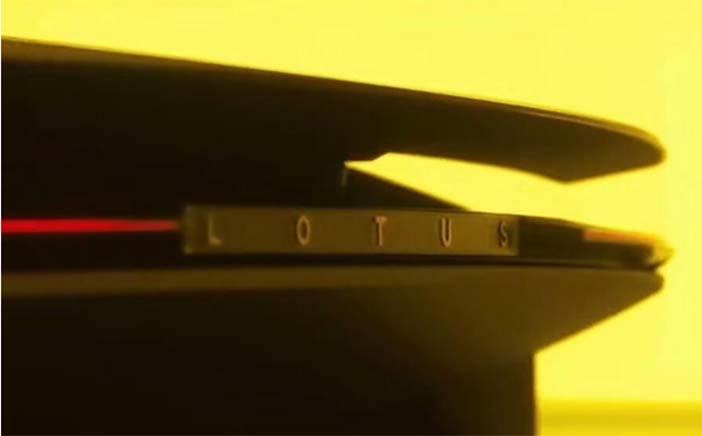
+++ LOTUS will unveil a new sports car called the Theory 1 on 17 September. The brand’s marketing chief, Qiao Xinyu, made the announcement on Chinese social media and posted a close-up preview image of the car’s rear end. The picture leaves much to the imagination but clearly shows an aggressive-looking rear spoiler, hinting that the new car is more overtly focused on outright performance than the Emeya and Eletre. Given it is called the Theory 1, it is highly likely that the new model is not a production car but a forward-thinking concept. With the exception of the track-focused 2-Eleven and 3-Eleven, Lotus’s road cars have all been named after words beginning with ‘E’ since the Elite was introduced in 1958. The Theory 1 is expected to preview the next evolution of Lotus’s design language, introduced with the Evija in 2019 and since reinforced by the Eletre and Emeya. +++
+++ STELLANTIS can’t seem to catch a break these days. Its dealer network in the United States is on the warpath, holding CEO Carlos Tavares accountable for the swift decline of the automaker’s brands. This isn’t mere grumbling: they’ve sent an open letter demanding that he allocate more funds to clear out old inventory and rejuvenate their American brands. The dealers’ message is unmistakable: fix this mess or watch their lots become graveyards for unsold cars. The leadership of the Stellantis National Dealer Council (NDC), which represents the dealers network and its employees, has accused CEO Carlos Tavares of “reckless short-term decision-making”, resulting in “devastating” effects on the U.S. market. This includes the “rapid degradation” of iconic American brands such as Jeep, Dodge, Ram and Chrysler, whose market share has been “slashed nearly in half”. The letter, signed by National Dealer Council Chairman Kevin Farrish, paints a grim picture of Stellantis in the U.S. It details how the “stock price is tumbling, plants are closing, layoffs are rampant, and key executives are fleeing the company”. Dealers blame the downturn on Tavares’ 2023 performance, when he supposedly “engineered a record year of profitability for Stellantis”, pocketing a staggering “almost 40 million dollars” in compensation. The letter advocates for clearing out old inventory and “getting the plants working at full capacity”. focusing on building cars that “Americans want to buy and can afford”. The day after the open letter was published, Stellantis fired back with a response. The company takes “absolute exception to the letter”, detailing the steps they’ve taken to address the admittedly disappointing financial results of H1 2024. Stellantis also points out that it reported a 21 percent increase in sales this past August compared to July. The company added that its market share rose by 0.7 percent and dealer inventory has been reduced by approximately 10 percent over the last 2 consecutive months. In response to claims of ignoring dealers, Stellantis countered that they “meet and talk monthly, have weekly calls, and personal conversations at the highest levels”. The company dismissed the open letter’s personal attacks on CEO Carlos Tavares, stating, “we don’t believe public personal attacks are the best way to address issues”. As for the call for investments and new products, Stellantis dropped another press release on the same day, revealing a $406 million investment across 3 Michigan facilities. The investment covers the swift retooling of the Sterling Heights Assembly Plant for the Ram 1500 BEV and REV trucks, while the Warren Truck Assembly Plant will ramp up production of the electrified Jeep Wagoneer. Additionally, funds are allocated to the Dundee Engine Plant for battery tray production and beam machining, alongside ongoing gasoline engine assembly. +++
+++ TOYOTA believes it can “rebuild the story” of hydrogen as a viable fuel for vehicles in the future, due to developments in heavy industry and other fields. The Japanese giant continues to invest heavily in hydrogen powertrains, working on both fuel cell and combustion versions as part of its ‘multi-pathway’ strategy. It has launched 2 generations of the Mirai FCEV, but the saloon has sold only in tiny numbers, in part due to the lack of a hydrogen-fuelling infrastructure. There have also been criticisms of hydrogen’s suitability as a ‘green’ fuel, due to the environmental impact of its production compared with that of electricity. Yet Thiebault Paquet, Toyota’s hydrogen boss in Europe, believes that continued development of hydrogen, including how to produce it more cleanly, means the fuel still has potential. “For heavy-duty transport, we will need other solutions than battery-electric vehicles, and hydrogen could be the right solution”, Paquet told. “We need to develop the infrastructure and the product at the same time, which is ongoing now. What we need to avoid and what maybe we did wrong before is not allowing for supply and demand. We learned from that, and I think we can rebuild the story. “Heavy industry will create a lot of volume for hydrogen, which can then contribute to the utilisations for other applications, like commercial vehicles and passenger cars. Companies developing hydrogen don’t make a distinction between hydrogen for transport and hydrogen for industry; it’s all part of their scale story. So hydrogen will come; this is something we’re convinced about”. The EU is expecting hydrogen to account for 13-20% of its energy mix by 2050, with a target of 40 GW of ‘green’ hydrogen production (produced from water and air using electrolysers) by 2030. It has committed to opening hydrogen fuelling stations in every city and every 200 km along key road networks, and while those are focused on use for long-distance delivery trucks, they could aid the development of a hydrogen fuelling network for cars. Paquet also addressed criticisms about hydrogen’s inefficiency compared with batteries, claiming that electricity can be used only relatively close to where it’s generated, whereas liquid hydrogen is easy to transport. He added: “In Europe, we will always have to import [hydrogen], but there are regions in the world that can generate green, renewable hydrogen in abundance, and we can easily transport that to areas that cannot fully sustain themselves”. +++