
+++ The ALPINE A390 electric crossover has been conceived as “a bigger A110 for 5” that pairs a futuristic fastback design with best-in-class driving dynamics. The concept will spawn a production car in 2025 that will use the Renault Group’s Ampr Medium EV platform (making it a relation of the Renault Mégane E-Tech) and be positioned as a rival to the likes of the BMW iX2 and Tesla Model Y. Alpine has benchmarked the Porsche Macan-sized crossover against its own 4-cylinder sports coupé and claims its 3-motor powertrain (1 at the front and 2 at the rear) combines with active torque vectoring to give the “driving dynamic of a lightweight car”. This set-up, confirmed Alpine CEO Philippe Krief, will also be adopted by the upcoming A110 EV. Chief designer Antony Villain said: “Most EVs are about just driving straight. Here the driving sensation is developed similar to the A110. This is mainly down to the torque vectoring”. The A390 (inspired by the Alpenglow concept that serves as “the mother of all future Alpine cars”) is described as 80% production-ready, with Villain confirming the front end will remain relatively unchanged, including the Le Mans-inspired central fin.
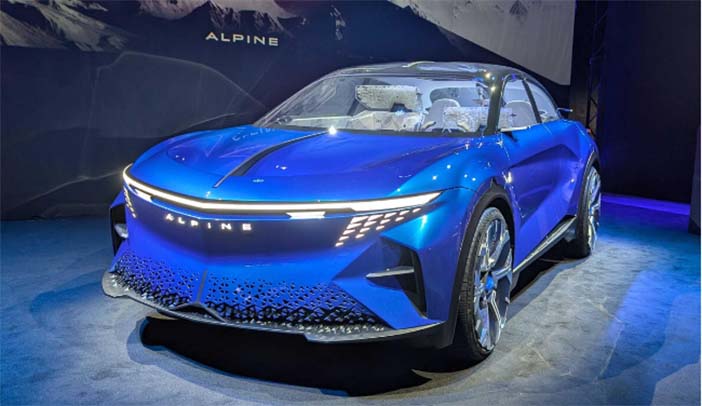
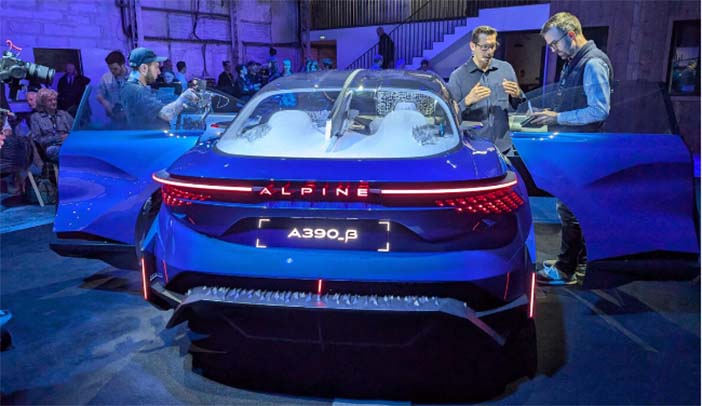
Elsewhere, the concept’s alloys, designed in the shape of a snowflake (“both strong and light”), will light up blue when active torque vectoring is occurring. It has been confirmed that this will make production. Radical elements that won’t make production include the rear-hinged doors, the rear light strip-cum-spoiler (which can extend by up to 80mm to reduce drag) and the radical Formula 1-inspired interior, although these all point to “the future of the brand”, said Villain. That interior is centred on the hydraulically assisted driver’s seat, which can switch from the standard driving set-up to one that mirrors an F1 bucket. The pedals also raise, while the steering wheel transforms from wide to narrow and displays extra information such as the weather. The cabin has also been designed for the front passenger to “share the driving experience”. As well as getting the same type of seat (although without the ability to change position), a panel is fitted to the dash displaying upcoming road information. This means, according to Villain, that they are “no longer a passenger, and now a co-pilot”.
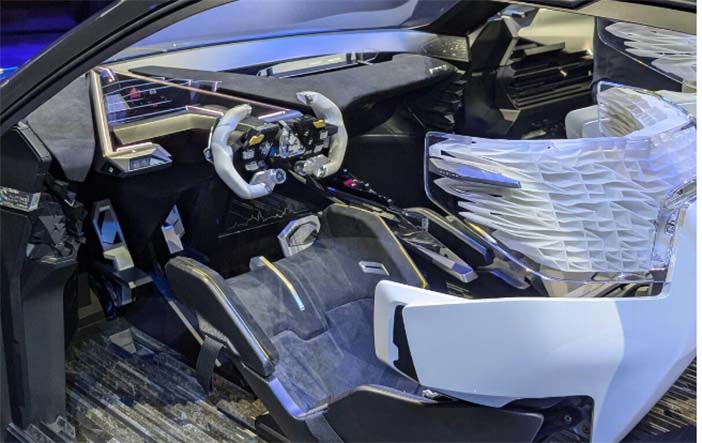
Elsewhere, the interior’s Alps theme can be seen in the white (snowy) seats and in the floor, which has been designed to mimic stones found on an Alpine pass. These light up when the car is moving, with beams travelling from front to rear to give the feeling that you’re floating over the road. Alpine wouldn’t be drawn on the battery, range or power the production car might possess, but Robert Bonetto, vice-president of Alpine Engineering, told it would “not aim to be the fastest” or the rangiest car of its type, because increasing the battery size would add weight. Instead it will offer “the right levels” and “be something that is still competitive”, he said. When it does arrive, it will come with a hefty price tag, said Krief. Below €100.000 but expensive enough to keep volumes lower than rivals’. +++
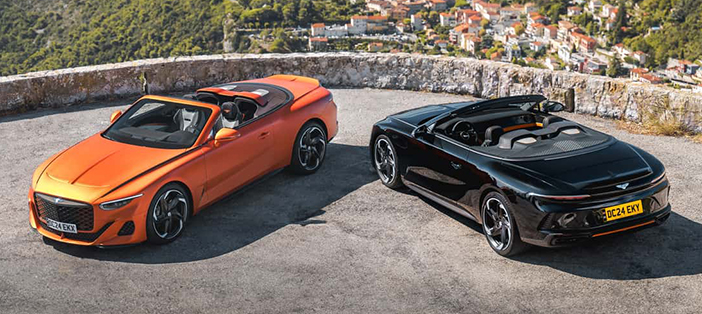
+++ After an endless series of tests and a 3.000 km journey across Europe, the BENTLEY Batur Convertible has entered the final testing phase. Thus, the launch of the most powerful W12 ever produced by the British company is drawing ever closer. Created by the Mulliner division, the Batur Convertible is the third car in the Coachbuilt series, following the Bacalar Barchetta and the Batur Coupe, and will be built in just 16 examples. These will be the last models in Bentley’s history to be equipped with the iconic 12-cylinder engine, capable of developing an impressive 750 PS. The Batur Convertible’s validation programme involves extensive testing to ensure the quality and performance of the vehicle. These include endurance tests of both the engine and the entire car, as well as environmental tests, sunlight exposure simulations, aerodynamic evaluations, noise and vibration tests, and driving dynamics analysis. More than 120 individual tests cover various aspects of the car, from finishing details such as the gold ‘organ stop’ ventilation controls, to the hardware and software of the W12 engine. Overall, the testing phase involves 58 weeks of testing on 2 pre-series prototypes: the Batur Convertible Car Zero and the Batur Convertible Engineering Car. Part of the validation process has already begun, with a 3.000 km journey through 5 European countries, starting in Germany and passing through Italy, France and Spain. The route included different types of roads, from mountains to motorways, with a brief stop in Munich for official photographs before continuing to Idiada, Spain, for high-speed testing on private tracks. The next stages of testing will span 7 weeks. During this period, the Batur Convertible will be tested on handling tracks, mixed roads and difficult surfaces, with a focus on endurance and high-speed performance. The data collected will be used to ensure that the car meets all the technical targets set. Like all models in the Mulliner Coachbuilt range, the Bentley Batur Convertible offers a very high level of customisation. Each customer has the option of choosing the colour and finish of each surface, both on the exterior and interior of the car. The prototype used for the engineering development, the Batur Convertible Car Zero, was treated with the same level of attention that characterises a customer model. In fact, the Bentley’s exterior paint was done in a custom colour, a two-tone combination of Vermillion Gloss and Vermillion Satin. Glossy carbon fibre elements, such as the front splitter, side skirts and rear diffuser, further embellish the bodywork. The bonnet is finished with glossy Dark Titanium detailing on the sides, a motif also echoed on the 22-inch wheels, with spokes in Gloss and Satin Black Titanium and accents in Vermillion Gloss. The second development car, called the ‘Engineering Car’, has completely different specifications. The body is painted in Midnight Emerald, combined with glossy carbon fibre elements and Satin Dark Titanium trim for the bonnet and lower bumper grilles. The front grille follows a three-colour ombré theme combining shades of high-gloss Beluga, Satin Dark Titanium and Mandarin. Inside, the cabin reflects the exterior colour scheme with upholstery in Cumbrian Green and Porpoises leather, enhanced with Mandarin stitching and trim. Distinctive elements include Bullseye air vents and machined titanium ‘organ stops’ controls. This is complemented by a laser-engraved audio signature, celebrating the W12 engine. +++
+++ Automakers around the world are in a flap about falling EV sales, but maybe they’re just making the wrong kind of EVs, because BMW doesn’t seem to be having any problem shifting its battery vehicles. Sales of BMW-branded EVs are up by more than a fifth year-to-date. BMW sold 22.6 percent more EVs between January and September 2024 than it did in the same period in 2023, according to new figures released by the automaker this week. Broadening the scope to include other BMW Group brands, including Mini and Rolls-Royce, the data shows that EV sales were up 19.1 percent. And though the growth was lower in the most recent 3-month period, BMW Group EV deliveries were still up 10.1 percent in the third quarter of the year, even as the supposed collapse in electric sales being experienced in other corners of the industry started to take effect. Mercedes, for example, suffered a 31 percent decline in EV sales in the third quarter of the year. Zooming out again, however, to look at the overall sales picture across all powertrain types, the data shows that BMW Group sales were down 4.5 percent year-to-date and 13 percent in the third quarter of the year. BMW-branded vehicles fared less badly, their deliveries dropping 2.3 percent so far in 2024 and 11.4 percent in the third quarter of the year, a period in which Mercedes grew its sales by 1 percent to 503.600, beating BMW’s 487.000. BMW’s official explanation for the Group’s January-September slip is a combination of production stops to deal with faulty Integrated Braking System components, as well as “difficult” market conditions in China. The braking issue is dealt with, but things aren’t going to get easier in China any time soon with domestic automakers continually upping their game and eating into Western brands’ market share. BMW (and Mini) sales dropped 2.1 percent year-to-date and 9.2 percent in the third quarter in the United States, and gained 1.4 percent in Europe where they fell by just 1 percent . But Chinese drivers bought 13.1 percent fewer BMWs in the first 9 months of 2024 and registrations tanked by a shocking 29.8 percent in the third quarter, whereas Mercedes was only down 1 percent. Sporty BMW M cars got away relatively lightly compared with the firm’s other combustion vehicles. Its sales were up 2 percent year-to-date and down 3.9 percent in the third quarter of the year. Rolls-Royce, which must be feeling the heat in China, can only dream about such positive stats. Its sales were down 12.8 percent year-to-date and 16.2 percent in the third quarter. Hopefully the arrival of the facelifted Ghost will help move the needle in the other direction. Mini also took a hefty hit, its deliveries plunging 20.9 percent in the first 9 months of the year and 25.2 percent in the third quarter, though much of that can be blamed on the brand replacing its entire model line. Or at least that’s what Mini bosses will be hoping. +++
+++ We all know that CHINA is the biggest car market in the world. With over 150 brands available and more than 25 million units sold each year, the Asian giant has become a benchmark in the industry. In less than 20 years, China has gone from being a minor and underdeveloped automotive market to one that is a must for almost all carmakers looking to become global players. Its rapid growth has forced carmakers in Europe, the United States and other Asian countries to make it their priority. But why is China becoming a problem for many of them? Last year, new light vehicle sales in China accounted for 28% of the world total. This is a major source of revenue for most of the world’s carmakers. For example, 43,4% of the Volkswagen Group’s total vehicle sales were made in China. China accounted for 36.1% of total sales for BMW, 32.4% for Mercedes, 33.9% for Tesla, 31.5% for Honda, 18.1% for Toyota and 21,6% for Nissan. For Hyundai, it was 6.1%, with Ford at 5.1%, Chevrolet at 5.3%, Kia at 2.6%, Audi at 38.1%, Mazda at 6.9%, Peugeot at 2.6%, Jeep at 0.5%, Subaru at 0.9%, Skoda at 2.5%, Lexus at 21.5%, Mitsubishi at 2.3%, Citroën at 4.9% and Buick at 73.9%. China is also a major production and export centre, not only for domestic brands, but also for many foreign brands. Tesla, for example, exports some of its models from its factory in Shanghai. BMW uses its factories to produce the BMW iX3 and the new electric Mini Cooper for world markets. Other brands, such as Volvo, are gaining ground in the electric vehicle markets with the Volvo EX30 built in China. Polestar, Dacia, Honda, Smart, Citroën, Lotus, Lincoln and Cupra also export their cars from China. At the same time, China has become a lifeline for many brands. At a time when the European and North American car markets are no longer growing, China has become their only major source of growth. Between 2013 and 2023, the volume of registrations in the European Union rose by 4%. In the United States and Canada, it remained unchanged at 17.3 million units, while car sales in China rose by 25% over the same period. The situation is deteriorating for foreign carmakers in China. Immediately after the pandemic, consumer tastes and demand changed, making it difficult for non-Chinese car brands to compete. In 2019, Chinese car brands held a 37% market share of car sales. This share fell to 36% in the year of the pandemic in 2020, but began to rise rapidly in 2021, when it reached 43%. The change continued in 2022 at a faster pace due to a more dynamic industrial landscape in China. OEMs such as Geely, BYD, NIO, Xpeng, Li Auto, Chery, Changan, have accelerated their production plans due to the new price war launched by Tesla. More and more new cars arrived in showrooms at lower prices. At the same time, fiercer competition forced most of them to improve the specification of their cars: for example, battery performance and software. All this happened in less than three years and took foreign carmakers by surprise. As a result, the shift from buying non-Chinese cars to buying Chinese cars accelerated. Local manufacturers had captured 46% of car sales by 2022. A year later, by the end of 2023, BYD had dethroned Volkswagen as the best-selling brand, with Chinese companies accounting for 50% of sales. This year, the change is even more dramatic: in August 2024, the Chinese brand’s market share reached a new record of 62%. This change in consumer perception is frightening foreign carmakers and is partly explained by the lack of contact with customers and the ability of Chinese manufacturers to offer competitive cars that appeal to consumers (including Chinese ones thanks to software that speaks their language). +++
+++ While many expect the car industry to ultimately transition almost entirely to electric vehicles, slowdowns in the take-up of new EVs do mean petrol cars will continue to be offered for longer than many had expected. That’s great news for car enthusiasts, particularly if you’re a fan of the LAMBORGHINI brand. Following the launch of the Reveuelto, Temerario and Urus SE, Lamborghini now offers 3 hybrids, which all retain big-capacity and hugely powerful combustion engines. These kinds of engines have become synonymous with Lamborghini and during a recent interview, the automaker’s technical officer, Rouven Mohr, confirmed they aren’t going anywhere soon, noting now is not the right time for an electric supercar. “At the moment, now, the time would not be right for an EV, at least not in a super sports car”, he told. “You have seen a lot of electric cars on the market that were not really successful”. Mohr added he’s super happy with Lamborghini’s current line-up, but admitted it will, eventually, go down the EV route in the future. “I’m happy with our current line-up, because with hybridized cars, we can live for the next decade”, he said. “But I also believe Lamborghini needs to have the transition to electric power, because it’s only a question of time when the mindset will change”. Lamborghini’s first EV will be inspired by the Lanzador Concept and is scheduled to arrive in 2028. Limited details are known about this new 2+2 at this early stage, but Mohr says the carmaker is working hard to ensure it offers the same excitement factor customers have come to expect from the brand’s models. “You can be sure when we bring the first electric Lamborghini, we will be very careful in managing the brand’s attributes”, he noted. “We are not thinking to bring another standard electric car, one megawatt of power. It’s not like this. You need a differentiation”. +++
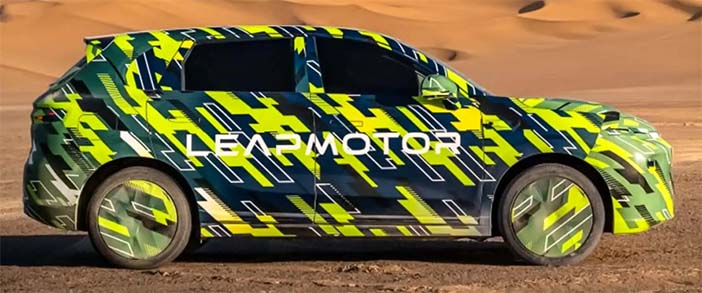
+++ You only have to open the newspaper to see that Stellantis has seen better days. The Italian brands of the large conglomerate in particular appear to be in free fall as the electric transformation is not going as easily as various top managers had imagined. In addition to range and residual value concerns, the high price of electric cars is still a decisive factor for many. A new joint venture between Stellantis and the Chinese electric car manufacturer LEAPMOTOR is now set to remedy this situation. The newly founded Leapmotor International is a joint venture managed by Stellantis with a 51/49 partnership between Stellantis and Leapmotor. With its headquarter in Amsterdam, the company aims to provide “technology-centred, affordable electric mobility solutions for global customers”. Stellantis has also invested €1.5 billion in the global Leapmotor group, acquiring around 21% of the company. Business operations in Europe are only launched last month. The company started with the Dacia Spring competitor T03 and the C10 family SUV. Both vehicles are particularly impressive in terms of value for money, which is exactly what Stellantis wants and needs right now. At the Paris Motor Show 2024 (14 to 20 October), Leapmotor is now presenting 2 more new products for the European market – the compact crossover B10 and the 6-seater C16. So far, we don’t know much about the compact crossover. Leapmotor itself speaks of a “C-SUV” that will compete “in the most important European segment”. It is the first model in Leapmotor’s B-series and marks “an important milestone for the brand’s growth in Europe”. Aside from the usual marketing blah-blah, we learn that the B10 is based on the Leap 3.5 architecture and is due to be launched in 2025. At the photo, we see a masked prototype that looks like a slightly higher compact car and appears to have the proportions of a Volkswagen ID.3. The C16 appears to be a stretched version of the C10. With a length of 4.9 metres, it offers space for 3 rows of seats in 2+2+2 configuration. The wheelbase is 2.83 metres. The car has been on the market in China since April 2024. It has rear-wheel drive and a single electric motor with an output of 292 PS and 360 Nm of torque. The motor is powered by a 67.7 kWh LFP battery. Leapmotor speaks of an 800 volt platform and DC charging speeds of 180 kW. This should enable the C16 to be charged from 30 to 80 per cent in 15 minutes. With a full charge, the new electric SUV has a range of 400 km. +++
+++ MERCEDES is to revert its electric cars back to traditional model naming structures in the coming years as the first generation of its all-electric models come to the end of their life cycles. The German giant has used EQ to designate its EVs across eight models from EQA to EQS SUV, but the new electric G-Class marks a change in approach. Branded ‘G580 with EQ Technology’, rather than the previously touted Mercedes EQG that would follow the naming strategy, the electric G-Class sits alongside petrol, diesel and high-performance AMG models in one range of cars. On whether the EQ naming system will be replaced with ‘EQ Technology’, Mercedes boss Ola Källenius told: “The conversion has already started. And it started this year with the electric G (the G 580 with EQ Technology). As we go through these next few years, there will be the nomenclature that you know, S-Class, E-Class, C-Class and the SUV derivatives of those”. Previously, Mercedes product manager Tobi Mantele had told: “EQ is the technical lead, future electric Mercedes-Benz won’t be EQ”. The manufacturer is aware of the brand cachet of cars such as the E-Class, and as electric cars are normalised as part of the model line-up, will revert to the traditional monikers of its petrol and diesel models. “EQ is the technical platform for the brand”, added a Mercedes spokesperson. “As soon as you go fully electric, you wouldn’t want to drop a brandname like S-Class”. But Mercedes isn’t going all-in on electric just yet, promising further developments on plug-in hybrids in the near future, as well as 48 volt hybrid as a minimum on every petrol and diesel car. “We’re not throwing away other opportunities with our state-of-the-art traditional platforms”, added the spokesperson. “We have the best-performing PHEV according to range, and we’re updating those again”. +++
+++ A brand-new NISSAN LEAF is just around the corner, and we’ve known for some time that it’ll morph from frumpy family car into a cool, concept-inspired SUV. But now, the company has hinted it’ll come with “affordable on-board bi-directional charging” that could lower fuel bills by up to 50 percent. The technology, which will make its debut in the Sunderland-built Leaf in 2026 before being fitted to the new Juke and Qashqai EVs, is part of an end-to-end solution aimed at helping Nissan reach net zero by 2050. The Leaf and other future models will be sold with a special home wallbox capable of sending power to the grid during periods of peak demand, before being topped back up when needs subside. Late last year, Nissan president and CEO Makoto Uchida confirmed that the brand’s Chill-Out concept, revealed way back in 2021, would become the next-generation Leaf. As I mentioned, the Leaf is confirmed to be one of the trio of new electric cars Nissan will launch by 2026. The others are the next-generation Juke and the successor to the Micra that will be based on the Renault 5 and serve as the brand’s entry-level model. +++
+++ PORSCHE is recalling a total of 27.720 units of the Taycan due to a potential short circuit in the battery modules. In the meantime, some owners will be advised to limit their EV’s battery charge to a modest 80 percent until the repair is finally sorted, though that fix isn’t expected to arrive until the first quarter of 2025. So, for the next several months, they’ll get to enjoy a slightly less “electrifying” driving experience while waiting for Porsche to resolve the issue. The affected Porsche Taycans were produced between October 21, 2019, and February 1, 2024, all featuring LG-sourced battery packs manufactured in Poland. Seems like LG is getting more than its fair share of recalls these days. Some Taycans may experience a short circuit in the battery modules, which could lead to a “thermal event”. To avoid this headache, Porsche suggests owners only charge their EVs “to a maximum of 80% battery capacity until the repair has been completed”. Unfortunately, a final solution won’t be available until at least the first quarter of 2025, leaving owners with a wait of at least three months before their EVs can be fully repaired. In the meantime, Porsche will monitor affected Taycans either remotely or through local dealers and notify owners who need to cap their charging capacity at 80 percent. In any case, Porsche will inspect the battery modules of the entire population of affected Taycans, checking for possible defects. When anomalies are detected, Porsche will replace the faulty high-voltage battery modules free of charge. Following the analysis, the company will also install an onboard diagnostic software, designed to detect any future battery anomalies. If the system finds new issues, it will display a warning message and automatically limit the charging capacity to 80% (or even to 50%) until the defective modules are repaired. Owners of the affected Porsche Taycans will be notified by mail starting on November 29, 2024. Any vehicles affected by prior recalls will also require this new remedy to be applied. +++
+++ RUSSIA invaded Ukraine nearly three years ago, resulting in a number of Western brands pulling out of the country due to a mixture of sanctions and political pressure. This left a significant void in the market for everything from cars to fast food, but those spots have been filled in with domestic and international options. One of the biggest winners appears to be Chinese automakers. Brands from the People’s Republic account for over 50% of new car sales in Russia. This booming demand has reportedly resulted in firms taking over plants that used to be owned by Western automakers. Chery is now making vehicles at Russian plants that were abandoned by Mercedes, Nissan, and Volkswagen. However, it appears there role in the production process is fairly limited as the plants are used for final assembly as the cars are “nearly finished” when they arrive. The move could be a way to sidestep tariffs as Russia is targeting imported vehicles with higher fees. Chery is said to control nearly 20% of the passenger car market, so doing final assembly in the country could be a way of securing their foothold. The plants are said to build Tiggo and Exeed models, with the Tiggo 7 being rebranded as the Xcite X-Cross 7. While it remains unclear how much assembly is actually being done in Russia, Italian authorities recently fined DR Automobiles for “importing ‘finished’ cars” from China. Officials there released pictures of rebadged Chery vehicles and noted they appeared “finished and complete in every way”. +++