
+++ The next-generation ALPINE A110, due in 2026, will be lighter than combustion-engined rivals despite adopting an electric drivetrain. Renault Group CEO Luca de Meo told that the company had made a “not rational” decision to “invest a lot of money” in a bespoke electric sports car platform for the next A110 and its derivatives (including a likely 2+2 version called the A310), but it had “looked at Porsche for inspiration” in how to successfully build a sports brand. “Porsche has the 911 platform as their own and then they use others VW Group architectures for the likes of the Taycan and Cayenne. You keep the heart then as very true to the brand,” he said. To that end, the Alpine sports car platform will be uncompromising in its purpose to root the French brand in performance models, which then lend credibility to its more lifestyle-focused mainstream models, such as the upcoming A390 SUV. “The next A110 will be lighter than a comparable car with a combustion engine but with no compromise in performance”, said de Meo. He added that making the bespoke architecture was objectively “a completely stupid decision” due to the likely return on investment in pure sales terms. A planned tie-up with Lotus on the architecture fell through but Alpine places such importance on sports cars that it has continued development by itself. Alpine has experimented with lightweight electric models previously, such as with the A110 E-ternité concept, an electric conversion of the current A110 that just undercut the Porsche 718 Boxster at 1.400 kg. The electric A110’s design will be only subtly evolved from the current car, de Meo suggested. It “needs to look like” an A110, he said. “Porsche doesn’t make a square 911”. More broadly, de Meo said “6 or 7” uniquely positioned models would make up the Alpine range, including “some emotional pure sports cars”. 18 months ago, the brand said its intention was to launch 7 models by 2030, starting with the new A290 hot hatchback. The plan is to crown the range with a supercar and Alpine CEO Philippe Krief hinted that this will come towards the end of the “really ambitious” range roll-out and serve as the flagship of its “dream garage”. Krief said the firm is “not yet” ready to launch the model, which will be developed at a new R&D centre born out of the firm’s soon-to-be-closed Formula 1 engine factory. He added that the launch of a supercar for the firm is a three-stage process: first a “brand exercise”, next a “tech showcase” and then the third one is “business”. To that end, Alpine has shown off a pure concept supercar called the Alpenglow as a brand exercise in 2022, followed by a hydrogen-combustion technology showcase version of it earlier this year, the Alpenglow Hy4. The working title for the production model is Future Alpine Supercar. Krief said Alpine wants to position itself as a “French sports specialist brand that also happens to be electric”, rather than call itself a pure EV maker. Head of product Sovany Ang added that the firm wants to “retain accessibility” and will “target specific things and segments where it makes sense for us to be”, rather than try to be a volume or a premium car maker. The dealer network is expanding to around 140 globally by the end of the year as Alpine looks to break itself out of France and it has established a new flagship facility in Barcelona that also includes e-sports and sim racing areas, as well as a bar and restaurant. This format will also be introduced in London and Paris. Krief confirmed that the current A110 will end production in 2026, when a small-series exemption for GSR2 regulations ends. The next 6 months of A110 production are sold out and 95% of theA110 R Ultime’s production run of 110 units sold within 2 months of its unveiling at the Paris motor show. +++
+++ As the star player of its electric car range, the BMW iX pretty much smashed it out of the park at the first attempt. Well-appointed and packed with technology, showcasing both fantastic refinement and effortless performance, when it launched back in 2022, the large SUV nailed its luxury EV brief with aplomb. If, that is, you could get past the styling. The iX will shortly receive a mid-life facelift, which will be unveiled early next year and on sale in the summer, and I’ve had a first taste of with a drive in a late prototype test car. Let’s get the styling out of the way first: if you didn’t warm to the iX’s ‘distinctive’ grille, temper expectations of this facelift: even with my test car sporting camo wrap, you wouldn’t need an ultrasound to diagnose that it retains a swollen kidney. Remember, that sizeable panel is there for a reason: it houses many of the sensors that the iX’s semi-autonomous assistance features require; that’s part of how this car serves as a technical flagship. While there have been some styling changes that we can’t talk about for a while, that wasn’t a priority here. As has been the trend with recent updates of electric cars such as the Audi e-tron GT and Porsche Taycan, instead of messing with the styling, BMW has focused on improving the iX’s performance, range and comfort, by upgrading the powertrain technology and electronic that is uses. When the iX launched it was taking on the likes of what is now the Audi Q8 e-tron and the Mercedes-Benz EQC SUV, but consider the recent or impending arrivals that this car will take on, such as the Volvo EX90, Polestar 3 and impending Range Rover Electric and the need for continual technical improvement is clear. Plus, with a raft of new BMW electric cars arriving from next year onwards, the goal is to keep this as a tech-focused halo car. The revamped iX retains the same basics, with a synchronous motor mounted on each axle giving all-wheel-drive. The e-motors are the same units as before, but now offer a bit more power (BMW has yet to give specific outputs) and use new silicon carbide inverters to improve their efficiency. The battery remains the same physical size, but BMW has been able to make it more energy dense and efficient. The result, BMW claims, is both an improvement in efficiency of around 10 per cent and increased performance. The latter means models will sport new model designations in line with the i5: so the xDrive60 I tested here is actually the mid-spec successor to the pre-facelift xDrive50. The equivalent to the iX M60 will, in turn, get its own higher number. Don’t stop to think about it too much and we’ll all be fine. In terms of range, the old xDrive50 had an official economy of 620 km. Another 10 percent would take the new xDrive60 to around 690 km, which is a useful improvement. Elsewhere, there are new hydraulic rear axle bearings and ‘friction-optimised’ wheel bearings to improve the dynamics and ride comfort, while BMW has also worked to reduce weight. There are also new tyres with reduced rolling resistance, while the suspension has been tuned for each of the model levels. My prototype rode on steel springs; air suspension with variable damping will be available. The dashboard of my test car was also largely concealed, but one point of note was the round M Sport steering wheel of my test car, which will now be optional on all models for those not sold on the hexagonal version. From behind the wheel, it’s apparent that the key strengths of the iX have been retained: it’s an incredibly smooth and refined powertrain, and there is performance in abundance if you need it, although there were precious few places to really experience that on our short, supervised test route. I did have the chance to try the revamped drive modes, including a new Sport Plus mode that sharpens up the driving dynamics and offers fixed, rather than variable, levels of energy regeneration. That is done to ensure a consistent feel when braking, to give more response and feel to eager drivers. Meanwhile, BMW has also worked on the drive modes at the other end of the scale, with a new Max mode that it claims could draw an extra 20 percent or so range, and happily it didn’t notably strangle the on-road performance as some eco modes do. While this doesn’t feel like a transformative mid-life upgrade, that’s in part because the iX was already an incredibly good luxury electric car. What this does feel like is a welcome dash of extra refinement and range to that package, which should ensure the iX can hold its own against the new wave of luxury electric SUVs. +++
+++ BYD ’s growth is unstoppable and Stella Li, vice-president of the Chinese giant, is one of the protagonists of this revolution. In an interview, the ‘Queen of EVs’ tells us about her plans, ambitions and strategies for the European market and beyond. And she does so with the smile of someone who can think big, on the strength of a huge domestic market and the technological dimensions achieved by her company, which is able to file 32 patents every working day of the year. Listening to Stella Li is interesting to get to know better not only the reality of BYD but also the characteristics of the Chinese industrial system that so frightens Europe but to which it would be a good idea to look in order to identify some healthy ‘best practices’. Starting with strategic clarity. With a global market share of 23 percent in electric vehicles, BYD is not content and, as announced several times in recent months, is betting heavily on Europe. A country like Italy, cited as an example, will see its dealer network grow from 20 to 105 outlets by next year. “We are not satisfied with what we have done so far”, says Stella Li, emphasising that the company’s strategy aims to make its vehicles accessible to more and more consumers by offering a hands-on experience with models such as the Seal U DMI, designed to address fears related to range and recharging. The current crisis of confidence in electric vehicles in Europe does not worry Stella Li, who sees it as a natural transition phase. Amidst fluctuating policies and high energy costs, BYD has a clear vision: technologically advanced cars that are affordable and integrated into a clean energy ecosystem. Thanks to the company’s solar panels and storage batteries, electric mobility can also become a more sustainable choice in Europe. During the interview, Stella Li confirmed that BYD is already working on the next generation of solid-state batteries, considered one of the most promising innovations in the industry. With a team of over 10.000 engineers dedicated to battery research, BYD expects this technology to be commercialised around 2030. “We are working to ensure safety, durability and performance, even in extreme temperatures”, Li explained, emphasising that these batteries represent the future of sustainable mobility, while acknowledging that current lithium iron phosphate (LFP) technology will remain dominant over the next 15-20 years. BYD’s real strength lies in technology, an area where the company invests more than 5 billion euro a year. With more than 102.000 research and development engineers and an impressive 32 patents filed every working day, BYD is a leader in innovation. “We are not a traditional automotive brand, but a technology company”, says Stella Li, recalling how every aspect of the vehicle, from batteries to autonomous driving, is designed to ensure safety, efficiency and performance. In addition to narrating BYD, Stella Li provides some nuances of China’s competitiveness in the automotive sector. A clear strategy, pursued for over 20 years, and a highly competitive domestic market, which stimulates innovation and quality. “In China, people who drive a petrol car are out of fashion”, says Stella Li, describing how electric mobility is now an integral part of culture and society. An approach that, according to her, Europe should watch carefully. +++
+++ Electric vehicles may be gaining popularity worldwide, but the path to mass adoption remains challenging. In EUROPE , where EV incentives have historically fuelled sales, several countries are planning to scale back or overhaul their subsidy programs in 2025, a shift that could hinder growth in one of the key markets for electrification. France is leading the charge with some of the most significant changes. As part of its 2025 national budget, the government is slashing its EV subsidy program’s budget from €1.5 billion to €1 billion. Currently, French buyers can receive between €4.000 and €7.000 in subsidies for EVs priced under €47.500. In 2025, those subsidies will be cut nearly in half, dropping to between €2.000 and €4.000. The country is also dialing back its innovative EV leasing program. This scheme, which allows low-income households to lease a small EV for €100 per month or a larger family electric car for €150 per month, proved so popular that it had to be paused just 2 months after launching due to overwhelming demand. In 2024, the program received €650 million in funding, but next year, the budget will be slashed to €300 million. Meanwhile, Spain is making changes to its EV incentive scheme, which has had a €1.55 billion budget. Buyers currently receive up to €7.000 for electric cars, €9.000 for commercial EVs and additional subsidies for motorcycles and scooters. Starting next year, Spain will introduce direct payments for these incentives, meaning customers will no longer face delays of up to 2 years to access their subsidies. While this change will streamline the process, details on the program’s overall budget and scope remain under wraps. The ripple effects of cutting EV incentives are already being felt. Germany, one of Europe’s largest EV markets, experienced a steep decline in sales after its government slashed subsidies in December 2023. EV sales in the country plummeted 69% in August compared to the previous year, following drops of 37% in July and 16% in June. Battery electric vehicles (BEVs) are still, on average, 75% more expensive than their internal combustion engine (ICE) counterparts. Subsidies and tax incentives remain critical tools for driving EV adoption and making them accessible to more consumers. As Europe scales back financial support for EVs, the industry may face an uphill battle to maintain its current momentum. +++
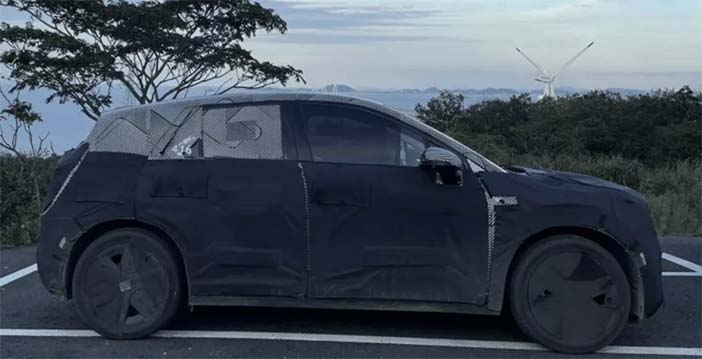
+++ New spy shots have surfaced online of the new electric car from FIREFLY , the entry-level brand from Chinese automaker Nio. The car is tipped to be showcased to the world on December 21 at the annual Nio Day in Guangzhou. While Nio itself is only a relatively young EV startup, it’s following the lead of other Chinese automakers in launching separate brands dedicated to building cheaper and more accessible cars. Firefly will slot below the recently introduced Onvo brand from Nio and focus on small and mid-size EVs. This photo confirm its first model will be a compact hatchback. The car’s proportions are fairly typical for a hatchback of this size, and key elements like the short front and rear overhangs immediately catch the eye. Viewed from the side, it’s impossible not to notice the car’s thick C-pillars as well as the aero covers over the wheels. The dimensions resemble vehicles like the Lancia Ypsilon Electric and Renault 5 E-Tech. Nio’s engineers have done a good job hiding the car’s front and rear fascias from prying eyes, even going to the trouble of affixing faux headlights and taillights to the black body cladding. It’s safe to assume that both the headlights and taillights will be LED units. The Firefly sports a large central screen for the infotainment system that looks like a huge tablet has been stuck to the dash. Despite the car’s budget positioning, Nio has also managed to add a digital instrument cluster. A simple 2-spoke steering wheel and a flat floor will also be part of the interior. Technical specifications about the car remain unclear, but it will reportedly support battery swapping through dedicated Firefly swap stations. It’ll initially launch in China but should also be sold in Europe, although recent tariff hikes will likely make it more expensive than originally planned. Prices in Europe should kick off from under €30.000. +++
+++ No one outside of LAMBORGHINI has even driven the company’s new Temerario yet, but the automaker’s R&D chief already has us geed up about the even hotter versions that will follow in years to come. Former Audi man Rouven Mohr told the 800 horses the baby supercar’s new hybrid V8 powertrain currently pumps out is only the beginning, and that both the combustion and electric systems have plenty more to give. “We operate our combustion engine at 200 hp per liter”, Mohr says of the launch configuration Temerario. “But we can run it at, say, 220 hp per liter”. The new 10.000-rpm, twin-turbo V8 has a 4.0-liter capacity, so makes 800 hp as of now, way more than the old Huracan’s naturally-aspirated V10 could dream of (even the track-ready STO topped out at 640 hp). But Mohr is saying the V8 could pack on 80 hp of muscle for an 880 hp combustion total. And that’s not accounting for the triple-motor hybrid kit. The base Temerario’s motors make 150 hp, but Mohr claims that extracting more is simply a matter of cranking up the voltage going in. So how much power might we be talking about for a future STO or whatever Lamborghini calls its hotter Temerario given that the current model already makes 920 hp? “A four-digit number is possible for the engine”, Mohr told. “We can do a big step, it’s clear”. Mohr also revealed that Lamborghini considered equipping the Temerario with a V6 having established that a motor with only six cylinders could hit the company’s performance targets. “But we thought the brand positioning would be a step too big, coming from the V10 to a V6”, Mohr explained. “We don’t think that the V6 is fitting to our brand”, he continued, adding that a V8 can create a more emotional feeling for a driver than a V6 can, without specifically calling out rivals Ferrari and McLaren, both of whom use V6 power for their base cars. Mohr says Lamborghini even briefly discussed the possibility of creating a new V10 but dismissed the idea after realizing it would have to give up 20 percent of its power to meet future emissions regs. +++
+++ The fifth-generation TOYOTA GR SUPRA is nearing the end of its production run, with the beefed-up A90 Final Edition marking the close of its relatively short five-year lifecycle. But don’t panic as Toyota has already confirmed that a successor is in the works, and the latest rumoUrs suggest that it will feature a turbocharged 2.0-liter four-cylinder engine, likely paired with a hybrid system. Originally, the sixth-gen Supra was expected to go fully electric, but it seems Toyota’s “multi-pathway” strategy has taken center stage. Last year, reports emerged claiming that Toyota would offer both internal combustion engine (ICE) and electric vehicle (EV) powertrains. Other rumors also pointed to a BMW-sourced engine, reportedly designed for compatibility with carbon-neutral fuels. Now, it seems the most likely scenario for the next generation Supra is one powered entirely by a Toyota-developed powertrain with no BMW parts in sight. The upcoming turbocharged 2.0-liter 4-cylinder engine, announced in May 2024, will likely play a key role, especially if paired with some form of electrification to boost output while keeping fuel economy and emissions in check. The newly-developed 2.0-liter engine will likely find its way under the hood of the reborn 8th generation Toyota Celica, and in its high-performance configuration is expected to produce up to 406 hp and 500 Nm of torque in non-electrified guise. The addition of a hybrid system could push the performance envelope further, potentially surpassing the 435 hp of the current turbo 3.0-liter 6-cylinder found in the A90 Final Edition. However, it likely won’t match the aural appeal (or the tuning potential) of BMW’s lauded straight-6. Importantly, this engine has been designed with future-proofing in mind, as it’s compatible with both electrification and carbon-neutral fuels, offering flexibility for Toyota’s engineers depending on regional regulations and market demand. The racing variant of the engine could even generate a staggering 600 hp, underlining the GR Supra’s motorsport potential. The self-charging hybrid system is said to incorporate a motor-generator paired with a clutch situated between the engine and the gearbox. As for transmission options, the latest rumours suggest an 8-speed or 10-speed automatic could be in development, though Toyota has also been experimenting with simulated manual gearboxes to compensate for the absence of a traditional stick shift. Yes, I know, it’s a bummer. It’s safe to assume the next-generation GR Supra will remain a rear-wheel-drive (RWD) vehicle, while the reborn Celica could opt for an all-wheel-drive (AWD) setup. Alongside the hybrid powertrain development, Toyota will also have full control over the exterior styling and chassis tuning of the new GR Supra. Early renderings point to an evolutionary design, retaining much of the current model’s aesthetic, but with sharper lines, more aggressive proportions, and a more dynamic stance overall. In any case, Toyota Gazoo Racing fans have plenty of reasons to be optimistic about the future, as the company recently hinted at an expanded sports car line-up. A teaser in Toyota’s GRIP anime series suggests that the automaker is working on new generations of the Supra, Celica, MR2, and GR 86 sports cars, alongside a mysterious GR GT3 supercar. The 6th-generation GR Supra is expected to arrive in 2027. However, with the A90’s production wrapping up in 2025, I wouldn’t be surprised if the new model hits the market in 2026. Of course, a lot will depend on Toyota’s strategy for introducing other sports cars to fill the gap until then. +++