
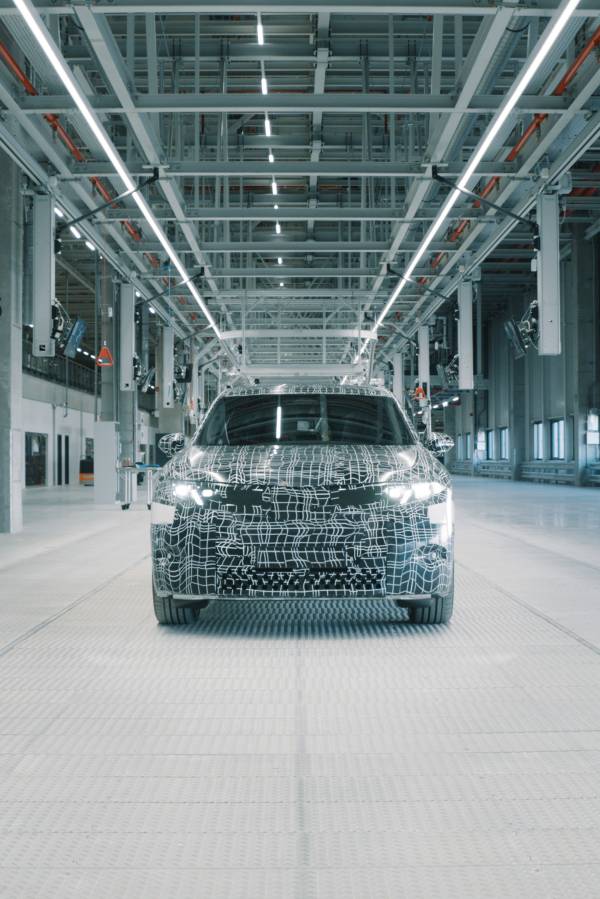
+++ BMW is set to begin testing the new iX3, its first model to feature the Neue Klasse design language, as final-stage prototypes of the SUV have rolled off production lines in Germany. The Audi Q4 E-tron rival spawns from the radical Vision Neue Klasse X concept, which introduced a striking new design language that departed dramatically from the look of BMW’s current line-up while subtly nodding to some of its most important past models. The iX3 will be launched at the end of next year, along with the electric 3 Series saloon, based on the smaller Vision Neue Klasse concept, following in 2026. This is the first time we’ve seen the new iX3 in near-production guise, following its predecessor being axed earlier this year. New pictures from BMW suggest the new car will keep similar proportions and design elements to the concept, although slightly toned down. Although it’s heavily camouflaged, Autointernationaal.nl understands the front end will be very similar to the concept, including the new-look kidney grilles, which take inspiration from the original Neue Klasse saloons and coupés from the 1960s. However, BMW’s official picture also confirms the production car won’t adopt the concept’s sleek side cameras (that would’ve replaced the traditional wing mirrors) and has a more conventional led signature to the Neue Klasse X’s sharp 2-slash design. “The production of the first test vehicles in Debrecen is an important milestone in commissioning the new plant”, said BMW production boss Milan Nedeljković. “With vehicles now approaching series maturity, all logistics and production processes at the Hungarian plant are being tested and constantly optimised under real conditions to ensure a smooth start of series production”. BMW has yet to confirm full specifications for the new iX3, but the Neue Klasse platform will be equipped with 800 Volt electrical hardware. This will allow it to keep pace with the quickest-charging EVs on sale. The platform will also house batteries that are 20% more energy-dense than today’s packs, meaning more range while retaining the same weight. The combustion-engined X3, BMW’s current best seller, will continue to be sold alongside the new iX3. The 4th generation was launched in June with petrol, diesel and plug-in hybrid power. +++
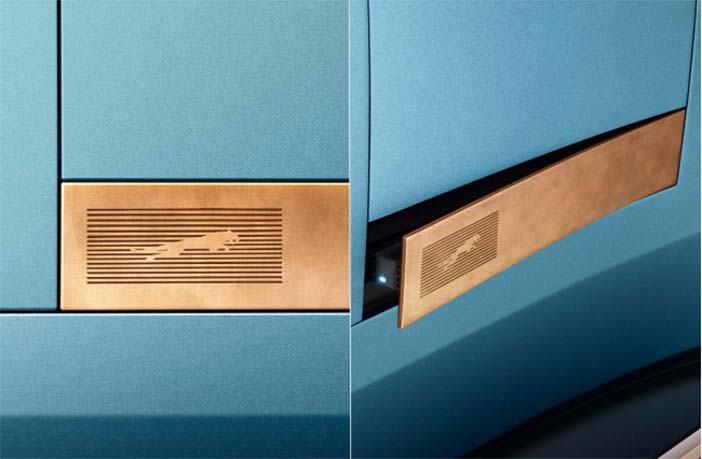
+++ JAGUAR has released another 2 preview images of its upcoming Design Vision Concept, showcasing how the reimagined Leaper logo will be used in its new cars. It appears to conceal a rear-facing camera, which could hint at the use of rear-view cameras rather than traditional mirrors; an element of the brand’s future models exclusively reported by Autointernationaal.nl last year. It follows yesterday’s unexpected release of a teaser image for the concept, confirming Autointernationaal’s report that it will also omit a traditional rear window.
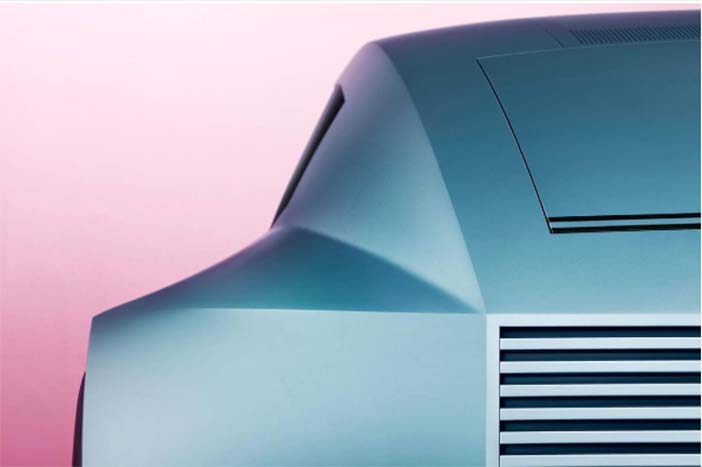
It also showcased the concept’s dramatic proportions, with a remarkably wide rear wheel arch and track, as well as a repeated contrast between smooth curves and hard-edged straight lines. Conventional rear lights can’t be seen: they are either out of view of the preview shot or are concealed by the prominent slats running across the tail. These slats mirror those featured in the new Leaper logo, suggesting the concept could showcase Jaguar’s new branding in large scale. The image was posted to social media accompanied by the text “copy nothing”, reiterating the mantra of JLR creative chief Gerry McGovern, and a phrase that is derived from that of Jaguar founder William Lyons. The unexpected post comes in the wake of the strong reaction to Jaguar’s rebranding, which was detailed in full earlier this month. “We are creating Jaguar for the future, restoring its status as a brand that enriches the lives of our clients and the Jaguar community”, said McGovern. CEO Adrian Mardell has described Jaguar’s rebirth as “a complete reset”, calling its new effort “something spectacular”. The concept will be shown in full on 2 December at Miami Art Week in Florida. It’s set to preview a 4-door electric GT, which will be the first in a 3-car line-up due from 2026. The production car, which recently began road testing, will pack north of 600 hp and have a range of more than 700 km. It will be priced in excess of €120.000, positioning it as a rival for the Porsche Taycan. +++
+++ The JEEP Recon as been spotted testing on public roads for the first time ahead of its launch next year. New images of the prototypes captured in Michigan, the US, reveal that the production car remains faithful to the digital renders previously released by the brand, with bluff, Wrangler-like proportions. However, it’s yet to be seen whether the led-lit grille from the Recon concept will make it to the road, owing to the placement of camouflage on the prototypes. All the Recon prototypes spotted on the road were electric, but it’s possible that the car will also gain a hybrid powertrain shortly after launch, Jeep boss Antonio Filosa previously told. As with the Wrangler, the Recon will be engineered to offer considerable off-road ability and feature removable doors. It will have around 600 hp and a range of 600 km. The Recon will arrive at a similar time to the Wagoneer S, a luxury flagship with a more road-going focus. Both are bespoke EVs based on Jeep parent company Stellantis’s new STLA Large platform. In response to the slowdown in growth of EV sales, Jeep recently launched a petrol-engined version of the Avenger. Fellow Stellantis brand Fiat did the same with the closely related 600 and is said to be developing an ICE powertrain for the currently electric-only 500. Asked whether that slowdown could prompt ICE versions of the Wagoneer S and Recon, Filosa said: “So far, our plan is BEV only”. But he added: “Wagoneer S will stay BEV-only, for sure. But while being faithful to our main strategy of deep electrification, we can think about opportunities on Recon. Let’s see: Recon will be built on a platform that is very versatile”. Filosa said it was unlikely that the Recon would be offered with a pure-petrol engine, hinting that any ICE-equipped model would likely be a hybrid. He added: “We are just studying development on the Recon and just analysing if there are options for the future – but so far it’s BEV”. Filosa reiterated Stellantis’s commitment to its current electrification strategy, with the goal of electric cars accounting for 100% of sales in Europe, 50% in the US and 20% in South America by 2030. “We are very versatile in our platforms, and while many of our competitors are only strong in one continent, we are strong in the rest of the world”, he said, highlighting that Brazil (which is focusing on ethanol) is Jeep’s second largest market behind the US. “To keep our strengths in those regions, we need to invest in other possibilities than electric, and since we have those investments running, we can adopt them immediately for other regions. “But our strategy is going 100% electric in Europe. If the political leaders of Europe decide differently, then we will need to adapt, and we will adapt very fast”. +++
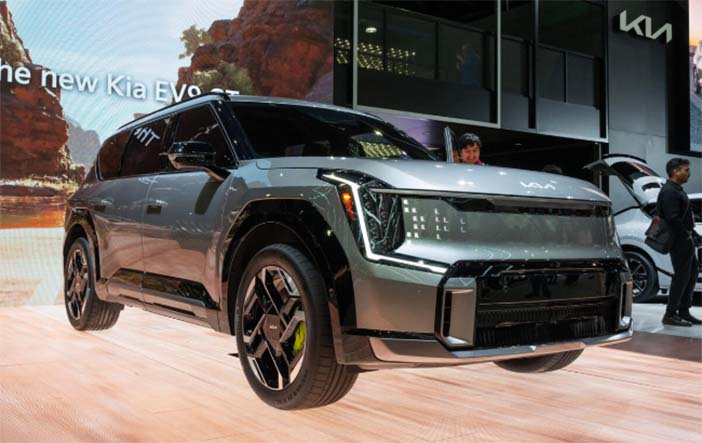
+++ The KIA EV9 GT has been unveiled as one the Europe’s fastest 7-seaters, capable of dispatching 0-100 kph in just 4.5 seconds. The electric SUV packs a dual-motor powertrain, with a 218 hp motor mounted on the front axle and another 367 hp unit at the rear, combining for 510 hp. That’s 125 hp more than the current EV9 range-topper, the GT-Line S. That makes it quicker than the 500 hp Land Rover Defender 130 V8, which hits 100 kph in 5.4 seconds. Indeed, the only 7-seaters faster than the EV9 GT are the Audi SQ7 (taking 4.1 seconds to hit 100 kph) and the Tesla Model X Plaid (2.7 seconds). As well as significant more power, the EV9 GT gets the simulated automatic gearbox and engine sounds from sibling brand Hyundai’s Ioniq 5 N. This can be controlled using paddles mounted on the steering wheel and is intended to add more engagement to the electric driving experience. Kia has also made a number of tweaks to ensure that the SUV (which weighs 2.648 kg in more mild GT-Line form) can corner too. It gets electronic suspension, which adjusts its firmness based on the car’s drive mode, in addition to an electronic limited-slip differential that distributes power to the wheels with the most traction. It also has a special set of 21 inch alloy wheels shod with Continental SportContact tyres with a 285 mm cross-section. Stopping power is said to have been boosted by the fitment of larger front brakes. Kia has yet to announce the range of the EV9 GT, but it’s likely to be significantly less compared with the standard Air variant, which is capable of 562 km between charges. For reference, the existing EV6 GT can do 424 km between charges, compared with 506 km for the softer GT-Line car. The EV9 GT can be recharged from 10-80% in 25 minutes, according to Kia. Inside, it is differentiated from the standard car by a range of neon-green accents, such as on the steering wheel and on the GT-specific sports seats, which are upholstered in Alcantara and imitation leather. The ambient lighting can also be set to the same green tone. The EV9 GT is expected to arrive in Dutch showrooms next summer, priced at about €95.000. The brand has yet to confirm its exact price, however. +++
+++ LOTUS will produce hybrid versions of future models in response to the continued reluctance of luxury car buyers to move to EVs. The switch, confirmed by the brand’s CEO to reporters at recent Guangzhou motor show in China, means the brand is tearing up its current plan to go all-electric by 2028. Lotus will develop ‘Super Hybrid’ technology with ultra-fast plug-in charging along with a turbocharged combustion engine to extend overall range to 1.100 km, Feng Qingfeng said. He didn’t say which models would receive the drivetrain, but Lotus could upgrade the current Eletre and Emeya with the technology, as well as adding it to the upcoming Porsche Macan-rivalling SUV. “At Lotus, we have always chosen the best power technology available, whether it’s pure gasoline, pure electric, hybrid or range-extended EV”, Feng told in an interview. Plug-in hybrids (PHEVs) and extended-range EVs (EREVs) have soared in popularity in China in recent months, forcing some car makers to refocus model development to cover demand. Chinese premium EV brand Zeekr (which is, like Lotus, owned by Geely) recently announced that it will start offering PHEVs in the future. The luxury segment in which Lotus competes has been stubbornly resistant to moving to EVs, with customers preferring to stick to ICE models. The benefits of going electric are less pronounced at the top end, believes Feng. “Luxury car engines are already very powerful, and the driving experience is quite similar, with 8-cylinder and 12-cylinder engines performing well”, he told. European brands are struggling to sell their EVs in China, with Porsche particularly hard hit. “We cannot expect significant recovery in the upcoming years when it comes to the premium and luxury BEV segment in China for European manufacturers”, Porsche CFO Lutz Meschke said on the company’s third-quarter earnings call. Lotus originally rejected versions of PHEV drivetrains due to their compromises compared with pure-electric systems in terms of driveability, Feng said. PHEVs require plugging in daily to fully utilise the EV element, while EREVs increase the electric useability but can become sluggish when the battery is depleted and the small ICE is called on to power the electric motor. Lotus will overcome the sluggishness by ensuring the ICE can charge the battery at a much faster rate than in other EREVs, ensuring the car won’t have to rely on ICE power alone, Feng promised. Meanwhile, the cars will use a 900 Volt electrical architecture to “flash-charge” the battery when stationary at a rate faster even then than battery-swapping, he added. Battery swapping is employed by Chinese EV maker Nio, a rival at the lower end of Lotus’s range. Feng didn’t go into detail about which ICE Lotus will use for its Luyao Super Hybrid system, but the Emira sports car currently uses a turbo-4 supplied by Mercedes-AMG, and Geely can call on its new engine company Horse, formed in partnership with Renault. Lotus would also benefit from lower tariffs into the European Union, which exempts PHEVs from the additional duties recently imposed on Chinese-built EVs. Lotus’s ‘lifestyle’ EVs are all built in China. Lotus delivered 8.631 vehicles in the first 10 months of 2024, with Europe accounting for 35% of sales and China 25%. The United Kingdom was a key market, with sales of 1.239 through November. The biggest seller was the Eletre, at 799, followed by the Emira, at 440. +++
+++ NORTHVOLT filed for bankruptcy protection in the US after a desperate bid to secure rescue funding fell short, leaving the struggling battery maker with just one week of cash in its accounts. The Swedish electric vehicle supplier will seek to restructure under Chapter 11 of the bankruptcy code. Northvolt had about $30 million in available cash and $5.84 billion in debt. The company decided to take the US legal route to provide a well-known framework for existing investors and third parties that have shown interest in providing financing. +++
+++ VOLKSWAGEN will launch updated versions of its ID models from 2026 as part of a significant upgrade to the MEB architecture on which they are based. R&D boss Kai Grünitz confirmed the developments at the LA motor show, along with the launch of a new ID.2 SUV concept car at the 2025 Munich motor show, a 2025 revamp for the Polo, a slimming down of the brand’s combustion engine range when EU7 emissions regulations kick in next year, and the role Rivian would play in the development of future VWs. Grünitz said the “huge improvements” from 2026 to the current ID range would include an all-new look that is “going back to where we came from”, as well as improvements in battery costs and overall performance and new functionality. The look of the new ID models is set to be inspired by the ID 2all concept car, which presents design boss Andreas Mindt’s vision for the future of VW designs that is altogether friendlier and inspired by the likes of great Golf models from the past. Grünitz said this look would be more akin “to what Volkswagen stands for” from a design perspective, and along with the production version of the ID.2all itself will be a moment where there’s a big visual leap for VW as part of company boss Thomas Schafer’s desire to make VW a “loved brand” again. Grünitz confirmed that development of the production version of the ID.2all concept car remained on track for a late 2025/early 2026 launch. He said that it would be the “starting point” for this new era for VW, “because customers will see there has been a change, and a much bigger change than expected”. An SUV variant of the ID.2 will also be previewed at the Munich motor show in September 2025, Grünitz confirmed, as the second VW model to be built off the MEB Entry architecture. A GTI version of the ID.2 is also planned and has been previewed by a concept car, and Grünitz said that it was “easy” to add performance to electric cars but less so to add “DNA” with the likes of GTI of what has made Golf GTIs great in the past. However, Grünitz said the firm had “ideas that you’ll be surprised” by when the first electric GTI launches in 2026. Development of the SSP (Scalable Systems Platform) is also continuing, said Grünitz, this electric car base is considered the most significant long-term architecture for the VW Group in being able to underpin everything from city cars to supercars. The joint venture launched last week with Rivian was significant for SSP, as VW would tap into Rivian’s experience in electric architectures which Grünitz said were particularly advanced and “best in class” for over the air software updates. “They are much leaner and faster than traditional OEMs. They’re closer to what we see in China. We combine that with our knowledge of building cars to high quality standards, so I think this is a good combination”. Upcoming EU7 emissions would result in a “line-up that’s slimmer than today”, said Grünitz, although it would also bring with it more mild hybrid options. He didn’t confirm which models would disappear but did say the Polo wouldn’t be one of them, and it would receive an extensive update at the same time. More broadly, Grünitz said investing in parallel architectures like the MQB for combustion engine models and MEB for electric ones was “a huge effort”, but there was no end date for the MQB architecture as electric car uptake had not been as predicted. Indeed, Grünitz said that it was possible the firm could integrate electric powertrains into it again as part of the options on the table for its development. VW’s sales and marketing boss Martin Sander said that ultimately “it was better for customers” to have dedicated architectures for the different technologies but as the firm looked to “the next generation, we have to find a very smart way of keeping individual features, but also using components across the platforms in intelligent way”. +++