
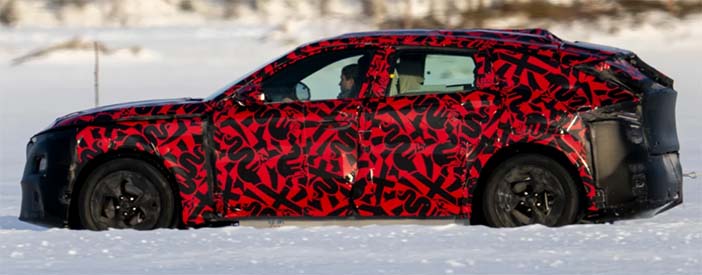
+++ ALFA ROMEO is putting the finishing touches on the next-generation Stelvio, having started to phase out the current-generation SUV and its saloon sibling, the Giulia. Images of a Stelvio prototype testing in northern Sweden reveal that it’s a significantly longer car than the current one and appears to have a more rakish roofline. Up front, it takes clear inspiration from the smaller Alfa Romeo Junior but gets a different look that splits the headlights and daytime running units into 2 sections, with the latter set just below the lip of the bonnet. At the rear is a set of arrow-shaped brake lights that, as previously revealed in an official teaser image, outline the tailgate in a shield-like design. There’s also a duck-tail-style lip spoiler that neatly separates the car’s glasshouse from its rear fascia. Completing the look is a new 3-spoke iteration of Alfa’s historic Teledial wheel design. The new Stelvio will be underpinned by Alfa parent company Stellantis’s new STLA Large platform and will offer the choice of hybrid and electric powertrains. The platform can support battery packs with capacities of up to 118 kWh (claimed to yield ranges of up to 800 km) as well as “extreme” powertrains with more shove than the Dodge Challenger Hellcat’s supercharged V8. For reference, the first STLA Large-based car, the Dodge Charger Daytona, gets a 93.9 kWh nickel-cobalt-aluminum battery that allows it to drive up to 500 km between charges. The range-topping Scat Pack model also gets dual motors with silicon-carbide inverters that combine to put out 680 hp, allowing it to do the 0-100 kph sprint in 3.3 seconds. However, former Alfa Romeo boss Jean-Philippe Imparato previously said the hot Quadrifoglio version of the new Stelvio-twinned Giulia would pack “around 1.000 hp”. It’s likely that Alfa Romeo will also offer a petrol-powered Quadrifoglio, retaining the current car’s 2.9-litre twin-turbo V6. Imprato confirmed in 2023 that the 520 hp lump would survive the incoming Euro 7 emissions rules, stating: “I would like something compliant with the new regulation to be interesting”. The news comes as Alfa Romeo begins to taper off sales of the existing Giulia and Stelvio. In a statement, it confirmed that Giulia Quadrifoglio order books will close at the end of March, with the Stelvio Quadrifoglio following at the end of April. The 2.0-litre petrol versions of both cars will come off sale at the end of May. The Giulia and Stelvio will remain available in Europe in diesel form therafter but, as it is no longer sold with this engine in the Netherlands, it will mark the end of both car’s life here. The new Stelvio and Giulia will be instrumental in Alfa’s success going forward. Its sales have declined significantly in the recent years. +++
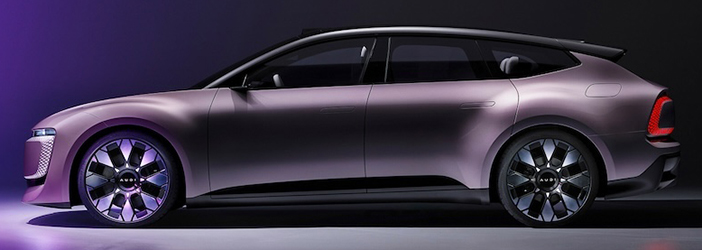
+++ Audi will launch its new AUDI brand for Chinese-market EVs next month with a striking, tech-focused estate aimed at stabilising the company’s footing in its most important market. Evolved from the bold AUDI E concept shown last year, the new model will be unwrapped at the Shanghai motor show on 25 April as the first of a line of bespoke EVs designed for younger buyers in China. While similar in size and proportion to the new Audi A5 that was recently launched in Europe, the AUDI model will be based on a new 800V architecture developed in partnership with joint venture partner SAIC (which owns MG) and completely unrelated to the other models in Audi’s global line-up. Audi bosses suggest the design will be little changed from 2024’s show car and production models for the AUDI brand will indeed forego the German marque’s historic four-ring logo in a bid to mark them out as differently positioned products. The AUDI brand is described as having been developed “in China for China” and will play an important role in catering to explosive demand for EVs in the world’s biggest car market, which is currently far outpacing most other regions in which Audi operates. There are no plans to sell AUDI cars outside China. Planned to go into production later this year, the E is the first of 3 new models, the others being a saloon and an SUV set for introduction in China in 2026 and 2027 atop the same architecture. The expansion of the joint operations of Audi and SAIC aims to harness the former’s reputation for design and engineering with the latter’s speed-to-market capabilities and local expertise. Significantly, the first AUDI model was developed in just 18 months; less than half the time of traditional Audi models. Audi CEO Gernot Döllner previously emphasised that the Audi-SAIC partnership provides a foundation for a “new generation of advanced, intelligent vehicles, which will be exclusive to China. The joint platform allows us to address a promising yet demanding segment with state-of-the-art connected vehicles”, he said. At 4.870 mm long, with a 2.950 mm wheelbase, 1.990 mm wide and 1.460 mm tall, the E is claimed to offer a roomier interior than the similarly sized A5. The styling of the E combines flamboyant LED light designs with clean and largely unadorned surfacing, to provide it with a more monolithic appearance than more recent models from the main Audi brand. Based on the new Advanced Digitalised Platform developed by Audi and SAIC, it features an 800 Volt electrical architecture and a dual-motor drivetrain that delivers a combined 762 hp and up to 800 Nm of torque. With Quattro four-wheel drive and torque vectoring capability, AUDI claims a 0-100 kph time of 3.6 seconds. A 100 kWh battery also provides the E with a range of more than 525 km . Details of the charging rate are yet to be revealed, but the E is claimed to offer a 300 km replenishment of energy stores in 10 minutes on a high-powered DC charger. Other features being touted for the upcoming production version of the E are four-wheel steering and air suspension. +++
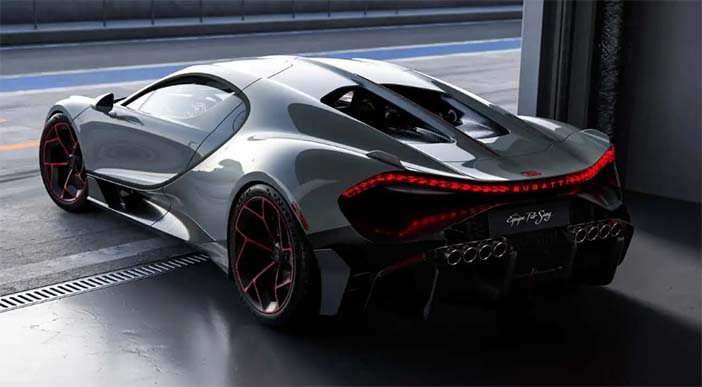
+++ Feeling disappointed by the BUGATTI TOURBILLON ? We don’t blame you. A hybrid hypercar with 3 electric motors and a naturally aspirated V16 making 1.800 combined horsepower just isn’t that special these days. If only there was some way to make this car stand out a bit more. Disillusioned one-percenters, Bugatti is listening to your cries for extravagance and has responded in the best way. Behold the Tourbillon Équipe Pur Sang, which roughly translates to Tourbillon Team Thoroughbred. It’s a new option package that, among other things, replaces the pair of thin, irregular exhaust outlets with no less than 8 round pipes: 4 to each side. They’re so cool that you may not notice other changes in the Équipe Pur Sang package. For instance, those quad-quad exhaust finishers sit in between a new deployable wing and a special rear diffuser, both designed to enhance downforce and efficiency. At the front there’s a new splitter down low. And a new set of directional wheels rest at each corner. They aren’t just for looks, either. Bugatti claims the thin-spoke design funnels more air into the rear radiator, increasing cooling effectiveness by 8 percent. On the inside, the Tourbillon Équipe Pur Sang gets special embroidery on the seat headrests and dash. There’s lots of carbon fiber in there, and the existing Performance Seat option is included. If you still crave more customization, Bugatti offers 23 exterior colours, 20 leather options, 10 Alcantara choices and 7 carpet colours to choose from. If that’s still not enough, you should probably just start your own car company. “With each new era of Bugatti, we seek to honour our heritage while pushing the boundaries of what’s possible”, said Hendrick Malinowski, Bugatti’s managing director. “The Tourbillon already represents an unprecedented fusion of naturally aspirated power and electrification: a hyper sports car conceived for eternity. With the Équipe Pur Sang option, we elevate its appearance towards the track, enabling customers to celebrate the pure racing soul that has defined Bugatti for over a century”. Bugatti doesn’t mention a price for the Équipe Pur Sang package, though considering the Tourbillon already costs $4 million to start, I can’t imagine it’ll be cheap. +++
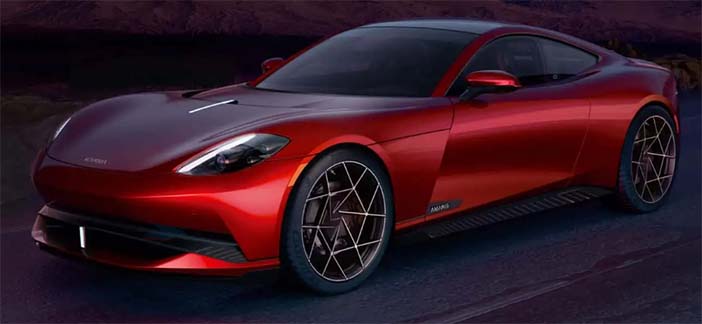
+++ KARMA AUTOMOTIVE has had several ups and downs over its decade-long history, but it continues to develop new products. Last week, it introduced the Amaris, a 2-door extended-range electric coupe wearing the latest evolution of the brand’s Comet Line design language. The Amaris rides on an evolution of the all-aluminum space frame architecture from the Revero, with a carbon fiber and aluminium body. The Amaris features 22-inch forged aluminium wheels, a clamshell hood, and a pass-through rear spoiler, wearing a production-intent design. It also has side-exit tailpipes for added styling, even though the exhaust connects to a four-cylinder range extender designed to recharge the battery. Karma says the Amaris will have a potent powertrain with a gas generator. The automaker claims the car will hit 100 kilometres per hour from a standstill in less than 3.5 seconds and can hit an estimated top speed of 370 kph; properly reinforcing its sleek, sporty appearance. The automaker also revealed that the Gyesera, first shown last year, will now arrive as a range-extended EV instead of a pure battery-electric vehicle. Karma decided to make it a hybrid “in response to changes in the near-term demand for EVs”. Many other automakers have recently re-evaluated their EV plans and are making similar changes to meet consumer demand. It’s also delaying the launch of the 1.000 horsepower Kaveya EV until 2027. Company president Marques McCammon said Karma wants to build a line-up of vehicles “that will deliver exceptional EV torque and performance paired with worry-free cruising range”. Karma says it will begin producing the Amaris in the 4th quarter of 2026. It’ll announce pricing closer to the car’s launch date. +++
+++ LAMBORGHINI ’s record sales year raked in record revenues, too. The Italian supercar maker revealed it earned €3.09 billion in 2024, breaking the 3-billion mark for the first time. Sales for the brand increased 5.7 percent last year to 10.687, with the majority being the Urus, even though sales for the model dipped. The automaker saw its revenue rise 16.2 percent over 2023, with operating income jumping 15.5 percent to €835 million. Over half of the vehicles Lamborghini sold last year, 5.662, were the Urus. The Huracán accounted for 3.609 sales, while the company sold 1.406 Revuelto supercars. It also sold 10 Aventadors as it ramped-up production for its hybrid replacement. Lamborghini earned its record revenue as it revamped its entire line-up with hybrid powertrains. The Italian carmaker revealed the V12-powered Revuelto in 2023, followed by the hybrid Urus that’s now sold out through 2026. The Huracán’s replacement, the twin-turbo V8-powered Temerario, debuted last August. According to CEO Stephan Winkelmann, the company “recorded growth” in its 3 major regions. However, he acknowledged the US’s proposed tariffs could “risk” sales volumes this year. The company is preparing to add a 4th model to its line-up in the form of its first electric vehicle. It previewed the new model with the Lanzador concept, and the CEO expects it will sell as many EVs as it does Temerarios when it arrives in 2029, which could bolster its sales even more if the company can convince people to buy it over other high-end EVs. +++
+++ MERCEDES ’ Chief Technology Officer has announced the A-Class line-up will not be renewed after the current-generation models die. Markus Schäfer reaffirmed the decision to scale back the compact car offerings from 7 to 4 models. The reasoning behind the decision has to do with cutting costs by focusing on models that have a broader appeal. Europeans may love their hatchbacks, but that’s not enough to survive in these challenging times for the automotive industry. The A-Class hatchback is going away, and so is the sedan. Consequently, the new CLA will become the brand’s entry-level car. “Reducing complexity is a key task for us, which is why decreasing the compact family from 7 to 4 models was necessary in this segment. We need models that will work around the world, including China and the U.S. I know the hatchback is a favourite in Europe, but it was not part of the plan and we had to make choices, including difficult ones”. Another Mercedes model going the way of the dodo is the B-Class, the smallest MPV in the line-up. That leaves the CLA, CLA Shooting Brake, GLA and the GLB at the bottom of the portfolio. A smaller G-Class is also coming, but Schäfer told it won’t be mechanically related to those 4 cars. Rather than sitting on the MMA platform, it will adopt a different architecture for better off-road capabilities so that it’ll be worthy of the “G” name. Mercedes recently announced plans to abandon the separate EQ line-up, which means that the next generations of the fully electric EQA and EQB will be integrated into the GLA and GLB families. I’m also expecting to see electric variants of the upcoming CLA Shooting Brake. All 4 models will be available as mild-hybrids based around a turbocharged 1.5-liter gasoline engine. Many would argue that Mercedes shouldn’t have chased volume with these lower-tier products in the first place. That’s debatable, but we are certainly going to miss the A35 and A45 hot hatches. I do agree there’s no place for 2 sedans in the same segment, so killing the 4-door A-Class to let the fancier CLA shine does make sense. As for the B-Class, few will miss it. +++
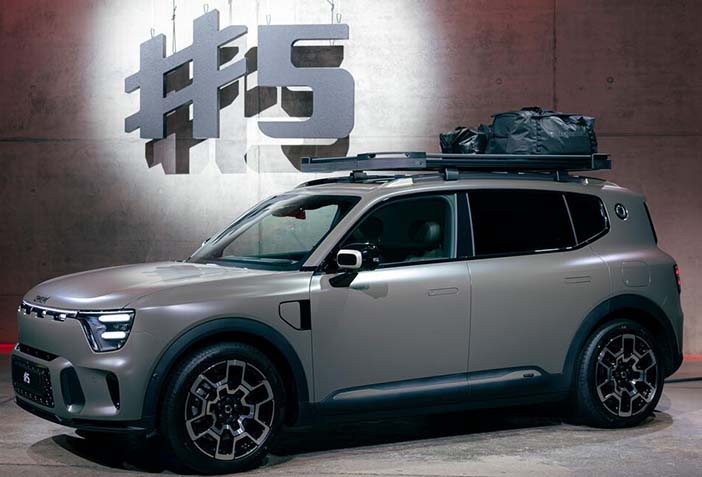
+++ Deliveries of the SMART #5 , the brand’s biggest car yet, will begin in October. An EV that will attempt to win over buyers of large SUVs with its hardy character, it will be underpinned by an 800 Volt electrical architecture and major on in-car technology. It sits on the same Geely SEA2 platform as the smaller #1 and #3 crossovers. The #5 measures 4.705 mm long, 1.920 mm wide and 1.705 mm tall, which makes it a similar size to the new Peugeot 5008, although it’s not a 7-seater. While retaining a lot of Smart’s modern design cues, such as concealed door handles and rounded edges, it differs from the rest of the line-up by swapping angular headlights and a singular light bar for a boxier, more rugged look. One of the big changes comes inside, where dual 13 inch OLED infotainment touchscreens dominate the dashboard. It uses an evolved version of Smart’s UX system and, like its siblings, it gets an animal avatar, this time a lion. Meanwhile, the driver has a 10.3 inch digital instrument cluster, an increase on the 9.2 inch equivalent in its sibling cars. Power figures haven’t been released yet, but details published by the Chinese government in June suggest that it will top out with a 645 hp dual-motor model using the Brabus nameplate. 5 trim levels will be available: Pro, Pro+, Pulse, Summit Edition and Premium. Battery sizes, depending on trim level, range from 76 kWh to 100 kWh, with as many as 585 km offered in its most efficient form. Top-end recharge speeds of 400 kW yield a 10-80% fill in 18 minutes. The Summit Edition is notable for bringing a variety of off-roading addenda inspired by the #5 concept, with 4-wheel drive, a roof rack and a ladder mounted on the right-hand side of its body. It also gets five off-road driving modes, including settings for snow and mud. Prices are expected to start at around €48.300 in the Netherlands. +++
+++ VOLKSWAGEN will introduce a full-hybrid powertrain to its line-up for the first time with the second-generation T-Roc, which will be unveiled at the Munich motor show in September. The move marks a shift in the German car maker’s electrification strategy as it responds to slower than expected electric car sales. The new set-up is similar to that used by the Toyota Prius, combining an internal combustion engine with an electric motor and battery. The ICE unit is expected to be a turbocharged 1.5-litre 4-cylinder petrol engine, which will drive the wheels alongside the electric motor. The petrol engine will also function as a generator to recharge the battery pack to enable limited electric-only driving. Various outputs are planned, ranging from 204 hp to 272 hp, with peak torque of of 350 Nm to 400 Nm, a source has confirmed. The technology differs from Volkswagen’s current hybrid systems, which either need to be charged via an external source (plug-in hybrid) or provide only an electric boost during normal running and are unable to operate in pure-electric mode (mild hybrid). The new hybrid drivetrain will not be exclusive to the T-Roc. Both the Volkswagen Golf and Skoda Octavia are set to receive it and additional models could follow. The MQB Evo platform, which underpins a wide range of Volkswagen Group models including the new T-Roc, allows for further expansion of the company’s new hybrid drivetrain across models such as the Tiguan, Passat and Tayron, as well as Audi’s A3, Seat / Cupra’s Leon and Formentor and Skoda’s Scala, Kodiaq and Superb, Autointernationaal.nl has been told. Models with the new hybrid system will be badged as hybrid electric vehicles (HEVs), a Volkswagen spokesperson confirmed. Despite the shift towards hybrid technology, diesel engines will remain available in key Volkswagen models for the foreseeable future. However, the long-term future of diesel within the company’s line-up is expected to depend on customer demand and the success of new HEV models. Volkswagen has committed to investing €60 billion by 2028 into ICE development, including the new HEV drivetrain. The first HEV model, the new T-Roc, will be launched in the Netherlands next year and will also be sold with petrol and diesel powertrains. The new version of the popular cross-over will feature a more prominent front grille than the car it replaces as well as slimmer, more angular headlights, bringing it into line with the latest Passat, Tiguan and Golf. +++