
+++ The MIIT in CHINA intends to require physical control mechanisms for functions such as turning turn signals on/off, raising/lowering windows, and activating advanced driving assistance system. This new requirement is expected to be mandatory for only newly manufactured vehicles starting July 1, 2027. In recent years, a theme among Chinese new energy vehicles is minimalistic cockpit design, with one of its characteristics being minimal presence of physical control buttons. Instead, a large central control screen houses most of the vehicle functions, and sometimes paired with co-pilot entertainment screen. This ubiquitous design was described by Geely’s vice-president as the “Chinese automotive industry is plagued by a trend of blindly following trends”.As a revision to the existing national standard GB4094—2016 “Marking of Automotive Control Components, Indicators, and Signaling Devices”, the update adds new types and technical requirements for physical control components, ensuring that key control components are accessible, usable, and largely blind-operable during driving, without overly relying on visual input and reduce distractions caused by display screens. This revision started in 2023, involving major automotive manufacturers and testing institutions, including China Automotive Technology and Research Center, Geely, FAW-Volkswagen, BYD and Great Wall Motor. A draft for public comment has been completed and will be released soon, which specifically includes the following functions: Lighting (Turn signals, hazard warning lights (double flashers), horn), Gear shifting (P/R/N/D; screen-only shifting is prohibited), Driver assistance (Activation switch for the advanced driver assistance system), Safety/emergency (Windshield wipers, defroster/defogger, power windows, Child/Accident Emergency Call System) and electric vehicle power off switch. Other detailed requirements for physical controls were also specified such as dimensions (effective operating area ≥ 10 mm x 10 mm), usability (fixed position, blind operation, haptic/auditory feedback) and reliability (basic functions remain available when the vehicle system crashes/power is lost). +++
+++ In EUROPE , Dacia sales were down 35 percent to 16.513 units in January, representing nearly half of the total volume deficit for the month versus January 2025. Meanwhile, China’s BYD, Jaecoo and Omoda all had triple-digit sales percentage increases. The ramp-up of the Grande Panda small car helped Fiat boost sales 24 percent in January. Other models on the Stellantis Smart Car platform, the Citroën C3 Aircross and Opel Frontera, also had strong sales. European auto sales fell by 3.6 percent in January compared with the same month in 2025, with (apart from Dacia) sharp decreases at Volkswagen brand. Hyundai and Kia were also contributing to the slowdown. +++
+++ HEMI fans lamented the legendary high-power engine’s demise when then-Stellantis CEO Carlos Tavares decided to phase it out on several models, including the Ram 1500 pickup. Exit Tavares. Enter Antonio Filosa, who is counting on the Hemi to have a role in winning back U.S. customers and turning around years of lagging sales. Reviving the Hemi is part of ensuring the “customer is back at the center of our business strategy”, according to Filosa. Filosa is unwinding Tavares’ plan to ramp up electrification and preparing a broader product offensive to reverse Stellantis’ sales slump. This year alone, he aims for 25 percent growth in U.S. retail sales. Filosa said the company is looking to sell 100.000 Ram 1500 pickups with the 5.7-liter Hemi in 2026, an option that was dropped from the line-up for the 2025 model year in favour of the inline-6 Hurricane engine family. +++
+++ LEXUS coupes have been quietly stepping back for some time. The RC and RC F wrapped up production in late 2025, and the LC 500 is set to finish after the 2026 model year, with production likely ending by August 2026. That shift leaves Lexus looking like an SUV brand at first glance. Grand tourers were always a niche, and the LC’s sales numbers showed it. The LC was more of a statement piece than a volume seller, an elegant V8 flagship that stuck around while the rest of the line-up moved toward hybrids and EVs. So it’s a bit of a surprise to hear new reports from Japan hinting that the LC name might not be gone for long. The word is that Lexus is working on a single coupe to take over for both the RC and LC. Instead of two separate 2-doors, there could be one flagship coupe covering the whole segment. Japanese outlet Best Car reports that Lexus is planning a new coupe for 2027, possibly built on the next-generation GR Supra platform. The idea is to mix the LC’s size and presence with the RC’s practicality, ending up with a bigger 2+2 grand tourer instead of a lightweight sports car. Early estimates put the size close to the current LC. That points to a premium GT focus. Under the hood, the talk is about a 3.5-liter V6 hybrid, with a full electric version possibly coming later as Lexus pushes further into electrification. If the price estimates are accurate, it would start at around 15 million yen; about where the LC is now, but far from the RC. It’s interesting how Lexus will incorporate the RC’s zippiness into the supposed upcoming grand tourer. Of course, none of this is official yet, and reports like these are best seen as informed speculation. Still, the direction aligns with what Lexus has been doing lately: fewer niche models and a greater focus on consolidated products. There’s no getting around it: if the V8 doesn’t come back, the LC’s character changes. The 5.0-liter naturally aspirated engine was rare in today’s luxury cars and was really the heart of the experience. That said, a V6 hybrid is probably the realistic middle ground. It keeps combustion alive, adds usable torque, and prevents the car from becoming a full EV too soon. For enthusiasts who still want sound and character, that compromise feels easier to accept than going fully electric overnight. This approach also fits with where Lexus is headed. The brand is already working on a fully electric halo model, previewed by the all-electric LFA Concept shown with Toyota’s latest performance cars. A hybrid LC-style coupe could slot just below that flagship, bridging the gap between the old Lexus and what’s next. +++
+++ The MAEXTRO S800 new energy sedan from Huawei and JAC remained the title of the bestselling luxury saloon in China as of January 2026. It outsold the BMW 7 Series and the Mercedes-Benz Maybach S-Class combined. The Maextro S800 has been dominating the luxury sedan segment with a price above 70.000 yuan since its deliveries began in August 2025. This car costs between 708.000 and 1.018.000 yuan (102,600 – 147.520 dollar). In December 2025, the S800 set a sales record of 4.376 units, easily outselling its closest rivals from legacy brands.
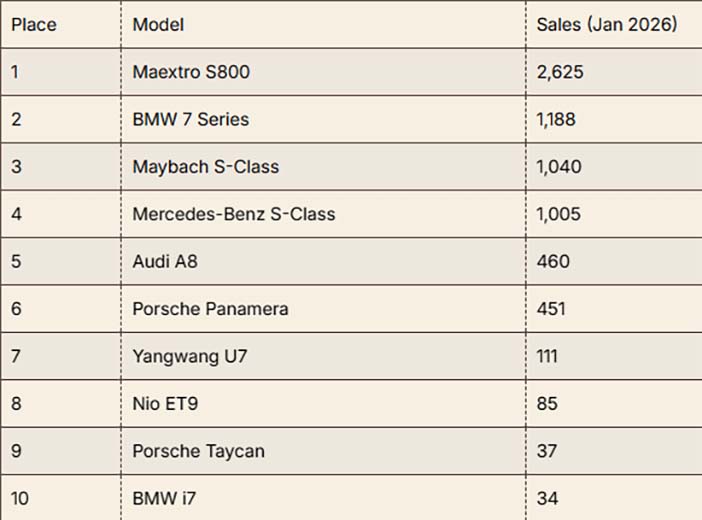
In January 2026, Maextro delivered 2.625 units of the S800 sedan. Despite a sharp decline of 38.6% month-over-month, it took the first spot in the segment. The runner-up is the BMW 7 Series (the i7 not included) with 1.188 units delivered. The Mercedes S-Class took third place with 1.040 units (Maybach included). It means the Maextro S800 sold more cars than its 2 closest rivals combined. The cumulative sales volume of the Maextro S800 reached 14.078 units. This vehicle has the highest sales in Shenzhen, Guangzhou, Shanghai and Beijing. Previously, Huawei Automotive BU executive Richard Yu shared that the Maextro S800 would become the top-selling car in the million-yuan price range.
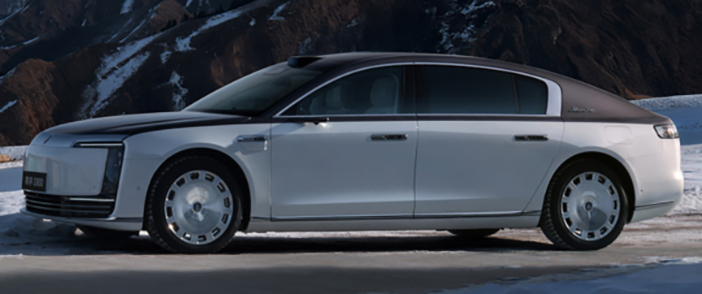
The Maextro S800 is being sold in China through Huawei’s HIMA (Harmony Intelligent Mobility Alliance) stores, which also sell Aito, Stelato, Luxeed and Saic (Shangjie) vehicles. It is one of the core reasons for this model’s impressive performance. The Maextro S800 is a large sedan with dimensions of 5.480 x 2.000 x 1.536 mm with a wheelbase of 3.370 mm. For clarity, it is 89 mm longer than the new BMW 7 Series (G70).
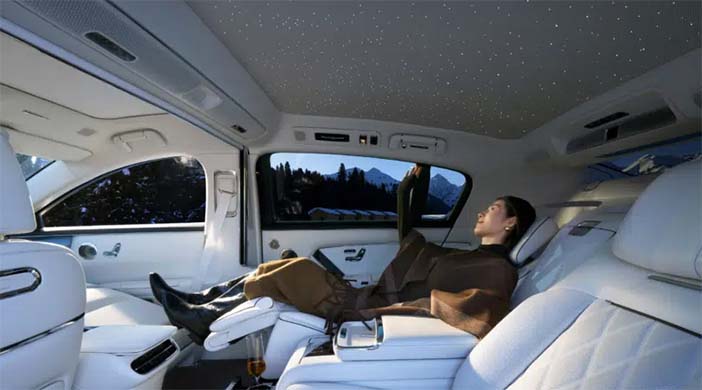
The S800’s cabin adopts a 15.6-inch touchscreen complemented by an even larger 16-inch front passenger monitor. The rear passenger windows of the Maextro S800 could be dimmed with a swipe of a hand. The all-electric variant of the Maextro S800 offers a dual-motor setup with 530 hp power and a 95 kWh battery. It has a range of 550 km. There is also an EREV variant available with 2 powertrain options: the dual-motor for 530 hp and the tri-motor for 860 hp. It also has a 1.5-liter generator for 156 hp) and a 65 kWh battery for 365 – 400 km of electric range.
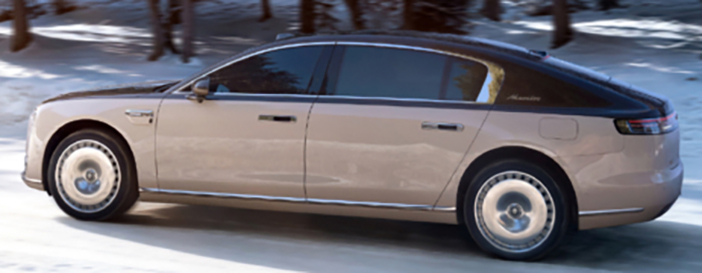
The Chinese Ministry of Industry and Information Technology (MIIT) has recently revealed specs of the updated Maextro S800 during the domestic homologation process. It will enter China shortly with an increased ICE range-extender power output. +++
+++ NISSAN welcomes Chinese automakers’ push into Latin America and other countries, according to the company’s top executive in the region, who says the competition will only make the industry stronger and benefit the car-buying public. “Competition is not a bad thing”, Christian Meunier, Nissan’s chairman for the Americas, told reporters in Sao Paulo. “Our duty is to provide a product and a service and an experience for the customer which is better than the Chinese. And if we do that, we’ll be fine”. Chinese electric vehicle makers are pushing deeper across Latin America, including Brazil and Mexico, using aggressive pricing to offload surplus production in China. The sudden influx has led the governments in those 2 countries, which are the largest car markets in the region, to hike tariffs to blunt the impact from the surge in Chinese imports. That’s prompted some of China’s carmakers to start production of vehicles locally to build on their market share gains, but even those efforts have faced hurdles due to pressure from more established rivals. While Meunier said Chinese brands’ incursion abroad has been supported by subsidies from the Chinese government, they often lack dealer and servicing networks critical for long-term gains and staying power. “Some are successful, some not so successful”, he said. “I don’t know how many of them will survive”. Nissan has no plans to form partnerships with Chinese companies in the region, unlike Renault’s tie-up with China’s Zhejiang Geely Holding Group in Brazil and Stellantis’ Brazilian production deal with Zhejiang Leapmotor Technologies. “No, we don’t have any intention here”, he said. The Japanese carmaker’s factory in Brazil, which received 2.8 billion reais ($575 million) in investments in 2023, currently manufactures engines as well as its Kait compact crossover and Kicks subcompact models. +++
+++ Once struggling with shrinking sales and an aging lineup, RENAULT KOREA MOTORS is now re-emerging as one of the most resilient foreign carmakers in South Korea. Not by retreating, but by upgrading its role within the global group. At a time when global supply chains remain volatile, and Korea’s position as an export base is under pressure, Renault Group is doing something few rivals have: turning its Korean unit into a development and production hub for next-generation vehicles. The shift is part of Renault’s “International Game Plan 2027”, which aims to launch 8 new models from 5 global hubs (Korea, Latin America, Turkey, India and Morocco), reducing reliance on Europe, where growth is structurally limited and regulatory costs are rising. Kim Pil-su, a car engineering professor at Daelim University, said the diversification reflects pressures in Renault’s home market. “Renault’s decision to diversify its revenue base comes after the structural constraints of its home market, Europe, where growth is limited and regulatory costs such as stringent CO2 emissions mandates are rising”, he said. “These pressures have prompted the carmaker to enhance profitability by focusing on more rapidly growing regions”. Renault Korea’s rebound began with the “Aurora Project”, launched after a sales slowdown between 2022 and 2024. A long gap in new models (especially electrified vehicles) had left the company exposed as Korean consumers rapidly embraced hybrids and EVs.
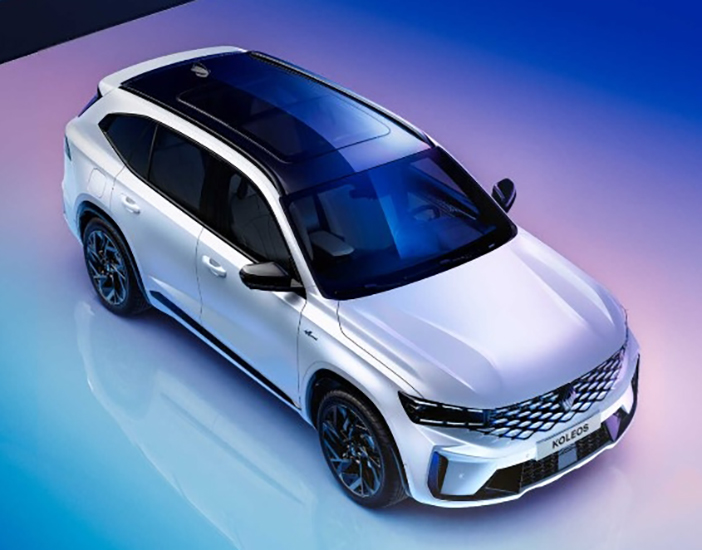
The turnaround vehicle was the Grand Koleos, a midsize SUV launched in September 2024 as the effective successor to the QM6. Rather than betting on full electrification, Renault adopted a hybrid-first strategy. The Grand Koleos offers a Hybrid E-Tech variant, targeting consumers who remain cautious about fully electric vehicles. The strategy proved effective. The Grand Koleos sold 40.877 units domestically last year, with hybrids accounting for 86.5 percent of total sales, placing it in direct competition with Hyundai’s Santa Fe and Kia’s Sorento. Renault Korea’s domestic sales rose 31.3 percent year on year to 52.271 units. Exports, however, fell sharply by 46.7 percent, underscoring a key structural shift. Korea is becoming less of a pure export base and more of a strategic development center within Renault’s global network. Renault selected Korea to develop and produce 3 vehicles for the D- and E-segment, reflecting the country’s strong domestic demand for midsize and large SUVs, engineering expertise and flexible manufacturing capabilities. Lee Ho-geun, an automotive engineering professor at Daeduk University, said a core driver of the Aurora Project was Renault’s continued commitment to investing in its Busan plant for hybrids and EVs despite mounting headwinds in the global automotive industry, including tariff tensions and a broader market slowdown. The Busan plant, which has an annual capacity of 300.000 units, has upgraded 68 facilities to enable full mixed production spanning internal combustion engine vehicles, hybrids and EVs. During the 2025 APEC summit in Gyeongju, North Gyeongsang Province, Renault Korea CEO Nicolas Paris pledged additional facility investment targeting EV production at the Busan base, reinforcing its long-term strategic role. The plant is already demonstrating its capability through contract manufacturing of the Polestar 4, signalling its readiness for next-generation production. Crucially, Renault Technology Korea (the on-site R&D center) enables integrated vehicle development from design to mass production. The recently unveiled Filante was developed with direct input from Korean customers, including acceleration improvements reflecting feedback on the Grand Koleos. Kim said Renault’s approach suggests confidence in decentralizing innovation. “Renault’s approach is likely based on the belief that a region with deep expertise and strong market demand in a particular vehicle segment can, in some cases, outperform headquarters-led R&D”, he said. He added that the group appears increasingly comfortable distributing development authority beyond its European base. This reflects a broader structural shift. Renault believes regional hubs with strong market demand and accumulated expertise can play a leading role in shaping next-generation vehicles, rather than merely executing headquarters-driven plans. The contrast with GM Korea underscores the significance of Renault’s repositioning. GM Korea remains heavily dependent on exports. In 2025, it shipped 447.216 vehicles overseas, accounting for roughly 97 percent of its total sales, while domestic sales fell 39.2 percent to 15.094 units. The structure reflects GM’s broader US-centric strategy, under which high-margin pickups and large SUVs are produced in the US, while overseas plants such as Korea focus primarily on lower-margin compact models for export. By contrast, Renault is embedding hybrid and EV capabilities directly into its Korean operations, aligning the unit with the group’s future mobility roadmap rather than limiting it to legacy export production. The shift gives Renault Korea a stronger local foothold while expanding its strategic relevance within the global organization. Lee Ho-geun said GM could potentially draw lessons from Renault’s approach. “Under its US-centric strategy, GM produces high-margin pickups and large SUVs at home while assigning lower-margin compact models to overseas plants, leaving its Korean unit largely as an export base”, he said. “If GM were to invest in future mobility models such as hybrids in Korea, as Renault has, it could better cushion external risks and support more sustainable growth”. +++
++ Tens of thousands of cars are being exported from China to RUSSIA under grey-market schemes that often circumvent Western and Asian government sanctions and automakers’ commitments to exit the Russian market, according to registration data and interviews with five people involved in the trade. The sanctions and company pledges came in reaction to Russia’s 2022 invasion of Ukraine. But a thriving trade in these vehicles (from Toyota and Mazda to German luxury models) continues partly through informal networks enabling Russian dealers to order them through Chinese intermediaries, the interviews and data from Russian research firm Autostat show. Most are made in China (where many international brands build vehicles with local partners) or are shipped through there after being manufactured elsewhere, according to the data and sources. A growing number are zero-mileage “used” vehicles (new cars registered as sold in China by dealers or traders, who then reclassify them as used and export them). The practice is a symptom of China’s highly subsidized and hypercompetitive car market, allowing automakers and dealers to inflate sales figures, collect subsidies and export surplus vehicles. Traders moving European, Japanese and South Korean brand cars from China to Russia classify new cars as used to eliminate the need to get automaker approval for Russia sales, said Zhang Ai Jun, a former exporter at a Sichuan-based car trader. “This way is to export more easily” she said. Zero-mileage used cars are often heavily discounted in China. But in Russia, they fetch prices similar to never-registered new cars, according to a Russian dealer and vehicle-shipping documents. Dmitry Zazulin, sales director at Moscow dealership Panavto-Zapad, said many customers want to buy and drive cars exclusively from Western brands, such as Mercedes. “However, at present, we can only bring them in through parallel channels”, he said. The dealership doesn’t import zero-mileage used cars, he added.
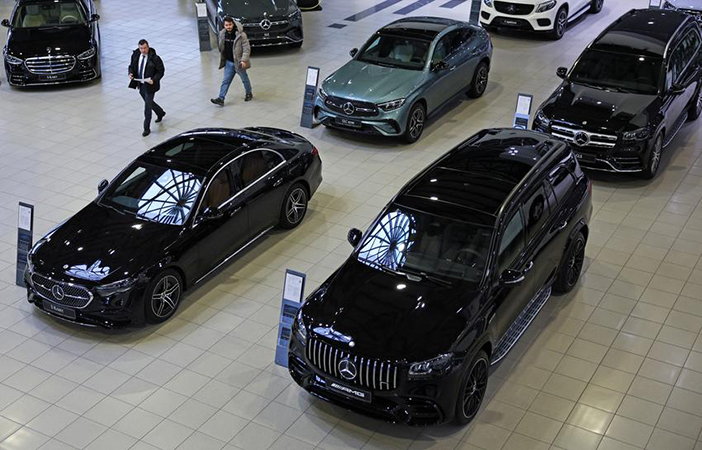
Mercedes-Benz, BMW, Volkswagen and other automakers from regions imposing sanctions said they prohibit sales to Russia and are doing their best to prevent unauthorized exports, including through training and contractual clauses with dealers. But they highlighted the difficulty in investigating potential breaches: Such probes are “time-consuming and complex” and require third parties’ assistance, Mercedes said in a statement. BMW said it has told its China retail operation to “strictly oppose any potential vehicle exports to Russia”, adding that if cars nevertheless enter Russia as grey-market imports, “this happens outside our sphere of influence, and also expressly against our will”. A Russian dealer, who spoke on condition of only being identified by his first name, Vladimir, told his dealership in Vladivostok doesn’t stock restricted foreign cars but buys them one-by-one from Chinese traders to fill customer orders. “There are lots of middlemen: This one knows that one; that one knows another, and that one can reach the dealer”, he said. The sales show up by the thousands in data collected by Autostat. The figures show imports from China represent an increasingly large share of all Western or Japanese brand vehicles registered in Russia, and sustained volumes of brands from South Korea. The number of such vehicles manufactured in China has more than doubled since 2023, the data shows. They now account for nearly half of the nearly 130.000 total vehicles sold in Russia in 2025 that are made by automakers from countries imposing sanctions, according to Autostat. Since Russia invaded Ukraine in early 2022, more than 700.000 vehicles from all such foreign brands have been sold in Russia. The Autostat data showed Russians bought more Toyotas last year than any foreign brand except Chinese ones. But the automaker said in a statement that it stopped sending cars there in 2022: “Toyota does not export new vehicles to Russia”, the company said, without addressing the Autostat figures. Mazda, which also had significant sales, said the same and added that any new Mazdas sold in Russia “have been resold through third parties that are outside of Mazda’s control”. Sebastiaan Bennink, a sanctions expert at European law firm Bennink Dunin-Wasowicz, said restricted products still often trickle into Russia even when industry players do their best to block them. There are so many ways to skirt sanctions it’s “almost impossible to prevent certain cars from ending up in Russia”, Bennink said. While the Autostat statistics show China is the main avenue, Reuters couldn’t determine all the pathways by which vehicles reach Russia. Germany’s economy ministry said customs authorities regularly investigate sanctions violations and work with counterparts in other EU countries to implement the measures. Japan’s Ministry of Economy Trade and Industry said automakers, exporters and dealers are bound by its sanction rules. It said it has been warning domestic businesses that knowingly exporting cars to third countries, including China, for resale to Russia could violate sanctions, while declining to comment specifically on the trade of Japanese cars between China and Russia. South Korea’s trade ministry said it has been working to prevent circumvention of export controls and that the country has been cracking down on indirect exports of used cars to Russia. China’s commerce ministry and Russia’s industry and trade ministry didn’t respond to requests for comment. Both countries have said they oppose unilateral sanctions and consider them illegal. The European Union, the United States, South Korea and Japan have all imposed similar automotive sanctions. They generally ban Russia sales of vehicles above a certain price or those with larger engines, along with all EVs and hybrids. Automakers from these regions also pledged to end or greatly restrict their Russia businesses. Overall, these efforts have slashed Russian sales of vehicles from regions imposing sanctions from more than one million in 2021 to about one-eighth of that, the Autostat data shows. But sales of Chinese-made German and Japanese cars are rising, the data shows, a trend some industry analysts attribute to growing exports of zero-mileage used cars. These vehicles don’t show up in some industry data sets; research firm GlobalData, for instance, reported no official new-car sales of German brands in Russia this year. The Autostat data, however, captures these sales because it’s based on new-car registrations in Russia, where imported vehicles with zero mileage are considered new regardless of whether they were previously registered in China. Nearly 30.000 Toyotas were purchased in Russia last year, the Autostat data showed. Almost 24.000 of them were made in China. Nearly 7.000 Mazdas sold during the same period, almost all China-made. Hybrids from brands including Toyota are among the most popular Japanese models in Russia, according to two China auto-retail sources. German cars are also prized. Autostat figures showed nearly 47.000 new BMW, Mercedes and Volkswagen Group vehicles, including brands Audi, Porsche and Skoda, were registered in Russia last year. More than 20.000 of those vehicles were manufactured in China, the data show. The rest were made in Europe but many likely passed through China on their way to Russia, according to industry analysts and one of the people involved in importing vehicles to Russia. Vladimir, the Russian car dealer, said most foreign cars are imported through China regardless of where they are built. One popular model among the Russian elite: The Mercedes G-class, a boxy off-road vehicle that can sell for about 120.000 euros and is only produced in Austria, said Felipe Munoz, an analyst who runs the Car Industry Analysis platform. Dozens of shipping documents showed other examples of German luxury SUVs being imported to Russia from China, including the Mercedes GLC 300 and the BMW X1 xDrive25i. “Given the trade between Russia and China (which has grown significantly in recent years in terms of cars) it is obvious to conclude that many of those cars imported into China from Germany end up in Russia”, Munoz said. +++
+++ In SOUTH KOREA , price-competitive electric vehicles (EVs) made in China are rapidly reshaping Korea’s imported car market (once dominated by legacy European carmakers) as emerging EV brands are gaining ground through aggressive pricing and growing consumer trust, according to data and industry officials Wednesday. Data from the Korea Automobile and Mobility Association showed that EVs produced in China accounted for roughly one-third of newly registered EVs in Korea last year, a sharp increase from about 1 percent in 2021. Last year, a total of 220.177 EVs were registered here, and the number of EVs produced in China reached 74.728 out of them. The surge reflects the rising presence of China-based production in global supply chains and improving consumer perceptions of vehicles built there. Strong demand for the Tesla Model Y and Tesla Model 3, both produced at Tesla’s Shanghai Gigafactory, has propelled EV sales growth in Korea. The U.S. automaker has maintained steady promotional campaigns here to expand its customer base, particularly for its affordable EV lineup, which helped it sustain sales momentum despite intensifying EV competition. At the same time, China’s leading EV maker, BYD, has emerged as a formidable challenger to legacy import brands. Since officially debuting in Korea in January last year, BYD has quickly countered lingering scepticism toward Chinese vehicles. The company recorded 6.107 cumulative EV sales in Korea in 2025, signalling a solid market foothold even in the first year of its business here. Its growth trajectory has been particularly evident in monthly sales data. According to the Korea Automobile Importers and Distributors Association, BYD sold 1.347 vehicles in January alone. That figure surpassed the sales of several established mid-tier imported brands during the same period, including Volvo with 1.037 sales, Audi with 847 and Toyota with 622. Although Lexus slightly outperformed BYD with 1,.464 vehicles sold in January, industry officials said the gap could narrow as BYD accelerates the launches of competitively priced models. The carmaker’s expansion has been buoyed by the commercial appeal of its key models, such as the Atto 3 and the Sealion 7. Earlier this month, BYD introduced the Dolphin electric hatchback, priced starting at 24.5 million won ($17,000) before subsidies. With a driving range of up to 354 kilometers on a single charge, the model ranks among the most competitively priced EVs in its class. Industry officials said that price alone does not fully explain the rapid ascent of Tesla and BYD in Korea. As the domestic EV market remains in a formative stage, consumers appear to be placing greater trust in manufacturers specializing exclusively in EVs rather than traditional carmakers transitioning from internal combustion engines. “The steady sales growth of these brands indicates that Korean consumers are increasingly confident in dedicated EV makers”, an industry official said. “Brand identity and technological focus are also becoming decisive factors in purchase decisions from customers”. +++