
+++ HONDA is staring down a financial hole it has not seen in nearly 7 decades. The company is set to report an operating loss of around 400 billion yen ($2.55 billion) for the fiscal year ended March 2026, as per Reuters. It will mark its first operating loss since going public in 1957. To put that in perspective, the previous fiscal year delivered an operating profit of 1.2 trillion yen. The size of Honda’s operating loss would be the second largest among Japanese automakers, trailing only Toyota’s 461 billion yen loss during the 2008 to 2009 financial crisis. Honda bet heavily on electric vehicles, and that bet went badly wrong. Honda cancelled its North American EV programme and 0 Series rollout, triggering up to 2.5 trillion yen ($15.7 billion) in losses. The program included multiple near-production EV models and retooled Ohio facilities already ramping for launch. In China, newer EV manufacturers with faster development cycles and stronger software capabilities outcompeted Honda, which was unable to deliver products that offered comparable value for money. Combined with Ford’s $19.5 billion write-down and General Motors’ $7.6 billion in EV-related charges, the industry’s collective retreat from battery-electric vehicles now totals roughly $67 billion. Honda is not abandoning electrification, but it is dramatically slowing the pace. Instead, hybrids are getting the resources that were once earmarked for pure EVs. Honda plans to launch 13 next-generation hybrid models globally over a 4-year span starting in 2027. In the US, where hybrid sales have been a genuine bright spot, Honda’s electrified lineup represented nearly a quarter of Honda’s American auto sales in 2024. That number is only expected to grow. Honda’s full strategy will be laid out at its May 14 earnings briefing, but the direction is already clear. Hybrids now. EVs, eventually, and on Honda’s terms. +++
+++ LOTUS is pivoting to hybrid cars (including petrol/electric versions of its Eletre and Emeya) because its 2028 ambition of 100 percent electric sales has been scuppered by commercial reality. Lotus group CEO Qingfeng Feng outlined a flexible powertrain approach and a commitment to the Hethel factory in Norfolk, as the sporty British brand rebuilds after epically failing to reach 150.000 units a year by 2028. Last year deliveries dropped from 11.984 to 6.520 cars. “In 2018, we launched the Vision 18 business strategy because we believed electrification could be the future trend. I must admit that the plan was aggressive, and we did act too fast”, said Feng. “That is why we made a change and decided to go hybrid”. Lotus has announced a new ‘Focus 2030’ initiative that it hopes will realign its priorities with demand in the luxury car market. Feng told that global volume for upmarket pure electric cars numbered less than 10 percent of total market, with demand also weak in China, the home market of Lotus parent Geely, despite it being the epicentre of ‘new energy vehicles’. “That’s why we’re introducing our Focus 2030 strategy”, he explained. “We’ve set the annual target at 30.000 units: we believe that will be enough to keep us profitable and keep the business sustainable”. The shift in strategy is headlined by plans to revitalise the Emira sports car and roll out plug-in hybrid powertrains for Lotus’s 4-seat ‘lifestyle’ models. It also sets out plans for the creation of a new V8 powered Lotus Esprit supercar, codenamed Type 135. The Focus 2030 plan aims to be true to Lotus’s core values of lightweight, aerodynamic and sporty cars, to reinforce the brand’s heritage while collaborating more closely with partners; the Geely group also includes Volvo, Polestar and Zeekr. The first fruit of all this will be a revamped Emira, which will be revealed in the coming weeks, alongside an unambiguous commitment from Lotus to British engineering and manufacturing at the Hethel plant in Norfolk. “We will definitely keep the UK factory running”, pledged Feng. “We have already invested more than £1billion in Hethel. We definitely want it to be better, to grow. The factory has a lot of strengths and competitive edge; we have made a lot of efforts to improve the operational efficiency, especially logistics and the labour efficiency. The factory has great strength in terms of skillful engineers and also skilled workers”. But Feng outlined the geopolitical issues facing its isolated British outpost. He explained that US customers account for up to 65 percent of Emira sports car production, with president Trump’s US tariffs triggering a 4-month shutdown in 2025 and leading to job losses. Last year, Hethel assembled 1.968 sports cars, down 62 percent on 2024 and way below the plant’s 10.000 total annual capacity. However, the UK’s trade deal with the US, which currently pegs import tariffs at 10 percent, is a compelling reason for sports car production to remain in the UK, Feng said. He added that Hethel is “the best option for the production of Type 135 and the hybrid Emira”. “We are now investigating the possibility of producing these 2 models at the Hethel factory, which would require a lot of preparations to be done, especially from the supply chain”, Feng said, citing battery supply as a particularly sensitive issue, given that the high-value component would need to be localised to meet UK:EU rules of origin targets, where 55 percent of a car’s value must be sourced in the region. The Emira, Lotus’s petrol-powered, mid-engined sports car, is set for a series of upgrades. First up is the most powerful and lightest version yet, a stripped-out model to shine a fresh spotlight on the car introduced in 2022. The Emira is currently offered with a Mercedes-AMG 4-pot and a Toyota V6, and I expect it’s the latter which will power the Clubsport. However both are close to their ceiling when it comes to outright performance, suggesting that power gains will be subtle and the emphasis will be on cutting weight. The hybrid Emira is a much more ambitious project, with the car requiring root-and-branch re-engineering. Expect a significant performance boost (Feng said hybrid technique “must enhance the competency of the car”) as well as a new electronic architecture to “incorporate intelligent vehicle technologies”. The Type 135, a V8/electric-powered supercar expected in 2028, should also help boost volume at Hethel. It’s expected to carry the evocative Esprit name. The other major element of the plan is a renewed focus on hybrid powertrains for the Eletre. A new 960 hp variant called Eletre X will reach European customers in the fourth quarter of this year, and moving forward, the company will target a global sales split of 60:40 between PHEVs and BEV models in the short term. Fulfilling the collaboration pillar, Lotus has dipped into the Horse Powertrains joint-venture between Geely and Renault to source a new 1.5-litre 4-cylinder petrol engine for its ‘X Hybrid’ system. The set-up sees the petrol unit work in conjunction with 2 electric motors on a 900V electrical system. Feng has been encouraged by 1.000 orders for the Eletre hybrid in its first month on Chinese sale. Lotus’ use of this new powertrain should only grow in future, too, with the Emeya saloon, as well as the Type 135 supercar, also primed to get a PHEV powertrain. Lotus’ core growth strategy will be primarily aimed at the Chinese market, leveraging the increased demand for high performance plug-in hybrid models. Demand for BEVs remains flat in China, and with the reduction of local subsidies for electric cars, this is likely to continue. +++
+++ MAZDA has been slow to adopt all-electric vehicles, and it’s about to slow progress even further. After it was announced at the beginning of 2026 that Mazda would delay its first in-house-developed EV from 2027 to 2028, the automaker has now decided to push that timeline back another year, with its first EVs only arriving in 2029 at the earliest. Concurrently, Mazda has announced that it is slashing EV investments by nearly half, focusing instead on profitable hybrids. While this may seem like a tumultuous time for the Japanese company, Mazda CEO Masahiro Moro said that it will be able to shift with almost no impairments or write-downs, unlike Stellantis, General Motors and Ford, for example. Mazda has described itself as an “intentional follower” when it comes to EV development, partly because of research and development budget limitations, and partly because it wanted to be sure that the world would gravitate toward all-electric mobility before betting it all on red. Mazda had not fully locked in funds intended for EV development before deciding to reverse course. “We made the decision before we started”, said Moro today while announcing Mazda’s financial results for the fiscal year ended March 31. “For battery EVs, we were always careful”. Toyota has also been pragmatic and careful in its approach to EVs, but it still took a $1.2 billion hit last year, thanks to the war in Iran, tariffs and yes, EV costs. Toyota is pivoting to hybrids to improve profitability and that’s what Mazda has planned too, which could be huge in the current climate, where hybrids are soaring in popularity. “Regarding internal man-hours, we are shifting resources back from electric vehicle-related work to internal combustion engines and hybrid vehicles”, said Moro. Along with the hybrid version of the CX-5 scheduled for 2027, which may also spawn a rugged variant, Mazda now intends to launch no less than 3 new hybrids between 2028 and 2030, each with the Mazda-created Skyactiv-Z 4-cylinder engine. While it works on these products, European EV demand will be satisfied by the likes of the Chinese-made CX-6e crossover and 6e liftback, allowing Mazda to cut electrification investment from roughly $12.53 billion to approximately $7.52 billion through 2030. Its new target is to produce 200.000 to 250.000 EVs by 2030, roughly 15 percent of global volume and down from previous targets of between 25 and 40 percent. +++
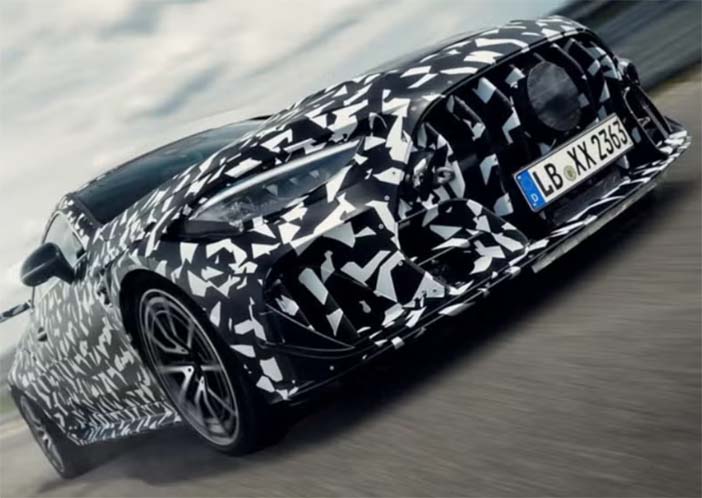
+++ The first product from the new low-volume Mythos division of MERCEDES-AMG is almost ready to be unveiled, with AMG sharing a batch of new images of the CLE-based super sports car on Instagram. Still clad in a geometric camouflage wrap but with the body looking close to production-ready, these images give us a closer look at some of the aerodynamic elements that will make this V8-powered monster a true 911 GT3 RS rival. Unlike the Porsche, this coupe won’t make do with just 520 hp, though. If reports out of Germany are to be believed, this M4 killer will make up to 650 hp. The images AMG shared show a new front fascia that is far more aggressive than any we’ve seen before, with large lower side intake openings on either side of a pair of intake scoops within the AMG grille. That grille now has long vertical vanes that are far more aggressive than those on test mules our spies have come across, and the fascia itself extends beyond the headlights and into the widened fenders. These front fenders also have large louvers in them to reduce front-end aerodynamic lift, though the existence of rivets surrounding both these vents and the AMG grille confirms that this isn’t the final form. It’s also worth noting that a prototype our spies saw previously had a much deeper front splitter, though the one depicted here is far from small. Higher up, the hood appears to be vented, much like that of the upcoming AMG GT Black Series. At the back of the car, the widebody treatment continues into the rear haunches, again with recesses around the light clusters. The rear bumper has more gaping holes, and lower down, there’s a prominent diffuser with an F1-style vertical reflector. We can’t see the tailpipes in the image provided, but we can safely assume there’ll be four of them. The real party piece sits atop the trunk as a huge dual-element wing with large endplates and manual adjustability. We don’t see any actuators, so this won’t have a DRS function like a GT3 RS, but the wing is similarly sizable, so it should vie for lap record honours at a few circuits. Already back in 2022, Mercedes was saying that Mythos products would be even more exclusive than those with Maybach badges, and the report that claimed a 650 hp peak output (from a 4.0-liter twin-turbocharged V8 hybrid) also claimed that there would only be 30 units produced for the entire global market. With summer fast approaching and Mercedes sharing these new images, we expect a reveal within the next couple of months. If not, definitely by the end of the year. +++
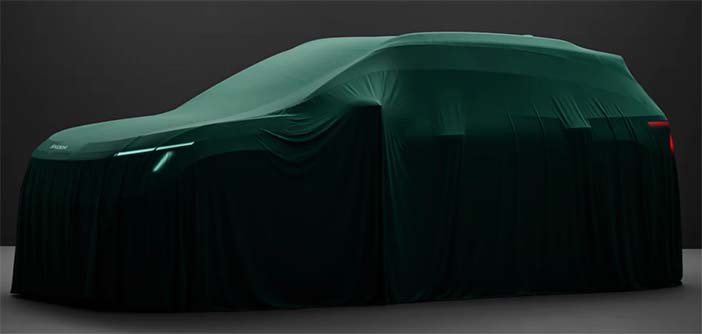
+++ After showing off its new Epiq in near-production concept form, giving us a glimpse of the interior, SKODA has given us another look at the production car, shortly before the small electric SUV’s global unveiling on May 19. The new image leaves little to the imagination and we can see how the new Epiq, which will be positioned as Skoda’s entry-level EV, utilises the brand’s now familiar ‘Modern Solid design language’. The latest teaser images confirm what we’ve known for a while: that the final Skoda Epiq production car will look almost identical to the show car revealed in summer 2025. The T-shaped headlights look virtually unchanged from last year’s pre-production car, as do the rear lights. The eight distinctive cut-outs in the front and rear bumpers aren’t visible here, but given they featured prominently on the show car and the prototype we drove, they’re very likely to make production. While previous Skoda concepts have utilised oversized wheels, the ones on the Epiq show car looked suspiciously production-ready so we might see them on the finished car. Another element are the physical door handles, they clearly stick out beneath the cloak in the teaser. “The Epiq show car offers a concrete glimpse into the next addition to Skoda’s successful all-electric family”, said Skoda CEO Klaus Zellmer. “It embodies the essence of Skoda: modern solid design, a spacious interior within a compact footprint, user-friendly intuitive digital interfaces, and Simply Clever details that ensure a seamless experience (and above all) at an attractive price point. With the Epiq, we’re taking another step towards making electric cars a practical and compelling choice for everyday drivers”. Skoda has confirmed that the Epiq will cost the same as its Kamiq petrol SUV equivalent, making good on the brand’s promise of a €27.500 electric car. Skoda’s current EV entry point is the Elroq, which starts at €32.990 in the Netherlands. Sitting below the Elroq and the Enyaq as Skoda’s third all-electric model, the Epiq brings Skoda back into a small EV sector, though it’s not quite as small as the old Citigo-e. That €27.500 price point means the Epiq will also have a load of fresh competition. There’s the Renault 4 E-Tech, the new Kia EV2 and its sibling model, the Hyundai Ioniq 3. Then there are rivals from within the Volkswagen Group, such as the Volkswagen ID.Cross, which shares the same underpinnings as the Skoda. The Epiq will utilise 37 and 52kWh batteries, with the larger of the 2 units delivering the 450 km maximum range figure. It will charge from 10-80 percent in around 23 minutes thanks to a peak charge rate of 133 kW. A variety of motors will be offered, the most powerful of which will be offered with a RS badge on the wings. Volkswagen has confirmed a 226 hp unit for its small EV, capable of accelerating from 0-100 kph in under 7 seconds. More sedate 116 hp and 211 hp versions will make up the mainstream range. +++
+++ Fiat and Citroen models are poised to join the new wave of small, affordable electric cars, the boss of parent company Stellantis has hinted. STELLANTIS boss Antonio Filosa talked of 2 key opportunities for Europe’s troubled car industry: ‘e-cars’ and light commercial vehicles. But progress in both areas requires agreement between the industry and European regulators. A framework to promote affordable, made-in-Europe ‘e-cars’ is still working its way through the European Commission, while sales of light commercial vehicles are being stifled by ambitious quotas for electric vans running dramatically ahead of the 10 percent demand. Citroen plans to launch an all-new EV inspired by its iconic 2CV, with Fiat also at the heart of the project. The Italian brand’s small car history dates back even further than its sister company’s, to the tiny, 2-door Topolino saloon from 1936. “Affordability is one of the major causes of the decline of the automotive industry in Europe”, Filosa told. “Cars below 15.000 euro, they don’t exist any longer” (new vehicle registrations in Europe totalled 13.2 million units last year; still below pre-Covid levels). “But clean and affordable is possible, the e-car project is possible”, Filosa said. He called on regulators to make good on discussions to give made-in-Europe e-cars a “special framework” enabling subsidies for their supply chain, particularly batteries, as well as “super credits” towards car groups’ corporate average CO2 obligations. The e-car regulation is expected to become law towards the end of the year, enabling manufacturers to lock in their vehicle projects and manufacturing plans, with a view to launching cars from 2028. Filosa took over Stellantis’ leadership a year ago, with the massive US/European car group set to unveil his new strategy on 21 May. Stellantis has been struggling, particularly in the US market, with excessive inventory of unsold pick-ups and SUVs, and having to write off huge investments in electric vehicles. In Europe, the group’s premium brands (Maserati, Alfa Romeo and DS Automobiles) are hampered by low sales and struggling to make any volume headway, while the rollout of key new Citroen and Fiat cars has been hit by software problems. Filosa denied that Stellantis was rowing back on electrification. “We will keep investing in electric cars for Europe and for the US as well. This year we will launch the electric Jeep Recon, and we will launch the first application of range-extenders in the world for large SUVs and pick-up trucks. But we are always listening to what our customers want. In Europe, they want a lot of electric cars and in the US, they want hybrids. We’re ready to provide them”. Filosa also outlined the 4 parts of his Stellantis turnaround plan. He argued that Stellantis’ scale (producing around 6 million units a year) gives the group sufficient economies and scope to deliver the leading-edge technologies that will keep it competitive. That scale plays out in a strong regional market presence, which Filosa called on Stellantis to nurture. “We are number-5 in North America, number-2 in Europe, number-1 in South America, number-2 in the Middle East and Africa”. But Filosa is not calling on Stellantis to go it alone: partnerships are the third key pillar of his comeback plan, with a recent agreement with Leapmotor to use Stellentis’ Spanish industrial footprint to assemble cars and collaborate on future products. And the final piece in the jigsaw? Strong brands, reckons Filosa. “They are our strongest asset, the most authentic bond to the customers”. But given that the premium brands are struggling for scale (Lancia is under-utilised, Fiat starved of new models and Opel is severely neglected and starved of investments in D-segment models, needed for its homemarket) is Filosa plotting a cull? “A brand stays because there is a customer that wants it, and if you are too drastic in deciding to quit one or the other, then you’re losing the customer base to somebody else”, he argued. “The real point is not to select one, two, three or four brands. The real point is to combine efficient capital allocation with brand specific strategies. And the way we want to do that, we will tell you later this month”. +++
+++ As legacy market growth stalls, the world’s largest carmaker is quietly placing a massive hedge with the poster child of rapid development, India. TOYOTA has formally committed roughly $1.9 billion (300 billion yen) to establish 3 new vehicle assembly plants in Maharashtra, India. This is a calculated investment in one of the world’s fastest-growing economies and a rising export hub. Toyota is tapping India to be its export hub for the Middle East, Africa and South Asia. Historically, Toyota’s relationship with the Indian carmarket has been notoriously turbulent. Just 6 years ago, in 2020, executives effectively halted local expansion, citing a highly punitive taxation regime that crippled organic growth, making it a hostile regulatory environment. But shifting economics and policy reforms have transformed India into one of the decade’s most attractive manufacturing economies. The Indian passenger vehicle market has officially eclipsed Japan to become the third-largest globally, offering the explosive growth trajectory that traditional automotive strongholds currently lack. India already functions as an export hub for car-makers such as the Hyundai Motor Group and Suzuki. The new Maharashtra facilities, slated to begin initial operations in 2029 and fully ramp up through the early 2030s, will completely transform the automaker’s footprint on the subcontinent. The investment is designed to triple Toyota’s Indian production capacity to a staggering 1 million units annually. Upon completion, the expansion will elevate India to Toyota’s fourth-largest global manufacturing hub behind only Japan, China and the U.S. The Maharashtra operation serves a highly lucrative dual mandate. These assembly lines are built to function as strategic export hubs. Toyota is engineering a localized fortress to feed vehicles directly into the rapidly expanding consumer markets of the Middle East and Africa, effectively bypassing the logistical and geopolitical friction of exporting from East Asia. While competitors throw billions at domestic pure-EV mandates, Toyota will employ the new Indian plants to heavily support plug-in hybrid vehicles (PHEVs) alongside its broader electrified portfolio. In 2025, Toyota Kirloskar Motor, Toyota’s Indian joint venture, recorded its strongest year on record with nearly 389.000 units sold; a 19 percent surge driven heavily by hybrid demand. By expanding local hybrid and PHEV assembly, Toyota circumvents the immediate limitations of India’s fragile charging infrastructure while navigating a regulatory landscape that recently scaled back specific electric vehicle subsidies. Relying strictly on American consumers and European mandates is a blueprint for stagnation. Toyota recently invested $800 million in its Kentucky plant to prepare for North American BEV production, part of a larger $1 billion commitment to US manufacturing. However, Toyota recognizes that the next decade of automotive supremacy will not be decided in California or Beijing. It will be won on the factory floors of India, building pragmatic, electrified platforms for the emerging economies that the rest of the industry is actively ignoring. Automakers that fail to build supply chains in fast-growing economies risk losing future volume growth. +++