
+++ Renault Group boss François Provost has said he isn’t worried by the slow sales of the ALPINE A390 , insisting the SUV is more important to “nurture the brand” for the long term than chase volume. The Porsche Macan Electric rival launched late last year and, alongside the A290 hot hatch, was intended to grow Alpine from a single sports car into a performance EV brand. But sales of the A390 currently sit at around 250 units per month, which Alpine CEO Philippe Krief has admitted is behind expectations. Provost hinted that he felt Alpine’s sales forecast was too high, saying that “we have to be a bit more humble” about the brand’s growth. He added: “When we launched the A390, I said to Philippe ‘I think you are much too bullish, your volume will be much lower than that and you should be more reasonable, because the car is super-good’ ”. Provost said that “we have a super clear genealogy” of the A390 compared with Porsche etc, and “those customers really consider the Alpine. We are in the basket, but we lose a lot from this pre-selection. Why? Because the German premium competitors of the A390 are cheaper in terms of monthly payments, most likely because they push a lot on residiual values and discounting. “Alpine is a great brand, but compared with German premium sporty cars, if the Alpine is more expensive it’s not easy. But the people who drive A390 are super-excited. It’s why we have to be a bit humble. It’s a long journey and we have to work hard”. Provost cited the delay to Alpine entering the US market as an example of this humility and noted that sales the A290 accelerated after a sluggish start. He added that he expected A390 sales to rise, but even if volumes don’t reach expectations, “I don’t care. I don’t care because this is a 20-year journey. I will not kill the brand, the DNA, the asset by being cautious or shaky. Maybe at the end we discover the potential of the car is one-third of what we thought. But so what? If the customer is happy, we find a good way to position the car. If this nurtures the brand, I’m fine with it”. Asked about Provost’s comments, Krief said that he was also relaxed and noted that the A390 wasn’t initially sold in every country where Alpine is present, and the GT and GTS variants weren’t offered at launch. He continued: “It’s exactly the same discussion we had 2 years ago when we talked about the A290’s slow ramp-up. It was exactly the same kind of start, but now it’s a big success”. Krief also highlighted the high conquest rate of the A390 so far, adding that “80% of the customers are new to Alpine and new to the Renault Group. So it’s a conquest car”. +++
+++ CUPRA ’s new Raval EV has drawn 51.000 orders as electric demand surges across Europe, but the shift away from combustion cars is squeezing profit margins and clouding sibling brand Seat’s future. +++
+++ DACIA is feeling the pinch from Chinese competition as its larger models come up against similarly-priced rivals for the first time that threaten its value status. The emergence of more Chinese car brands, which have so far largely targeted the most popular C-segment, has seen China-made models in this class, such as the Jaceoo 7 and MG HS. Dacia has introduced the Bigster as its first C-segment SUV in mid-2025, predicted to be a licence to print money at the time of its launch. Though popular in most European markets, and the best-selling C-segment SUV to retail customers across Europe, sales in the United Kingdom have been slower than anticipated. Speaking at the Paris Motor Show, Katrin Adt, CEO of Dacia, said Dacia was trying to “run its own race” but that the competition was tougher than ever. Adt said: “We feel the competition and there are certain areas, especially when it comes to higher segments, that the Chinese manufacturers, well they’re in front of us. Where we were alone at the value end of the scale for a long time, we aren’t any more”. Such competition is likely the cause behind Dacia canning a third new C-segment car it planned to launch in 2027, which was set to join the Bigster and new Striker estate being introduced at the start of next year. The Dacia CEO said its biggest competition was Chinese OEMs and Stellantis, which has set about introducing many cheaper cars from Fiat and Citroen especially in recent years, and said “we are comparing ourselves to a large extent”. Despite this, Adt remains committed to offering the “best value for money on the market”. Adt said “you cannot only compare the purchase price of the car” to rival brands, but rather look at the total cost of ownership. “If you see our residual values, we are 14 points up on the average of the industry. We have the highest residual values of the industry. We have a very reliable service network, and we make good-quality cars. We have a high repairability. If you take that all and all together, it’s difficult to copy our model, and it’s still the best value for money that you can get”. +++
+++ JEEP has confirmed the Recon will finally launch in Europe after an on again/off again set of decision making since it was originally revealed at the 2025 Los Angeles motor show after years of concept teasers. The Recon was planned to launch in Europe alongside the high-performance Wagoneer S, before rationalisation plans high up in Stellantis management halted that in the summer of 2026. Now, though, new Jeep head of enlarged Europe, Xavier Peugeot, confirmed to media at the 2026 Paris motor show that the all-electric 4×4 model will arrive here as a larger electric offering for the brand in Europe. “I hope I will be seeing you again at the 2027 Brussels motor show early in January 2027, as there we will be revealing and confirming the launch of Jeep Recon, and this will be an important car for us”, he says.
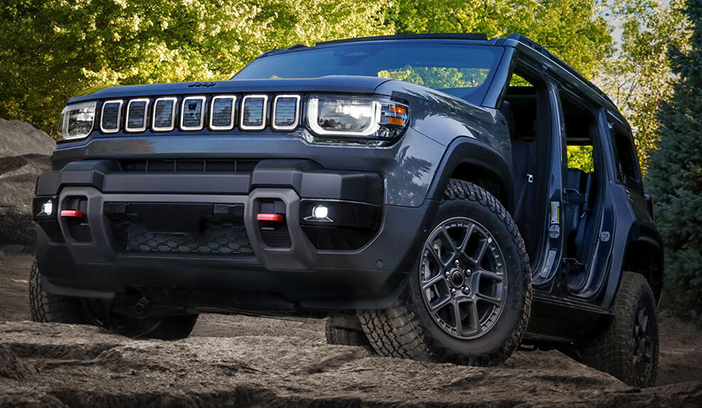
The Recon is Jeep’s first electric car for proper off-roading, launching as a Trail Rated model; it features serious engineering beneath the bodywork and twin motors for electric all-wheel drive. Fabio Catone, head of Jeep comms in Europe, says the Recon is “inspired by the heritage of the Wrangler, and it’ll bring electric driving into the great outdoors. It’s a 100 percent Jeep 4×4, but one that’s 100 percent zero emission”. The Recon’s looks haven’t really changed much from the early preview images that were shown in 2022. The Recon is a properly boxy 4×4, with a silhouette that’s slightly smaller and lower to the ground than a Wrangler. Details include backlighting on the 7-slot grille, beefy wheel arches and tow loops. A fixed panel roof is standard, but can be upgraded to a ‘one-touch’ roll-top fabric one.
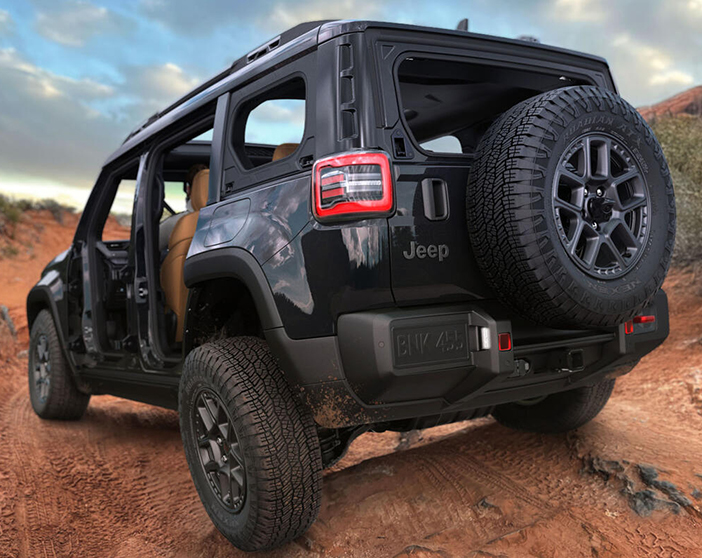
Neatest detail of them all, though, has to go to the removable doors. Jeep has designed new hinges that allow you to remove them without the need for tools; by comparison, you need to use an Allen key to detach a Wrangler’s doors.
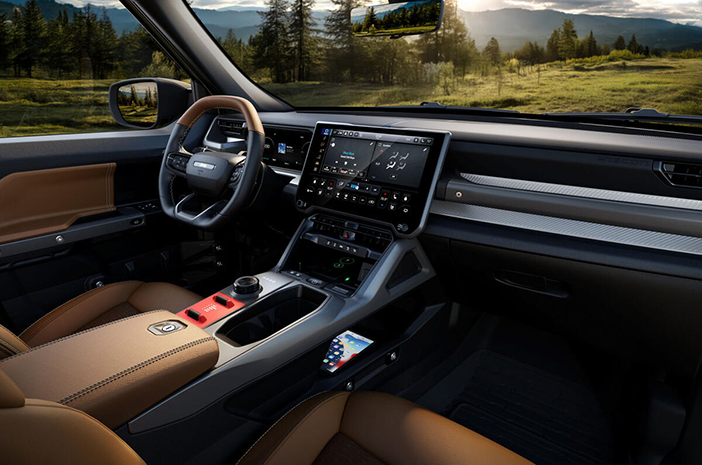
Inside, the Recon blends design elements of the latest Compass and Wagoneer S. There’s a chunky steering wheel, a wide glossy infotainment screen and digital instruments, as well as a centre console that includes toggles for the Selec-Terrain drive modes. Jeep has gone wild with the accessories, offering a modular rail in the dashboard that can be used to mount cameras (also navigation devices) and a place for your rubber duck. Don’t get the reference? It’s a bit of an ‘if you know, you know’ scenario. The huge and passionate Jeep community has taken to placing rubber ducks on each other’s Wranglers; a trend that started small but has spread community-wide. So much so that Jeep, it seems, is now leaning into it. Beneath the bodywork is the STLA Large architecture; the same platform as that of the Wagoneer S. The Recon includes a 100 kWh battery pack on a 400 volt architecture, which is shielded by reinforced steel to protect it from underbody damage. The flagship variant arrives with 650 hp and 830 Nm of torque from a pair of electric motors; one driving each axle. Jeep claims a 3.8 seconds 0-100 kph time and a claimed range of around 440 km for the North American markets. Powertrain and range figures are yet to be confirmed and homologated for Europe. Moab versions use an electric locking differential for the rear axle, with Jeep claiming it can ‘go from open differential to fully locked’ via the e-Lock toggle on the centre console. On top of that, the front axle uses a short-long arm setup that allows for flexible wheel articulation, while a multi-link setup is used on the rear. Moab models also feature chunky 33 inch tyres that allow for 238 mm of ground clearance. We’ll have to hang on for that 2027 Brussels show debut for more intel on the European specification for the Recon before it lands in Continental markets at the end of that year. +++
+++ The 208 might be the entry-point to the PEUGEOT line-up, but the next-generation model is set to become the brand’s most hi-tech offering when it arrives in 2027. Forming the basis of the fresh 208’s cutting-edge technology will be the all-new ‘STLA One’ vehicle architecture, key details of which have been confirmed by Peugeot’s owner Stellantis. Alongside the 208’s electric powertrain and smart technologies, ‘steer-by-wire’ system, voice control and 360-degree sensor technology to power next-level driver assistance, we now have a great idea of the 208’s design, thanks to the retro-inspired E-T16 concept. The third generation of the 208 will also herald a transformation in the brand’s model range. “Peugeot will launch 7 brand-new models between now and 2030”, brand CEO Alain Favey told at Stellantis’ 2026 investor conference. “4 of these will be based on the new STLA One platform. The first comes next year in the shape of the new E-208, a real game changer for us and for the European market I would say”.
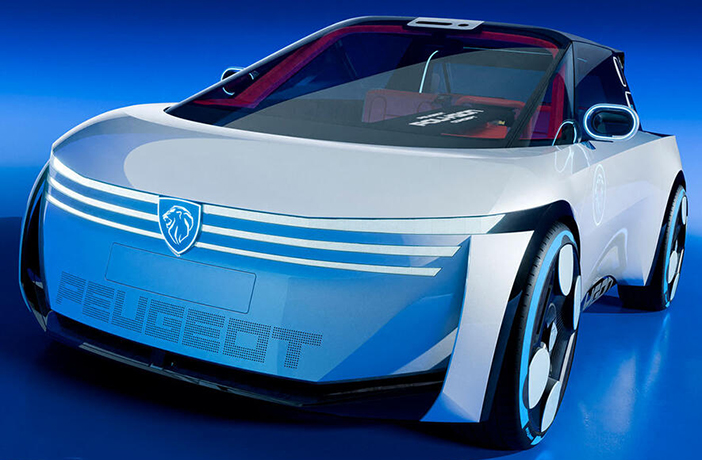
While the new 208 will adopt the most futuristic technology available to Peugeot, the overall design will cleverly mix details inspired by the 205 with modern clean surfacing and sheer edges. The radical Polygon concept previews the 208’s front and rear light strips, which mirror the original 205’s striped grille and rear hatch cover, but execute them in a very contemporary way.
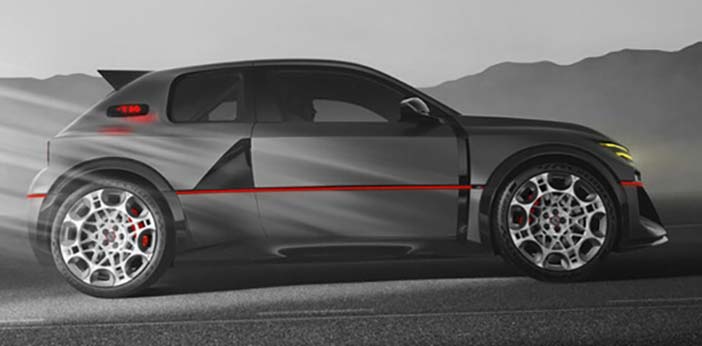
This design has since been backed up by the E-T16 shown off at the Paris Motor Show, which has been described as a ‘near-production ready’ concept. Essentially, peel away the E-T16 concept’s Group B rally car additions and you should have something very close to the new 208. Peugeot design director Matthias Hossann said at the concept’s reveal: “The E-T16 reinterprets the lines of the future Peugeot E-208, pushing every proportion to the extreme. It’s a radical design that celebrates our heritage and transforms power and sportiness into a true design language”. Reinforcing the 208’s design elements, Favey previously told: “The horizontal, 3-line light signature is something that you’ll find on future Peugeots. Same for the back. The very prominent red lights, and the fact they are horizontal lines, are a hint at what’s to come in future Peugeots”. The CEO added: “Our designers like to mix modernity and some positive elements of our heritage. We wish to use elements of the past to create the future”. The new 208 will be the first model on Stellantis’ latest ‘STLA’ architecture. “The car is on STLA One and it will be launched as a BEV”, Favey said. “We were first with STLA Medium as well (beneath the 3008). It’s Peugeot’s role to bring innovation among Europe’s mainstream brands”. The new chassis incorporates Hypersquare steer-by-wire, where the mechanical link between the steering and wheels is replaced by digital impulses. This will also help unlock two fundamental 208 goals: dynamic handling and maximum space in a compact package; something we found the Polygon concept pulled off well. The Polygon’s proportions (with the windscreen pushed forward to shrink the nose and a longer wheelbase) show how electric cars can cram more space into a small footprint. Eliminating the steering column, combined with a new dashboard architecture, will boost roominess, too. And will this focus have a knock-on effect in minimising weight gain, which saps EV range? “Absolutely. That’s what we’re trying to do with the next 208”, Favey said. And that’s not the only way: STLA One has cell-to-body technology, where the battery pack is part of the floor and a structural component in the car. “This will cut costs, weight and complexity”, said Davide Mele, Stellantis’s product planning chief. “STLA One will also be 800 volt capable, delivering very competitive charging times and a better real-world experience”. In the E-T16 concept, charging its relatively large 85 kWh battery from 10 to 80 percent takes just 15 minutes. Peugeots have long been known for their direct steering, with small steering wheels as the centrepiece of its ‘i-Cockpit’ set-up. Hypersquare will take things to the next level, with sophisticated software assessing the car’s speed and surroundings to deliver variable and precise levels of steering-motor assistance. With no mechanical link between the wheels and infinitely variable assistance depending on your driving situation, the E-208 will need next-level computing power and sensor technology. And it’ll get it from the new ‘STLA Brain’ making the E-208 Stellantis’ first true Software Defined Vehicle, and its ‘STLA Smart Cockpit’ technologies. “STLA Brain is our new electronics and software platform”, said Ned Curic, Stellantis chief technology officer. The car’s new ‘central nervous system’ gets rid of the myriad control units on today’s cars masterminding the disparate systems for powertrain, chassis, infotainment and so on, wrapping them up into one connected, high-performance computing platform. This boosts processing power by 6 times and bandwidth by a multiple of 1.000, unlocking a host of new features with instant, intuitive responses and Over The Air updates frequent upgrades. It’s this platform, with its AI-powered ability to understand the car’s surroundings and use case and respond instantly, that should help steer-by-wire offer the right level of assistance, from incredible car park manoeuvrability to incredibly consistent motorway tracking. The Hypersquare ‘wheel’ will be part of the new STLA Smart Cockpit. “This replaces what’s today 12 different separate systems in one unified cockpit platform that works across all brands and regions”, said tech boss Curic. “Each of our brands need to deliver a distinct cockpit experience for our customers”. Peugeot will be the very first brand to introduce the new cockpit tech, enabling a distinctive AI-powered brand experience with unique graphics, ambience, voice controls and features. In the E-T16 we saw a new, performance-oriented infotainment design on the same 21-inch screen used on the 3008 and 5008. Stellantis planned the next 208 when demand for electric cars looked unstoppable, with STLA One native to electric cars. But the investor day confirmed that the architecture is hybrid compatible, and “optimised for each configuration so you don’t carry the penalties of a traditional multi-energy architecture”. Cost is one penalty, weight is another: the STLA Medium platform under the current Peugeot 3008 is known to be excessively heavy, to protect it for off-road usage by Jeep for example. The next-level 208 will be introduced as a BEV first, with Favey confirming that it would sit alongside the existing 208, suggesting hybrid will arrive later. For how long remains to be seen, because the current hatchback will be positively archaic alongside the new model. Opel is facing the same conundrum with the next Corsa, which is also based on the same underpinnings and twinned with the new Peugeot. The current, 7-year-old 208 recently gained a hot GTi variant, which will be continued alongside the next E-208, but performance levels will be quite different. Favey said: “As long as there’s demand, we will keep the GTi on sale; the new 208 in 2027 will attract a different kind of clientele and that’s fine”. While the halo GTi packs 281 hp, the E-208 will start with more modest power outputs. Stellantis is developing a new range of e-motors, producing between 100 hp and 450 hp. E-208 power will need to span from 130 hp to 220 hp to match the Volkswagen ID.Polo and Cupra Raval line-ups. Those small VW Group EVs will be built in Spain to exploit its lower cost base and Stellantis is taking the same approach: the Zaragoza plant which makes the current Corsa and E-208 is earmarked for the next-generation cars, with other STLA Small cars also set for the Vigo factory. The 208’s longer wheelbase will enable bigger battery packs than today’s 54 kWh maximum. The STLA Small platform can accommodate up to 85 kWh (like the E-T16) and yield a maximum range of around 480 km. Smaller packs (potentially just under 40 kWh) will be available to create city runabouts. With an expected starting price around €30.000, the 208 will have plenty of rivals such as the Renault 5, Cupra Raval and Volkswagen ID.Polo. +++
+++ The RANGE ROVER has made a name for looking at home in most environments, but we’ve just caught the new 2027 model testing in a rather unfamiliar place, the Nurburgring. We’ve seen the next Range Rover being tested before, but this is our first look since the all-important, all-electric Range Rover arrived last month. That’s crucial because we expect the facelifted combustion-engined model is set to gain plenty of upgrades derived from the electric car. As suggested by the previous spy photos of the facelifted Range Rover, I don’t expect a huge overhaul for the updated car. Toned down cladding on the bodywork reveals an almost identical design to the current model, and indeed the new Range Rover Electric. The lighting signature looks to have changed, but the grille (which remains open unlike the closed unit on the EV), lower front bumper and the rear look unchanged. We may see a fresh selection of wheels, including new, more aerodynamic rims brought out on the EV. The refreshed Range Rover will also maintain its characteristic floating roofline and decorative trim behind the front wheelarch. Land Rover will continue to offer standard and 7-seat long-wheelbase models. The interior is where we expect the biggest changes to take place, although perhaps not via an extensive visual overhaul. The infotainment screens are unlikely to grow in size, considering the latest EV shares its 13.1 inch curved glass central touchscreen and 13.7-inch digital driver display with the ICE Range Rover. It’s the software hidden within that’s likely to get the most significant update; cleaner tech, greater functionality and slicker menus should all feature. New material options and colour choices are all but guaranteed to ensure the Range Rover can take on the Bentley Bentayga and Porsche Cayenne. Under the metal we can assume Land Rover will look to refine the Range Rover’s powertrain updates, continuing with its range of mild-hybrid petrol and diesel engines, plus a choice of big-battery plug-in hybrids. I know the revised Range Rover will likely borrow the updated suspension set-up developed for the EV. I’ve experienced it before and found the switchable twin-chamber air suspension very impressive. EV-specific elements such as one-pedal driving won’t make it to the combustion car, but we could see learnings from the Range Rover Electric such as all-new ‘acoustic packs’ to better suppress noise, find its way to next year’s model. However, it’ll unlikely surpass the EV when it comes to overall quietness, which is already seven decibels less than the combustion car. The new Range Rover isn’t likely to arrive until 2027, where it’ll have not only the Bentayga and Cayenne to contend with, but also the new Mercedes GLS and possibly the Neue Klasse-inspired BMW X7. +++
+++ The popular RENAULT CAPTUR will remain until 2035 and continue to play a role in Renault’s ‘hybrid or EV’ strategy, according to the firm’s CEO. Renault’s fast-paced model strategy means that the current Captur, introduced in early 2020, is now by far the firm’s oldest car. It’s a model that’s often left out of discussions and presentations about the brand, not least next to the headline-grabbing EV line-up that includes cars like the Renault 5 and new Twingo. But despite its seemingly forgotten status, Renault’s CEO Fabrice Cambolive says the Captur is still “playing its role” and will continue to for many years to come. “I think the Captur played its role and is still playing its role, because we will sell more than 100.000 or 120.000 Capturs this year, and for me it’s a very complimentary car to the Renault 4 and Symbioz”, he said. Introduced in 2013, the Captur arrived well ahead of many other small SUV rivals and was an instant success with its deceptively spacious interior and bold colour palette, traits that continue to this day. European sales climbed to a high of 223.000 in 2019 but have fallen since, even with the introduction of a second-generation early in 2020 and a facelift in 2024. Despite this, Cambolive still describes the Captur as one of its ‘flagship’ hybrid models. “I think Captur is one of the flagships with Clio that is defending our hybrid technology and we think the right choice was made 4 years ago between hybrid or diesel, ICE hybrid and PHEV, when we selected a full hybrid and BEV offering. Captur is supporting this full hybrid strategy”. Cambolive added that Renault “wanted to go on with Captur” and that it would be renewed. With the newest Clio having with a more modern interior and different design direction, I’d expect the same to happen to the Captur in the near future. “It’s too soon to announce another Captur. But we are working on this, and I think for me, the Captur has a future until 2035. Let’s see what our renewal cycle on will be, but for sure we will defend the name and the model”, Cambolive said. The similarly-sized Renault 4 is also just starting to gain traction. Cambolive reckons the Renault 4 was a little too early to market but that the “massive arrival of new product in the B-SUV space” is good news for Renault, with models such as the Skoda Epiq and Kia EV2 set to help this segment grow significantly. “The B-SUV segment will be the next to significantly shift to EV”, said the Renault CEO. I think that the 4 E-Tech at the beginning was not as good as the 5 E-Tech, not because the product is not good, but because the segment was still pushing back a little against EV”. Cambolive said that the EV sales share in the 4’s class is currently 12 percent, compared to 18 per cent for the 5 and well behind the 30 per cent electric share in the larger C-SUV segment where the Scenic E-Tech operates. “It means the potential to grow is really high”, said Cambolive. +++
+++ In the UNITED KINGDOM , used luxury electric cars are depreciating faster than petrol and diesel equivalents, according to valuation specialist Brego. Citing forecast data for EV and ICE luxury models from Mercedes-Benz, Porsche, Volvo and Genesis, the company noted an average difference in retail residual values of 1.9% at 1 year old, 0.7% at 2 years, 0.9% at 3 years and 1.3% at 4 years; all in favour of the ICE (Internal Combustion Engine) version. The models in question were the Mercedes EQS and S-Class, the Porsche Taycan and Cayenne, the Volvo XC90 and EX90 and the Genesis G80 and Electrified G80. Mercedes saw the starkest difference between EV and ICE residual values, which broadly increased over time. There was a 5.9% advantage for ICE cars at 1 year old, 5.4% at 2 years, 6.3% at 3 years and 6.4% at 4 years. Volvo was the only one of the four manufacturers with a retained value (RV) bias in favour of the EV, which was consistent over the 4 years and again increased over time. It was 0.8% at 1 year, 1.4% at 2 years, 1.6% at 3 years and 1.9% at 4 years. “Generally speaking, the RV percentage is lower for the luxury EVs”, Brego’s head of communication, Rupert Pontin, told. “I think the reasoning for this is that we’re going to start to seeing solid-state batteries coming in, and all of a sudden it will not be a 650 km range or a 750 km range, it will be double that. “Who is going to want a luxury barge that will be used, in many cases, as a chauffeur car or for private hire, when at 1 year old (or in 2, 3 or 4 years) it’s got that range? Even if you don’t jump to solid-state, the battery evolution is constant, so I think that is partially a driver”. Although flagships such as the S-Class aren’t typically found on conventional fleet choice lists, some company car drivers opted for prestigious, well-specified versions. Where employers and suppliers have permitted it, drivers who may previously have chosen, say, a BMW 3 Series company car or equivalent have plumped for more aspirational models. Peter Golding, managing director of fleet software and management specialist Fleetcheck, said expensive, heavily specified cars aren’t helping EVs establish themselves in the used market and called for a greater emphasis on reasonably priced models with middling levels of equipment. “The dilemma is changing now, because a lot of the Chinese imports are more economical and addressing the sub-€35.000-45.000 mark. What they will then do is feed that second and third owner with a desirable vehicle. “But if you think of maybe a BMW 7 Series, for example, when you get to the third owner that vehicle is very, very cheap, because people are really concerned about it going wrong. I think some of the electric vehicles we’re dealing with have fallen into that trap, where they’re very complex and very expensive. What one has to look at is addressing the market in mind of third owners, and there are affordable electric vehicles that aren’t necessarily loaded to the gunwales that attract that market. Companies can be a little bit more discerning with their choice lists and actually include vehicles that are going have better resale values in the long run”. Pontin agreed that the used market would benefit from more affordable EVs and that reliability concerns have always dogged lavish cars but said there’s nonetheless a market for them. “There needs to be more cheaper EVs, because getting people into them is a cost thing”, he said. “But when you come to the likes of the 7 Series, there is a market for that as a second, third and fourth owner, because people want to own the car that’s got all the kit on it. But by the time it gets to the second, third or fourth owner, there will be newer spec (suspension, the type of electric seat, the massage function, the panoramic roof), but they’re expensive to repair, and that’s where the big problem is”. This isn’t the first time that used EV values have been at the mercy of technological developments. The seminal Nissan Leaf and Renault Zoe came under frequent scrutiny in the 2010s, when specialists predicted that their desirability would be impacted when they were superseded by models with more advanced batteries and superior ranges and battery development has consistently been on RV specialists’ lips. EVs have been popular with used buyers seeking lower running costs since the Iran war began. +++