
+++ The recently revealed all-electric GENESIS GV60 might be one of the first models with a wireless charging system right from the factory. The company did not announce any technical details yet, but the wireless charging option will be launched next year, initially as part of a test or pilot programme in South Korea. The main point of a wireless charging system is to improve the convenience of home charging by removing the necessity of plugging in and out. Charging a car starts automatically when a vehicle equipped with a receiver pad parks over a ground assembly pad. In premium/luxury vehicles it might be worth trying, but the outcome is not certain. A few aftermarket wireless charging options that were available for some models so far have not attracted too many customers. Anyway, WiTricity is expected to be Hyundai Motor Group’s supplier of wireless charging. The group has already shown some concepts with WiTricity’s tech in the past. The power output of home wireless charging will probably be 7 or 11 kW. At least that’s the typical values in the new J2954 wireless charging standard released in October 2020. The efficiency of the wireless charging over a 10-inch (254 mm) ground clearance is expected at 94 %. WiTricity’s website says that the overall efficiency will be similar as in the case of conventional methods: “Remember, we’re dealing with electricity here, and it needs to be respected. Both wireless and plug-in charges have functional blocks to protect your home and vehicle, and those blocks prevent any charging from being 100% efficient. Most Level 2 chargers are between 89-94% efficient, and so is the wireless charging built on WiTricity’s technology”. However, the biggest question is the cost of the system, which might far exceed the cost of a J1772 plug-in home charging station. +++
+++ When HONDA unveiled the NSX Type S, with it came the announcement that the limited run of 350 units would mark the end of the Japanese supercar. But the NSX might make a return for a third generation. Honda vice president and brand officer Jon Ikeda said: “If you notice, we make an NSX when there’s something we want to say. The first-generation was gas. The second generation was a hybrid. There’s gonna be another one”. He also told: “There will be a next one, at some point, I am sure… There will be another one”. Essentially, it sounds like there are no official plans for a new NSX right now, but when the time comes for Honda to show what they’re capable of again, the flagship supercar will return at some point to carry on the NSX name. Many people were upset when the NSX went hybrid, but the powertrain was never what that car was about, in any generation for that matter. It was about pushing boundaries and defying expectations, and while it’s always nice to see automakers drawing inspiration from their heritage, if a third-gen NSX returns as an EV, so long as it’s doing those things, it sounds like it’ll be accomplishing its goal. +++
+++ JAGUAR LAND ROVER has issued a recall for select Land Rover models due to an issue that could trigger a fuel leak. The recall impacts 2010-2013 Range Rover Sport and 2010-2016 Land Rover Discovery models equipped with the automaker’s 5.0-liter V8 and 3.0-liter V6 petrol engines. A total of 55.555 Land Rover Discovery models are involved while there are also 56.191 Range Rover Sport models involved. An investigation from the car manufacturer has revealed that a fuel tank flange can develop a crack. If this is to occur, it can trigger a fuel leak. Jaguar Land Rover is aware of six consumer complaints alleging fuel leak from cracked tank flanges and has also identified 200 warranty claims related to the alleged defect while analyzing 2010-2012 Jaguar XF models that were previously recalled due to the same issue. Owners of impacted vehicles may notice a fuel odor, gas on the ground, and an amber Malfunction Indicator Lamp on the instrument cluster that has been triggered by the crack. The presence of an ignition source on gas that leaks could trigger a fire. To resolve the issue, owners will be notified and instructed to take their vehicle to a nearby Land Rover authorized repairer to have the fuel outlet flange replaced with a new one with a revised design. The repair will be performed free of charge and owners who have previously paid for a repair of the defect will be covered by the Jaguar Land Rover reimbursement plan. Jaguar Land Rover will notify dealerships on August 26 and owners on October 8. +++
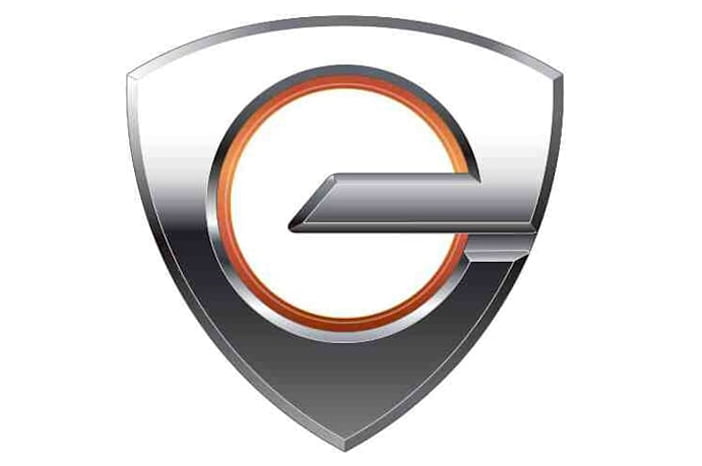
+++ With this much smoke rising from MAZDA HQ in Japan, it’s hard to believe there’s no fire. A series of filings at the beginning of August contained schematics of what could be (and let’s face it, what we hope to be) an RX-Vision-like sports coupe with an electrified front axle. Then came a report from Japan’s Best Car that Mazda is working on a hydrogen-powered rotary engine that would slot into some sort of RX-8 successor. Now I’ve learned that Hatena Blog in Japan has found 8 Mazda trademark applications, four perhaps having to do with vehicle trim names, four perhaps to be applied to electrified propulsion systems. The drivetrain applications are a logo, pictured below, and 3 names: e-SKYACTIV R-Energy, e-SKYACTIV R-HEV, e-SKYACTIV R-EV. Hatena figures the latest applications center on the automaker’s XEV technology that we heard about last year, which would use a small rotary engine in an extremely compact hybrid powertrain that could act as a mild hybrid, series hybrid, or range-extended EV. A Mazda patent application showed a potential AWD layout for the powertrain that was as complicated as it was novel. The logo is clearly the rotor in a Wankel rotary engine with an equally clear “e” cutout. I’m going with the idea here that correlation is causation, so we’ll assume having a rotary-shaped logo filed with new “R” nomenclature means these terms signify some sort of electrified Skyactiv rotary engines. If Mazda’s sticking to the current trend in electrified naming, we’d take R-HEV to be for a hybrid electric vehicle (or it could be hydrogen) and R-EV to suit a battery-electric vehicle. That leaves the R-Energy name as a mystery; my guess is that it identifies another alternative fuel like that hydrogen rotary engine, or it could be an umbrella term for any non-traditional R car. Remember, Mazda also applied to trademark a new R logo in July, the most popular guess being that it could signify rotary-powered high-performance models. I’ll put the usual trademark disclaimer here: Applications don’t necessarily mean anything for the real world, so the logo and names might end up being placeholders that never escape a Japanese filing cabinet. But again, this is a lot of activity in a single month that’s tangential to things we know Mazda is working on, like a new sporty RWD car and rotary engines. The other 4 trademark applications were for trim names Hatena figures will be applied to JDM offerings: Field Journey and Sports Appearance for the CX-5, VS Terracotta Selection that mimics the VS White Selection already available for the Miata Roadster RF, and Pro-X Ross Style that’s a stumper. +++
+++ The first MUNICH MOTOR SHOW will begin this September with a press day on September 6 and doors opening to the public the following day. Officially, the Munich Motor Show is called IAA Mobility and It spreads across the city, with a traditional motor show space as well as displays in the city centre and even a test track that links the 2 main locations. The motor show will host the reveals of several new models, and you can read about all of the most important ones below in our A-to-Z list of the car makers and what they’re going to bring to the show. We already know that Audi, BMW, Cupra, Dacia, Ford, Hyundai, Mercedes, MINI, Polestar, Porsche, Renault, Rolls-Royce, Smart and Volkswagen will be in attendance, though only a handful of these car makers have announced what they will be showing. Notably, Stellantis brands including Opel, Peugeot, Citroen and Fiat won’t be attending the show. The Munich Motor Show, which replaces the traditional Frankfurt Motor Show this year, will be built around the Summit area, a typical motor show space with new products and unveilings. This is where I will chat to industry bosses and get famous scoops and exclusive news stories. Then there’s the Blue Lane, a test track that runs from the conference centre to the city centre, where visitors can try out new products, including cars and bicycles (since this motor show is focused on all forms of mobility and not just cars). Then there’s the Open Space in the city centre, where visitors to Munich will be able to see the new cars and other transport, plus there will be entertainment and other events. Audi will show a trio of ‘Spheres’ concept cars at the motor show, including a sports car, a luxury car and an SUV. The first of the three, the sporty Skysphere, has already been revealed and its dramatic swoopy styling is said to preview the brand’s next-generation design direction. The all-electric luxury two-seat roadster also incorporates some radical thinking, helped by its variable wheelbase set-up, that’s claimed to provide occupants of the Skysphere two very different experiences. The first is called ‘Grand Touring’ mode that sees the Audi’s steering wheel and pedals retract to allow the Skysphere to drive itself autonomously using its level 4 tech. The second ‘Sports’ mode sees the steering wheel and pedals return and the wheelbase shrink by 250 mm, while the ride drops by 10 mm. Both measures boost agility to provide the sportiest drive possible. Featuring steer-by-wire tech on both front and rear axles, plus adaptive suspension, the latest Audi concept features the brand’s next-gen chassis technology. Power comes from a battery that “is expected to be more than 80 kWh” for a claimed WLTP range of 500 km. The battery feeds one electric motor mounted on the rear axle producing 630 hp and 750 Nm of torque; Audi claims that the Skysphere weighs around 1.800kg, which results in a 0-100 kph time of 4.0 seconds. The brand has not yet revealed any information on charging technology, but has confirmed that the Skysphere is based on an 800 volt electronic architecture; similar tech shared by the firm’s A6 e-tron concept that is based on the VW Group’s PPE platform. This car’s battery accepts a maximum 270 kW DC rapid charge supply and can recharge from 5 to 80 % in just 25 minutes, so we’d expect similarly swift times for the Skysphere’s smaller battery. As well as the Skysphere GT, Audi will also reveal a luxury car called the ‘Grand Sphere’ which was also teased with a line drawing showing a model with a long and sweeping roofline, large wheel arches and a high shoulder line. If the 3 advanced concepts aren’t enough to drag you to Audi’s Munich stand there’s also the first chance to get up-close-and-personal with the giant-slaying hyper hatch, the RS 3. Already, unveiled in full online, we already know the Mercedes-AMG A 45 S rival returns with its trademark 2.5-litre turbocharged 5-cylinder that pumps out a muscular 400 hp and 500 Nm. Combined with a 7-speed dual-clutch automatic and Quattro all-wheel drive, Audi says the RS 3 can get from 0-100 kph in just 3.8 seconds before running into its speed limiter at 250 kph. It’s rumoured that BMW will launch its new 7 Series luxury saloon at the motor show this year, potentially in the form of a concept car. It’ll show the transition from combustion power to the future of electric luxury cars on a new platform designed to support that. Staying on that theme, the Munich-based brand will also roll out its hydrogen fuel-cell powered X5. Called the iX5 Hydrogen, BMW has confirmed the zero-emission SUV will be available for showgoers to take short rides in ahead of its 2022 debut.Featuring a unique blue-tinted grille, lightweight 22 inch alloys and a revised rear diffuser with blanks where the exhausts sit on ICE-powered X5s, the short-production run of iX5s are driven by a pair of electric motors that generate a combined 375 hp. Employing fuel-cell tech developed in partnership with Toyota, the BMW iX5 Hydrogen is claimed to combine an unconfirmed long-range with a four-minute refuelling time. As well as the bigger hydrogen-powered X5, BMW will use its home show to debut the recently updated pure-electric iX3 that received mild cosmetic updates and more tech. Spanish performance brand, Cupra, will use the Munich show to unveil its all-new Born electric hatch that’s closely-related to the Volkswagen ID.3. Already previewed online, we know that beneath the skin, the Cupra Born will be offered with either a 150 hp or 231 hp electric motor that, with the largest 77 kWh battery provides a range of up to 520 km. Budget car maker Dacia will show a new 7-seat MPV called the Lodgy at the show. It’ll use the same architecture as the new Sandero and Sandero Stepway, but it’ll be larger to accommodate the extra passenger seats inside. I expect it to use the same engines as well, including a small petrol and probably the LPG-equipped Bi-Fuel model too. A diesel will also likely be available. Mercedes will launch 8 new cars at Munich, including five pure-electric vehicles and one new performance hybrid. The most important debut will be the Mercedes EQE saloon, ahead of the new all-electric executive saloon going on sale in 2022. For those EV buyers who need something altogether more rugged, Benz will also pull the drapes off a concept for a battery-powered EQG version of the G-Class that will preview a production model scheduled to make its debut in 2024. We’ll have to wait until the show to see if engineers have adapted the current G-Class’s ladder-frame underpinnings to package the batteries or started from scratch and used Mercedes’ dedicated EVA platform for EVs; regardless, expect its blocky looks to live on in the electric age. Mercedes will also unveil its first-ever electric AMG model, which we expect will be a 760 hp version of the EQS saloon. A more luxurious Mercedes-Maybach-badged version of the EQS SUV will also be launched. Other highlights will include a new rival for the Audi A4 Allroad in the form of the C-Class All-Terrain, and a new performance hybrid, which could either be an AMG version of the GT 4-Door or the electrified S-Class. Mystery still surrounds exactly what Porsche plans to unwrap at the Munich motor show following it only revealing a single teaser image of a headlamp, but we expect the concept will be fully electric and possibly take the shape of a sports or supercar. Other rumours suggest that it could preview new tech destined for the brand’s 2023 hybrid racer that’s currently in development for the World Endurance Championship’s upcoming LMDh class. Renault has a strong line-up at the Munich show, starting with the new Megane E-Tech electric car. It’s a fully electric version of the popular family car and will rival the Volkswagen ID.3. The Renault 5 electric car prototype we’ve already seen will also make an appearance on the show stand, as well as some classic Renault 5 models to compare it with. Plug-in hybrid Megane models will also appear. Finally, there will be vehicles from the new Mobilize brand, which Renault is using to show its planned range of urban vehicles, likely to be called Duo, Bento, Limo and Hippo. This service looks like it will produce a successor to the oddball Twizy, but with a more modern sales policy with charges based on time spent in the car and paid by smartphone. Smart will showcase the start of its push upmarket and into larger vehicle segments at Munich, with new parent company Geely at the helm. The company will unveil a new concept electric SUV, which ditches some of the brand’s famed “smallness” in favour of a more premium image. It will morph into a fresh rival for the DS 3 Crossback E-Tense and I have it on good authority that the finished car will look just like the concept sketches. It will be the first car using the new Geely developed SEA all-electric car platform. Volkswagen will unveil not 1 but 3 new cars at the Munich show. I’ve already driven the ID.5 GTX coupe-SUV in prototype form, but now it’s time to reveal the real thing. Based heavily on VW’s first performance-focused electric car, the ID.4 GTX, the sporty ID.5 gets swoopy looks and a powerful 299 hp all-wheel drive system that offers a brisk 6.2-second dash from 0-100 kph. Feeding the pair of electric motors is a 77 kWh lithium-ion battery that provides a range of up to 500 km. If a quick electric SUV-coupe doesn’t appeal, VW will also cater to more traditional performance car enthusiasts with the facelifted Polo GTI. Now pumping out 207 hp from its 2.0-litre four-cylinder turbo, the pint-size VW hot hatch gets a 7-speed dual-clutch transmission that enables it to launch from 0-100 kph in 6.5 seconds. The final launch on the VW stand will be the European market debut of the SUV-coupe Taigo. Closely related to the Polo-based Nivus already on sale in South America, think of the Taigo as a sportier take on the current T-Cross. Under the bonnet there’s the choice of either a 1.0-litre 3-cylinder petrol or a more powerful 1.5-litre turbo that will offer up to 150 hp. +++
+++ Mate RIMAC is used to being the underdog. At the Geneva auto show in 2009, the then-21-year-old Croat walked to the Koenigsegg booth looking for his idol, Christian von Koenigsegg. In those pre-YouTube-saturation years, Rimac didn’t know what the namesake of his favorite car brand looked like. And no one knew him. So he approached “the most serious-looking guy” at the stand and went on to befriend his idol, Rimac said in an interview on August 13 in Carmel, California. 12 years on, Rimac, now 33, has more than leveled the playing field with his Swedish friend. On July 5 his Rimac Automobili (the tech and supercar company he founded in his garage) announced a joint venture with Porsche to take control of Bugatti. The 112-year-old French crown jewel in parent company Volkswagen’s crown, Bugatti sells cars like the 1.500 hp Chiron Pur Sport, which has a very bad fuel economy in city driving. The brand traditionally does not disclose specific sales results but is known to deliver roughly 80 vehicles globally each year. Rimac has characterized the acquisition as “removing some distractions” from VW. According to the terms of the deal, Rimac holds a 55 % stake in Bugatti-Rimac while Porsche owns the remaining 45 %. Earlier this year, Porsche had also separately increased its stake in Rimac to 24 %. Rimac himself will take the helm of Bugatti-Rimac, while Porsche’s Oliver Blume and Lutz Meschke will join a supervisory board for the company. It’s all quite a change of view for a guy used to working behind the scenes. “The stakes are getting bigger”, Rimac said. “But I am not somebody to play it safe. Never. Not even close. So if there is going to be some friction with our shareholders and more experienced people that come into the company, it’s going to be that”. The arrangement marks the first time Volkswagen has ceded control over one of its brands to a company and a person so young. It also signals a subtle stratification of the company’s premium marques, dividing those aligned with Rimac, which includes Porsche and Bugatti, from those such as Audi and Bentley that are likely to continue using VW’s own electric components. “We are already developing stuff that will be soon in high-volume Porsches”, Rimac says. “Not special projects, but the mainstream”. The company provides EV tech such as batteries for carmakers including Koenigsegg and Pininfarina. At this point, Rimac admits that his 1.000-person, decade-old operation is far from an underdog. Porsche just paid the company $70 million, he says, and Rimac’s $2.4 million Nevera supercar recently turned in the quickest quarter-mile time ever for a production car. The Bugatti-Rimac venture will retain both Bugatti’s headquarters in Molsheim, France, and Rimac’s headquarters in Zagreb, Croatia. “It feels really interesting when you think where we came from. This country has never had an automotive industry”, Rimac says of Croatia. “We had absolutely no idea what we were doing. And now our tech is in so many cars, and with Bugatti this whole thing is a huge responsibility”. He is used to the pressure by now. Call it discipline à la automaker. “I was told by our big OEM customers, if you screw up, the next day we send 30 trucks, they pick up everything, you are dead”, Rimac says. “If you screw up and you don’t deliver, everything stands still, and then you are dead. You are dead”. +++
+++ VOLKSWAGEN ’s ID.4 electric vehicle has had a slow start in China, with sold just over 1.200 sales in the model’s first 2 months on the Chinese market; by contrast, Tesla sold more than 6.000 units of the Model Y 2 months after launch. There are many theories trying to explain why the ID.4’s is underperforming. One of the most unusual comes from Stifel analyst Daniel Schwarz, who believes that VW employees dress too conservatively compared to staff from competitors like Tesla and Nio. Yes, you read that right, and no, this theory did not come out of the blue. Schwarz came to this conclusion after Stifel dispatched mystery shoppers to VW, Tesla and Nio stores. According to the analyst, the experience in Volkswagen’s dealerships was very different, as the staff were dressed very conservatively and were not as energetic as those in the Tesla and Nio stores. “Clearly, the dealerships at VW look older than at Tesla or Nio. The sales personnel at Tesla/Nio are younger and perceived as ‘more energetic and more confident’ than VW’s sales personnel, the mystery shoppers were stressing this very much, also that it influences the buying decision”. To back these claims, Schwarz included a photo that shows a VW salesman in a tie, compared with the more relaxed Tesla and Nio sales staff. While that may oversimplifying things, the fact remains that younger customers may feel more at ease in the company of salespeople who dress in a more relaxed manner. For some buyers, the more conservative dress code could also send the message that legacy automakers are more rigid and stuck in their old ways. However, Schwarz added that VW knows it needs to improve in China, and the company is adding new locations. In a July 29 earnings call, VW Group China’s CEO Stephan Wollenstein said that the VW brand is aiming for a network across both joint ventures (FAW-VW and SAIC-VW) of roughly 150 such prime locations in high-frequency areas in China, where its competitors are also now presenting their cars. He also said that would give VW a similar-sized network to NEV-only brands. They might be another reason for the ID.4’s underperforming sales, though. In China, the number 4 is associated with death because it has almost the same pronunciation in Mandarin as the word “death”. +++
+++ Joel Johnson laughs nervously from the backseat when his self-driving taxi stops in the middle of a busy road in suburban Phoenix. The car, operated by autonomous vehicle pioneer WAYMO , has encountered a row of traffic cones in a construction zone, and won’t move. “Go around, man”, Johnson says as he gestures to the drivers honking behind him. After the vehicle has spent 14 mostly motionless minutes obstructing traffic, a Waymo technician tries to approach, but the car unexpectedly rolls forward, away from him. “It definitely seemed like a dangerous situation”, Johnson recalls. Incidents like this one, which Johnson posted to his YouTube channel in May, are embarrassing for Waymo, a company that’s having its own problems moving forward. A unit of Alphabet, Waymo hasn’t expanded its robo-taxi service beyond Phoenix after years of careful testing. The company has floated moves into other areas (trucking, logistics, personal vehicles) but the businesses are in early stages. And its production process for adding cars to its driverless fleet has been painfully slow. This spring, Waymo saw a mass exodus of top talent. That included its chief executive officer, chief financial officer, and the heads of trucking product, manufacturing, and automotive partnerships. People familiar with the departures say some executives felt frustrated about the sluggish pace of progress at the enterprise. Despite years of research and billions of dollars invested, the technology behind self-driving cars still has flaws. Not long ago, a glorious future of autonomous vehicles from Waymo and its many competitors seemed close at hand. Now, “what people are realizing is that the work ahead is really hard,” says Tim Papandreou, a former employee and transit consultant. Waymo, by most measures, is still the leader of the world’s autonomous vehicle effort. Development of its technology began at Google more than a decade ago, and the company hit a historic milestone last year when it started its completely driverless taxi program in Arizona. During the pandemic, many rivals gave up on self-driving (Uber Technologies) or sold themselves to rivals (Zoox, which was acquired by Amazon.com). Waymo kept going, raising $5.7 billion from outside investors since last summer, adding to the untold billions Alphabet has already spent. Waymo points to its remarkable track record vs. those of its rivals. Since last fall, the company says it’s provided “tens of thousands” of rides without a driver present in Arizona. “We consider that to be a huge accomplishment”, a Waymo spokesperson said in a statement. “In fact, the absence of any other such fully autonomous commercial offering is a demonstration of how hard it is to achieve this feat”. But the company’s remaining competitors have also started to hit milestones. Argo AI, backed by Ford and Volkswagen, will start charging for robot rides in Miami and Austin later this year, albeit with a human minder behind the wheel. Zoox and Cruise, which is funded by General Motors, Honda, and SoftBank, have begun testing autonomous vehicles on public roads in California. While none of these companies has yet turned a profit on self-driving tech, they’re all directing billions of dollars toward erasing Waymo’s early lead. Waymo separated from Google’s research lab in 2016 to become the latest subsidiary of Alphabet, and went on a hiring spree, recruiting personnel to cut business deals with automakers, draft financial models, lobby state houses, and market its technology. At the time, many Waymonauts (as employees call themselves) believed the machinery was in place for fully driverless cars to hit public roads imminently. In 2017, the year Waymo launched self-driving rides with a backup human driver in Phoenix, one person hired at the company was told its robot fleets would expand to 9 cities within 18 months. Staff often discussed having solved “99% of the problem” of driverless cars. “We all assumed it was ready”, says another ex-Waymonaut. “We’d just flip a switch and turn it on”. But it turns out that last 1% has been a killer. Small disturbances like construction crews, bicyclists, left turns, and pedestrians remain headaches for computer drivers. Each city poses new, unique challenges, and right now, no driverless car from any company can gracefully handle rain, sleet or snow. Until these last few details are worked out, widespread commercialization of fully autonomous vehicles is all but impossible. “We got to the moon, and it’s like, now what?” says Mike Ramsey, a Gartner analyst in Detroit and longtime industry spectator. “We stick a flag in it, grab some rocks, but now what? We can’t do anything with this moon”. At first, it appeared that Waymo would produce cars at a supercharged pace. In 2018, Waymo signed up to turn as many as 20.000 Jaguar I-Pace cars into Waymo autonomous vehicles. Months later, it said it would expand its fleet of Chrysler Pacifica minivans to more than 60.000. Waymo planned to buy the cars and install what it called its “Driver”: a suite of cameras, sensors, and proprietary computer gear. “There’s not a lot in assembly”, then-CEO John Krafcik, a former auto executive, declared at an event that year. In reality, skilled disassembly is required. Engineers must take apart the cars and put them back together by hand. One misplaced wire can leave engineers puzzling for days over where the problem is, according to a person familiar with the operations who describes the system as cumbersome and prone to quality problems. Like others who spoke candidly about the company, the former employee asked not to be identified for fear of retaliation. The painstaking nature of the process has left Waymo without a viable path to mass production, the person says. Waymo has slashed parts orders on the Chrysler minivan project and has had far fewer Jaguars delivered than initially expected, according to people familiar with the automakers’ plans. The Waymo spokesperson says the company is not supply-constrained in Detroit, and that it’s on track to hit all its internal production targets with Jaguar, but declines to share details. The company also disputes that it’s fallen behind schedule on constructing its Chrysler vehicles, noting that these agreements are “fluid and subject to change”. Waymo’s competitors in Detroit already have vast manufacturing capabilities. Argo and Cruise, for example, plan to build their driverless cars from the ground up. Insiders generally believe that Waymo is the leader on technology, but manufacturing capacity could give Detroiters the advantage when it comes to rolling out fleets, according to Ramsey, the Gartner analyst. “I don’t know what their current number is”, he says of Waymo’s production. “But it hasn’t moved much”. In 2019, Waymo rented a warehouse in Detroit to be, as Krafcik said at the time, “the world’s first dedicated autonomous plant”. Michigan officials agreed to give the company an $8 million grant partly in exchange for creating at least 100 jobs in the state. As of last fall, Waymo had hired 22 people to work at the facility, according to state filings. The company says it’s exceeded the 100-person job-creation pledge in the state, and would not comment on the headcount of specific offices. Earlier this year, Waymo was trying to produce 5 to 10 vehicles a day at the factory, says one former employee. The company disputes this claim. After years of publicly touting the wonders of self-driving, Waymo personnel started talking in recent years about managing people’s expectations of what their cars could do, and when. Several people who worked at Waymo describe parent company Alphabet as extremely cautious, particularly after an Uber self-driving test vehicle struck and killed a pedestrian in Arizona in 2018. For example, Waymo’s ad hoc board shot down a splashy marketing pitch from Krafcik, according to three people familiar with the decision. In 2018, he wanted to stage a multicity demonstration of the company’s technology, with pop-up marketing installations showcasing what Waymo could do. Tesla Inc. had carried out something similar with its early models. But the company’s board (which consisted of Google’s founders Larry Page and Sergey Brin, along with Alphabet honchos and a few outside investors) worried about repeating the failures of Google Glass, the flopped augmented-reality spectacles, by introducing a product before it was ready. A Waymo spokesperson said that the company simply went in a different direction. Krafcik left the company in April. The new co-CEOs are Tekedra Mawakana, formerly Waymo’s chief operating officer, and Dmitri Dolgov, who had been its chief technology officer. The pair met with backers and partners this spring as Waymo closed its financing round. According to one investor, the new chiefs were upbeat in a recent meeting, saying that with the pandemic fading the company was gearing up to make “huge headway” on its goals. Meanwhile, in Phoenix, even after his traffic cone incident, YouTuber Joel Johnson was still enthusiastic about the technology. “It seems to handle pretty much everything that I try and throw at it”, he says. In other words, it works 99 % of the time. +++