+++ Battery-powered cars seem like the next big thing, but a growing portion of AMERICANS aren’t ready to give up internal combustion. The percentage of Americans who say they’re “very unlikely” to buy an electric vehicle as their next car is growing, according to JD Power, which keeps close tabs on consumer sentiment around EVs. In JD Power’s surveys, the EV-skeptic contingent has steadily grown from 17.8% to 21% of respondents between January and March. The share of consumers on the opposite end of the spectrum (those “very likely” to go electric) has stayed mostly flat this year, most recently measured at 26.9%. “Top-line metrics on overall EV market share, availability and affordability have been on a long-term upward trend”, the market research firm said. “But beneath those headline numbers we are starting to see some consumer behaviors that suggest a possible bifurcation of the automotive marketplace”. Some potential car buyers are getting more adamant about not wanting an EV during a transformative and crucial time for the auto business. Carmakers who didn’t pay all that much attention to EV technology in years past are dumping billions into developing cleaner cars. That’s in part due to tightening environmental regulations around the globe. Plus, they’ve seen the success of Tesla (now the world’s most valuable carmaker by market capitalization) and they now want in on the EV party. But for that to happen, automakers need to convince shoppers to embrace a new and unfamiliar technology. As JD Power’s research shows, that’s easier said than done. While interest in EVs is growing (EV market share shot up from 2.6% in February 2020 to 8.5% in February 2023) there are still lots of sticking points keeping buyers from considering a Tesla or the like. High purchase price and lack of charging stations were the most-cited reasons for not wanting an EV, followed by limited driving range and time required to charge. Respondents were also concerned about EV performance in extreme temperatures, cost of ownership, lack of repair shops, reliability and power outages. Interestingly, it isn’t just rigid older folks who are skewing the numbers. While the majority of Boomers and Pre-Boomers aren’t considering EVs, 33% of Gen Z shoppers also told JD Power they were either “somewhat unlikely” or “very unlikely” to buy an EV. +++
+++ FORD made $1.76 billion last quarter, swinging into the black from a $3.1 billion net loss for the same period a year ago (the first-quarter loss last year was due mainly to a drop in valuation of Ford’s investment in electric vehicle startup Rivian). Excluding one-time items, Ford made 44 cents per share. That beat Wall Street estimates of 42 cents, according to FactSet. Revenue rose 20% to $41.74 billion, soundly beating the $39.25 billion that analysts expected. Ford reaffirmed its earlier pretax profit guidance for the full year of $9 billion to $11 billion. Ford lost $722 million before taxes on its electric vehicles, but it made $2.62 billion on internal combustion vehicles. The company’s commercial vehicle unit added $1.37 billion to the pretax profits. Ford lost more than $60.000 per electric vehicle sold in the first quarter. Its combustion-vehicle business, Ford Blue, averaged pretax profit of $3.715 a vehicle, while the Ford Pro commercial business earned $4.053 per vehicle, based on the company’s financial data. The company’s profits were fueled largely by sales in the U.S., its most lucrative market. Ford sold just under 472.000 vehicles from January through March, up 9.9% from the previous year. The company continued to get strong prices for its vehicles during the quarter, driven by loaded out trucks and big SUVs. Ford’s average sale price was $56.534. Earlier Tuesday, Ford cut prices on its Mustang Mach E, the same day Tesla raised prices slightly on the Model Y, the Mach E’s main competitor. Ford also said it is reopening the order bank on Wednesday for the Mach E after upgrading a factory in Mexico to increase output. Automakers have been able to scale up production and get vehicles to dealers on time after being pinned down by shortages of semiconductors and other parts in 2022. Ford cautioned that “higher industrywide customer incentives as vehicle supply-and-demand rebalances” will be a “headwind” for profitability. +++
+++ The FORD MUSTANG MACH-E is getting some welcome updates, primarily for the standard-range models. Those standard-range cars all get new batteries that offer slightly improved range and charging, and the all-wheel-drive versions are more powerful than before. And even better, base prices for every Mach-E have gone down. The standard-range models’ driving ranges are improved, albeit slightly. The rear-wheel-drive version now goes 250 miles, rather than 247, and the all-wheel-drive model goes 226 miles instead of 224. It’s partly a result of the new battery packs used in these models. They’re still lithium-ion, but use a different lithium iron phosphate (LFP) chemistry, rather than nickel cobalt manganese (NCM) like the older versions and the extended-range Mach-Es. Tesla uses the same type of batteries in its standard-range Model 3s. This kind of battery has a few benefits such as generally longer lifespan and less degradation over time, along with being able to handle faster charging and more charges to 100%. In the case of the Mach-E, Ford estimates that the new standard-range car with LFP batteries will charge about 5 minutes quicker to 80% than the outgoing model. Ford didn’t disclose whether this is due to a higher peak charging capability, or an improved charging curve with the same peak as before. LFP batteries are good at discharging, as well as charging. That’s good for power, and the standard-range Mach-E with all-wheel-drive now has more of it. At 311 horsepower, it makes an extra 45 ponies. Torque is technically lower at 427 pound-feet, but that’s a drop of just a single pound-foot. And some final notes regarding the LFP batteries. They don’t use nickel and cobalt, which are expensive metals mainly sourced from countries with worrisome regimes, so overall cost is lower and arguably more ethical. The only potential downsides are generally worse cold-weather performance compared to NCM batteries and less battery density. That’s partly why the extended-range Mach-Es with their higher capacity will still use the old chemistry. And on the topic of those extended-range Mach-Es, there are no changes to range or power output for them. Aside from big battery changes, all Mach-Es will now also be able to use BlueCruise, Ford’s hands-off highway driving assist. They will come with a 90-day trial for free, with the option to start a 3-year subscription for the feature. Pricing for the subscription is $2.100. The latest version that will be offered, 1.2, will be capable of executing lane changes at the driver’s request, and can be set to adjust lane position to have a bit more space between it and a vehicle in a neighboring lane. This finally brings us to pricing and Ford has dropped the base price of every trim substantially. Ford says it is wrapping up factory upgrades for increased production and availability. +++
+++ HYUNDAI is considering withdrawing from Russia after selling its plant there, where operations were halted following Russia’s invasion of Ukraine in February 2022. According to local reports, Hyundai recently decided to sell 2 factories in Russia and is waiting for final approval from the Russian government. However, the company allegedly seeks a precondition under which it can purchase the factory back at the time of its choosing. “Hyundai’s decision is somewhat late compared to its competitors who had already withdrawn from the market a while ago. If they put those conditions (to repurchase the plant) in the sale agreement, they will be able to repurchase at a set price”, Lee Hang-koo, a research fellow at Korea Automotive Technology Institute, said. Hyundai was the top importer in Russia but halted production in March of last year due to the Russia-Ukraine conflict. As the procurement of core parts, such as semiconductors, was prohibited by international sanctions, factory operations were suspended and most of the 2.000 local employees left the company. A Kazakhstan-based company is said to be acquiring the plant. It has agreed to hire local employees and is currently engaged in final negotiations for the sale. “Hyundai’s cooperative company is in Kazakhstan and I believe it is the one they are selling it to. There are 2 car manufacturers there, and one of them has been assembling Hyundai CKD (completely knocked down) vehicles for over 10 years”, Lee added. “If they sell the factory to a completely unrelated company, it will be difficult to obtain references in the future, and when negotiating the price later, they may end up selling it for a lower price”. The automaker declined to comment on the possible sale. “We are considering all possibilities, but nothing has been confirmed”, a Hyundai official said. Hyundai’s plant in St. Petersburg, Russia, which was built in 2010, produced 200.000 vehicles annually. On December 2020, Hyundai acquired a General Motors factory nearby and expanded its production capacity to 300.000 vehicles. The exact sale price has not yet been confirmed, however, industry watchers believe Hyundai is expected to suffer a 1 trillion won ($745.6 million) investment losses once the sale is finalized. +++
+++ The HYUNDAI MOTOR GROUP is highly likely to outpace Toyota in first quarter earnings this year for the first time, according to industry estimates on Wednesday. The South Korean auto giant’s Hyundai and Kia brands posted a combined 6.5 trillion won ($4.8 billion) in operating profits in the first 3 months of this year. It is a record figure for the carmaker, exceeding the estimated 5.98 trillion won of operating profits of its archrival Toyota, the world’s No. 1 carmaker in terms of sales. Last year, the Hyundai Motor Group sold 8.48 million cars, becoming the third-largest carmaker globally after Toyota and Volkswagen. Toyota sold 104.8 million vehicles during the same period. The upbeat outlook comes after Hyundai and Kia posted record earnings in their first-quarter earnings reports this week. On Tuesday, Hyundai said it posted record operating profits of 3.6 trillion won in the first quarter, an 86.3 percent jump from a year ago. It sold over 1 million vehicles, up 13.2 percent on-year. Sales also increased 24.7 percent to 37.8 trillion won, mostly driven by a surge in sales of sport utility vehicles, including Tucson and Santa Fe, as well as from its premium brand Genesis. Its smaller affiliate Kia also saw operating profits skyrocket by 78.9 percent to 2.87 trillion won compared to a year earlier. It sold 768.251 units; a 12 percent jump. In Korea, the carmaker saw a 16.5 percent increase in sales to 141.749 units. It sold 626.511 units in global markets, up 11.1 percent from a year earlier. Kia’s stellar performance came after surge in sales of highly profitable larger SUVs, including the Carnival, Sportage and Sorrento, as well as a recovery in chip supplies. “The Korean, US and Indian markets saw 5.6 percent growth in the first quarter, leading to an increase in Kia’s global market share to 4 percent”, said Lee Hae-in, team leader of investor relations at Kia Motors, during a conference call. Clean car sales including EVs and hybrid EVs spiked 21.1 percent to 133.000 units in the first 3 months this year, driven by new car launches including the Sportage Hybrid and Plug-in Hybrid. The 3 key EV markets have seen growth in market shares: 32 percent in Korea, 36 percent in Western Europe and 14 percent in the US. This year, Kia aims to sell up to 250.000 units; a 57 percent increase from a year earlier, to take up 8 percent in the global EV market share, with upcoming EV lineups the EV6, Niro EV and EV9. When asked about the impact of the US’ Inflation Reduction Act, Joo Woo-jeong, vice president at Kia Motor, said that although the EV6 and Niro EV are not eligible to receive tax credits in the US, Kia’s EV lineups have not lost their competitive edge because many rival models were also taken off the subsidy list. General Motors’ Chevrolet Bolt EV and the Lexus UX Electric did not make the US tax credit list that was announced on April 18. “But before we complete construction of building an EV manufacturing plant in the US by 2026), the company plans to expand lease sales. But if it doesn’t work, a further incentive policy (of cutting car prices) will be made available for customers”, said Joo. Starting from Mexico and China, Kia plans to ramp up its electrification strategy by transforming existing car production facilities into EV plants as well. It hinted its Mexican plant will be an EV manufacturing base for North America. The carmaker underscored the strategic importance of the Chinese EV market. A new EV model will be produced every year by 2030, with the EV5 set for launch in China late this year. It plans to make EV cars take up more than 20 percent of its total Chinese lineups by 2025. +++
+++ MERCEDES-BENZ has plugged its Formula One team into the engineering process to build vastly more efficient mass-market electric vehicles (EVs), slashing development times by a quarter or more as it jump-starts efforts to keep pace with Tesla. F1 technology has always eventually bled over into mass-market vehicles. But Mercedes’ F1 collaboration to build more efficient EVs faster is unprecedented because it embeds that racing mindset and technological expertise directly in product development. After decades of leadership in combustion-engine technology, legacy carmakers like Mercedes have lagged Tesla in electric vehicles. Mercedes’ F1 team can help it get back in the race, said Steven Merkt, head of transportation solutions at TE Connectivity, a major autos supplier. “Nobody feels the pressure more than Mercedes to be innovation leaders here”, Merkt said. “They’ve got to push it out or they’re no longer Mercedes”. Last year, Mercedes unveiled its EQXX concept car: a super-efficient EV capable of a range of more than 1.200 km, which was jointly developed with the German premium carmaker’s F1 team in England. The EQXX took just 18 months to develop, leaning on the F1 team’s experience of working rapidly to squeeze efficiency from engines and electric motors, aerodynamics and rolling resistance, the company said. “We have an edge here with Formula One that others don’t have”, Mercedes chief technology officer Markus Schäfer said. “Tesla doesn’t have it. Other teams don’t have it”. Speed is ever more important because newer entrants, above all Tesla, can develop or tweak models far more quickly than legacy carmakers. Fast-moving Chinese EV makers have cut development time to an average of 2.5 years and are launching innovative, cheaper models in Europe. The need for speed is coupled with a push among carmakers to make EVs more efficient and thereby reduce costs by lowering weight, improving range, and using less battery materials already in short supply. Suppliers say efficiency is now baked into some EV contracts as carmakers seek to make their vehicles more affordable. “Efficiency is a key enabler to accelerate adoption of EVs globally”, Schäfer said. Parts of what Mercedes learned from the EQXX will feature in a new EV platform that will go into production in 2024, including aerodynamic features, parts of the powertrain and the vehicle’s software system. Schäfer said applying its F1 approach, Mercedes has cut new vehicle development time from an average of 58 months to go from the drawing board to mass production to “the low 40s”. For derivative models, similar models built using the same platform, the target is “the low 30s”. The F1 engine team at Mercedes AMG High Performance Powertrains (HPP) in Brixworth in central England is now working on at least half a dozen new projects developing parts for mass-market Mercedes models: batteries, inverters and new generations of motors, Schäfer said. HPP advanced technology director Adam Allsopp said he took the call from Mercedes headquarters in Stuttgart that kickstarted the EQXX project standing in a former cowshed while on holiday on the Isle of Wight in August 2020. It came with a clear, tough challenge: build an EV capable of driving 1.000 km on a single charge. F1 fuel limits imposed in 2014 forced HPP to develop engines and cars that squeeze the most out of every drop and to “chase every single watt of loss” from 2 electric motors, Allsopp said. “A fundamental part of who we are is always getting ready for the next race”, Allsopp said. Applying that racing mindset, F1 engineers in Brixworth and nearby Brackley worked with a team in Stuttgart to produce the EQXX using a flexible approach that allowed the team to move forward with development before the EV’s batteries were ready and then adapt plans when they were. The EQXX featured a battery pack half the size of Mercedes’ flagship EQS SUV, compact electronics hardware and new operating system. Coupled with sleek aerodynamics, that allowed it to drive more than 1.200 km from Stuttgart to Silverstone in England on a single charge, spending 8.3 kilowatt hours (kWh) of energy per 100 km. By comparison, Tesla says its long-range Model 3 spends 16 kWh per 100 km. To maintain speed for bringing elements of the EQXX to mass production in 2024 on its new compact Mercedes Modular Architecture (MMA) vehicle platform, the German carmaker has developed a digital model of its plant in Rastatt (the same car will also be built in Hungary and China) to “simulate the assembly process” and thus accelerate the physical changeover of the plant to build the new EVs, Schäfer said. Traditionally, carmakers have conducted “mid-life” upgrades on vehicle models after 3 or 4 years, but Schaefer said “updates to EVs will be way more frequent”. Others in the auto industry are also ramping up the race for speed and efficiency. Ford has announced plans to follow Mercedes with a return to F1 racing in 2026, providing “an incredibly cost-effective platform to innovate, share ideas and technologies”, CEO Jim Farley said in February. And Volkswagen has said it aims to cut its time to market for new Chinese models from four years to closer to the Chinese 2.5-year average, partly by localizing more research and development. Carmakers are so focused on efficiency some now include penalties for suppliers who fail to meet efficiency targets, said Liam Butterworth, CEO of supplier Dowlais, whose sideshafts are used in 9 of the world’s top-10 selling EVs. OneD Battery Sciences adds silicon to EV battery anodes that cut weight, reduce cost and charge batteries faster. General Motors has invested in the Palo Alto, California-based company and is researching using the technology in the U.S. carmaker’s Ultium batteries, both companies said. OneD CEO Vincent Pluvinage said that during the second quarter the company will announce more agreements with carmakers seeking cheaper, more efficient EVs. He declined to provide further details of the deals. “Increasing performance and reducing costs is the name of the game”, Pluvinage said. “If you have a technology that works but you’re asking a premium, carmakers are no longer interested”. So far, carmakers have added more batteries to vehicles to increase EV range, exacerbating a looming shortage of raw materials such as lithium and cobalt. But HPP’s Allsopp said making EVs more efficient allows carmakers to use smaller batteries, making them both greener and cheaper. “Just throwing batteries at something is not an intelligent solution”, Allsopp said. “If you find clever ways to achieve the same range: it’s better for customers, carmakers and the planet”. +++
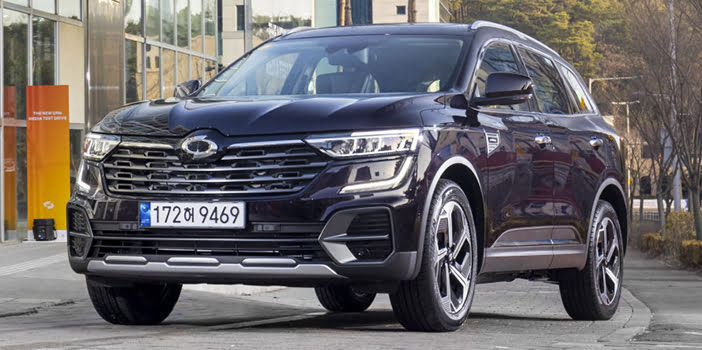
+++ RENAULT KOREA ’s new QM6 is more than just your typical SUV: it is also equipped with the much-loved perks of a sedan. SUVs are usually known to offer a less comfortable riding experience compared to sedans due to the bigger tires causing higher road impact. With an improved power train, reduced noise, an upgraded exterior and additional convenience features, Renault’s QM6 presents a solution to this issue by keeping the performance and capabilities of an SUV while incorporating the comfort of a sedan. The noise that is typically heard when driving a car can be attributed to sources all throughout the vehicle. Renault made sure to address these sources and have reduced noise, enhancing the driving experience. The carmaker explained that sound-absorbing materials were used in order to block out engine noise in the cabin. The car also features double-tier windows, offsetting the disadvantage of a typical SUV’s windows, which are more susceptible to wind noises due to their larger surface area. The LPe model in particular features a toroidal LPG tank (alternately referred to as a donut tank because of its shape) that is mounted on the car’s side beam as opposed to the floor of the frame. Due to its position, the noise, vibration and impact caused by the tank coming into contact with the vehicle’s body are greatly reduced, Renault said. This makes it not only quieter but also safer to ride. This earned the carmaker its own patent for the new mounting technology. To counter the increase in friction from higher engine revolutions, the QM6 uses a continuously variable transmission or CVT. Thus, there is no shock from gearshift changes and the car is able to maintain a low rotational speed of 1.300 rpm at 50 km/h and 1.800 rpm at 100 km/h. From the sturdier radiator grille and olive green napa leather seats to the filtered air purifier, the SUV also touts a sleek look and trendy specs. However, the most anticipated feature is arguably the Easy Life entertainment system, which has something for everyone. Riders can enjoy a 9.3-inch display for navigation, AI-based voice recognition technology, music and more. +++
+++ STELLANTIS continues to energize its drive to deliver clean, safe and affordable mobility around the world and meet the challenging commitments of the Dare Forward 2030 strategic plan, reporting a 14% year-over-year increase in the first quarter of 2023 Net revenues with all segments contributing positively. Global battery electric vehicle (BEV) sales increased 22% year-over-year. There are 9 additional BEVs to be launched in 2023, and total BEV offerings to reach 47 by the end of 2024. The electrification offensive in North America is fast approaching, highlighted by the unveil of the all-new, all-electric Ram 1500 REV at the New York International Auto Show. The Jeep Avenger, the brand’s first-ever BEV, was named “2023 European Car of the Year” and it was also recognized as “World’s Best Family SUV in 2023” by the Women’s World Car of the Year Awards. Stellantis is focused on the execution of the 3 pillars outlined in the Dare Forward 2030 strategic plan: Care: Stellantis emphasized its commitment to global gender equality via adoption of the United Nations Women’s Empowerment Principles. In the march toward carbon neutrality, the Company signed a binding term sheet with Vulcan to develop new geothermal projects aimed at decarbonizing the energy mix of the Rüsselsheim industrial site in Germany. Tech: Stellantis maintained a quick pace in the electrification transformation. Manufacturing investment announcements were made in Mangualde, Portugal; Eisenach, Germany; Cassino, Italy; and, Kokomo, Indiana, U.S. Continuing to build its network of partnerships to ensure supply of essential battery materials, the Company signed strategic deals with McEwen Copper, Terrafame and Element 25. Stellantis also expanded its software development and engineering network to eight hubs with a new operation in Gliwice, Poland. Value: Stellantis took various actions supporting growth in the Middle East & Africa region, including signing a framework agreement with South African authorities to develop a manufacturing facility, entering into an agreement with Koç Holding to further expand the existing Tofaş joint venture in Turkey, and, in Algeria, launching the FIAT brand which plans to have six carlines in market. In Europe, the implementation of the New Retailer Model will begin from mid-2023 in the pilot countries following an agreement with the European dealer associations. +++
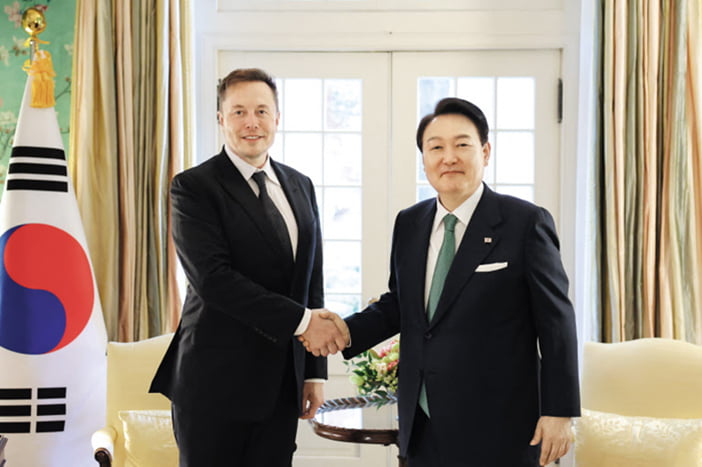
+++ President Yoon Suk-yeol met TESLA chief Elon Musk on Wednesday and asked him to pick Korea to build an electric-car factory. Presidential secretary Choi Sang-mok said Musk had asked for the meeting. “Korea has world-class robotic manufacturing facilities and highly skilled workers” and “is a country where Tesla will be able to achieve optimum efficiency in operating its giga-factory”, he quoted Yoon as saying. The EV maker has “giga-factories” in the U.S., China and Germany that seek to maximize production efficiency and is casting around for an Asian production base. Yoon pledged to provide active support including tax breaks once Tesla picks Korea. He also mentioned Musk’s SpaceX despite last week’s humiliating failure to launch a Starship, and said he hopes for increased cooperation with Korea’s burgeoning space industry. Musk said Korea is a “very interesting and high priority candidate” for the factory and added that he would like to visit. The 2 already spoke on Zoom last November. +++