
+++ ALFA ROMEO will deploy parent firm Stellantis’s new electronic architecture on its new Giulia in 2025, but boss Jean-Philippe Imparato has confirmed that this won’t lead to a wholesale reinvention of the brand’s interior design philosophy, nor a battle with the Germans on in-car tech. “I respect what Mercedes is doing with its digital technology, of course”, he told, “but my customers aren’t looking for metre-wide infotainment screens in their cars or 200 digital assistance systems to switch on and off. We’re developing our technology and you will see what we’re working on in 2025, when Alfa Romeo becomes the first to deploy the Stellantis group’s all-new electronic architecture, STLA Brain. But it won’t change how our cars speak or appeal to our customers. We must continue to play to our strengths”. Alfa Romeo’s customer research suggests that its buyers want an evocative cannocchiale (telescopic) double-cowled instrument panel in their cars and an infotainment system that gives them driver-specific information about their car’s condition but doesn’t bamboozle them with unnecessary information. “We will have the cannocchiale, for sure”, said Imparato, “and we will have a larger central display than we do currently, depending on the car. I also like the idea of a larger head-up display with a ‘ghost car’ projected as if on the road ahead, to help you position the car as you drive. This feels like something an Alfa should do. It’s helping you to drive the car and keeping you engaged in the process. “What I don’t need is to know the weather for 3 weeks’ time. I don’t care. I’m here to drive”. As regards autonomous driving technology, future Alfas will come with separate driving modes that Imparato describes as “I want to drive” and “I want to be driven” and will oblige drivers to choose between the two at the start of every journey, ensuring there’s no confusion between semi-autonomous operation and full human control. “But it’s important we know what systems will add value, and which we should exclude”, pointed out Imparato. “Our job isn’t to offer every lane-keeping, convenience and crash-avoidance system that we can, just because our competitors have them. We must be selective”. +++
+++ In May, global sales of plug-in PLUG-IN ELECTRIC cars increased exceeded 1 million units for the fifth time in history. Some 1.057.509 new passenger plug-in electric cars were registered globally in May. That’s about 50 percent more than a year ago and about 16 percent of the total market. All-electric cars represented some 70 percent of that volume: 727.000 units, which was also 11 percent of the total volume. It’s worth noting that battery-electric vehicles (BEV) are now consistently achieving about a 10 percent market share since February. PHEVs sold about 330.000 times and had a 5 percent share. So far this year, 4.558.183 plug-in electric cars were registered around the world, which is about 14 percent of the total volume. BEVs sold about 3.26 million times and had a 10 percent share. PHEVs did 1.3 million and had a 4.0 percent share. For reference, in 2022, more than 10 million new passenger plug-in electric cars were registered globally for the very first time. The most popular plug-in model in the world in May was the Tesla Model Y, which noted more than 90.000 new registrations. Behind the Model Y, we can see the BYD Qin Plus family (BEV and PHEV) with 42.895 units and the Tesla Model 3 with 38.453 units. The rest of de top-10 only consists of Chinese cars. After the first 5 months of the year, we can see the Tesla Model Y with an even bigger advantage over other models and the Tesla Model 3 racing with the BYD Song family (87 percent PHEV) for second place. The Volkswagen ID.4 is outside the top-10, at 11th position (68.818). In terms of the most popular plug-in brands, BYD noted 228.094 new registrations, far outselling any other brand. Even Tesla is almost 100.000 units behind with 134.020 sales. Next came GAC Aion – 45.016, BMW – 42.393, Volkswagen – 40.012, SAIC-GM-Wuling – 38.276, Mercedes-Benz – 29.189, Li Auto – 28.277, Volvo – 24.937 and Changan – 23.167. After the first 5 months, BYD remains the largest manufacturer of rechargeable cars (over 950.000 units and close to 21 percent share). BYD also expands sales of BEVs/PHEVs very fast. Meanwhile, Tesla is the sole leader in the all-electric car category (over 670.000 units, compared to less than 490.000 BYD). One of the most interesting things is always the relatively high position of BMW (a premium brand), but it’s probably just a matter of time before others, like GAC or Volkswagen, will take over. +++
+++ Former Nissan chairman Carlos GHOSN said during a news conference that the Japanese automaker and Renault are trying to go for less cooperation between them with a deal to overhaul their long-standing alliance. “With the latest agreement, they’re trying to go for a mini alliance with a very reduced scope of cooperation”, Ghosn told reporters in Tokyo via video stream. Nissan and Renault are holding discussions about a final agreement to overhaul their alliance, after announcing in January that the deal will see Renault bring down its stake in Nissan to 15% from about 43% to put them on an equal level. Earlier this year, Ghosn filed a lawsuit against Nissan and a handful of individuals seeking $588 million in lost remuneration, and a further $500 million in moral damages. “Nissan will have to pay for what they did to me and my family,” Ghosn said. “Nissan created a lot of damage … damage that can not be repaired. What I’m looking for is not revenge”, Ghosn added. “I just want to make sure that all the criminals and the plotters cannot sleep quietly in their beds after what they have committed”. +++
+++ JAGUAR LAND ROVER (JLR) owner Tata will build an electric vehicle battery factory in the United Kingdom. In an investment totalling about 4.6 billion euro, the Indian industry giant will establish local battery production with a view to starting supply to “anchor customers” (initially named as JLR and Tata Motors) as soon as 2026. Tata’s plant will have a capacity of 40 GWh, higher than the eventual 38 GWh targeted for Envision’s battery factory next to Nissan’s plant in Sunderland. The Faraday Institute forecasts that the UK needs a total of 100 GWh of local capacity by 2030 to satisfy demand for EV production, rising to 200 GWh by 2040. It was widely reported earlier that Tata had identified a site in Somerset to build a battery factory, with the potential to create 9.000 jobs, and an official announcement was expected imminently. Making that announcement, Tata chairman N Chandrasekaran said: “Today, I am delighted to announce the Tata Group will be setting up one of Europe’s largest battery cell manufacturing facilities in the UK. Our multi-billion-pound investment will bring state-of-the-art technology to the country, helping to power the automotive sector’s transition to electric mobility, anchored by our own business, JLR. With this strategic investment, the Tata Group further strengthens its commitment to the UK, alongside our many companies operating here across technology, consumer, hospitality, steel, chemicals and automotive”. The firm has yet to officially confirm whether the factory will be sited at Bridgewater in Somerset; a location historically linked with battery factory plans from various automotive manufacturers including Tesla, Rivian and JLR itself. Tata will produce “sustainable battery cells and packs for a variety of applications within the mobility and energy sectors”, following a “rapid” ramp-up phase during which the plant will be built and begin operations inside 3 years. Tata also plans to “maximise its renewable energy mix” at the battery factory, ultimately targeting 100% “clean” power. A core component of its sustainability ambitions will be the recycling of batteries in-house, aiming to create a “truly circular economy ecosystem” by recovering raw materials for reuse in new batteries. Many view that the government’s investment, thought to be worth hundreds of millions of pounds, could be the most important spend on the UK’s automotive industry since Nissan agreed to build its Sunderland plant in 1984. The BBC previously reported that the incentives tabled to the Indian firm (including cash grants and energy subsidies) were valued at around £800 million. A JLR spokesman told in May that all discussions, decisions and subsidies are a matter for Tata, and that JLR will only be a customer of the Tata plant. CEO Adrian Mardell confirmed in April that JLR itself would not build a gigafactory, categorically stating “that is not in our plans”. Tata Motors chief financial officer PB Balaji confirmed plans for a European battery plant at Auto Expo 2023 in Delhi, India. It will primarily supply JLR and India-based Tata Motors but will also sell batteries to the wider market. It will produce cells using 2 chemistries (lithium iron phosphate (LFP) and nickel manganese cobalt (NMC) ) with the latter earmarked for JLR, Balaji confirmed. “We are well covered on the production plans for batteries, but we will require some cell capacity coming into Europe”, said Balaji. The move could be a significant step towards ensuring JLR complies with European ‘rule of origin’ regulations for electric vehicles, which become stricter from 2024 due to Brexit agreements. The new rules will require that 45% of the value of an EV produced should come from the EU or the UK to qualify for trade without tariffs, increasing to 65% in 2027. Stellantis, which builds Citroën, Fiat, Peugeot and Opel/Vauxhall vans in the UK, previously called on the government to renegotiate the Brexit deal to delay the tightening of the rules. It warned they would lead to factory closures, resulting in the loss of thousands of jobs at Ellesmere Port and Luton; a sentiment that has since been echoed by Ford and JLR. Ford said the rules “would add pointless cost to customers wanting to go green”, while JLR called them “unrealistic and counterproductive”. JLR is poised for a radical reinvention as it expands its line-up of electric cars. Jaguar plans to completely relaunch with a £100,000 electric grand tourer in 2025, a year after the first Range Rover EV arrives. +++
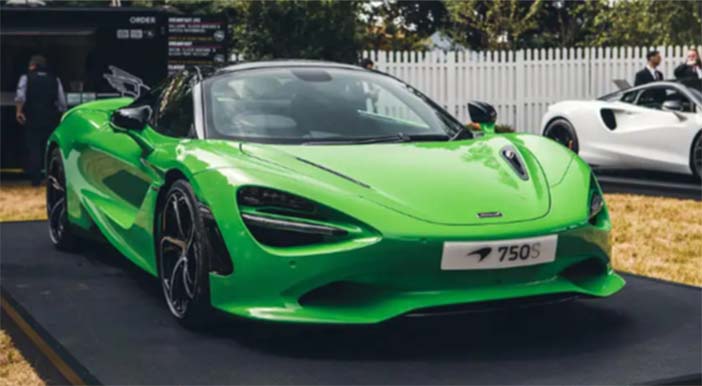
+++ MCLAREN will look to extend its range beyond its core mid-engined supercar models, but not before 2028. At the Goodwood Festival of Speed, McLaren boss Michael Leiters said the firm’s immediate priorities were to complete a reorganisation and recapitalization of the company “to bring the company on the right road to profitability” when asked how plans for a long-rumoured crossover model were progressing. “If we are on the right road for profitability, we will think about extension across all segments. We call it ‘shared performance’. Shared performance could be everything which has more than 2doors and/or more than 2 seats. ‘This is something we will think about later. We didn’t make a decision on that. It’s definitely a business opportunity for us. But I don’t see that in the near future. If you consider what I said (recapitalization and then going to profitability plus the development time of the car) this won’t be before 2028”. Leiters is just over a year into his role at McLaren, and has spent much of his time since reorganizing the company’s internal structure. The focus is now on working with existing shareholders “to recapitalise the company to fund and restructure” to allow it to return to profitability, the shareholders “aligned with this vision and business plan”. While this work is ongoing, “2023 will be a difficult year” for revenues and profitability, as in parallel to this structure and finance work Leiters is working on improving the quality of McLaren car that means its Woking factory is not working at full capacity. The Artura hybrid supercar has not yet fully reached its full production capacity, Leiters said, admitting that this will cause customer delays, including to the US launch. However, this was important “as the Artura is a fantastic car, and we don’t want to damage the image by taking risks” in delivering cars not at the required quality. “We still have to ‘robust’ our organisation and supply chain on that”. Some 500 Arturas had been delivered to date. The 720S-replacing 750S is in the ramp up phase now towards production, with the first deliveries expected at the end of this year. The car is already sold out to the end of 2024. Leiters believes these 2 cars sit together far better in McLaren’s range than anything previously as they have clear positioning and differences, both in terms of cylinder count (the Artura is a V6, the 750S a V8) and a technology (the former is hybrid, the latter pure ICE). These 2 models will be McLaren’s core range until the proposed 2028 expansion, and Leiters believes that the firm can still grow in the supercar market, not necessarily through volume but with increased pricing and “more specials”. On future electric models in its supercar range, Leieters said there were 3 pillars to the firm’s line-up and future plans: pure internal combustion engined models, hybrids and EVs. The 750S and Artura sit in the first 2 pillars respectively, with Leiter saying he expects hybrids to make up 90% of McLaren volumes in 5 years. On EVS, he said the firm “did not want to do a car weighing 2.000 kg and with 2.000 hp as anyone can do that” and instead if it was to launch an electric car it would have to be “comparable to a 750S weight wise”. He added: “We are working on concepts and have really exciting ideas around that, and if in time it is there it has to outperform what we can do with ICE”. That last comment not only refers to performance but also how the car drives, and the emotional experience for the driver. +++
+++ The MERCEDES-AMG performance car division plans to establish its own stand-alone software development centre at its Affalterbach headquarters on the outskirts of Stuttgart, new company CEO Michael Schiebe has revealed. In an interview, Schiebe said AMG is aiming to go one step beyond the new MB.OS (Mercedes-Benz Operating System) being developed by its parent company with its own add-on software package, which will be used exclusively by its future line-up of performance models. “We’re looking to create the perfect symbiosis between hardware and software development. Future Mercedes-AMG models will use software based on the MB.OS. But we will enhance it with our own special DNA that will give our hardware unique properties”, he said. Schiebe singled out the upcoming models to based on the company’s new AMG.EA electric vehicle platform as among those to benefit from the new software. It will operate in combination with other unique hardware components, he said, including batteries using technology developed by sibling company Mercedes-Benz High Performance Powertrains and axial-flux electric motors from Yasa; a British-based company acquired by Mercedes-Benz in 2021. “The aim is to ensure our future electric models retain traditional AMG qualities”, he said. The new software development centre is set to be based close to the existing hardware development division at AMG’s existing Affalterbach facility. “We’ve already chosen the site”, Schiebe revealed, but he wouldn’t be drawn on how many software experts the new centre will employ. “I want the best in the business”, said the 39-year-old German. “We’re at an early stage, but AMG will offer an attractive package with hybrid work conditions, flexible working hours, gym membership and other enticements. “I’m under no illusions. We need to convince software experts to choose Affalterbach over places like Berlin. We will do that by offering the best conditions we possibly can”. Mercedes-Benz already operates a software development centre at its Sindelfingen manufacturing base, close to Stuttgart. Established in 2022 at a cost of €200 million, it employs 1.000 workers. A further 2.000 software experts are employed in Mercedes-Benz’s global research and development network, according to the German car maker. +++
+++ TESLA on Tuesday sought to assuage Brandenburg state residents’ concerns by holding a question-and-answer session on the EV maker’s planned expansion that would make its local plant the biggest car factory in the country. Tesla, which currently produces around 5.000 cars a week, hopes to double the plant’s production capacity to 1 million vehicles a year and add 50 gigawatt hours of battery production capacity, though it has not provided a timeline. Ramping up output at its first European production hub is crucial to Tesla’s goal of vanquishing market leader Volkswagen , whose largest plant in Wolfsburg has capacity for 800.000 vehicles but last year produced only around 400.000. While Volkswagen still holds the highest EV market share in the region, Tesla is making its mark. Its Model Y was the best-selling car in Europe in the first quarter of the year. Tesla workers answered queries from locals on issues from water use and biodiversity protection to the environmental impact assessment for the expansion, in an attempt to address concerns that could hold up its application to local authorities. The first phase of the plant’s construction was delayed due to the high number of objections from local citizens, mostly related to environmental concerns. Tesla has long argued that the plant’s impact is relatively low and referred to the benefits of EVs in combating climate change. The carmaker is due to publish the full application for the expansion on Wednesday, and citizens have until mid-September to file objections. Tesla on Tuesday said the planned expansion covers a new 700-by-700-metre production space, around double the size of its current production hall, and could entail increasing its staff to 22.500, from around 10.000 now. The attendees’ main concern at Tuesday’s event was how the carmaker will manage to expand the plant without using additional water, which Tesla has said it will achieve by recycling the 1.4 million cubic metres of water it is licensed to use. “I keep my animals here for hunting and not even they get enough water. We just don’t have enough”, Emily, a 23-year-old attendee, told during the meeting. Still, others were more optimistic. “Water isn’t a Tesla problem. It’s a general problem”, said 68-year-old local resident Matthias Handschick. “If the recycling works, that’s good. We need these solutions”. +++
+++ TESLA’S BOARD OF DIRECTORS will return $735 million to the company, in order to settle a lawsuit that claims they were overpaid. The team of directors (which includes Oracle co-founder Larry Ellison, Rupert Murdoch’s son James Murdoch and Elon Musk’s brother Kimbal Musk) said they would return stock and cash made on exercised options from 2021 through this year, according to court filings. That totals to around $735 million, consisting of $458.6 million in company shares and $276.6 million in cash. The directors denied wrongdoing as part of the settlement and said they agreed to the deal to “eliminate the uncertainty, risk, burden, and expense of further litigation”, the filing reads. The settlement is awaiting approval from Delaware Chancery Court’s chief judge. The proposed deal excludes Elon Musk, who is undergoing a separate lawsuit on his $56 billion pay as Tesla CEO. The $735 million settlement stems from a 2020 lawsuit, wherein Detroit’s Police and Fire Retirement System accused Tesla’s board members of overpaying themselves in the form of stock options from 2017 to 2020. Tesla directors denied those claims, arguing that the company saw rapid growth sent the stock soaring. In the last 5,5 years, Tesla shares have zoomed 1.795%. +++
+++ Supply of new, unsold vehicles in the UNITED STATES , boosted by inventories of electric units, continued to increase in June, with days of supply standing at 53, according to data from Cox Automotive and the Automotive News Research & Data Center. Cox estimated unsold inventory at 1.95 million vehicles at the end of June, only slightly lower that in May, when inventory marked the highest level since April 2021. Toyota and Honda vehicles represented 9 of the 10 nameplates with the fewest number of days’ supplies. New-vehicle sales in June rose 20 percent from the previous June and posted the highest volume since May 2021, Cox reported. The seasonally adjusted annual rate of sales (SAAR) climbed to 15.7 million in June, up from May’s 15.1 million rate and 13.0 million in the year-ago June. Sales into fleet and increasing incentives supported the sales gain. The “asking” prices for new vehicles remained stable at $47.571 at the end June, very slightly up from $47.487 at the start of the month. “Sales of new vehicles closed the first half of 2023 surprisingly strong”, said Cox Automotive Senior Economist Charlie Chesbrough. “Pent-up demand from individuals and businesses that could not find their product or a price they were willing to pay last year was unleashed”. There was a 103-day supply of EVs as the month closed, with 90.963 units reported, and the average listing price at $63.486 (the data does not count Tesla, which sells direct to consumers). The car with the least dealer inventory was the BMW i4, with 40 days’ supply, Cox said. Cox also pointed out that inventory levels were lowest among lower-priced vehicles, with stocks growing roughly as price increased. The inventory of luxury vehicles (excluding ultra-luxury ones) stood at 310.304 at the end of June for a 62 days’ supply, said the report. Luxury vehicle supply has been mounting for the past few months. Among the 7 automakers still reporting monthly sales and inventory figures, 6 saw their days’ supply levels increase last month, between 1 and 4 days, with only Volvo staying level, according to figures provided by the Automotive News Research & Data Center. +++