
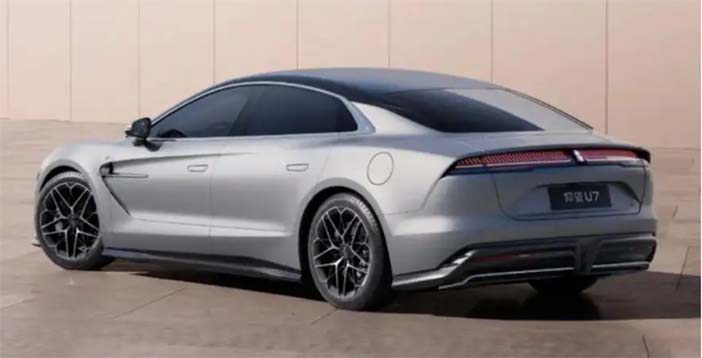
+++ BYD ’s new upmarket Yangwang brand has revealed its third production car: a 1.000 hp-plus luxury saloon aimed at performance variants of the BMW i5 and Mercedes-AMG EQE. Set to go on sale in China during the second half of 2024, the new 4-door is based on BYD’s e4 platform; the same structure that underpins the Yangwang U8 (a SUV) and the U9 (a supercar). The styling of the U7, created under the guise of former Audi design boss Wolfgang Egger, adopts cues already seen on the U9, including flamboyant C-shaped headlamp graphics, structured flanks and full-width tail-lights. It also reflects a family resemblance with BYD-branded models (including the Seal saloon) and accommodates wheels of up to 21 inch in diameter. BYD is yet to reveal the dimensions of the U7, but Chinese reports suggest it could stretch to up to 5.200 mm in length and 2.000 mm in width. Officials from the Chinese manufacturer claim it will be among the most aerodynamic efficient cars to enter production, with a drag coefficient that betters the i5 and EQE, at 0.195 Cd. In a posting to its official WeChat channel, Yangwang said the U7 gets more than 1.000 hp from 4 electric motors. At this stage, it isn’t known if the 4-wheel-drive saloon will feature a range-extender powertrain, as used by the U8, or a pure-electric one, as found in the U9. The REx system of the U8 combines a 2.0-litre 4-cylinder petrol engine with 4 electric motors and a 49.1 kWh lithium-iron-phosphate (LFP) battery. It develops 1.180 hp. The EV drivetrain used to power the U9 uses 4 electric motors in combination with a 100 kWh lithium-iron-phosphate (LFP) battery. It develops 1.100 hp. BYD said the new Yangwang flagship will cost upwards of 130.000 euro in Dutch pricing. +++
+++ JLR (formerly Jaguar Land Rover) has cut its substantial order backlog to 148.000 as improved global supply has resulted in production being ramped up. The majority of these cars (around 112.000, or 76%) are Range Rover, Range Rover Sport and Land Rover Defender models, JLR revealed today ahead of posting its full financial results for the third quarter of the 2023 financial year. The British manufacturer has been hampered by chip and other component constraints, with its backlog hitting a high of 215.000 orders at the end of 2022. This resulted in customers being told to expect to wait up to 2 years for delivery. +++
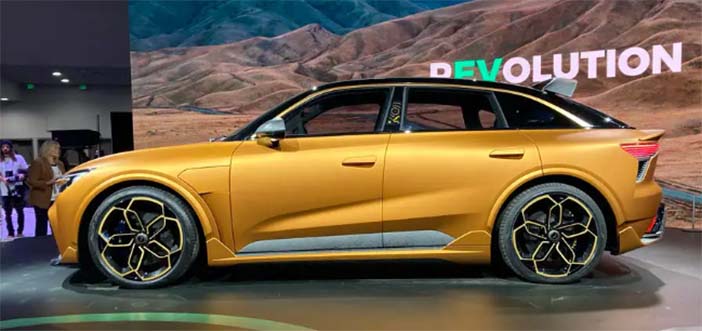
+++ MULLEN AUTOMOTIVE has revealed a 1.000 hp electric super-crossover that’s aiming to crack 320 kph. The California-based EV firm, founded in 2014 by David Michery, took to CES in Las Vegas to show its new flagship model, the Five RS, based on the Five it showed last year. The Five RS (no doubt conceived as a rival to the likes of the Tesla Model S Plaid and Lucid Air Dream Edition) is claimed to have more than 1.000 hp, a 320 kph-plus top speed and a 0-100 kph time of less than 2 seconds. Michery gave few technical details away at the car’s unveiling but did confirm that the Five RS features a twin-motor four-wheel-drive powertrain and 800 Volt charging architecture that is said to allow for a 0-80% top-up in just 21 minutes. Mullen also says the Five RS is fitted with 6- and 4-piston Brembo brake calipers clamping carbon-ceramic discs, an Ultra-Performance Race Track mode for maximum power and more engaging steering, and an AI-powered voice assistant with facial recognition technology. It is unclear whether the RS version (or indeed the Five on which it is based) is ready to enter production at the firm’s new factory in Robinsonville, Mississippi. The car on show in Las Vegas was clearly a prototype built just for the stage. However, it does have a full interior, complete with Alcantara-finished sports seats, carbon-effect trim and bespoke orange ambient lighting. Michery said in 2022: “From the inception of Mullen, it has been my mission to bring an ultra-high-performance EV to market. The Five RS is intended to be one of the fastest vehicles on the planet, competing with some of the best and most well-known and regarded automotive marques”. He had also pledged to showcase the car’s performance on track last spring, but the car has yet to be seen driving in public. Mullen holds a controlling stake in electric commercial vehicles firm Bollinger Motors, which revealed a hardcore pick-up and SUV duo at Los Angeles in 2019 but has since shifted focus to full-scale HGVs. The company was supposed to launch a sports car called the Dragonfly K50 (based on Chinese firm Qiantu’s K50) in 2021 but has yet to deliver any cars to customers. +++
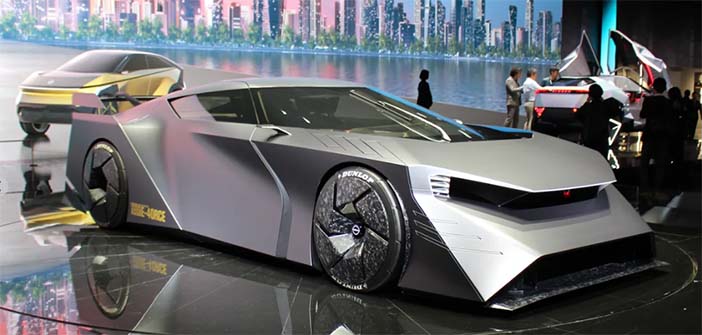
+++ NISSAN ’s Hyper Force concept car is a “lucid dream” that the firm is working on realizing for a next-generation GT-R, which could be ready before the end of the decade. Nissan program design director Giovanny Arroba, who worked on the recent Tokyo motor show concept as well as the four others alongside which it starred, told that the electric supercar was already largely feasible for production before 2030, despite its extreme styling. “The shapes, proportion and stance aren’t based on pure fantasy”, he said. “It’s quite daring but a tangible dream to achieve by the end of the decade”. The Hyper Force has 4-wheeldrive and an output of 1.360 hp. It has a solid-state battery, which Nissan is developing for mass production in 2028, and a new GT-R could provide a statement model in which to introduce this game-changing new technology. Arroba didn’t mention the GT-R by name when discussing what the Hyper Force concept pointed to, highlighting that the logo was deliberately blurred on the concept car and that it being revealed would all but confirm its production intent. The concept doesn’t try to hide with any subtlety that it points to the next GT-R, and when asked directly about this, Arroba said “it gives a glimpse of what it could be” and “the dream is still lucid” in making it happen. Arroba said the concept had become “a manifesto not only for us internally but [also for]how to inspire our company with a tangible dream”. He said that feedback to the concept had been generally positive but there had been “some polarization, some saying no to an EV supercar and saying we should do ICE” but the next generation of car buyers responding “quite positively” to the GT-R’s electrification. The dramatic concept car was revealed at the 2023 Tokyo motor show and was billed by Nissan as its “vision for a next-generation all-electric high-performance supercar”. Nissan CEO Makoto Uchida told: “We’re an EV pioneer and this is what we want to do. People’s expectations change and they don’t look at vehicles as before and in their needs and lives. We’ll hear from customers what they think about the concepts. This is giving a look at our future plans. All concepts, we’d like to deliver. We need the customers to agree”. The all-wheel drive system is badged E-Force, as with Nissan’s other four-wheel drive EVs, yet whereas they are twin-motor systems it is not known whether the Hyper Force uses 2 or 4 motors. The Hyper Force concept features a lightweight body with carbon fibre used in its construction. Nissan says that this body, combined with “powerful downforce” and the advanced control of the E-Force all-wheel drive system allows for “enhanced cornering and exceptional handling on circuits and winding roads”. No dimensions have been released by Nissan but the concept is large, most likely in excess of 5 meter long and 2 meter wide. The aerodynamics of the car were developed and designed in conjunction with Nissan’s performance arm Nismo. As well as providing “high” aerodynamic and downforce performance, the body design also substantially contributes to cooling performance to allow the concept to be driven harder for longer. Some of the features of the body include a dual-level diffuser at the rear, active front winglets, fender slips and rear wing ends, and a plasma actuator that is said to suppress air detachment to maximise grip and minimise inner-wheel lift while the car is cornering. The design has little in common with the current GT-R, which by the time this next-generation model enters production will be two decades old, but there are nods to the legendary Skyline lineage with the design of the front and rear headlights. The wheels are made from lightweight carbonfibre, in a design which improves aerodynamic efficiency while providing better cooling for the brakes. There are two driving modes offered on the concept car: R and GT, standing for racing and grand touring respectively. The interior lighting and displays change colour based on what mode is selected (red for R and blue for GT) and different information is displayed to the driver. The graphics inside have been developed with Polyphony Digital Inc, the maker of the Gran Turismo video game franchise – which designed the graphics for the infotainment in today’s GT-R. The interior layout, which features carbonfibre seats, also changes in the different driving modes. In R mode, the interior panels move closer to the driver to give the feel of a racing cockpit and four screens give different driving information such as pressures and temperatures. The GT mode gives more traditional infotainment displays. A full suite of automated driving functions are offered on the concept car, with Nissan saying they have been “tuned for sports driving” and will even provide extra safety functions on a circuit. +++
+++ RIMAC ’s next supercar might not be powered only by batteries, as the company is looking into the viability of a radical new technology that generates electricity using liquid fuels like diesel. Founder and boss Mate Rimac gave hints at what the next steps might look like for the Croatian brand, which is well underway with production of its second car, the 1.900 hp Nevera EV. “Rimac isn’t exclusively electric. It’s doing whatever is most exciting at the time”, he said, revealing that it’s “working on” a program that will determine if so-called nanotubes can be an effective source of energy for a vehicle. In essence, the idea is to superheat “chemically different” liquid fuels to generate electricity that could then be used to power an electric motor, thereby replacing the battery in an electric drivetrain. Mate Rimac cited liquefied petroleum gas, hydrogen and diesel as examples of fuels that could be used to power this arrangement. He revealed that his company had identified a start-up experimenting with the tech on a small scale and that tests had suggested nanotubes could operate at 80% efficiency, when the average for an internal combustion engine is 30%. The by-products of this process, said Rimac, include CO2 and other gases but far less than is emitted by any conventional ICE. He believes the programme has potentially significant implications for the whole car industry but “especially sports cars”, implying that there are substantial weight savings and packaging advantages to be gained by removing the battery from an electric drivetrain. +++
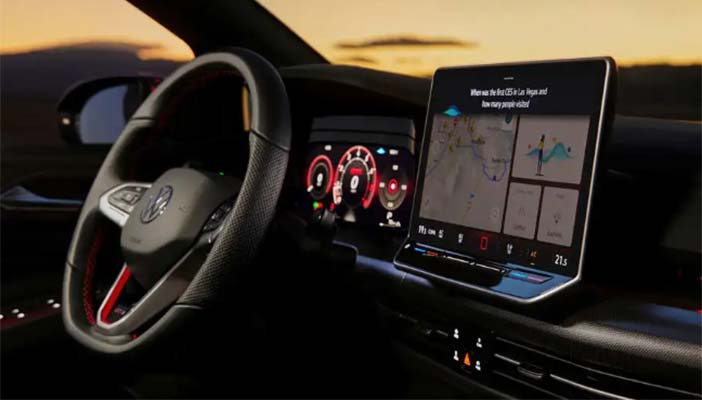
+++ The updated VOLKSWAGEN GOLF , to be revealed in a matter of days, is equipped with a ChatGPT voice assistant that can be used to control various vehicle functions and provide information and entertainment. To be rolled out across the Volkswagen line-up, the new system is designed to be more “conversational” and “natural” than the current in-house voice assistant. It can turn the heating up when a passenger says “I’m cold” or find a nearby shop if they say “I need bread” but can also provide more extensive information and entertainment functions, for example reading out detailed dinner recipes or children’s stories on the move. The move comes as Volkswagen rethinks its approach to interior design for its next-generation cars, including the Golf, with a focus on reintroducing physical, simple switchgear to boost utility. Asked why it’s introducing a new voice-control function in light of that approach, technical development boss Kai Grünitz told: “In China, they want to do everything with the speech dialogue system: adjust their seats, open the tailgate. In the Unitec Stes, they want to have huge switches with a great feeling to the touch and feel, and in Europe something in between. We will see how the customer demands will change in the next month or years; we’re prepared to do both worlds. For me, it’s more than a gimmick. We know from our studies of home systems how you use Amazon Alexa for example, or Amazon Echo, and you can have the same convenience and seamless interaction with your vehicle”. In response to the suggestion that some users might have concerns about sharing data with their car in this way, Grünitz said: “You will agree to the terms of use like you do with your smartphone. If you don’t want to use it, you just say, and then there’s no data exchange”. He said that between 70 and 80% of Volkswagen’s EV customers choose to be “online” in this way and said there was a “challenge to convince the customers, with functionality, that this is a great function for daily use”. +++
+++ Volkswagen is preparing to launch a 285 hp hot version of the ID.3 that will serve as an electric equivalent to the Golf GTI. The electric hot hatchback builds on plans first aired by Volkswagen with the unveiling of the smaller ID.GTI concept at the Munich motor show in September last year, with unique exterior styling touches, an upgraded interior and a revised drivetrain offering significantly more power and torque than existing ID.3 models. The upcoming range-topping ID.3 has 2-wheel drive, like every Volkswagen that has worn the hallowed GTI badge over the past 5 decades. However, instead of being front-wheel drive, this latest sporting model will have rear-wheel drive, in line with every other ID.3. Although Volkswagen’s previous management initially hinted at a dual-motor, 4-wheel-drive GTX version of the ID.3 at its launch in 2019, current CEO Thomas Schäfer has subsequently denied that the firm harbors plans for such a model. This is in part owing to the cost of re-engineering this version of the MEB platform to accept a front-mounted electric motor, as is possible in larger MEB-based EVs. Autointernationaal.nl understands that the GTX name could be used for the hot VOLKSWAGEN ID.3 , even though it has been previously reserved for four-wheel-drive EVs. Technical details remain scarce ahead of the ID.3 GTX’s planned introduction in 2024. However, the new EV is expected to feature Volkswagen’s significantly more powerful APP550 motor in place of the ID.3’s existing APP310 unit. As deployed in the new ID.7 saloon and extended-wheelbase ID.Buzz, the new APP550 motor features revised cooling measures, new windings and a more efficient inverter, among other key changes. In its initial form, it delivers 286 hp and 550 Nm of torque; an 82 hp and 230 Nm increase on the most powerful ID.3 model on sale today, the Pro S. Befitting its sporting remit, the ID.3 GTX will get a uniquely tuned chassis, with revised gearing for the steering, firmer springs and dampers and a lowered ride height, among other changes. It will also have recalibrated stability and traction control systems and a revised driving mode controller. In common with all existing ID models, it will use single-speed reduction gearing. It’s also likely to receive a 77 kWh lithium ion battery for a range of more than 500 km on the WLTP test cycle. Although it might not wear the GTI badge, it’s still expected to feature GTI hallmark design cues, including deeper bumpers with honeycomb inserts, new-look sills and unique wheel designs, and potentially even an interior with red accents and the classic Jacky plaid seat upholstery +++
+++ Volkswagen’s upcoming entry-level electric city car, known as the ID.1, will channel the spirit of the VOLKSWAGEN UP and could even take its name when it arrives in 2026. The affordable EV is due to follow the €27.500 ID.2all onto the market in the second half of the decade, rivalling the likes of the upcoming Renault Twingo and the new Citroën ë-C3 at less than €22.000. Volkswagen confirmed plans for a new entry-level EV last year when it revealed the slightly larger ID2all concept and is now working to bring the ID.1 to production within the next 3 years as a replacement for the Up, which recently went out of production after 12 years. Revealing that the first design sketches are complete and that development is under way, technical development boss Kai Grünitz suggested it will be an obvious successor to the successful city car in its conception and inevitably will share some design elements and attributes. “The ‘ID.1’ will be close to the Up regarding the usage of that car”, he said. “There aren’t so many possibilities to design a small vehicle for cities in terms of what it looks like. It will be a car that fits into the Volkswagen brand design DNA and functionality DNA but at a lower price”. He stopped short of categorically confirming the return of the Up badge, but Volkswagen places great value on its longest-running and most successful names. Golf, Passat and Tiguan are all due to be retained in the EV era, with the suggestion that the brand’s numerical naming strategy for its ID EVs could be retired. Grünitz outlined the importance of bringing such a car to market: “You need a smaller car that’s affordable for the broader customer base. That’s why we’re going for €27.500 for the ID.2all and we’re invested in the development phase for a vehicle below €22.000 – that’s Volkswagen. We have to go in that direction to convince our customers that EV is the right way”. Taking into account Volkswagen’s new 36-month vehicle development timeframe, the ID.1 should break cover before 2027. Indeed, Grünitz said the wraps will come off “several years before the end of this decade”. Set to be based on a bespoke platform, distinct from the ID.2’s MEB Entry architecture, it will be developed with a rigid focus on keeping costs down, which means it won’t play host to the same levels of advanced autonomy and connectivity functions shared by other, more expensive Volkswagen models. “You need a car that really fits the customer demands in that price class. You don’t need high-end technology within these cars”, said Grünitz. “Maybe you could bring your own device into this car instead of having a huge infotainment system, or something like that”, he added, hinting at the possibility for the Up replacement to feature a smartphone cradle in place of a touchscreen, like the previous car. “It has to be tailored to the customer group”, he said, adding that the focus will instead be on making it “bigger inside than outside”, with effective use of space and a range of innovative storage solutions. Neither will the final car be equipped with 200 kW fast-charging capacity or a battery that allows it to travel long distances, because it’s envisioned as a pure city car, “not a car for driving thousands of kilometers on the highway”. The Volkswagen e-Up, retired in recent weeks along with the petrol Up as production came to a close in Bratislava, Slovakia, claimed a range of 260 km and could charge at a maximum speed of 37 kWh. Asked whether the Up’s replacement can be produced profitably, Grünitz suggested that it might not need to generate huge margins in its own right but could rather serve as a ‘loss leader’ by introducing younger users to the VW EV line-up. “Should it be a vehicle that is profitable on its own, or should we look for a vehicle that might be for first users? I started with a Polo when I was 18 years old, I got in touch with the VW family, jumped into a Golf and never left the Volkswagen family”, Grünitz said. “It’s really important to have a vehicle for first-car users”. “There’s also the possibility to earn money with more expensive cars”, he said, suggesting margins from larger cars could be sufficient to support production of a less profitable model. In response to recent reports that Volkswagen could partner with Renault to develop the new cheap EV, Grünitz would only go so far as to say it remained a possibility. “We’re looking at several different ways: doing it on our own, doing it with Volkswagen Group sibling brands Cupra and Skoda, doing it with external partners… Everything has advantages or disadvantages, and in the end we will see where we’re at”. Nor has it been decided whether there will be sibling versions of the small EV, as is the case for the ID.2, which is technically identical to the Cupra Raval and an as-yet-unnamed Skoda model. +++