+++ DACIA currently has only one all-electric model in its line up, the Spring, which is not only one of the cheapest cars on sale, but also Europe’s cheapest electric car. During the Renault Group’s recent Ampere day, Autointernationaal.nl has now learned that Dacia’s future electric models could receive technology from the group’s electric division, Ampere, to help the value-driven Romanian brand grow its EV model range. Luca de Meo, CEO of the Renault Group and Ampere said: “we decided we would serve Renault group and OEMs so of course there’s discussion from Ampere with Dacia to help them transition to EVs”. While Renault is currently on a path to replace its internal-combustion engine cars with pure-electric by 2030, there’s no set date for when Dacia will make the switch. “For Dacia we think it’s about value”, says De Meo, “we did the Spring, although that’s a different concept, and now we are looking at when the paths will cross in terms of EV pricing. Ampere serves as a background to help these brands”. Dacia’s chief executive Denis Le Vot told at the Paris Motor Show that the firm’s next electric car would be the new Sandero, arriving in 2027. The Dacia boss initially said the firm would delay its commitment to using EV or ICE powertrains for its next supermini until late 2025 as the Renault Group won’t provide the flexibility to have a multi-energy approach, like Stellantis for example. Given that Ampere’s AmpR small platform has recently launched with the new Renault 5 E-Tech, it would make sense for the similarly-sized Sandero to use this same technology. Expect the Dacia to have a shorter range and slower recharge times than the Renault 5 E-Tech and upcoming Nissan Micra EV, given the Sandero’s predisposed focus on value. +++
+++ FORD plans to shut down the Michigan factory that produces its F-150 Lightning plug-in pickup, its signature electric vehicle, as demand for EVs continues to wane. The move is the latest blow to a model that had been a centerpiece of Ford’s EV strategy and that Chief Executive Officer Jim Farley said would be “a test for adoption of electric vehicles”. The automaker is to begin a 7-week shutdown in mid-November of the Dearborn plant visited by president Joe Biden in 2021, who drove a Lightning and declared “this sucker’s quick”. +++
+++ FORD is committed to making performance models in the future despite the slimming down of the Performance range for ST and RS models in recent years. With the Focus ST soon to follow the Fiesta ST into retirement, only the Puma ST and the Mustang will remain on sale. Autointernationaal.nl spoke to Ford of Europe design director Amko Leenarts in a wide-ranging interview on the firm’s future. Asked if there is still a future for fast Fords, particularly in the electric era, Leenarts said: “Definitely. If you look at Ford Performance, we’ve been bigger than ever: Formula 1, Dakar, WRC, Pikes Peak, Nascar. I can’t think of another brand that is present everywhere, so that must have an influence on our daily cars”. He added: “If we’re not doing that, we are making the wrong investments. So it’s got to transition to our normal car lines globally”. We have seen the new Explorer and Capri usher in a new look for Fords. Where is the brand now in terms of its development? “12 months ago, if you walked into a Ford dealership and you wanted to buy an EV, you could only get one the Mustang Mach-E. At the end of 2024, we’re looking at an entire range at different prices. It’s been such an important part of where we build our strategy. We have to stand out and we have to, in the end, offer a really, really wide range of good cars”. Question: We’ve gone from the likes of the Fiesta, Focus and Mondeo all following the same look to this bolder approach. What freedom does that give you as a designer? Answer: “From the moment I took over design in Europe in 2017, I was challenged a lot from the outside. ‘Amko, what do you call the new design philosophy?’ People want to know its name, and then you apply the same recipe, same DNA on each car. This kind of Russian doll strategy has worked for us for a while, and then it doesn’t any more. People are looking for vehicles that tell a story, that have a personality. It’s not a Russian doll any more. For us it’s still the Ford brand”. Q: Volkswagen has talked about becoming a ‘loved brand’ again and Ford’s approach is changing too. Have people fallen out of love with mainstream car brands? A: “It’s just a logical era. We came from everybody kind of wanting to copy the Germans as an example of great perceived quality. Before that, it was maybe Italian flamboyant design, or there was a period where everything was aero-driven, and then it went out again. But car makers all have to reinvent themselves, because just being 1 millimetre further on panel gaps or having slightly better lighting is not enough any more. It has to be a total package and tell a different story”. Q: Do you think we’re in a era of car design that we’ll look back on fondly? A: “Yeah, I would say so. Even though there are groups of cars that kind of look alike, the variety is bigger than ever. There are small cars, big cars, low cars, high cars, sports cars; there is obviously a whole army of SUVs. But even in that, there is just an enormous amount of differentiation. We’ve got an incredible amount of freedom. You’re not restricted any more. On the face, lights can go anywhere. On the rear, you can see that people are experimenting with it. I would say it’s a great time”. +++
+++ Almost a year since JLR apologised for severe parts delays and promised improvements at its new logistics hub, some customers have continued to experience issues that have only recently been resolved. Last November, JLR boss Adrian Mardell said the firm was “really unhappy” about problems at its then new Global Parts Logistics Centre in Leicestershire. It had been reported that some 10.000 cars had been off the road awaiting parts due to delays at the new distribution hub. Mardell promised the company would fix the issue and said customers would begin to see the benefits during the second quarter of this year. In February, he said the firm had begun to resolve the backlog but cautioned it would take time for dealers to repair the affected cars. In April, 2 months after the update, JLR customer Robin Tudor reported that his year-old Range Rover Evoque had broken down in January and the company had said the parts it needed would not be available until July. Last month, reflecting on the delay, he said he had been given contradictory explanations throughout. “My car is now working fine, but it has put me off JLR vehicles in future”, he said. Meanwhile, owing to a delay unrelated to JLR’s new logistics hub, Julie Courtis’s 5-year old Jaguar XF Sportbrake had, until recently, been in a garage awaiting parts 4 months after they were ordered. The parts have since arrived and been fitted but her husband remains unimpressed with the company’s customer service team. “It was their lack of transparency that was so frustrating”, said Simon Courtis. “For weeks, they had been saying only that the part ‘is on the list’ or blamed ‘supply chain shortages’. Recently they said it would arrive at the distribution centre in mid-September, but then my dealer was told JLR could still not say when it would arrive”. A spokesperson for JLR said the firm’s Global Parts Logistics Centre was now stable with consistent parts supply but conceded that some customers are still waiting for parts. “We do appreciate that some customers may not be feeling that improvement just yet. To resolve that as quickly as possible, we have invested 6 million euro to increase mobility availability for clients while they wait, provided 90% of JLR clients whose vehicles are in for repair with a JLR vehicle (up from 65% in October) and increased our customer service agents by 25% to give greater support”. Unfortunately, JLR’s offer of a courtesy vehicle to customers awaiting parts did not extend to the Courtis family, whose XF was with an independent garage. As a result, they paid 2.300 euro in hire car charges. JLR has blamed temporary supply chain ‘constraints’ along with model changeovers for a drop in car parts production and cited the impact of floods in central Europe on raw material production. Among the car makers affected was JLR, whose aluminium supplier was flooded, but a spokesman said the company had found alternative sources. +++
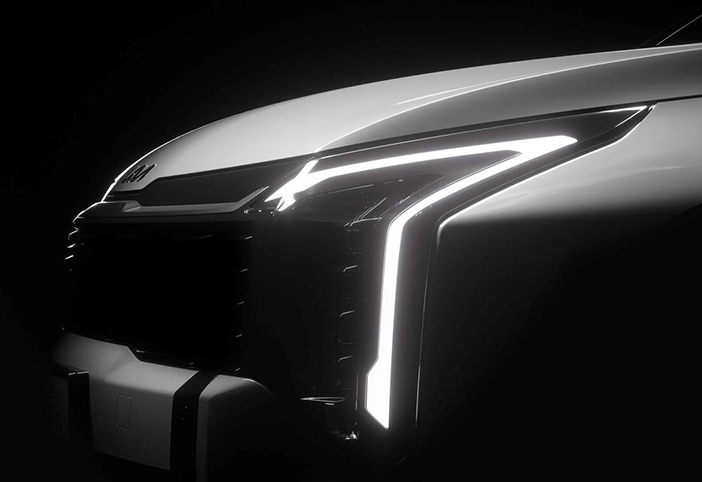
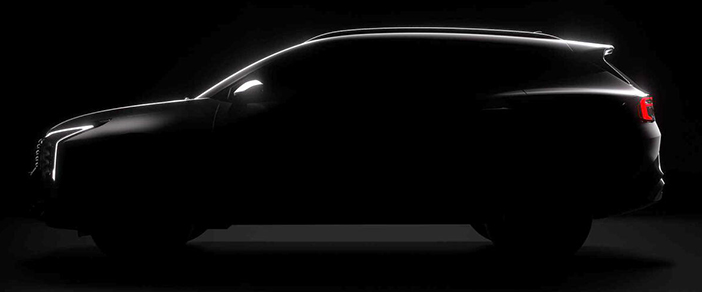
+++ KIA will give the Sportage SUV a chunky visual update, bringing it in line with sibling models such as the Sorento and EV9. The new look of Kia’s most popular model in Europe has been teased by the brand in Korea. Those images show a new headlight design that interprets cues from both the new Sorento and the EV9’s ‘Starmap’ lighting signature.
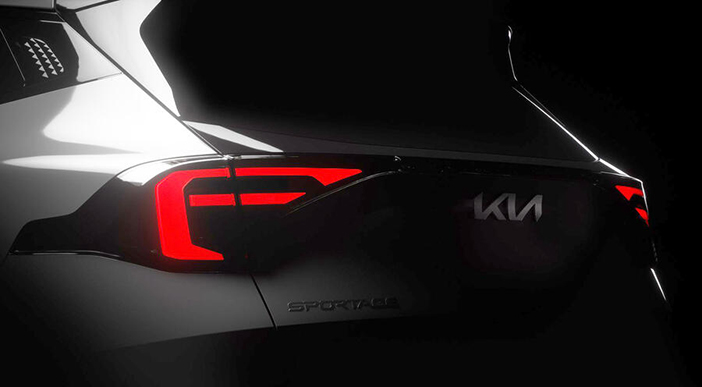
The Sportage also gets new rear lights too. The rest of the design, however, appears to remain relatively unchanged.
Little else has been released about the updated Sportage, but reports suggest it’s likely to adopt a tech-focused interior inspired by its electric siblings, such as the triple-screen infotainment arrangement found in the upcoming EV3. Underneath, the Sportage is currently offered with a range of hybrid and plug-in hybrid set-ups, which will likely continue with the facelift. However, Kia might look to slim down its offerings, for example by dropping entry-level trim level or the option of a manual gearbox. The facelifted model will likely also bring with it an inflated starting price, that would push it past the 45.000 euro mark in the Netherlands. Given the timing of the teaser, the updated car is expected to be revealed at the Los Angeles motor show, before going on sale in early 2025. +++
+++ The new PORSCHE 911 TURBO is set to arrive next year and will feature hybrid assistance for the first time, but the latest 911 Carrera S will be sticking with purely petrol power. The news comes from Porsche’s deputy chairman Lutz Meschke, who said during a call to investors that the new 911 Turbo is entering production in the second half of 2025 and will include a battery cell from manufacturer Varta. The same company is responsible for producing the lithium-ion unit used by the all-new ‘T-Hybrid’ powertrain in the 992.2 generation 911 Carrera GTS that was launched back in May. Meschke didn’t go into detail about how hybrid technology would be integrated into the 911 Turbo, however it seems very likely that Porsche’s all-wheel drive, everyday supercar will adopt a similar set-up to the 911 Carrera GTS. The GTS used to have a twin-turbo 3.0-litre flat-six, but that’s been replaced by a brand-new 3.6-litre flat-six engine with a single turbocharger. Between the turbo’s compressor and the turbine is an electric motor that can build boost pressure instantly when the accelerator is hit. Another e-motor is integrated into the 8-speed PDK’s transmission housing, with both drawing power from a 1.9 kWh lithium-ion battery in the front of the car. Combined power output for the GTS T-Hybrid is 540 hp and 610 Nm; an increase of 60 hp and 40 Nm over its non-hybrid predecessor. Better still, the hybrid system only added 50 kg to the car’s overall weight. The outgoing 911 Turbo packs a twin-turbo, 3.8-litre flat-6 engine that produces 580 hp, while the 911 Turbo S bumps that up to 650 hp. The addition of hybrid power is sure to see those already impressive numbers climb, and performance turned up another notch or two. The new 992.2 Porsche 911 Carrera S is due to arrive earlier in 2025, according to Meschke, and won’t be electrified. But I expect its 3.0-litre twin-turbocharged flat-six engine to benefit from the larger turbos and intercoolers the base Carrera received when it was updated a few months ago. This should result in a minor power boost from 450 hp and 530 Nm of torque in the current model. Other changes on the new 992.2 Carrera S and Turbo will mirror those featured on the 911 variants updated so far. Namely a fully digital instrument display, new front bumper designs that incorporate active aerodynamics, new headlights and tail-lights, and an upgraded version of Porsche’s PDCC active chassis control system for select models. +++
+++ SEAT achieved an operating profit of 415 million euro between January and September 2024. These results were 17.2% lower than for the same period of the previous year (501 million euro), in a challenging economic environment affecting the global automotive industry. Furthermore, 2024 has been a pivotal year for the company, marked by substantial investment to support several major launches for the Cupra brand’s range of BEVs and PHEVs as the company drives forward its transformation toward electrification. Due to a complex global environment marked by a growing competition, Seat’s sales revenue reached 10.5 billion euro, which represents a fall of 3% compared to the first 9 months of the previous year (10.8 billion euro), while operating return on sales fell by 0.7 % to 3.9%. Simultaneously, deliveries at Seat increased thanks to the strength of Cupra and the main brand. The company reached a total of 422.100 vehicle deliveries in the first 9 months of the year, an increase of 7.7% compared to the same period of 2023 (391.800). “2024 has been a challenging year, in which we have made a significant investment in the Cupra brand”, said Wayne Griffiths, CEO of Seat and Cupra. “With the addition of the Born VZ, facelifted Leon plus Formentor, and our new heroes, the Tavascan and the Terramar, we now have a fully-fledged brand, demonstrating our commitment to providing customers with a diverse range of high-quality of BEVs and PHEVs. We have done the necessary work and have what it takes to lead the way in electromobility”. Griffiths continued. Addressing the challenges in the transition to electromobility, Griffiths remarked “our company is fully committed to electrification—there is no Plan B. We’re undergoing the biggest transformation in our history, but we can’t do it alone. The future of our industry is at stake, and urgent action is needed to accelerate EV adoption and secure our competitive edge. Strong support from government and industry organisations is essential, as investments, jobs, and the future of our sector depend on it”. According to Patrik Mayer, executive vice-president for Finance and IT at Seat, “The external environment combined with mix effects and competitive landscape in 2024 present challenges. However, with a clear focus on our strategic priorities and two strong, resilient brands, we are committed to sustaining robust operating profits and returns on sales, driving us toward a more sustainable and profitable future”. In 2024, Cupra continues to break records and registered its best first 9 months in history, with 179.100 delivered cars. This represents 5.3% more than the same period in 2023 (170.100 cars) helping the unconventional challenger brand to surpass the milestone of 750.000 vehicles sold since its creation in 2018. The Formentor remains Seat’s best seller, with 85.800 units delivered so far in 2024, followed by the Cupra Born which registered 29.600 units delivered between January and September and consolidates the brand’s commitment to electrification. Cupra continues to grow in Europe with Germany as its undisputed best market with 59.200 cars delivered (+11.1%), followed by the United Kingdom with 22.900 (+22.5%) and Spain with 16.400 deliveries (+3.1%). The steady growth of the Seat brand has been an essential lever for the company. With 242.900 cars sold in the first 9 months, the brand is on the verge of double-digit growth with 9.6% (Jan-Sep 2023: 221.700). The Ibiza is celebrating its 40th Anniversary as the brand’s best-selling model, with 82.300 cars delivered, followed by the Arona with 72.600 deliveries. Germany also holds the position as the main market for Seat with 51.400 cars sold in the first 9 months of 2024. The outlook for the next year is expected to present significant challenges, with import duties on the Tavascan likely to negatively impact business performance. In spite of the challenging environment, Seat anticipates continued growth for both brands through late 2024 and into 2025. The company is now leveraging its fully-fledged Cupra line-up to increase deliveries and in parallel, Seat is set to sustain its positive momentum as the brand approaches its 75th anniversary in 2025. +++
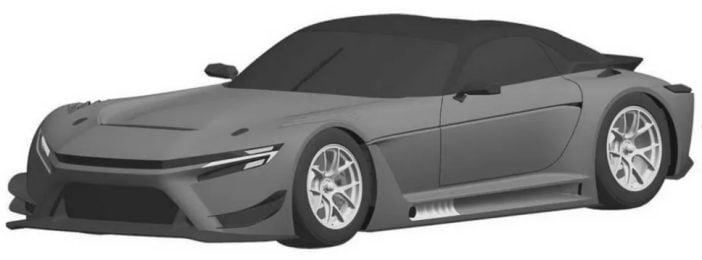
+++ TOYOTA has dropped the strongest hint yet that it is preparing to revive the MR2 and Celica in addition to renewing the GR86 and GR Supra. A recent episode of the company’s self-published cartoon, named Grip, briefly shows a whiteboard containing a list of new models: a Supra Mk6, Celica Mk8, MR2 Mk4, GR86 Mk3 and GR GT3.
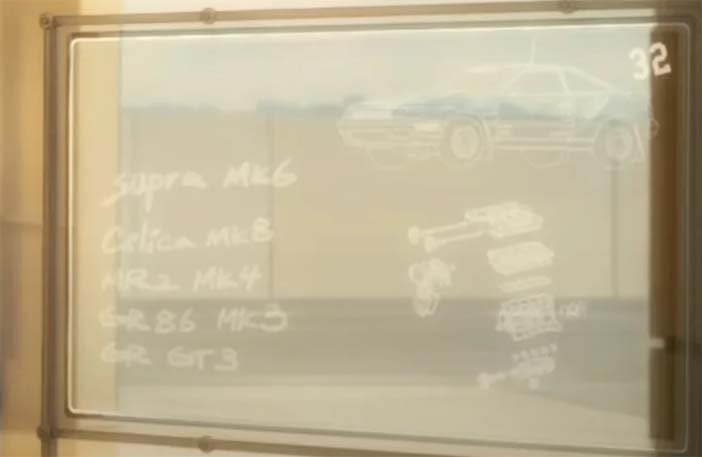
Notably, the whiteboard features alongside character Master Rugu, who guides the show’s protagonists in their battle against autonomous race cars. The new sports cars have yet to be officially confirmed for production by Toyota, but the teaser follows months of reports that the Gazoo Racing line-up is due to be drastically expanded. Toyota chairman Akio Toyoda, who was the driving force behind the creation of GR, has previously spoken of his ambition to revive what he calls the “three brothers”, the Celica, MR2 and Supra. As previously reported by Autointernationaal.nl, Toyota is currently debating whether to press a new Celica into production, utilising a new electric car platform that opens up “lots of different possibilities”. Key is a low seat height enabling true sports cars. The FT-Se concept revealed at last year’s Tokyo motor show sits 75 mm lower than the Porsche 718. It’s design is split into 3 modules, with single-piece front and rear ends. This “allows us to be more extreme”, Shinya Ito, general manager of Lexus Electrified, told last year. The new platform will also be used for a cab-forward 2-seat sports car channelling the spirit of the MR2, based on the FT-Se concept. However, it won’t necessarily revive the MR2 name. Japanese magazine Best Car reported earlier this year that the S-FR roadster concept revealed in 2015 has been green-lit for showrooms. Although its engine would be mounted up front rather than amidships, it’s possible that it will still take the MR2’s place as Toyota’s junior sports car, rivalling the Mazda MX-5. Toyota has yet to speak openly about the next-generation Supra, but it’s likely to be due within the next 3 to 4 years, given the current car was launched in 2019. The GR86, meanwhile, is set to be redesigned to meet new crash safety and engine emissions regulations, adopting a hybridised version of the turbocharged 3-pot from the GR Yaris. Speaking exclusively to Autointernationaal.nl during the 2023 Goodwood Festival of Speed, Toyota tech chief Hiroki Nakajima declined to confirm any plans for an all-new GR86 hybrid but said such a car was a “good idea”. The GR GT3 supercar was shown in concept form in 2022. +++