
+++ The next AUDI RS6 will be completely electrified for its fifth generation in 2026, when it will arrive with both a plug-in hybrid V8 powertrain and a fully electric one; a first for Audi Sport. Set to rival both the electric BMW i5 M60 and the M5, the new RS6 will be the most powerful version yet, producing as much as 740 hp in combustion-engined form. And for the first time since 2010, the RS6 will offer a choice of estate and saloon body styles. The decision to continue offering a combustion-engined RS6 comes 2 years after Audi confirmed its intention to take the RS6 fully electric. Slower than anticipated EV sales in important markets prompted a revision of that plan, with Audi now instead seeking to extend the life cycles of key ICE models well into the next decade. The dual-powertrain approach is underpinned by a dual-platform strategy. The electric RS6 e-Tron sits on the Volkswagen Group’s Premium Platform Electric (PPE). Meanwhile, the combustion-engined RS6 adopts the Premium Platform Combustion (PPC); an evolution of the MLB architecture used by the current RS6, which was introduced in 2019. Details remain scarce, but the combustion-engined RS6 is understood to continue with an updated version of the Porsche-developed twin-turbocharged 4.0-litre V8 petrol engine used by its predecessor. But in order to meet stricter Euro 7 emissions legislation, it is expected to be combined with a plug-in hybrid system that incorporates a gearbox-mounted electric motor and a lithium ion battery; a set-up already deployed in various Porsche and Bentley models. Recent sightings of test vehicles appear to confirm this development, with mules spotted wearing smaller, more inboard tailpipes closely resembling those fitted to the Porsche Cayenne Turbo E-Hybrid. A ‘high voltage’ sticker has also been seen on these prototypes. Using this set-up also means a bump in power over the existing RS6’s 625 hp and 835 Nm. For example, in the most potent Cayenne, the PHEV arrangement delivers a combined 740 hp and 940 Nm of torque. An even more powerful version of this PHEV powertrain is used in the facelifted Porsche Panamera Turbo S E-Hybrid, where it develops 785 hp and 1.000 Nm. That provides the four-wheel-drive luxury liftback with an official 0–100 kph time of 2.9 seconds and a 325 km/h top speed; figures that Audi Sport will be aiming to emulate with the new RS6. The move to develop the V8 for the RS6 is reinforced by fellow Volkswagen Group brand Porsche, which announced last year that the next-generation Cayenne and other models will retain combustion engines into the future, with investment aimed at “improving the efficiency of the V8 developed by Porsche and built at the Zuffenhausen engine plant”. The electric RS6 e-Tron, meanwhile, is confirmed to run a sophisticated dual-motor, 4-wheeldrive powertrain that builds on the one already in the S6 e-Tron. In that model (launched alongside the standard A6 e-Tron earlier this year), the system develops 550 hp and 850 Nm. Insiders at Audi Sport have suggested that power will be ramped up to somewhere closer to 680 hp and 950 Nm. One source said: “It’s unlikely to reach as far as the RS e-Tron GT (Audi Sport’s most powerful model, at 925 hp), but there will be a solid increase over and above the S6 e-Tron as part of the differentiation measures”. Like some other performance EVs, such as the Hyundai Ioniq 5 N, Audi will also give the RS6 e-Tron a trick gearbox and pump sound into the cabin to increase driver engagement. Audi Sport engineers are also claimed to be developing a progressive torque curve. The EV will use the same 94.8kWh (usable) battery as the A6 e-Tron but, given its performance positioning, it isn’t expected to achieve the same range as the standard saloon 750 km or Avant estate (700 km). Both the electric and combustion-engined RS6s will be visually more aggressive than their standard stablemates, with a more angular design, wider arches and, at the rear, a deep diffuser and larger roof-mounted spoiler. For the PHEV, notably larger air intakes and centrally positioned oval tailpipes will be added. Meanwhile, the EV will grow to 4900mm in length, to match its PHEV V8 sibling. Despite the adoption of lightweight materials such as aluminium and composites, the extra hybrid hardware will add mass, tipping the new PHEV RS6 beyond the 2.090kg of its predecessor. The electric RS6 E-tron, meanwhile, is set to exceed the 2.500kg mark. To preserve handling agility and improve comfort, Audi Sport is expected to introduce a new active suspension system similar to that of the Panamera Turbo S E-Hybrid. Sightings of prototypes also suggest braking will be handled by large carbon-ceramic discs and 10-piston front calipers. As with previous iterations, the new RS6 is expected to maintain a significant premium above the rest of the A6 range. +++
+++ When one thinks of the Flying B’s contemporary wares, there’s never any shortage of horsepower, but the racing pedigree that made the brand so successful at the start of the 20th century is a second thought to supreme serenity. Indeed, a BENTLEY is an ultra-luxurious machine first and foremost, but even among buyers who can tell what forest their wood trim came from just by the grain, there is always a small group of individuals who are bored by opulence alone, seeking to push the limits of performance beyond what their peers think is reasonable. In the 1920s, the Bentley Boys personified this attitude of extremism. In the 2020s, those who choose to get behind the wheel of the monster Bentley is now testing at the Nürburgring will be stealing stares and grabbing glances. Based on the Continental GT Speed, this prototype captured by our spies is preparing to become the most hardcore Bentley yet. Unlike the regular GT Speed, this prototype has a large spoiler on the trunk and aggressive canards on the front end, and such aggressive bodywork has previously characterized the Supersports. Until the 2017 Supersports, the aesthetic changes were always subtle, but Bentley went hardcore with a vented hood, more aggressive front and rear ends, and a sizable wing on the trunk. It’s unclear if this prototype will swap its spoiler for a wing at a later stage, but then again, this may not even be the most aggressive Continental in the Bentley pipeline; previous Supersports variants have arrived at the end of the life cycle, not near the start, so this may well be a hotter Continental, but not necessarily the hottest. That said, the sinister taillights and quad tailpipes are signature styling characteristics of the Supersports. My spies have also floated the idea of this being named the Continental GT Speed RS. The wheels on this prototype appear to be fairly vanilla, but other sightings of this hardcore Bentley have shown a more intricate, aggressive dual-five-spoke design. Nevertheless, the Pirelli P Zero tires and large brakes suggest this won’t just be an appearance package; we expect more power. The current Continental GT Speed’s twin-turbo V8 hybrid delivers a combined 771 hp and 1.000 Nm of torque, so a figure close to or just beyond 800 hp seems reasonable. After all, the last GT Supersports had 79 more hp than the car upon which it was based. As we touched on earlier, the current Continental GT Speed has only been around a little more than a year (and this is our first sighting of the sportier special edition), so we doubt this hardcore version, whatever name it bears, will be revealed before the end of the year. +++
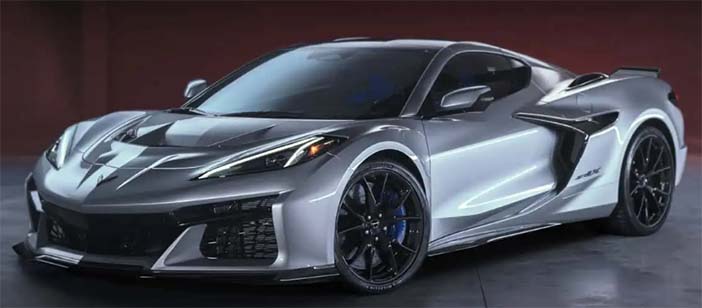
+++ The CORVETTE ZR1 may already be the fastest rear-wheel-drive car to touch down on our planet: A record-stomping track monster that crushes 100 km per hour in 2.4 seconds, and whose 375 kph top speed reads like an AI hallucination. Now, Corvette is working on the ZR1X. Chevrolet executives say the ‘X’ signature underscores this as a natural evolution of the ZR1 family, rather than a standalone model. Or, just spitballing here, a standalone, more-desirable, more-collectible model. Wouldn’t want to hurt the standard ZR1’s feelings, or those of buyers. Yet speculators and sharp-lensed spy photographers got a lot right, if not the ZR1X’s earlier-than-expected arrival, with deliveries set to begin before year-end. This is the range-topping, AWD hybrid Corvette that has haunted the dreams of collectors and the nightmares of 7-figure European rivals. “America’s Hypercar”, Chevrolet is calling it. What once would have been eye-rolling GM performance puffery, in the days of Fieros or Solstices, now seems legit. Forget garden-variety 911s that put a chip on the Corvette’s shoulder since about, oh, 1963. The ZR1X directly targets the rare birds typically spotted in Goodwood or Pebble Beach, and then never again outside of YouTube crash videos: The $3.9-million Ferrari F80, a $2.1-million McLaren W1, a $2.7-million Mercedes-AMG One. Sure, it’s “only” a Chevrolet. But here’s the crazy part. Blue-collar badge aside, the X no longer comes across as the performance underdog. Not with a track record of track records for its rear-drive sibling. And not with a gonzo, fully competitive 1.250 hp and roughly 1.250 Nm of torque. Versus an X-less ZR1, a jump of 190 hp and about 200 Nm is entirely due to a Frankenstein jolt from an electrified front axle, an upgraded version of the Corvette E-Ray’s hybrid system. The extra oarsmen up front relieve a brutal burden on the ZR1X’s rear tires, helping them lay down power and maintain grip, including on optional Michelin Pilot Sport Cup 2R tires. Especially for standard Pilot Sport 4S rubber, AWD will make the ZR1X more confident in slippery street conditions, which translates to more opportunities for fun without jangling nerves. Neutral handling and driver confidence were development watchwords. Leveraging the front axle, says Corvette vehicle chief engineer Josh Holder, “is the most approachable way to achieve maximum capability and predictable, repeatable performance”. Keith Badgley, ZR1X lead development engineer, says plotting performance curves shows the lighter ZR1 a touch quicker through the middle of many corners. But for corner entry or exit, it’s game over. The 4-wheeling freak can use regenerative braking to help slow and balance the car. From there, the ZR1X leaps like a cheetah with a taste for gazelle. “You’ll feel that coming out of every corner, the car clawing you out”, Badgley promises. “This thing accelerates like crazy, like nothing you’re used to. The 2 powertrains play together in a harmonious and advantageous way that’s beyond what you’d expect from just adding them together”. Naturally, the ZR1X is no slouch in a straight line, despite those electrified parts pushing it past 2.200 kilos, even in base coupe form. The ZR1X can maintain an unholy 1.3 g’s of longitudinal acceleration throughout first and second gears, and nearly through third gear. In more familiar terms, that’s a wormhole trip from 0-100 kph in 2.0 seconds. And though GM President Mark Reuss hasn’t done a 375 kph run in this baby (a stunt that, Reuss told me, left his spouse anxious and none-too-pleased) the Corvette team is confident in simulations that show the ZR1X matching that terminal velocity. But that’s all moot, innit, in a boundaried world where a standard ZR1 runs out of room at around 290 kph. Recall that the E-Ray’s oft-quoted 1.1 kilowatt-hour battery, neatly ensconced in the cabin’s center tunnel, is only the useable portion of 1.9 kilowatt hours of lithium-ion pouch cells. So, engineers managed to squeeze 26 percent more energy from the same-size battery, unlocking more than 1.5 kWh of usable juice. Expanded voltage allowed engineers to push more power into the drive unit, which gains 26 horsepower and 27 Nm versus the E-Ray. That single motor was redesigned to handle increased loads, including new bearings. As on the E-Ray, the hybrid battery is designed for hyper-fast discharge and charge events, versus EV-style propulsive stamina. So there’s plenty of buffer to ensure consistent performance and battery life. On the street, it’s impossible to deplete the E-Ray’s battery to where it can’t provide boost (and oh, how I’ve tried) no matter how hard you drive. Push a Charge+ button, included on the ZR1X, and the Corvette boosts motor resistance to fully recharge within a few miles of normal driving. As Tadge Jüchter, the now-retired Corvette chief engineer told me, the no-hassle hybrid system is designed to convince Corvette refuseniks (of which he admits there are many) that electricity can be their performance friend, and is nothing to fear. That front axle can contribute power at up to 260 kph before disconnecting, versus 240 for the E-Ray. Intelligent strategies, heavy on the algorithms, reserve electricity for when it’s truly needed. “We want to be razor sharp in how we use that finite energy”, Badgley says. To humiliate mere supercars, a “push to pass” function unleashes the full tag team of gasoline and electric thrust. That’s accessed via a repurposed steering-wheel cruise-control button. A Qualifying Mode provides maximum jolt up to the front axle’s speed limit. An Endurance Mode monitors state-of-charge to sustain all-wheel advantages through a full tank of fuel. Aside from ZR1X badges on the flanks, steering wheel, and interior waterfall panel, you’ll need to squint to spot exterior differences. Or crouch to see the E-Ray’s telltale, additional front radiator on the driver’s side. Both cars offer the bewinged aero package and carbon-fiber handling aids. Both offer optional carbon-fiber wheels. To rein in the thrust, the ZR1X does introduce standard carbon-ceramic brakes that are the largest in GM history, including 16.5-inch front rotors clamped by 10-piston calibers. For 2026, that “J59” brake package will become an option on the ZR1. These bros love to share. Whatever your preference on rear-drive versus AWD, the ZR1X has one clear edge: The redesigned interior of all 2026 Corvettes, which is more visually appealing and functionally coherent. That includes enlarged screens, a useful 6.6-inch auxiliary driver’s screen, and a passenger grab handle that replaces the former try-hard waterfall switches. Tactile HVAC controls migrate below the main display. A smartly redesigned console adds a drive-mode controller that no longer feels like carpal tunnel waiting to happen. Tony Roma, the new executive chief engineer, notes there are no production limits on the ZR1X. If you order one, a process set to begin soon, Cherolet will get it in the pipeline. It hopes to build as many as fans demand. I’m going to peg a ZR1X at €300.000. Some old-school Corvette fans will choke on the price. But so will people who pay $1 million or more for highfalutin’ hypercars. Even they’ll know a (relative) bargain when they see it. +++
+++ Electric performance cars have proven to be a hard sell. Even Mate Rimac, who started a company that makes EV hypercars, thinks so, and that’s proving to be bad news for FERRARI . Reuters, citing anonymous sources, reports that Ferrari is delaying its second EV from 2026 to 2028, because right now, there’s evidently “zero” demand for such a car. The Reuters story says that Ferrari’s first EV will be a low-volume special model, and a “symbolic milestone model that will meet its promise to launch its first EV in 2026”. The second electric Ferrari, which was supposed to arrive by the end of next year, will be a higher-volume production car. Ferrari sells around 5.000 to 6.000 examples of each regular-production model over a 5-year run, but one of Reuters’ sources said that would be impossible with an EV arriving next year. There’s virtually no customer interest, so Ferrari is delaying the model until 2028 at the earliest. This additional time also has the side benefit of allowing Ferrari to further develop its EV technology. We reported previously Ferrari has applied for patents on a virtual engine-and-transmission system for electric cars, not unlike what Hyundai has done successfully with the Ioniq 5 N. Still, one of Reuters’ sources said that the main reason for the delay is the demand issue, not anything having to do with the car itself. Ferrari isn’t the only Italian performance-car brand to delay its electric performance car plans. Lamborghini pushed back the launch for its first EV from 2028 to 2029 and Maserati outright killed the electric MC20. EV demand is slower than many automakers once anticipated, and regulatory pushes to end gas-car production have been either delayed or abandoned entirely. For Ferrari, a wait-and-see approach might not be such a bad thing, rather than committing to something it might not need to build after all. Or, customers might suddenly embrace performance EVs at a greater rate. +++
+++ Selling cars in Europe today requires a delicate balancing act. On one hand, combustion-engine vehicles remain the preferred choice among buyers. In the European Union, electric cars held only a 15.3% market share in the first four months of the year, according to data from the European Automobile Manufacturers’ Association (ACEA). On the other hand, tougher legislation is forcing automakers to accelerate the rollout of EVs. Therein lies the problem. KIA says it must tread carefully because favouring either side could backfire. Carlos Lahoz, the company’s vice president of sales in Europe, explained why prioritizing combustion engine cars over electric vehicles, or the reverse, should be avoided: “If we rely too much on combustion cars, we risk not reaching the CO₂ targets and having to pay fines. If we push EV sales too much, we end up denting our profit margins”. It’s no secret that the EU is breathing down the car industry’s neck with stricter emissions regulations. Some automakers, like Volkswagen and Renault, have expressed concern about potentially paying billions of euros in fines in 2025 alone for exceeding the newly enforced limits. The EU has granted carmakers an additional 2 years to meet these targets by calculating fleet emissions as an average over the 2025–2027 period, rather than requiring compliance in 2025 alone. Even so, automakers are facing significant headwinds. Stellantis’ chairman recently stated that engineers spend over 25% of their working hours solely on ensuring cars comply with increasingly stringent legislation. It’s safe to assume that meeting stricter emissions standards takes the lion’s share. Especially with 2035 looming, when automakers will be required to sell only EVs in countries that adhere to EU legislation. But going all-in on EVs today isn’t a viable solution either. Lahoz acknowledges that electric cars still can’t match the profitability of combustion engine models. Battery costs remain too high to make electric vehicles financially competitive, so Kia must strike the right balance between gas-powered and electric vehicles to maintain a sustainable business. Companies are still free to sell as many gasoline and diesel vehicles as they want in Europe, provided they balance those sales with plug-in hybrids and, especially, electric vehicles to reduce average fleet emissions. The issue Lahoz raised isn’t unique to Kia, as virtually all major automakers face the same dilemma. The development of tomorrow’s EVs is being funded by profits from today’s gas-powered cars. Price parity between the two has still not been achieved, with a few exceptions, primarily limited to Chinese manufacturers taking advantage of lower production costs. Sales-wise, Kia is performing exceptionally well in Europe these days, even outpacing some of the most established names on the continent. +++
+++ It’s not easy being an automotive engineer tasked with developing a new car for the European market. The EU undoubtedly has the strictest legislation in terms of emissions, noise, safety, and other criteria. These higher standards not only drive up prices but also consume a significant portion of engineering time. Stellantis chairman John Elkann told that an engineer working at one of the largest automotive conglomerates spends more than a quarter of their time solely on ensuring compliance with the EU’s stringent REGULATIONS : “If you look at our engineers, more than 25 percent just work on compliance, so no value is added”. And it’s only going to get worse. Elkann, who also chairs Ferrari, says cars sold in Europe will need to meet more than 120 new regulations by the end of the decade. The most daunting challenge is reducing fleet emissions. The 93.6 g/km average for 2025 to 2029 is already 15% lower than the previous standard. For the 2030-2034 period, that figure will have to drop further to just 49.5 g/km. Starting in 2035, new cars sold in Europe won’t be allowed to produce harmful emissions, effectively banning the use of combustion engines. Elkann argues that small vehicles are also being squeezed out as rising prices, driven by costly regulatory compliance, make them less viable. The Volkswagen Group stopped making the VW Up, the Skoda Citigo and the Seat Mii years ago. He noted that more than 1 million vehicles priced under €15,000 were sold in Europe in 2019, but that number has since plummeted to around 100.000. His solution? The EU should take inspiration from Japan’s kei cars and introduce a European equivalent: “There’s no reason why if Japan has a kei car, which is 40 percent of the market, Europe should not have an E-Car”. Earlier this year, former Renault CEO Luca de Meo also emphasized the need for smaller cars, stating: “Driving around every day in an electric vehicle weighing 2.5 tons is clearly an environmental nonsense”. Despite the growing popularity of crossovers, there’s still a clear demand for smaller, lighter vehicles in Europe. Renault’s budget brand Dacia is thriving with its no-frills line-up that’s both lightweight and affordable. According to data from the European Automobile Manufacturers’ Association (ACEA), Dacia held a 5.1% market share through April, thanks in part to the success of the Sandero. While Dacia does sell SUVs like the Duster and Bigster, even the heaviest configuration of the latter weighs only about 1.400 kilograms. Excessive bureaucracy is undermining affordability and could backfire on Europe’s push for electrification. Making new cars more expensive risks encouraging people to keep their older, more polluting vehicles. Loosening regulations on small cars, similar to Japan’s kei car approach, could give automakers the flexibility to build cheaper, more efficient models. Will that happen? Given the EU’s tendency to tighten the rulebook, it seems unlikely. +++
+++ This is the all-new SKODA EPIQ , a baby electric SUV designed to sit underneath the larger Elroq and Enyaq (and later the 7-seat Eviatiq) when it arrives in 2026. We’ve known the car is coming for some time, having been previewed by a concept last year, but this is the first time the model has been caught testing on public roads. While still wearing extensive cladding and heavy disguise, we can see from these first images that the Epiq will inherit a family look with stacked head and daytime running lights, connected via the brand’s now-familiar ‘Tech Deck’ face; a gloss-black panel housing many of the car’s sensors and radars for its suite of Advanced Driver Assistance Systems (ADAS) and features. The slashes and vents in the bodywork and lower part of the bumper will set the Epiq apart from its larger siblings, though the intricacies of the design remain under lock and key for now. Like the Elroq and Enyaq, the smallest Epiq will feature a clamshell bonnet that wraps around the side of the car to the A-pillar. From the side, we can see the Epiq will utilise a shorter wheelbase, plus cut-down front and rear overhangs. Its stubbier overall proportions should allow it to slip into the segment currently occupied by budget alternatives such as the Citroen ë-C3 and forthcoming BYD Atto 2. The Epiq concept measured 4.1 metres long; significantly shorter than the 4.5-metre Elroq.At the rear, the upright tailgate should help preserve bootspace; Skoda doesn’t want to sacrifice its reputation for offering clever, practical cars. Design-wise, there’s a good chance we’ll see the concept’s T-shaped rear light clusters make the cut, alongside the usual SKODA lettering and a numberplate fixed to the bootlid rather than the bumper. The prototype’s overall proportions, plus its roof rails and cladding, lend it that baby-SUV look, though the ride height doesn’t look much taller than your average supermini’s. While it’s not clear how quickly the car is travelling, it looks to be cornering relatively flat. While we’ve not yet been given a look inside, when unveiling the Epiq concept, Skoda hinted that much of that model’s interior would be carried over to the production car. If this is true, we can expect a larger central display flanked by a smaller digital instrument cluster, plus plenty of storage and features that align with Skoda’s ‘Simply Clever’ marketing messaging. At the time of its unveiling, Skoda boss Klaus Zellmer described the Epiq concept as “offering a spacious interior within a compact exterior, all at an attractive price”. While unconfirmed, I previously suggested a price of around 25000 euro . The small SUV is set to be revealed in 2026, shortly after an Octavia-sized EV is shown at the Munich Motor Show in September this year. The Epiq will be based on the Volkswagen Group’s MEB-Small platform, which will also feature on the VW ID.2 and forthcoming Cupra Raval. We can expect a choice of battery sizes, with the biggest offering up to 400 km of range. +++