+++ A new study from LendingTree analysed driving-under-influence (dui) statistics from 50 of America’s largest cities, finding that BMW owners were most likely to be caught driving under the influence. The study also found that Gen Z drivers had a higher dui rate than any other age group. BMW drivers scored a rate of 3.09 dui’s per 1,000 drivers in America’s biggest cities, with Ram drivers following closely behind, at 3.0 per 1.000 drivers. Of the top-5 brands, 4 were luxury carmakers, with Acura in third (2.69), Audi in fourth (2.43) and Volvo in fifth (2.42). At the other end of the spectrum, Mercury drivers carried the lowest DUI rate for American cities, at 0.86 per 1.000 drivers. It’s followed by Land Rover (1.16) and Lincoln (1.16). Tesla was smack-dab in the middle of the 30 brands analysed, in 16th place with a dui rate of 1.9 per 1.000 drivers. Gen Z drivers (aged 19 to 27) took the crown for highest dui rate by age group, with a rate of 2.62 per 1.000. They were followed closely behind by the next youngest group, Millennials, at a rate of 2.4 per 1.000 drivers. In fact, the study found the dui rate decreased as the age group moved up, with the silent generation, aged 79 to 95, carrying the lowest rate of dui, at just 0.21 per 1.000 drivers. “People tend to become more risk-averse as they age”, says LendingTree official Rob Bhatt. “Gen Z will someday reach the age of today’s baby boomers. If they’re lucky, younger drivers will be more responsible then”. LendingTree also calculated offenses by city, finding that Omaha, Nebraska, had the highest dui rate of the 50 cities analysed, at 4.48 per 1.000 drivers; more than double the average of 1.9. And while no California city took the top spot, 6 of the top 10 worst-offending cities were located in the Golden State; not surprising, considering the population is overly reliant on cars as a means of transportation. Weirdly, New York City also made the list at number 10, despite its robust public transit system. Chicago, Illinois, meanwhile, carries the title for the lowest dui rate of the 50 largest American cities, with just 0.45 dui’s per 1.000 drivers. It’s followed closely by Tulsa, Oklahoma, at 0.65 and Miami, Florida, at 0.66. +++
+++ CITROEN is considering whether to bring back the 2CV, the 1940s masterpiece of simplicity that put France back on the road after World War II. The recreation of the Renault 5 and Renault 4 (reinterpreted as an SUV) has got French brand’s executives questioning whether to delve into their brand’s back catalogue and revive the iconic Citroen 2CV. It’s one of the biggest decisions facing new CEO Xavier Chardon. His predecessor Thierry Koskas and head of design Pierre Leclercq gave their views too. Reviving the Citroen 2CV (a cheap 4-seat car with a long canvas roof, a tiny engine to save fuel and comfortable suspension so it could carry a basket of eggs across a ploughed field) is the subject of intense debate inside Citroen’s Paris HQ. Citroen’s discussions centre on whether that concept of ‘four wheels and an umbrella’, set out in the late 1930s, is still highly relevant to car buyers pampered by digital touchscreens, aspiring to premium, assailed by electrification and drowning in choice? And how transferable is the original design to a car that would come out 90 years after its progenitor? “We have a very, very strong heritage, one of the richest in the car industry”, then-Citroen boss Koskas told. “We have the 2CV, the Traction Avant, the DS: amazing cars known all over the world. I absolutely agree that one of the big strengths of European brands is their heritage. On the product side, we are not taking it as a general direction to do retro design. But I do not exclude that maybe we study and have some exploration, we are open to look at that. But at Citroen you will not see all the future cars reminding you of previous models”. Steeped in his brand’s history, the Citroen leader for more than 2 years is well aware of the 2CV’s philosophy, arguing “something super simple that takes you from A to B, with the necessary room: these ideas can feed us in a great way, because it’s very much the DNA of the brand”. But will Citroen go beyond philosophy and recreate the 2CV’s look? “You will have people that value a design that is close to a car they used to love in the past. This is the debate”, explains Koskas. “But there have been successes and failures in automotive revivals. Some fail because companies don’t position the car properly, they seem retro but aren’t really, or customers don’t really like the car or recognise their love story. So if we were to do it, we would have to be very, very careful and cautious about how we did it”. The challenge of bringing back the Citroen 2CV poses more problems than Renault faced with the 5 E-Tech. Its chic supermini concept, launched in 1972 and lasting until 1996, remains deeply relevant and its form is still recognisably contemporary, unlike the 2CV’s. Up front, those articulated fenders are distinctively pre-World War II, grafted onto a relatively thin, long nose that followed the form of the inline flat-twin engine. It’s a form that makes no sense today, especially if the new Citroen 2CV is electric with no engine to package, and would have to meet crash regulations and place round headlamps at the car’s extremities. Slavishly following that horseshoe cockpit’s silhouette could mean some difficult trade-offs between occupant and boot space: one reason why VW’s Beetle failed was compromised practicality, particularly rear headroom. Big alloy wheels are critical to muscular modern car design so could Citroen return to the 2CV’s faired-in rear wheels? We asked the brand’s design director Pierre Leclercq, who pointed out historic cars’ narrow tracks and inboard wheels (“great car but look at an E-type’s!” he urged) are a far cry from contemporary precisely stuffed arches. “We have them as flush as possible in today’s cars and that’s much better. It’s super important because this gives a stance on the road”, Leclercq told. “Let’s say we have to do CX or a GS again, we’d have to make a piece of plastic over the rear wheel with an offset of maybe 50mm to do it”. And what’s head of design Leclercq’s take on the retro design trend? “Customers like it for reassurance. I’d like to go back to the past for some projects, it’s interesting”, he explained. “They’ve done a great job with the Renault 5. Do we want to do it, and as much as they do? It’s a good question: why not? Why yes? There’s nothing planned, really. But we don’t forbid ourselves to try”. Given the Citroen 2CV’s design is so of its time and would need dragging into a new millennium, do the risks outweigh the rewards? “It’s a very difficult exercise”, concedes Leclercq. “You could do a 2CV, you could do an H-type, a CX, we could easily bring back cars from the past. But obviously, the first one coming to everyone’s mind is the 2CV, asking ‘when do you bring it back?’ Mmmm. Let’s see”. There’s no doubt a team as creative as Leclercq and his designers will have sketches and probably scale models of a reborn Citroen 2CV. Renault’s future 5 had already been designed and rejected by a previous management team before the current CEO Luca de Meo arrived in 2020 and green-lit the proposal. But the critical question is whether a new 2CV is retro or a reimagining? Citroen’s product planners will be trying to estimate demand for different approaches: could a concept car be a way to test the water, we asked Koskas? “It could be this is what we want to do”, replied the then-CEO. “The C5 Aircross concept was a show car, which means you are very close to the series model: it’s a good marketing strategy. But our next concept car will show ideas, clues, intentions, directions that will inspire the future cars, but probably means you’ll never see a Citroen car like that on the road. As we did with the Citroen Oli concept in 2022”. There are many more considerations than the design. Does Citroen have the budget, design and engineering capacity, or does it need to shelve other projects to accommodate a 2CV? Where would the production car be built? And which car platform and drivetrains would it use? The original Citroen 2CV measured 3.82 metres long and stood 1. 6 metre tall, thanks to its jacked-up height for tackling rough terrain. The new C3 hatch isn’t much longer, measuring 4 meter and 1.57 meter. That suggests the C3’s front-wheel-drive ‘smart car’ platform could provide a usable base, especially given its clever engineering would help keep costs low, as per the 2CV philosophy. The Stellantis Group underpinnings unlock a choice of pure electric or 3-cylinder hybrid petrol power, which would be mounted transversely and drive the front wheels, like the original car. The extra cylinder and packaging a modern car’s ancillaries and crash structure would make matching the Citroen 2CV’s nose impossible. So could Citroen find inspiration in the reborn Renault 4, a hatchback originally launched in 1961 to steal 2CV customers with its extra speed and sophistication? Although it was “not a very nice-looking car”, according to Renault Group design director Laurens van den Acker, who was tasked with updating it. What his team has done so effectively is take a few design cues (the rearmost trapezoidal glass panel, tail-light motif, low-set boot and the graphic of the second-generation’s grille) and turn them into a cute SUV. It’s a stretch, literally: the reborn 4 is almost 50 cm longer than the sixties original. But the 2-box shape lends itself to an SUV. Could Citroen do the same and reinvent the 2CV as an SUV? Maybe. But at that point is it actually a 2CV at all? The naysayers within Citroen will argue it’s a moot point anyway. Because a 21st century 2CV already exists: it’s the Citroen C3. Philosophically it meets the 2CV’s brief and remains true to its forebears’ values. It’s affordable: with the newly announced 34 kWh battery, the e-C3 will cost less than €22.000 when it comes on stream in late 2025. It’s comfortable: the hydraulic bump stops give it a pillowy ride, although it will struggle to carry a basket of eggs across a ploughed field. And there’s clever simplicity, such as the digital driver’s binnacle situated at the top of the dash rather than an expensive head-up display projected onto the windscreen. The decision to proceed with a reborn Citroen 2CV is still to be taken. “When you develop a car, it takes 4 years”, says Citroen’s boss. “You start the studies and so on, then in the middle you sign a contract when the car is decided, and this is when you can probably start to communicate about the car. We are not at that stage yet”. He agrees the 2CV and new C3 share a philosophy. “When we talk about daring, comfort, simplicity, affordability, the C3 is very much in line with what Citroen was in the past”, says Thierry Koskas. But he’ll be the first to tell you that today’s Citroens are also built on sustainability and daring. The Mini, Fiat 500 and Renault 5 have paved the way. Nothing would be more daring than bringing back the 2CV. Does Citroen dare? And can it possibly win? Over to you, new CEO Xavier Chardon. +++
+++ With the first half of the year behind us, we have a clearer idea of which manufacturers are leading the 2025 sales race and which ones are struggling. In the LUXURY SEGMENT , we already know that BMW is crushing Audi; the former sold twice as many cars in the United States as its rival in the first 6 months. But what about Mercedes-Benz? We’ve had to wait a bit longer for Mercedes to post sales, but now it has. While it is performing much better than Audi, Mercedes sales are down in the United States relative to last year, and it’s some way off of BMW’s numbers. Let’s take a closer look. In the USA alone, Mercedes has sold 142.000 cars in the first half of the year, a drop of 6% year-on-year. By comparison, BMW sold 178.499 units and saw a 1.6% increase in sales over the same period. Audi is in a distant third spot, notching up 81.951 units, a drop of 12%. BMW, therefore, is the only that has been able to grow this year. It was a better second quarter for Mercedes though, with 74.600 cars sold, an increase of 11% compared to the first quarter.Unlike BMW and Audi, Mercedes does not report individual sales per model. The brand only provides broader insights and sales figures, so a direct comparison with its rivals is tricky. The manufacturer pointed out that demand for its top-end models was strong, but did not go into more detail about how much each model sold. This segment includes models like the Mercedes-Maybach S, S-Class, EQS, G-Class, EQS SUV and performance Mercedes-AMG models. Competing models from BMW, such as the 7 Series and X7, are both up in sales in 2025. Mercedes’ top-selling car globally is still the GLC, while its stylish new CLE is selling strongly globally, too. Plug-in hybrid sales were up 34% globally in Q2, and in Europe, the share of electrified models hit 40%. Still, Mercedes is 36.499 models adrift of BMW in the first 6 months in the USA, and at this rate, it’s unlikely to steal the luxury crown back from BMW. A lot can happen in 6 months, though, so I’ll keep on eye on how these brands weather the tariff storm. +++
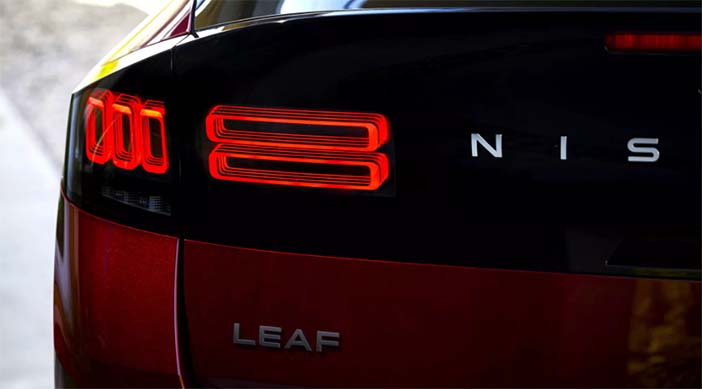
+++ The Trump administration recently signalled the end of the clean vehicle credit, which can save consumers up to $7,500. Its last day will be September 30, sending EV prices up and demand down. That’s a disastrous combination and we’re already starting to see some fallout from the move. However, it can’t be blamed for NISSAN ’s reported decision to cut production of the redesigned Leaf. While the model hasn’t been launched yet, reports out of Japan suggest the automaker is scaling back production because of rare earth export restrictions imposed by China. Reuters cites Kyodo News as saying the restrictions have resulted in a parts shortage, although specifics are hazy. Rare earths play an important role in a variety of industries and China’s export restrictions have impacted a number of automakers including Ford and Suzuki. Suppliers are also in a bind as they can’t always get the materials they need. In fact, the European Association of Automotive Suppliers recently warned the supply chain is “experiencing significant disruption due to China’s recent export restrictions on rare earth elements and magnets”. They went on to say the move impacts “both combustion engine and electric vehicles”, which threatens “automotive production and thousands of jobs in the European Union”. +++
+++ JLR has revealed a bold new logo for the RANGE ROVER brand, as it prepares to launch the luxury SUV marque’s first electric model later this year. The new emblem (featuring a pair of Rs in the brand’s trademark minimalist, wide-set font) is the first designed for Range Rover since it launched its original car in 1970. JLR told that the new badge is not intended to replace the spelled-out ‘Range Rover’ script that has adorned the front and rear of each Range Rover model since the brand’s launch. “The Range Rover Motif has been developed as a smaller symbol for where our familiar Range Rover device mark does not fit, such as on a label or as part of a repeating pattern, and within event spaces where an emblem is more appropriate”, it said. Range Rover has been split out as 1 of 4 JLR sub-brands (alongside Jaguar, Discovery and Defender) as part of the company’s House of Brands strategy, wherein each of those four model lines is operated as its own business, with their own bespoke branding, positioning and marketing strategies. Jaguar has already revealed its new-era branding as part of the Type 00 concept unveiling, but Defender and Discovery have yet to receive their own bespoke badges. As part of this strategy, the Land Rover name will take on a new role as a ’trust mark’, the company has said, meaning it will continue to be used in reference to the drivetrains and technology in the company’s SUVs but will no longer be pitched so overtly as the parent marque. Nonetheless, CEO Adrian Mardell has previously emphasised that Land Rover will remain an integral part of JLR’s operations and its name will continue to feature on the cars. “I really want to reiterate and put this on record that the Land Rover mark will remain”, he said, following the unveiling of the House of Brands strategy. “Among its many attributes, Land Rover is rightly synonymous with off-road credentials, with technology capabilities, with significant and huge safety features. It is still integral to our business. It will remain visible on our vehicles. It will remain on our websites, in social media and at our retail sites”. Range Rover’s new motif, then, is unlikely to replace the offset Land Rover oval that has been a distinguishing feature of every Range Rover model since the original. It is unclear how this will be used, but one possibility is that the pattern is used prominently on Range Rovers (perhaps for the grille or interior upholstery) as a means of differentiating the cars from more mainstream Land Rover models. +++

+++ What a difference a couple of years can make. In 2023, Tesla was crushing it in Europe, the Model Y was on its way to becoming the first ever EV to top the continent’s year-end best sellers league table and VOLKSWAGEN announced it was pausing production of the ID.3 and its Cupra Born electric twin due to slow sales. But just 2 years later, Volkswagen is reveling in a surge of EV demand that has helped it overtake its American rival. According to the latest figures, the VW Group delivered 4.41 million vehicles of all energy types around the world in January-June, a 1.3 percent increase on 2024’s total. But global BEV sales were up a staggering 47 percent, reaching 465.000 and in Europe they rocketed by 89 percent to 347.900 deliveries. Though Tesla hasn’t broken out its European sales figures, it has confirmed that global sales fell 14 percent to 384.000 in the first half of the year. And Dataforce numbers revealed that Tesla had only sold 76.400 units in Europe between January and the end of May, a period in which the core VW brand alone shifted 122.600 EVs. The report says VW tied with Tesla in March’s sales race but trounced it in every other month, selling three times as many cars in April, for example. Delivering more electric cars is important for VW’s image as it continues to put distance between itself and the Dieselgate scandal that keeps coming back to life via various ongoing court cases. And it’s also crucial if VW is to meet the EU’s draconian CO2 fleet limits. But VW’s sales success is the result of discount campaigns on cars like the ID.3 and that is putting pressure on Wolfsburg’s bottom line. A senior VW exec told the company is still making money on its EVs, but that the operating margin is below the 6.5 percent return target it has set for 2029. VW is hoping its new range of affordable EVs on sale from next year, including the ID.2 and Cupra Raval, will help improve the health of those margins. +++
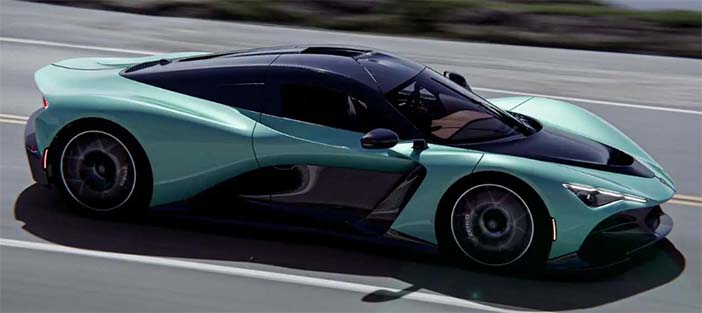
+++ It’s been nearly two years since ZENVO revealed the Aurora, a V12-powered hybrid hypercar. The Danish automaker showcased 2 variants: the road-going Tur and the track-focused Agil, and has since then been fine-tuning the design. Ahead of the car’s dynamic debut later this week, the company has revealed the Tur’s final exterior shape. Zenvo doesn’t mention what’s changed, and to be honest, it looks almost identical to the original with a passing glance, but a closer inspection reveals a few tweaks. It has new rear-end styling, with a much more aggressive diffuser and a relocated license plate bracket. It also appears the rear deck is longer than before, housing a reshaped tailpipe and thicker taillights. Up front, the changes are even more subtle. The front openings now have mesh coverings, there’s a bit more sheet metal underneath the daytime running lights, and the hood has been reshaped. While Zenvo is pitching the Aurora Tur as the road-going version, it’s also the most potent of the two, even with both using the same quad-turbocharged 6.6-liter V12 engine. The Tur has three electric motors instead of one, upping the powertrain’s output to 1.850 hp and 1.700 Nm. Zenvo claims the car will hit 100 km/h in 2.3 seconds and reach a 450-kph top speed. The car will make a public appearance at the Goodwood Festival of Speed. When Zenvo announced the car, it said production would not begin until 2026, and it appears the company is on schedule to meet that timeline. Just a few weeks ago, the company announced it would tap Alcon Components to provide the hypercar’s braking system. In April, Zenvo showcased the first example of its V-12 engine built by Mahle. +++