
+++ The next-generation ALPINE A110 will introduce a new driver-focused cockpit design that majors on physical controls, and it will then be rolled out to all of its models. The third-generation A110, due to be launched next year with exclusively electric power, will be Alpine’s first model to feature a completely bespoke interior, rather than one adapted from sibling brand Renault’s cars, and the company will favour analogue switchgear over digital controls. Alpine design boss Antony Villain spoke to reporters as the brand’s new A390 made its debut at the Goodwood Festival of Speed and said the marque will emphasise the importance of driver engagement and minimise distraction with its next-generation cabins. “Starting on the future A110, we will enter a new generation of cockpit that will be really, really new”, he said. “We’ll stay with the same ingredients, but we push further. Once again, we are now building something really strong and this will be developed on all the cars that are coming”. The Alpine A290 hot hatchback is based on the Renault 5 so largely shares that car’s cockpit, with a large wraparound digital display on the dashboard, while the A390 has a similar set-up to the Renault Megane E-Tech, with most functions controlled by a 12 inch portrait touchscreen. Villain acknowledged that such screens are the norm now, because “customers want technology on purpose”, but said Alpine’s more driver-focused cars need a more traditional and physical approach. “So we’ll have a lot of physical button mixing with minimal digital things”, he said. He added: “Of course there is this trend of having screens everywhere but, to be honest, when you want to focus on driving, you don’t really focus on screens. You need to have instinctive access to every crucial function. But you have also an emotional relation with the machine, and you control the machines: it’s not the screens controlling the machine. “When you buy a sports car, you want to be in control. You don’t want the car to start itself. You want to master the car. You want to start the car. You have your ritual. You want to set your things. “It’s not the car that drives you and controls you: it’s the opposite”. Villain also gave more clues about the final design of the electric A110, revealing that “there are no retro cues”, unlike the current car, which is heavily inspired by the 1960s A110. There will, however, be “all the codes of the A110” so it is recognisable as the descendant of today’s mid-engined car: the quad headlights and squat, mid-engined silhouette being cited as key examples. However, the “form language” he said, will be more closely related to the A390, so expect a sharply pointed nose, a swooping roofline and swollen arches to be among its defining characteristics. Villain emphasised that the electric A110 will be no taller than the outgoing petrol car, hinting that it will not have its battery under the floor as is conventional with EVs – but perhaps behind the seats for optimal weight distribution, or arranged in a T-shape as in the Maserati Granturismo Folgore. “We’ll keep it super-low. It’s super-important that we keep it low”, he said. Villain refused to be drawn on when the wraps will come off the electric A110, following the recent release of the first official preview image, but the current ICE car has only months left in production and it is likely the company will look to minimise the length of time its halo product is off the market. Company bosses earlier confirmed that, as well as being as low as the current car, the new A110 will be lighter than its combustion-engined rivals, despite the switch to EV. Outgoing Renault Group CEO Luca de Meo told that the company had made a “not rational” decision to “invest a lot of money” in a bespoke electric sports car platform for the next A110 and its derivatives (including a 2+2 version called the A310) but it had “looked at Porsche for inspiration” in how to successfully build a sports brand. “Porsche has the 911 platform as their own, and then they use others Volkswagen Group architectures for the likes of the Taycan and Cayenne. You keep the heart then as very true to the brand”, he said. To that end, the Alpine sports car platform (called APP) will be uncompromising in its purpose to root the French brand in performance models, which then lends credibility to its more lifestyle-focused mainstream models, such as the new A390. “The next A110 will be lighter than a comparable car with a combustion engine but with no compromise in performance”, said de Meo. He added that making the bespoke architecture was objectively “a completely stupid decision” due to the likely return on investment in pure sales terms. A planned tie-up with Lotus on the architecture fell through but Alpine places such importance on bona fide sports cars that it has continued development by itself. Alpine has experimented with lightweight electric models previously, such as with the A110 E-ternité concept, an electric conversion of the current A110 that just undercut the Porsche 718 Boxster at 1.400 kg. +++
+++ HONDA has shown a new concept car hinting at a city-focused EV at the Goodwood Festival of Speed. Named the Super EV Concept, it is an A-segment hatchback to rival the Hyundai Inster, Fiat 500e and upcoming Renault Twingo, with styling that draws on the previous Honda E supermini. Technical details remain thin on the ground, but Honda said it is intended to show how a small, affordable EV can be fun to drive. It has already been tested as part of a broader international roll-out. Honda has also used the event to showcase the radical O Series SUV concept in Europe for the first time, as well as the Civic Type R Ultimate Edition. The new Prelude coupé is running up the Goodwood hillclimb. Any production version of the Super EV would likely represent the entry point to Honda’s future EV line-up, sitting opposite the upmarket O Series range. The Japanese brand plans to launch 7 new EVs in the coming years, with these using a new platform, new batteries and new motor technologies, in an effective reset of its approach to electrification compared with the old E and current e:Ny1. “As society is starting to move from the early stage to the widespread adoption stage, the time has come to invest in our EV strategy”, Honda CEO Toshihiro Mibe told last year. However, Honda is also going big on hybridisation, with 13 new models due globally by 2030 in a bid to bridge the gap to mass-adoption of battery-electric cars. These will use what the brand has claimed to be the most efficient combustion-engined powertrains yet. +++
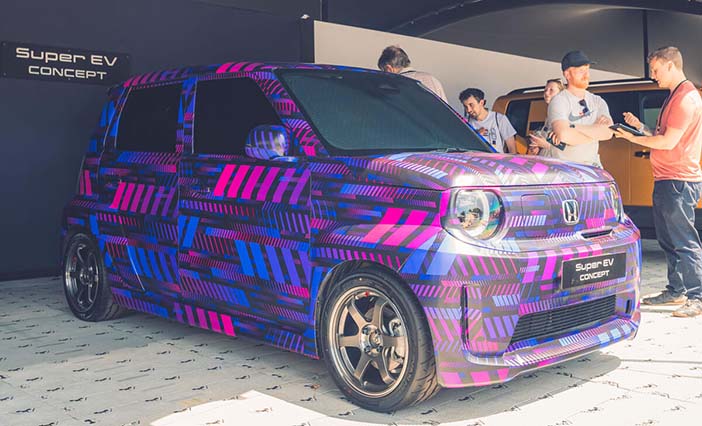
+++ JAGUAR ’s internet-breaking Type 00 concept has made its public debut at the Goodwood Festival of Speed, just months before the firm reveals the production version of the radical electric super-GT that will start its new era. The concept was revealed late last year as a statement of intent for the reinvention of Jaguar, which has taken all of its models off sale for a year while it lays the groundwork for a new range of all-electric luxury cars in a far higher price bracket.
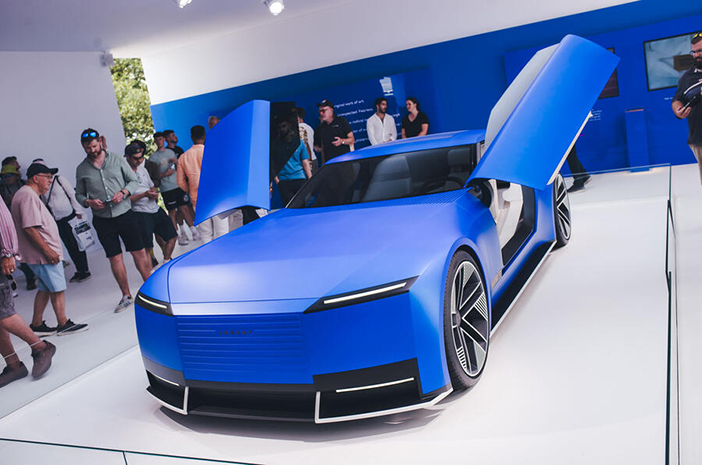
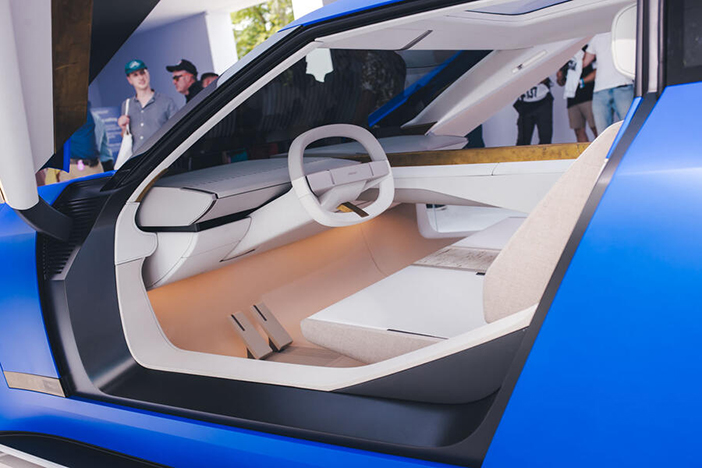
The first of these will be revealed at the end of this year as a sleek, 4-door GT with up to 1.000 hp and a design that departs completely from Jaguar’s past line-up, both inside and out, as previewed by the Type 00. Due in production in the middle of next year, it will be followed by 2 more luxury cars, thought to include a larger limousine-style saloon and a Bentley Bentayga-rivalling SUV. The concept car is a 2-door fixed-head coupé, a body type we’re told will not be built. But it has perhaps been artfully chosen because it loosely echoes the layout of the 1961 Jaguar E-Type, the car nearly everyone cites as the leader of a previous great leap forward in Jaguar design. Company insiders say the concept coupé’s size, proportions and, above all, its design style are all “very close” to the brand’s first next-generation production car: a blocky Porsche Taycan-rivalling super-GT that has been recently pictured testing. This will be the first of 3 models to be launched, with about a year between them, on the new purpose-designed JEA architecture. That platform will, Jaguar estimates, offer as much as 700 km of range and the ability to add 300 km with 15 minutes of charge. This would suggest power being drawn from a battery in excess of 100 kWh, but Jaguar has yet to confirm a pack size.
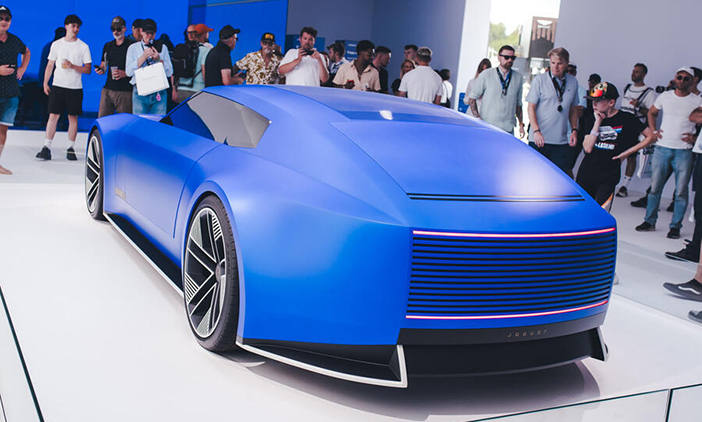
This concept is the product of an exhaustive process that led designers to produce 13 full-size models on the way, and its maturity shows. All were avant-garde, according to design chief Gerry McGovern. “Anything iterative would not have taken us where we wanted to go”, he said. Its name, which reprises the word ‘Type’ used for so many great Jaguars, also suggests that future nomenclature won’t stray too far from the past. +++
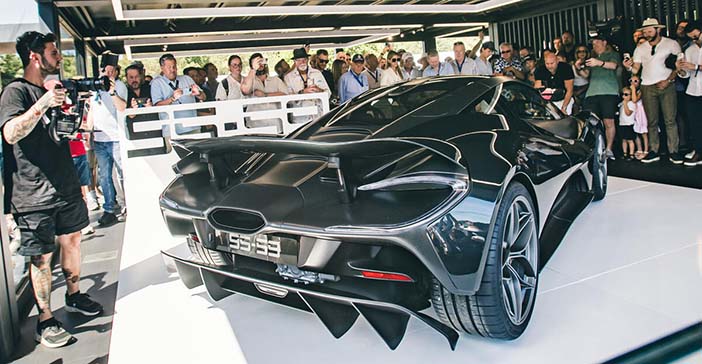
+++ Performance specialist LANZANTE has created an homage to the iconic McLaren F1 with its own 3-seat supercar, which produces an uncompromising 700 hp per tonne. Called the 95-59, the limited-run model is a tribute to the Lanzante-run #59 McLaren F1 GTR that won the 1995 Le Mans 24 Hours. The Petersfield-based firm’s new 3-seat supercar packs 850 hp and 870 Nm from a mid-mounted 4.0-litre twin-turbo V8. The car is based on the McLaren-built Monocage carbonfibre chassis used by the P1, 720S and Senna, but it has been adapted by Lanzante to accommodate 3 seats. Weight has been pared back to 1.250 kg, aided by the fitment of carbon body panels and, as part of the optional LM30 Pack, a host of weight-reducing features such as forged aluminium wheels, titanium tailpipes and gold-plated heat-shielding. This gives the 3-seater a power-to-weight ratio that is just 40 hp per tonne shy of the new 1.200 hp Ferrari F80. It betters the original McLaren F1 by 160 hp per tonne. The 95-59 sends its 850 hp to the rear wheels via a seven-speed sequential gearbox. An large active wing helps to keep the rear planted at speed and in corners. While full technical details have yet to be confirmed, the 95-59 is expected to hit 62mph from rest in around 2.5 seconds.
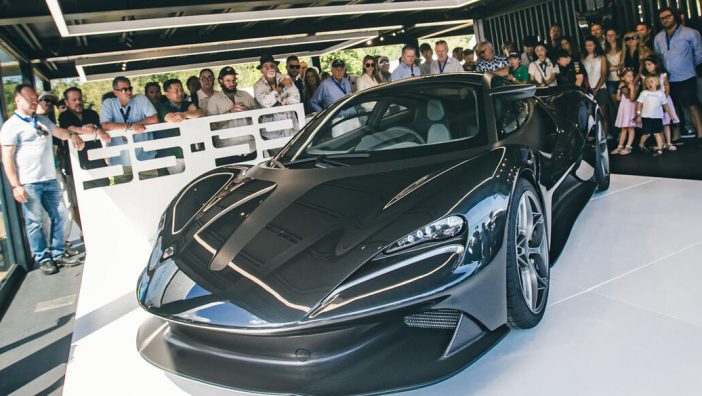
The supercar, which is making its world debut at this week’s Goodwood Festival of Speed, has been shaped by former McLaren designer Paul Howse. The Briton oversaw the exterior design of the P1, 570S, 720S and Artura, and many McLaren-esque design elements are evident on the 95-59, especially at the rear. Key to the design was controlling air flow to improve the aerodynamics, said Howse, which gives the car a “bullet-like” appearance from the side. Howse said: “I like to think we have created something that is unlike anything else, building its own legacy”. In keeping with its exclusive positioning, it has been fitted with dihedral doors, similar to those found on hypercars such as the Koenigsegg Jesko. Inside, the centrally sited driver’s seat is positioned in front of a cockpit layout that features physical buttons around and even above the steering wheel. The driver’s display shows only key information. The 2 passenger seats are positioned either side of the driver’s. Founder Dean Lanzante said the car “is the result of everything I personally and we, as a business, have learned and experienced over three decades since winning Le Mans”. The 95-59 is limited to 59 examples, each priced at €1.5 million. +++
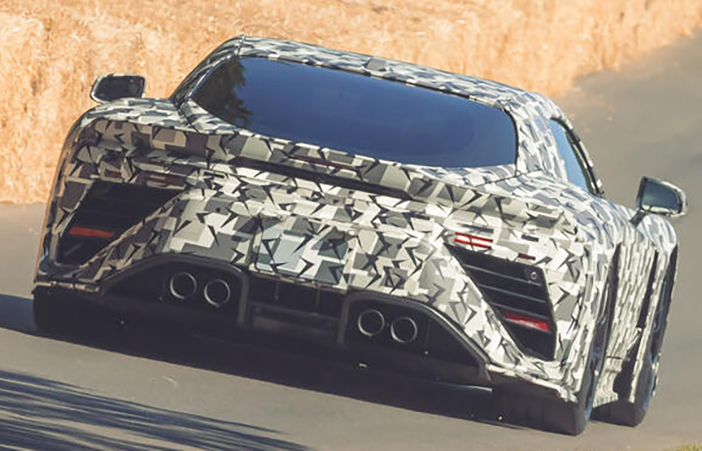
+++ A new V8 LEXUS supercar that will rival the likes of the Aston Martin Vantage and Mercedes-AMG GT has been officially shown for the first time. The GT Concept is the homologated variant of the incoming GT3 GR hardcore racer, itself revealed in concept form in 2022, and both took to the hillclimb at Goodwood’s Festival of Speed. The road-going GT3 GR is likely to wear a Lexus badge, rather than a Toyota one, in keeping with the premium brand’s history of large-engined sports cars, including the LFA, LC 500 and RC F. As such, it is thought to preview what could be the spiritual successor to the acclaimed LFA, and may take the LFR name. A production version of the GT Concept is likely to hit showrooms at the end of 2026 and will be created because FIA homologation rules dictate that any GT3 racer shares its basic body design with a related road car. Aston Martin, BMW, Ferrari, Ford, Lamborghini, Lexus, McLaren, Mercedes-AMG and Porsche all currently sell GT3 customer cars.
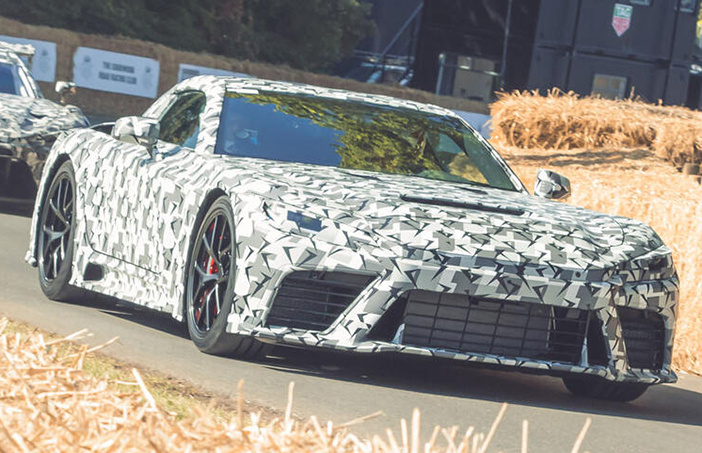
Toyota has previously said it will continue “commercialising motorsports cars rather than simply adapting production vehicles for use in motorsports”, as it did with the rally-honed GR Yaris hot hatchback. Running up the Goodwood hill, the soundtrack of the GT3 prototype (with a huge rear wing) is unmistakably that of a highly strung V8, but the quieter road car mule suggests it will add some type of hybrid assistance, most likely to meet ever-stringent emission regulations. Currently, no GR models use a hybrid powertrain, but the performance division is extensively testing the technology. Hiroyuki Yamada, a GR engineer working on the project, said: “We can use hybrid for future cars. We will use it in our motorsport activities in the future, because of emissions. We will apply this technology to both motorsport and passenger car engines. In the future, we want a more fuel-efficient engine for GR cars”. The plan to fit GR models with hybrid power has been long mooted by Toyota. In 2023, chief technology officer Hiroki Nakajima told: “Hybrid systems are always a good solution for environmental cars, not just for passenger cars but for sporty cars as well”. No specifications of the road car have been released yet but the race car will produce around 500-600bhp and weigh no more than 1.300 kg, in line with GT3 regulations. With the addition of a hybrid system, the road car is expected to produce closer to 700 hp as it vies with with the recently revealed 680 hp Aston Martin Vantage S. Gazoo Racing boss Masahito Watanabe recently told that Toyota is pursuing a “multi-pathway” approach for sports cars, rather than investing in all-out electrification. He said: “We still think the internal combustion engine has some potential and, as we do so, we will of course be trying to comply with all the applicable rules according to the regions in each country. But we don’t want to give up. It’s not over just yet, because if you look at the internal combustion engine, there’s still hydrogen combustion that can be a part of that zero-emission line-up. So I think that’s going to continue”.
Lexus has retired its RC and LC coupés in Europe and hasn’t officially commented on plans for any replacements, although the outlandish Electrified Sport concept that it revealed in 2021 emphasises its continued commitment to performance cars. That concept, which is due to reach production by the end of the decade, is electric rather than V8-powered. But it has been confirmed to share its carbonfibre monocoque underpinnings with Toyota’s GR GT3 concept and has a similar cab-rearward silhouette, which suggests the possibility for Lexus to offer 2 closely related supercars (based on the same chassis but using totally different powertrains) within the next 5 years. +++
+++ MASERATI will launch extended-range versions of its electric Grecale and GranTurismo later this year as part of a push to keep developing and improving its EV line-up. The Italian firm launched its first 2 electric cars in 2024, offering EV power in those model lines as an alternative to mild-hybrid and pure-petrol ICE options. It was due to launch an electric Quattroporte this year but delayed that car until later this decade and now says improving its existing EVs and increasing uptake is the priority over launching new models. Speaking at the unveiling of the new MCPura (the renamed and lightly restyled replacement for the V6-powered MC20 supercar), Maserati engineering boss Davide Danesin said the firm has adjusted its strategy in light of declining demand for premium electric cars and will continue to invest in its existing EVs rather than branching out into new segments. He said: “Maserati has invested a lot in an electric roadmap in the past years and we produced 2 wonderful products: the Grecale Folgore and the GranTurismo Folgore. Unfortunately, the acceptance from the market of BEV cars is low, so we are also affected, like all the other brands, by the low demand. But we developed great technologies in the past years for electrification and I think many of them are going to last. For example, this year, we are releasing the Grecale Folgore in an extended-range version, with additional kilometres of range, and we’re going soon to do the same for the GranTurismo. We are still developing our battery-electric vehicles to improve performance”. He did not disclose any details about these extended-range EVs. The Grecale Folgore is currently offered with a 105 kWh pack under the floor, giving an official range of 500 km, while the electric GranTurismo’s T-shaped battery has a usable capacity of 83 kWh for an official 450 km. It remains to be seen whether Maserati will boost the capacity of these batteries to eke out more kilometres per charge, or whether the duo’s respective range figures will be extended by virtue of efficiency improvements elsewhere. Danesin said Maserati will continue to update its electric cars to keep pace with rivals and new technologies: “Of course, on the other side, we need to follow the roadmap of the technology. We know the technology is evolving and we are evolving. We are going to follow the roadmap of cell evolution in the next years to continuously improve our products. Some other technologies that we developed on the current Folgore we are going to further refine and bring on. We are following our internal roadmap of continuous improvement”. However, there are no plans to resurrect the cancelled MC20 Folgore project for the latest generation of the supercar, now called MCPura. Danesin said: “For the MC20, we took the decision already some time ago to stop the battery-electric version of it because of the situation of the market. We think the current propulsion we are selling on the MC20 is fulfilling perfectly the real request from the market. So I think that we will not go on with any electric roadmap on the MCPura for the next few years. Then about the future we will see”. +++
+++ A production version of the MG CYBER X concept could be on European roads by 2027, UK boss David Allison has told. The rugged, boxy SUV concept, which previews the second model in MG’s fashion-focused Cyber line-up, was revealed earlier this year at the Shanghai motor show. Asked if we could see a production version here within the next 2 years, Allison said: “I think it’s very possible. One of the things that has always impressed me very much about the way that this company operates is the speed of development”. He added: “It’s not unusual that we will show something and very, very quickly it turns into a real thing”. The Cyber X is a bold, 2-box, 4×4-inspired crossover measuring 4.3 metres long, making it roughly the same size as the Land Rover Defender 90 and slotting it in below the 4.5 meter long S5 EV that recently arrived in Europe.
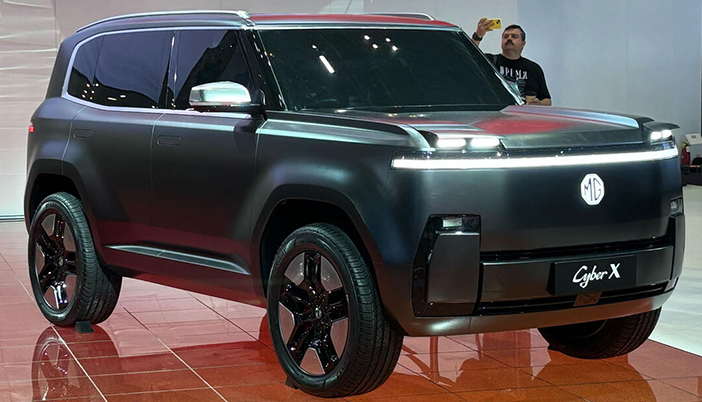
It has been revealed in concept form without an interior, but MG parent company SAIC’s design boss Jozef Kaban suggested that the speed of development in China means it could quickly be made production-ready. Allison said: “We are very much in favour of something like this coming to Europe”. Speaking at its unveiling, chief designer Kaban explained that the priority of the concept is to demonstrate how the more enthusiast-focused Cyber line-up could be expanded and to bring a new character to the MG family. “One thing we have been talking about is the passion of MG and delivering experience, which is not just going from A to B but a pleasure which makes you happy”, he said.
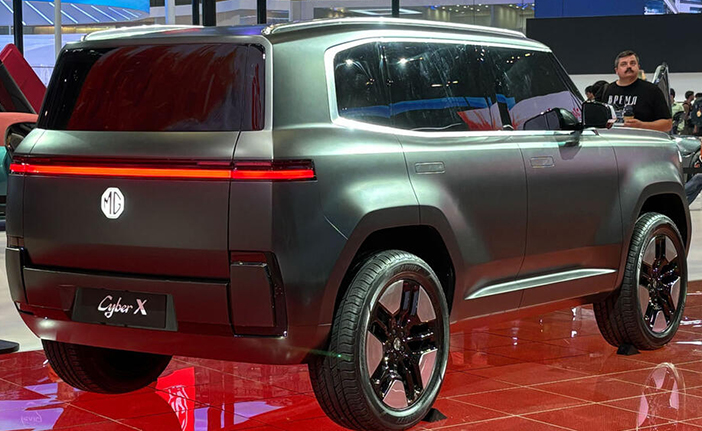
While the Cyber X previews a sibling to the Cyberster electric sports car and would likely share its fundamental underpinnings and technologies, it takes a radically different design approach – as part of Kaban’s plan to give the Cyber line-up as broad an appeal as possible. “When you see the Cyberster, it’s soft like a circle, with almost no edges, and with the other one coming, it’s almost like plus and minus. They are completely different. But plus cannot live without minus. Their contrasts bring people together”. Kaban highlighted the octagonal outline of MG’s emblem as a shape that could be interpreted as a “square circle or a round square”; a theme he says translates to the radically different design treatment for the sleek, flowing Cyberster and its brutalist new SUV sibling. “The point is to show that we are so diverse, we are different, and MG is the brand which is able to handle two characters, because they will have one thing in common: the joy in connecting people and in being fun to have”. Kaban said that the priority with the Cyber X’s design was to “give families an emotional car, to give them joy by not needing to compromise at the stage of life when they have a family”. The production version of the Cyber X will be MG’s third distinct SUV model in Europe. It’s only slightly smaller than the ZS and S5, but Kaban said its radically different design and positioning means it can co-exist with its high-riding range mates. “Of course we have the HS and ZS, and they are going to live, but we could give another star next to them to shine, to make the family even stronger”.
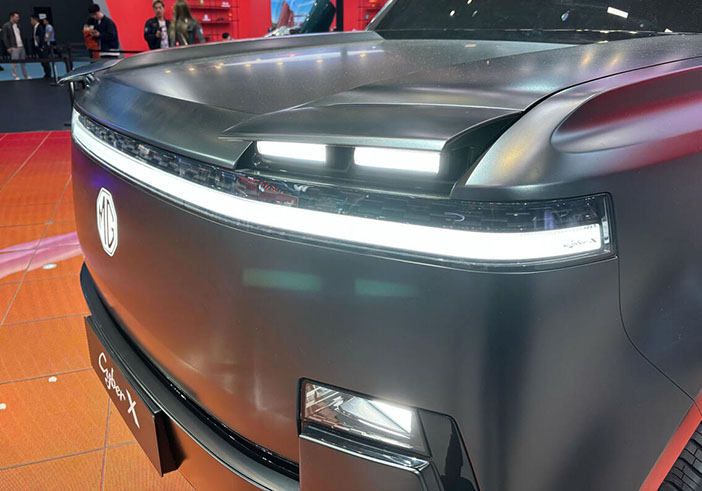
Kaban said the Cyber X’s monolithic silhouette is not a reflection of a desire to rethink traditional SUV designs but rather a recognition that “being a little bit edgy doesn’t need to hurt”. He referenced the unusual pop-up headlights (“like a Ferrari Testarossa”) as a particular design highlight, saying that the advent of the ‘digital world’ means some historic car design differentiators have been lost and the Cyber X concept is designed to explore ways of bringing some of that character back. +++
+++ The new RIMAC NEVERA R has officially become the world’s fastest electric car, clocking a top speed of 450 kph. That means the more hardcore version of Rimac’s EV hypercar is also one of the world’s fastest production cars of all time, surpassing even the Bugatti Veyron Supersport. The independently verified top speed was confirmed as part of a final round of validation tests ahead of customer deliveries getting under way, during which, Rimac says, the 21,00 hp Nevera R claimed “new world records in 24 categories”. Surpassing “every performance record previously set by the standard Nevera”, the R also proved itself the world’s fastest-accelerating production car, sprinting from 0-60mph in a dazzling 1.66 seconds; 0.08 second quicker than the standard car. The R also achieved a record 0-400-0 km/h time of just 25.79 seconds, just over 2 seconds quicker than the previous fastest car. Company founder and CEO Mate Rimac said: “When we first introduced Nevera, it almost seemed like the pinnacle of hypercar performance had been reached. In a single generation, we had created a performance jump that previously would have taken decades. But now, through relentless innovation, Nevera R goes even faster, while still maintaining much of the comfort and practicality that makes the Nevera a real, usable daily car. Breaking records is in our DNA, and we won’t stop here”. While Rimac remains committed to breaking boundaries for outright performance, it is possible that the company’s next car may not be fully electric. In May last year, Rimac had not yet sold all 150 examples of the standard Nevera, and Mate Rimac suggested that “the narrative” around electric cars had changed, and buyers were becoming “a little bit repulsed” by the “forced application” of EV propulsion. He said that Nevera development began in 2016 on the assumption that “electric cars would be cool in a few years”, but instead appetite for ultra-high-end EVs was waning in favour of more traditional, analogue alternatives. “An Apple Watch can do everything better. It can do 1.000 more things; it’s a lot more precise; it can measure your heart rate. But nobody would pay $200,000 for an Apple Watch” he said, adding that Rimac could branch out from EVs in a bid to tap into that demand. “Rimac isn’t exclusively electric. It’s doing whatever is most exciting at the time”, he said.
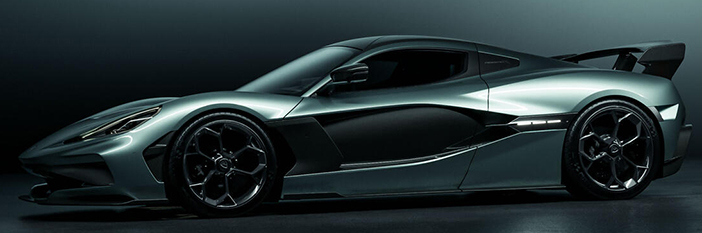
The Nevera R’s game-changing performance statistics will no doubt play a big part in re-igniting excitement around electric performance cars. However, all-out speed wasn’t the overall goal, said Rimac. Instead, greater focus was placed on making the R a better-handling and more agile proposition than its grand tourer sibling. Billed as an electric “hyper sports car”, the R is fitted with next-generation all-wheel torque-vectoring tech, which has been tuned to suit its new Michelin Cup 2 tyres, and a steering rack that has been revised to deliver sharper responses and crisper feedback. This is claimed to reduce maximum understeer by 10% and increase maximum lateral grip by 5%. A new fixed rear wing, combined with a new large front diffuser, helps to boost maximum downforce by 15% and maximum aerodynamic efficiency by 10%, enabling sharper, faster cornering. In line with its extra 190 hp, the Nevera R is fitted with carbon-ceramic EVO2 brakes. As a result of these measures, Rimac says the R “sets a new benchmark” for “driving excitement” on twisting B-roads. The R retains the same 120 kWh battery as its sibling, which was good for as much as 400 km in the standard Nevera. The Croatian brand has yet to confirm official range figures for the R. Mate Rimac said: “We’re relentlessly tweaking to customers’ desires and many were looking for a car that really emphasised the Nevera’s cornering ability, using all the advanced technology on board. We responded with the Nevera R: all the DNA of the record-breaking Nevera, but lighter, faster and more focused”. Launched exclusively in Nebula green, the R costs €2,6 million before personalisation (of which there are hundreds of options) are added. The standard Nevera is priced at €2 million. +++