
+++ China’s BATTERY industry is increasingly turning to sodium-ion technology as lithium prices rise and major manufacturers expand production and investment. The shift signals growing interest in alternative battery chemistries for cost-sensitive and cold-climate applications. Sodium-ion batteries are chemically similar to lithium-ion batteries but use more abundant raw materials. Sodium is widely distributed in Earth’s crust, with a concentration roughly 400 times that of lithium, which is concentrated mainly in South America and Australia. This makes sodium-ion batteries potentially less exposed to resource volatility and supply-chain constraints. Rising lithium prices have intensified interest in alternatives. In early 2026, lithium carbonate prices surpassed $20.900 per ton and reached levels above $23.700 per ton. Higher material costs have intensified production pressures on entry-level electric vehicles, which predominantly rely on lithium iron phosphate (LFP) batteries. CATL recently launched a sodium-ion battery for light commercial vehicles and indicated passenger-car deployment is planned in the second quarter of 2026. However, sodium-ion technology is being adopted more broadly, with several Chinese battery manufacturers investing in production capacity. BYD has commissioned a 30 GWh sodium-ion battery line, while EVE Energy has launched a $144 million sodium-ion project, and Ronbay Technology has converted part of its lithium battery production to sodium-ion materials. In 2025, global sodium-ion shipments reached around 9 GWh, up 150 percent from the previous year. Sodium-ion batteries offer certain performance advantages in specific scenarios. They maintain higher capacity retention at low temperatures, with some prototypes retaining more than 90 percent of capacity at -20 °C, compared with roughly 80 percent for standard lithium batteries. Cost estimates suggest sodium-ion materials could be 30–40 percent cheaper than lithium equivalents, although overall production costs remain affected by scale and early-stage supply-chain development. Challenges remain for sodium-ion technology. Energy density currently ranges from 100 to 170 Wh/kg, which is below that of mature LFP batteries (180–200 Wh/kg) and significantly below that of ternary lithium batteries (250–300 Wh/kg), thereby limiting their use in high-range EVs. Supply-chain coordination and scale production remain in development. Analysts expect sodium-ion batteries to be adopted initially in specific segments such as entry-level electric vehicles, cold-climate applications and stationary energy storage, complementing rather than replacing lithium-based batteries. Industry observers suggest that 2026 could mark a period of accelerated commercialization for sodium-ion technology in China. +++
+++ Automakers in EUROPE face a stark technological disadvantage in the electric vehicle revolution, with the continent lagging “at least 20 years behind China” in battery technology, according to renowned German automotive expert Professor Ferdinand Dudenhöffer, who often referred to as the “Auto Pope” (Autopapst) by German media. In an interview, Dudenhöffer, director of the Center for Automotive Research in Bochum, Germany, delivered a blunt assessment of Europe’s position in the global EV race. His comments come as Chinese automakers reported breakthrough sales in Europe, with monthly volumes exceeding 100.000 units for the first time in December 2025, capturing 9.5% market share. “In the battery sector, Europe is 20 years behind China”, Dudenhöffer stated, emphasizing that cooperation with Chinese suppliers has become essential for European manufacturers to remain competitive. This technological gap has created a situation where over 70% of batteries in electric vehicles sold in Europe by 2025 will be supplied by Chinese companies. The cost advantage held by Chinese manufacturers is substantial, with battery production expenses approximately 30% lower than those of their European counterparts and development cycles shortened by 50%. Meanwhile, European battery manufacturers struggle to gain traction, with Sweden’s Northvolt facing bankruptcy due to technical deficiencies and delivery delays, while France’s ACC has paused factory expansion plans.

Chinese battery giants like CATL and Gotion High-Tech have moved beyond simply supplying components to actively establishing manufacturing presence in Europe. CATL’s joint venture with BMW has already begun production in Germany, while BYD‘s partnership with Stellantis to develop low-cost lithium iron phosphate batteries has entered mass production. The technology gap extends beyond batteries into other critical areas. “Chinese companies in fields such as automatic driving and smart cockpits, like QCraft, Horizon Robotics, Xiaomi and Huawei, are leading the trend rather than being dominated by European and American manufacturers”, noted Dudenhöffer. International Energy Agency data shows China currently controls 75% of global battery production capacity, with particular leadership in lithium iron phosphate battery technology. Despite European efforts to strengthen local supply chains through the Critical Raw Materials Act, battery production costs remain 50% higher than in China, with over 80% dependency on imports for critical materials like lithium and nickel. “If European automakers continue to rely on inefficient local supply chains, they will completely miss the transition window”, Dudenhöffer warned, suggesting that the ongoing partnerships between Chinese and European firms could transform Europe from a “battery consumption center” to a “Sino-German technology testing ground”. The professor also highlighted what he calls “Chinese efficiency,” noting that development cycles for Chinese companies can be half as long as their German counterparts. “We can learn a lot from ‘Chinese efficiency’ ”, he concluded, emphasizing that cooperation between the Chinese and European automotive industries represents a win-win strategy that combines the strengths of both sides. +++
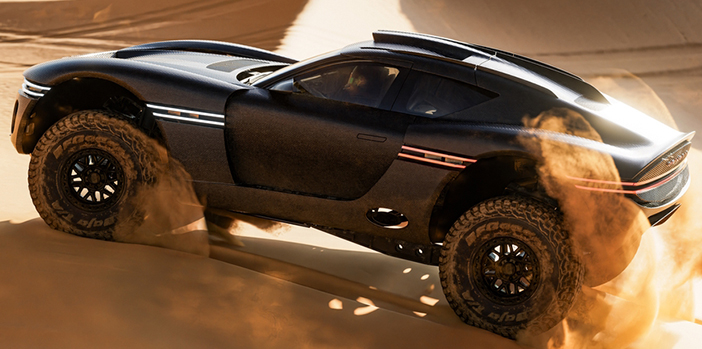
+++ GENESIS has unveiled its extreme off-road concept car, the X Skorpio Concept, at a premiere event held in the Rub’ al Khali desert in the United Arab Emirates. “The new vehicle was designed to conquer harsh terrain while reflecting Genesis’ design philosophy”, said Luc Donckerwolke, chief creative officer of Hyundai Motor Group.
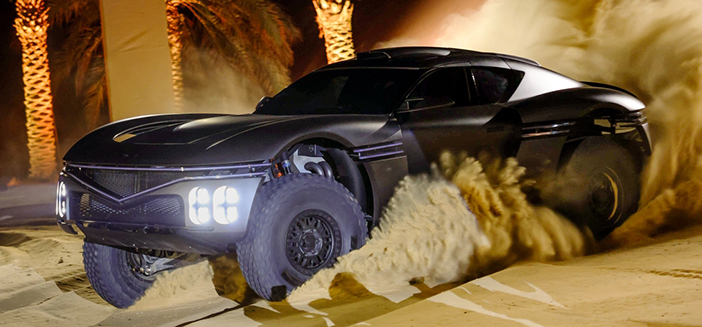
The exterior draws inspiration from a scorpion’s stance, with body curves resembling an arched tail. Segmented panels, also inspired by the scorpion’s form, are engineered for durability and rapid repairs in extreme environments, Genesis said. The concept is equipped with a high-performance internal combustion engine, deadlock wheels and dedicated off-road tires, suspension and braking systems. Donckerwolke said the model reflects Genesis’ collaboration with off-road racing experts and the application of parts supplied by specialists, including a braking system from Italy’s Brembo. +++
+++ HYUNDAI said Thursday its 4th-quarter operating profit fell 40 percent from a year earlier as higher US tariffs weighed on earnings, overshadowing gains from improved pricing and favourable exchange rates. Operating profit for the October-December period fell 39.9 percent on-year to 1.69 trillion won ($1.19 billion). Meanwhile, revenue edged up 0.5 percent to 46.84 trillion won. The automaker’s operating margin slid to 3.6 percent, as cost pressures intensified in key markets. It marked the first time South Korea’s largest carmaker’s quarterly profit fell to the 1-trillion-won range since the third quarter of 2022, when the Covid-19 pandemic disrupted global auto production. The result also missed market forecasts, which had projected quarterly profit in the range of 2.5 trillion won to 3 trillion won, as the US tariffs exerted a sharper drag on profitability than investors had anticipated. Hyundai said the impact of US tariffs caused a 1.46 trillion won increase in cost during the 4th quarter and an estimated 4.11 trillion won for the whole year, according to Hyundai CFO Lee Seung-jo during a conference call. When combined with losses reported by its smaller sister brand Kia, which announced tariff-related costs of around 3 trillion won, the total losses incurred by Hyundai Motor Group from tariffs exceed 7 trillion won. Although the carmaker implemented contingency measures to reduce tariff impacts, inventory sold in the fourth quarter was still subject to a 25 percent US tariff, reducing the advantages of subsequent tariff relief, it explained. In April, the US levied a 25 percent tariff on all imported automobiles and auto parts. South Korea and the US reached a trade agreement in July to lower the rate to 15 percent in return for Seoul’s pledge to invest $350 billion in the US. But it wasn’t until November 14, when Seoul proposed legislation to support special investment in the US, that the reduced tariff rate was applied retroactively from the first day of that month. US president Donald Trump’s announcement earlier this week that he would raise auto tariffs back to 25 percent has further increased uncertainty. Trump cited delays in South Korea’s legislative approval of the trade agreement. “We expect this year’s tariff effect to be at a similar level to last year”, CFO Lee said, adding the carmaker will continue contingency measures to offset tariff-related expenses. The full-year results showed a similar trend. Operating profit for 2025 fell 19.5 percent to 11.47 trillion won ($8.04 billion), while revenue rose 6.3 percent to a record 186.25 trillion won. Hyundai’s operating margin stood at 6.2 percent, within its previously announced guidance range of 6.0 percent to 7.0 percent. Last year, Hyundai sold 4.41 million units, down 0.1 percent from a year earlier. Domestic sales totalled 712.954 units, while overseas sales came to 3.43 million units. Despite the slight decline, Hyundai noted that its annual US wholesales surpassed 1 million units for the first time. Eco-friendly vehicles particularly fared well, with sales rising 27 percent to 961.812 units, including 275.669 electric vehicles and 634,990 hybrid vehicles. Looking ahead, Hyundai expects uncertainty throughout the year, citing slower growth in major markets, intensifying competition in emerging economies and broader trade risks, including tariffs. Hyundai targets global sales of 4.16 million units, revenue growth of 1 to 2 percent from 2025, and an operating margin target of 6.3 percent to 7.3 percent. The carmaker also plans to invest a total of 17.8 trillion won this year, with a focus on eco-friendly vehicles, software-defined vehicles, autonomous driving and artificial intelligence technologies. Breaking down, it plans to inject 7.4 trillion won into research and development, 9 trillion won into capital expenditures and 1.4 trillion won into strategic investments. Hyundai is also stepping up efforts to secure technological competitiveness in humanoid robotics and autonomous driving. “Proof-of-concept testing of humanoid robots at the Metaplant has been underway since late last year”, Lee said, adding that a demo model of the company’s smart car could be rolled out in the second half of the year”. +++
+++ Chery is reportedly exploring the use of JAGUAR LAND ROVER ’s existing factories in the United Kingdom to produce vehicles, with discussions still at an early stage and no finalized terms. The potential arrangement would involve manufacturing at facilities currently operated by Jaguar Land Rover, according to reports from the Financial Times and Chinese automotive sources. The UK government has publicly expressed interest in attracting Chery to manufacture vehicles domestically and has identified Jaguar Land Rover’s plants as a potential option. Officials indicated that cooperation could be considered if certain factories are underutilized, framing such collaboration as a potential pathway rather than a confirmed plan. Chinese sources confirm that these talks are ongoing but emphasize that no formal agreement has been reached. From the British government’s perspective, cooperation with an overseas automaker could help achieve its target of producing 1.3 million vehicles annually by 2035. The Society of Motor Manufacturers and Traders estimated that UK vehicle production in 2025 reached 738.000 units, indicating a gap between current output and the long-term target. Chery’s Omoda and Jaecoo brands have been among the fastest-growing Chinese brands in the UK market. Chinese reports note that multiple Chinese EV makers are accelerating their entry into the UK, while EU tariffs on China-made battery-electric vehicles have prompted brands including BYD to introduce more competitively priced models. In a separate development, Chery Commercial Vehicle announced that it will establish its first European headquarters in Liverpool, United Kingdom. The headquarters will serve as the central hub for the company’s European operations, including research, engineering, and commercial activities. Local authorities said the project will create high-value jobs and strengthen collaboration with regional research and innovation institutions. This move is independent of ongoing discussions regarding Chery production at Jaguar Land Rover UK factories. Chery insiders have previously highlighted high energy and labour costs in the UK as key challenges for local manufacturing and capacity expansion. These factors remain relevant in assessing the feasibility of establishing or expanding production in the country. Chery already owns a manufacturing facility in Barcelona, acquired from Nissan, and recently reached an agreement to acquire Nissan’s factory in South Africa. Nissan has also not ruled out allowing its Chinese partner, Dongfeng, to use its Sunderland plant to fill unused capacity. Separately, Leapmotor is expected to begin production of new models at a Stellantis facility in Spain this year. Jaguar Land Rover, controlled by Tata Motors of India, has an existing joint venture with Chery. In 2024, Jaguar Land Rover licensed the Freelander brand to Chery for the development of battery electric models based on Chery platforms. The automaker suffered a cyberattack in late 2025, resulting in losses of at least 196 million pounds, equivalent to about $267 million. Academic commentary cited in Chinese sources suggested that Jaguar Land Rover factories could still accommodate 1 or 2 additional models as new electric vehicles approach market launch. Chinese and UK sources both note that discussions remain at an early stage and that no official timetable or contract has been announced for Chery vehicle production at Jaguar Land Rover factories. +++
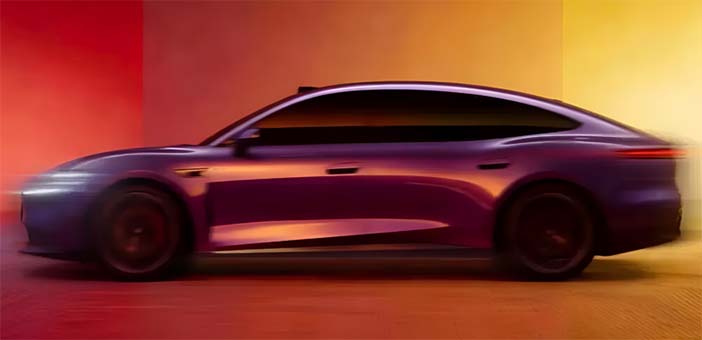
+++ MG has released a teaser image of a new pure-electric sedan, marking an early disclosure of a battery-electric model positioned within the brand’s sedan line-up and indicating potential expansion of MG’s electric passenger-car portfolio, as reported by IT-home. The teaser shows a sedan with a coupe-style silhouette, a roof-mounted lidar sensor, and semi-hidden door handles. MG has not disclosed the vehicle’s name, technical specifications, driving range, launch timing, or pricing. The company has not confirmed whether the model will enter production or its relationship to existing MG products. The exterior of the new sedan appears similar to that of the MG 7, which is currently sold as a gasoline-powered mid-size sedan. Chinese media have also described the vehicle’s profile as resembling that of the SAIC Z7, another sedan developed within the SAIC group, which features a coupe-style body and roof-mounted lidar hardware. SAIC MG has not provided official confirmation of design lineage or platform sharing between these models. Specifications for the new electric sedan are not known yet. Beyond the teaser image, MG has not released any further information on the vehicle’s platform, battery configuration, motor output, driver-assistance system specifications, or positioning within the brand’s product hierarchy. The lidar unit indicates the integration of advanced driver-assistance hardware, but its functional capabilities have not been detailed. The teaser is the first public indication of a new MG pure-electric sedan, while technical specifications, naming, and market launch details remain undisclosed. +++
+++ NISSAN has agreed to sell its plant in South Africa to Chinese automaker Chery Automobile around the middle of this year, without disclosing the transaction value. The move clarifies which 7 factories worldwide Nissan plans to exit as part of its restructuring efforts. The Japanese carmaker said employment at the plant in South Africa is expected to be largely maintained. The South African plant has produced Nissan’s Navara pickup truck. The company said it will continue vehicle sales in the country after divesting the plant, including through imports, to retain a local market presence. The other 6 factories targeted for consolidation are in Argentina, Japan, India and Mexico. +++
+++ The TOYOTA GROUP remained the world’s top-selling automaker in 2025 for a sixth straight year on the back of robust demand for hybrid vehicles in North America, outperforming the Volkswagen Group, data showed Thursday. Toyota’s annual global sales, including minivehicle maker Daihatsu and truck manufacturer Hino, rose 4.6 percent from a year earlier to 11.32 million units, setting a group sales record for the first time in 2 years. The sales volume of the Japanese automaker far surpassed the 8.98 million vehicles reported by Volkswagen, as Toyota’s overseas sales expanded 3.1 percent to a record 9.25 million units despite higher tariffs imposed by the United States. Toyota alone sold a record 10.54 million vehicles globally, up 3.7 percent, boosted by a 7.3 percent jump in sales in North America to 2.93 million units. Sales in China edged up 0.2 percent to 1.78 million units amid intensifying competition with domestic automakers, while those in Japan grew 4.1 percent to 1.50 million units thanks to solid demand for its new luxury Crown model. The group’s worldwide production climbed 5.7 percent to 11.22 million units, with that of Toyota alone increasing 4.5 percent to 9.95 million units. The company’s global sales of hybrid vehicles rose 7.0 percent to record 4.43 million units, including those in North America jumping 19.9 percent to 1.27 million vehicles. The automaker’s EV sales saw a 10.2 percent increase to record 4.99 million vehicles. Toyota group’s global sales for December 2025 were up 3.1 percent to 993.356 units, while total domestic and overseas output rose 1.2 percent to 881.654 vehicles. +++
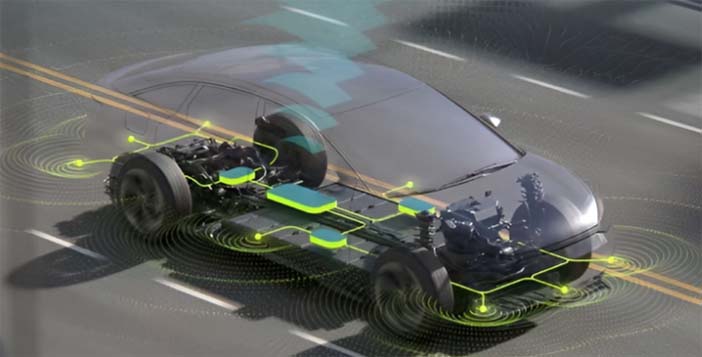
+++ The VOLKSWAGEN GROUP has confirmed that its China-developed CEA regional electronic and electrical architecture entered production at the end of 2025, with the first Volkswagen-brand model based on the architecture produced at the Volkswagen Anhui plant. The rollout is positioned as a structural technology update affecting multiple vehicle platforms and powertrain types in the Chinese market. The Volkswagen Group stated that models using the CEA architecture will gradually expand from small to compact vehicles and will be introduced across its 3 joint ventures in China, covering new products with multiple powertrain options. The CEA architecture adopts a regional control design and integrates a central high-performance computing platform. It was jointly developed by Volkswagen China Technology Company, Cariad China and Xpeng. The Volkswagen Group said the architecture can be deployed across multiple vehicle platforms and powertrain types, including battery-electric, hybrid and internal-combustion-engine vehicles. Compared with the previous generation of electronic architecture, Volkswagen said the CEA system can reduce the number of electronic control units by about 30 percent, which lowers system complexity. The company stated that the architecture supports AI-based cockpit systems, China-specific advanced driver assistance functions, and vehicle over-the-air update capabilities. Volkswagen also described changes in its software-defined vehicle development process. The company said enhanced local research collaboration at the concept stage and earlier supplier participation can increase vehicle development efficiency by up to 30 percent.
Volkswagen added that development costs for some key new models could be reduced by up to 50 percent under the updated process. The Volkswagen Group said CEA-based models will be gradually introduced across its 3 joint ventures and applied to new vehicles across multiple propulsion technologies. The company stated that the architecture will support its locally developed intelligent connected vehicle portfolio and expand its software-driven vehicle line-up in China. The Volkswagen Group confirmed that the first production car based on the CEA architecture has entered production and that additional CEA-based models will be introduced through its joint ventures in 2026. +++
+++The sales figures for the XIAOMI SU7 ULTRA , which was recently featured in Gran Turismo, haven’t been great lately. According to data from platforms like Dongchedi, sales of the Xiaomi SU7 Ultra plummeted to just 45 units in December 2025. This marks a sharp contrast to its peak performance in March, when 3.101 units were sold. From March to August, monthly sales consistently ranged between 2.000 and 3.000 units. However, a steep decline began in September, with only 488 units sold, further dropping to 130 in October, falling below 100 in November and finally settling at under 50 units by December. Launched on February 27 last year with a price tag of 529.900 yuan ($75.700), the vehicle boasts a triple-motor system, delivering a maximum output of 1.548 horsepower, enabling it to accelerate from 0 to 100 km/h in 1.98 seconds and reach a top speed of 350 km/h. The SU7 Ultra’s cumulative sales have surpassed 10.000 units, meeting Lei Jun’s initial target. However, the majority of these sales occurred in the first half of the year, with only approximately 3.000 units sold in the latter half. In the months following its market launch, the Xiaomi SU7 Ultra became embroiled in several controversies, including false advertising, requiring buyers to make advance payments and doors failing to open after accidents. Perhaps these controversies have affected its sales to some extent. In stark contrast to the SU7 Ultra’s declining figures, Xiaomi’s other models are experiencing robust growth.
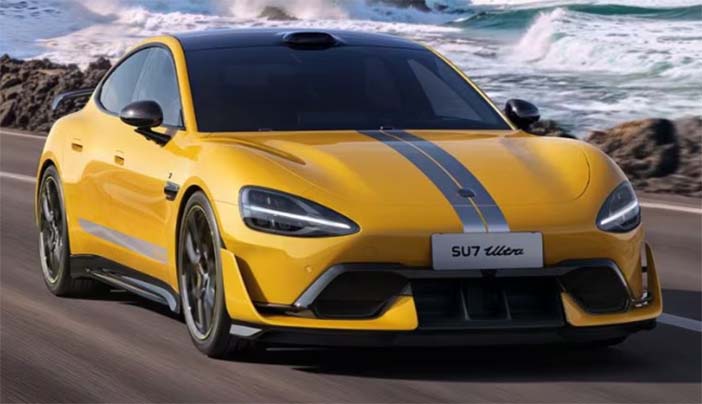
In December 2025, the Xiaomi SU7 recorded sales of 11.123 units, while the Xiaomi YU7 achieved over 39.000 units. On January 12, 2026, the China Passenger Car Association (CPCA) announced the 2025 annual retail sales rankings for new energy vehicle manufacturers. Xiaomi Auto secured a spot in the industry’s top 10 with 411.837 units sold for the year, representing a 200.9% year-over-year increase. Looking ahead, Lei Jun unveiled Xiaomi Auto’s ambitious sales target of 550.000 units for 2026. Given the current product structure, demand in the household vehicle market remains the absolute mainstream. Consequently, the SU7 Ultra, as a niche model in the high-performance segment, has not had a substantial impact on Xiaomi Auto’s overall sales trajectory, which continues its strong upward momentum. +++