
+++ The Volkswagen Group didn’t have the best start in the EV game. Some of its first mass-market EVs either failed to meet expectations of critics, consumers, or sales, or all three. Harsh and costly lessons were learned after that, and things might be looking up for Germany’s largest automaker. However, that also means a lot of catching up to do, as well as putting out fires in sales, labor, and profitability. Right now, the Volkswagen Group is tightening its belt but is actively implementing measures to simplify and streamline production and development processes across all companies under its wing. It is set to roll out a new EV platform. Dubbed the SSP, it’s short for Scalable Systems Platform. The platform was delayed to ensure it could be used by most of the brands under VAG’s wing. It’s said to be used by future EV models from Audi, Cupra, Porsche, Skoda, and, of course, Volkswagen. Volkswagen chief financial officer Arno Antlitz further highlighted the importance of this platform. The Volkswagen Grouo will not be able to achieve EV profit margins at the same level as ICE vehicles until the first SSP-based models arrive. He was quoted as saying, “We have to sell more electric cars than the natural demand in Europe. Until this platform SSP arrives, we have to make trade-offs between BEV volumes and CO2 fines”. It wasn’t mentioned what size class SSP is primarily for, but since it’s modular, it can go up or down by one class depending on the application. However, what is confirmed is the first brand that will use it. Surprisingly, it won’t be Volkswagen, but rather, AUDI . That means the initial success of the SSP architecture rests on Ingolstadt. No pressure. Of course, company representatives didn’t say which Audi model will utilize SSP first. However, the next generation Q4 e-Tron might be a safe bet, as it’s slated for a Fall 2029 reveal for the 2030 model year. VW CEO Thomas Schäfer then said Porsche will be the second brand to use the new platform. With that in mind, it suggests that SSP might be available with different drivetrain options. Other brands within the Volkswagen Group will follow suit, and there was mention of the ID.Golf is coming after the release of the SSP-based Audi and Porsche models. An electric version of the Skoda Octavia is also on the cards, while Cupra will eventually use the platform too. By the looks of things, this is a similar strategy to the one the Volkswagen Group applied about 30 years ago with the PQ34 platform. Audi was the first recipient of the PQ34 platform with the first-generation A3. It then became the basis for the first modern-era Skoda Octavia, and after that, the MK4 Volkswagen Golf. Other derivative models were made, such as the Audi TT, Seat Leon and Volkswagen New Beetle, to name a few. +++
+++ BYD is rolling out 9-minute-long flash charging, which it believes will smash the final barriers to mass EV adoption. The Chinese tech company plans to roll out 3.000 of the 1.500 kW chargers across Europe in 2026, as it moves into infrastructure as well as the supply of EVs and hybrids, as well as premium cars with its new brand Denza. Will this kill the petrol car, asked Kana Inagaki, the Financial Times’ autos correspondent? “I can not say kill, but flash charging can at least compete with the combustion engine”, said BYD’s executive vice president Stella Li with a twinkle in her eye. “When we make recharging as fast as refuelling, this will end the final barrier for people to jump into electric cars”. She believes this will be a historic moment in EV adoption, a “revolution with the kind of technology we launch in China now and with Denza cars”. “Today, people don’t buy electric cars because it’s too long for them to charge, there aren’t too many charging stations and, even if you build a lot, they might be occupied because cars are sitting there for 40 minutes, or maybe 1 hour in the winter. Flash charging technology is more like a gas station”, she continued. “You go there and before you finish your coffee, the charging is finished, and you can move”. Ms Li reckons this will improve the utilisation of chargers by a factor of 30, with throughput soaring. She claimed flash charging would give EVs sufficient charge in 5 minutes, or charge to 97 percent in 9 minutes, or 12 in extreme cold. The first BYD with flash charging capability is the second-generation Atto 3, which packs BYD’s next-generation Blade 2 battery cells. The European launch car for premium brand Denza (the Z9GT, a wannabe Porsche Taycan Gran Turismo) is also compatible with the next-gen chargers. Blade 2 batteries will be backed by a longer warranty, Ms Li promised, to counter consumer fears that high-power charging will lead to faster battery degradation. The BYD regional boss believes flash charging is a “game changer” that will give the Chinese car maker the chance to play in “100 per cent of the market”. “In the UK our EV penetration means there’s 70 per cent of the market we can not touch. With flash charging technology, we can equally compete with gasoline cars”. Ms Li also indicated how flash charging will seek to overcome the challenges of getting sufficient power supply and grid connections. The stations will be backed by BYD battery storage, which will recharge overnight to offer back-up supply. Other sites will be coupled with solar, to help with developing infrastructure in the Middle East and Africa, she claimed. +++
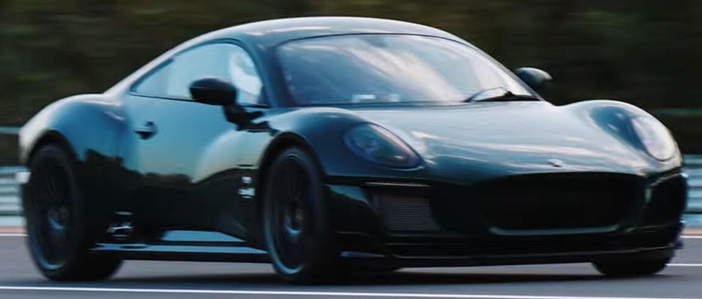
+++ CATERHAM Caterham has released a photo showing its new electric sports car, the Project V. It shows a prototype conducting various manoeuvres on a test track, including charging and braking from high speed. The first rolling prototype of the coupé was displayed at January’s Tokyo Auto Salon, marking a major milestone in its development. Caterham had previously been tight-lipped about the car’s development following the October 2024 annoucement that it would use an electric motor supplied by Yamaha. The British company said in December 2025 that it was evaluating the EV’s motor and battery performance, as well as the durability of its chassis. “This next step enables us to complete a comprehensive vehicle testing programme”, said CEO Kazuho Takahashi. Takahasi, who is also president and founder of Japanese firm VT Holdings, which acquired Caterham in 2021, assumed control last month after Bob Laishley stepped down. The Project V was first shown in concept form at the 2023 Goodwood Festival of Speed. It was originally earmarked for a market launch this year. The new video shows the prototype is largely similar to the concept unveiled 3 years ago. Key changes include a swap from polygonal rear lights to 4 round items (reminiscent of those on the Ferrari F355) and a swap from a bespoke steering wheel with an airbag to an off-the-shelf Momo part without one. It remains to be seen whether the latter part will be retained for the production car. The testing prototype also has 4 seats, rather than the 3 of the concept. Caterham said the Project V will have 272 hp, weigh 1.430 kg and dispatch the 0-100 kph dash in less than 5.0 seconds. It had originally targeted a mass of 1.190 kg and a 0-100 kph time of less than 4.5 seconds. It’s also aiming to achieve an official range of 400 km and a 20-80% charging time of 20 minutes. +++
+++ The automobile market of CHINA has rejected internal combustion engine (ICE) vehicles. For decades, legacy Japanese automakers like Toyota and Honda stood tall in the Chinese market, leveraging long-standing reputations for reliable ICE vehicles. However, new data from April tells the story of EV dominance. According to the latest figures from the China Passenger Car Association (CPCA), the retail penetration rate for New Energy Vehicles (NEVs, which includes plug-in hybrids and pure battery-electric vehicles) surpassed the 60 percent threshold for the first time, reaching a historic 61.4 percent. During April, NEV retail sales hit 849.000 units; conversely, traditional ICE vehicles experienced a severe 37 percent year-over-year collapse, dropping to just 530.000 units. The tides have all but turned in China. The divide between domestic and foreign carmakers is stark. Chinese domestic brands achieved an 80.1 percent NEV penetration rate, successfully capturing the mass-market transition. In contrast, mainstream joint ventures, heavily populated by legacy foreign brands, posted a mere 14.1 percent NEV penetration rate. This structural market shift is having an immediate and severe impact on Japanese manufacturers‘ sales volumes. Honda is facing significant headwinds even beyond China; cumulative tracking data from January through April 2026 shows a 28 percent year-over-year plunge, equating to 145.065 units sold. For the month of April specifically, Honda’s terminal sales in China slumped by 48 percent. Toyota, despite its massive global footprint, is also losing ground. Over the first 4 months of the year, the automaker saw its Chinese sales fall 10 percent year-over-year to 477.100 units, with its overall April volume contracting by 25 percent. Consumers are increasingly bypassing conservative ICE architectures in favor of highly digitized, affordable domestic electric vehicles. Yet, the data also provides a clear blueprint for survival. While Toyota’s overall internal combustion volume plummeted, the brand’s localized EV sales in China surged by an impressive 88 percent year-over-year in April. This singular bright spot proves that Japanese brands can still capture market share in the region, provided they deliver competitive electric alternatives. +++
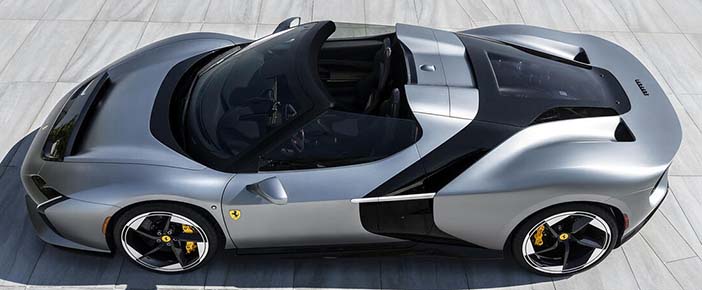
+++ FERRARI has unwrapped the HC25, the latest in its line of one-off specials reserved for the brand’s most privileged customers, and it could hint at the future of the marque’s mid-engined supercars. Penned by Ferrari design boss Flavio Manzoni and based on the F8 Spider, it’s described as having a “bold, forward-looking perspective”. Ferrari said it bridges the gap between the F8 (the last Ferrari powered by a mid-mounted V8 without hybridisation) and its latest flagships, the F80 and front-engine 12Cilindri. In keeping with Ferrari’s latest cars, it emphasises geometric forms and glossy black contrasting elements. The band that runs around the midsection of the car highlights its engine and key ancillaries. Its arrow-like shape is said to provide a sense of “momentum”, emphasising its rear haunches, segmented by milled aluminium door handles. Notably, the HC25 introduces new headlight technology that has allowed for thinner lenses, and it’s also the first Ferrari with fang-like daytime running lights. Much of the HC25’s interior is upholstered with a grey textile, contrasted against yellow stitching and graphics. The HC25 will be on display at this weekend’s Ferrari Racing Days at the Circuit of the Americas in Texas. +++
+++ JLR won’t stop Chery bringing the new FREELANDER brand to the United Kingdom, new CEO PB Balaji has said, and the Chinese-built SUVs won’t cannibalise any current Land Rover products if they are sold here. The Freelander 8 was revealed at the start of May as a large 4×4 and the first in a wave of new Freelander-badged cars destined for sale globally; Chery plans to introduce a new model every 6 months for the next 5 years. These are being created as part of a long-standing joint venture between the 2 car makers. JLR has licenced the Freelander name to Chery and has penned the cars’ designs, but they will be engineered and built by the Chinese company in China. Sales will begin later this year initially in China before Freelanders are exported to other regions. Autointernationaal.nl previously reported that Chery was plotting which markets it would send those models to, with Europe not ruled out. Freelander CEO Wen Fei previously said that any cars exported to Europe wouldn’t be adapted Chinese-market models but instead bespoke derivatives tailored to each market’s demands. Asked if JLR would give Chery its blessing to sell Freelanders here, given that the British company owns the brand name, Balaji said that “it’s Chery’s car” and JLR would “let them make up their mind”. He added: “The car will be sold primarily in China to begin with, and then they will have to decide their plans for bringing it out to the rest of the world. “And from our perspective, our role is ensuring that the design is in sync with what JLR stands for, and thereafter it is completely their baby”. Balaji’s comments also strongly suggest that, if those Freelanders are sold in Europe, they won’t be marketed by JLR or placed in its showrooms. Speaking further about any potential cannibalisation of JLR’s cars, especially given the Freelanders are to be positioned within the same segments as Discovery and Defender models, Balaji said he wasn’t worried. “The price positioning of Freelander and our price positions are different”, he explained. “The product offerings are different. So we don’t see ourselves competing with each other. We see it as ‘together we should be expanding the market’. So let them make up their mind as to how they want to play the game”. +++
+++ The updated LOTUS EMIRA will be the first to use a new 3.0-litre V6 turbocharged hybrid engine developed by Geely-Renault-owned powertrain company Horse. The revised Emira, due to arrive later this decade, is part of a wider overhaul at Lotus that brings combustion-engine sports cars back to the fore, with a new V8 hybrid supercar codenamed Esprit leading the charge. The Horse V6 will become the only available powertrain so will replace both the current Toyota-sourced V6 and AMG-supplied 4-cylinder unit that currently powers the Emira, Lotus CEO Feng Qingfeng confirmed. It develops up to 550 hp and 800 Nm but weighs just 160 kg, making it around 10 kg lighter than any other V6 on the market and only marginally heavier than many 2.0-litre 4-pots, said Horse CEO Matias Giannini. The unit will be mated to an automatic transmission (of as-yet-unconfirmed size) with an integrated electric motor, giving the Emira an additional power boost while also reducing emissions. Lotus extended the life of the Emira after deciding there was no market for the planned electric replacement, originally to be developed alongside Alpine for a launch previously planned for this year. Lotus made the decision to focus on the 6-cylinder partly due to reaction from the US market, which has driven demand for the Toyota-supplied V6. “They told us that they love the V6 engine, and actually the V6 version is our best-seller in the US market”, said Feng. The continuation of the combustion-engined Emira is great news for Lotus’s historic production plant in Hethel, near Norwich, which will also build the V8 ‘Esprit’ supercar from 2028. Production sunk as low as 2.000 cars last year after the US imposed an inflated 25% tariff on imported cars in March 2025. Negotiations by the UK reduced the final figure to 10%, reviving production and making Hethel an attractive place to supply the US again. “The 10% tariff for UK-manufactured cars exported to the US seems acceptable to us”, said Feng. “It is actually more cost-efficient using Hethel than investing in a new factory”. Lotus last year had to deny a report that it planned to shut Hethel amid a wider push to cut costs at the money-losing company. Lotus now aims to push Hethel close to its capacity of 10.000 with the combined production of both the new Emira and the V8 supercar, which is likely to take its Esprit codename into production. The current Emira was launched in 2021 on a much modified version of the outgoing Evora platform and has gone on to become Lotus’s best-selling sports car based on annual figures. However, the V6 from Toyota was due to be replaced because it would have failed to meet upcoming changes to EU regulations, prompting Horse to create its own engine. The engine will set new standards in the category, Horse CEO Matias Giannini told. “Being based on a smaller engine design is also a key reason why the V6 is so compact and light”, he said. “That’s why it’s so competitive, and it is the lightest and smallest hybrid V6 in the world right now. There’s no hybrid V6 engine that fits in the package that ours fits”. The 3.0-litre unit, revealed at the Beijing motor show last month, is described as a “powerful and lightweight V6 engine” for use in mild- and full-hybrid vehicles. It is the latest in a wave of new systems revealed by the fast-growing company, which was set up as a joint venture between Renault and Geely in 2024 to develop and supply electrified ICE powertrains for car manufacturers globally. Horse engines are already used in a variety of vehicles from Renault, Dacia, Nissan, Mercedes and others. Giannini explained that the new motor was not initially in the product strategy when the company was founded 2 years ago, but has been developed efficiently using existing assets. He said: “I love the big engines. When I came here, I didn’t think that was ever going to be part of our journey, because there’s so much to be done with that more commoditised powertrain: the 3- and four-cylinder, up to 2.0-litre engines. But obviously, in a company like Horse Powertrain, there’s a lot of car enthusiasts, so people would come to me and say: ‘When are we going to have a V6?’ And I would say: ‘It’s not the focus right now’. But that’s the thing about an innovative company with car lovers: they made a way to convince me, and the way to convince is that the basis of the V6 comes from our simple 4-cylinder technology”. Giannini’s comments highlight the modularity of Horse’s construction methods, which mean that all its engines can essentially be scaled up and down as needed. Such modularity has also allowed for the creation of a new V8, based on the V6, which will power Lotus’s new supercar. +++
+++ American EV manufacturer LUCID has firmed up its plans for a mass expansion into Europe, and it’ll do so with 2 new mid-size SUVs. The company, already noted for its impressive advances in powertrain efficiency and packaging, hopes to implement these technical capabilities into high-volume segments that will pitch it against rivals including the BMW iX3, Mercedes GLC and Tesla Model Y. The first of these 2 models will be called Cosmos, a family-oriented crossover that focuses on interior space, performance and efficiency. The second, called the Earth, will feature more rugged styling and a degree of off-road ability. While different in ethos, both models will utilise the new Midsize architecture that will help drive down costs and increase scale across the brand’s manufacturing and distribution. Derek Jenkins, Senior Vice President of Design and Brand at Lucid, said: “These vehicles deliver unmistakable Lucid design and driving characteristics, while embracing a radically simpler, more efficient approach to manufacturing and cost. With Midsize, we didn’t compromise what makes a Lucid special, we engineered it to scale”. European pricing hasn’t been announced, but a starting price of under €70.000 is expected for the Cosmos by Autointernationaal.nl; around the same as a dual-motor Mercedes EQB and more than a Tesla Model Y. What will Lucid offer that Tesla or BMW don’t already? Specific technical specifications are still a while away from being revealed, but the ‘Midsize’ architecture has been designed around a brand-new electric motor. Lucid says it’s even more efficient than its world-leading e-motors found in existing models, and will be fed from significantly smaller battery packs. This reduction in battery size won’t just reduce weight and embedded materials, but also allow better cost control, because they often account for around 30-40 per cent of the overall spend across a vehicle. The new models will be built in an unlikely place, too, with the brand opening up a new plant in Saudi Arabia that’ll supply global markets with the mid-size models. Lucid has confirmed that none of its facilities have been affected by the ongoing conflict in Iran. The cars will feature Level 2++ autonomous driving capabilities, but the brand is already on-track to build this out to Level 3, because there’s no need for new hardware; the only changes required are software and legislative. Yet while these models will bring down the cost of Lucid ownership, the brand won’t venture into mainstream territory. Instead, it’ll remain a premium company with a higher-specification car than the equivalent Tesla. The firm previously shared a shadowy teaser image of one of the new models. While it doesn’t reveal much, it’s possible to make out the sloped roofline and cab-forward stance, previewing a silhouette with echoes of the Gravity SUV. This should help when it comes to range and efficiency. Lucid’s former CEO Peter Rawlinson confirmed last year that the company is also planning a rival to the Tesla Model 3 saloon, which will almost certainly use the new mid-size platform. However we don’t yet know the timeline for this particular model’s arrival. +++
+++ Industry safety experts at Euro NCAP have urged MG 3 owners to take part in a free recall on the car. The recall addresses what the organisation describes as a “significant safety flaw” surrounding the supermini’s seat latching system. In September 2025, Euro NCAP crash tested the MG 3 and uncovered a “troubling” issue with the mechanism of the front seats. The driver’s seat came unlatched from the rails mid-collision, causing it to twist and resulting in lower leg injuries for the crash dummy. This also caused the dummy’s head to ‘bottom out’ on the steering wheel, something that would also be likely to result in injury. Responding to the results Euro NCAP took the unprecedented decision to advise consumers to avoid buying the MG 3 altogether. Since then, MG has launched a free recall for all MG 3 cars built prior to August 2025; models produced after this date have been manufactured with the necessary fixes to the seat mechanism included. Between the start of the recall in November 2025 and the end of April 2026, MG says it has inspected and fixed over 12.000 cars; roughly two-thirds of those impacted. Having already contacted every owner concerned, the firm expects to surpass the 90 percent completion mark by November 2026. Nevertheless, Euro NCAP’s programme director, Dr. Aled Williams, said: “This was a significant safety flaw that Euro NCAP uncovered, and we were pleased with MG Motor’s robust response. Owners of the MG 3 who haven’t heard about the vehicle recall or are still to take action should contact their local MG dealer, and they will confirm whether their car is one of the affected models, and arrange repairs, if necessary, at no cost to the owner”. As of the time of writing, the MG 3 has been awarded a respectable 4-star safety rating by Euro NCAP. Aside from the seat rail issue, it was rated 74 percent and 73 percent for adult and child occupant protection respectively, 81 percent for vulnerable road user protection and 69 percent for safety assist functions. +++
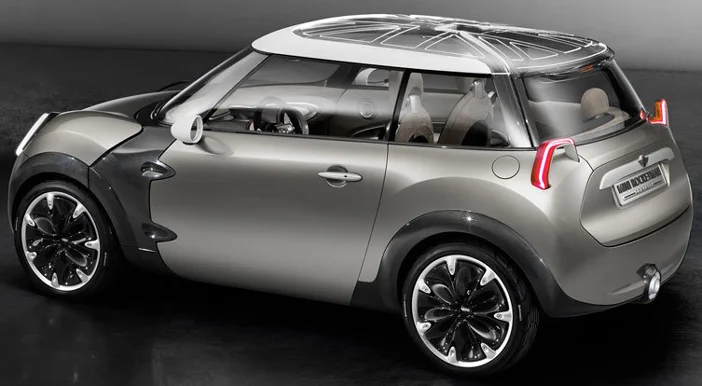
+++ The MINI ROCKETMAN city car is an “exciting project” that is apparently still under consideration, 15 years after the concept was shown at the 2011 Geneva Motor Show. Mini’s head of design, Holger Hampf, said his team is “studying volumes” and “trying to see what Mini can get into such a small, 3.6-metre car”. The main hurdle MINI’s designers and engineers need to overcome is today’s necessity for complex advanced driver-assistance systems, plus a desire to meet increasingly stringent safety regulations. Despite its size and assumed lower price point versus the current Cooper, any future Rocketman would not sacrifice the maker’s reputation for high-quality small cars fitted with the latest safety technology. “You have to be conscious about your surroundings”, Hampf told me. “Everything else around the Mini has grown. Then there’s new regulations in terms of pedestrian safety and sensor technologies. People don’t want to miss their ADAS functionality, or cruise control and all of that. That has led to increasing the size a little bit. There is so much technology in these cars compared to the classic Mini, or the Rocketman concept. So, certainly we’re studying these volumes and we’re trying to see what Mini can get into such a small 3.6-metre car. It’s not easy”, he said. “I’ll leave it at that”. As hinted, Hampf gave nothing more away on the potential Rocketman project, but any future Mini city car would inevitably be designed to rival the wave of small EVs due over the next few years. As well as the imminent Renault Twingo, the Rocketman would act as an alternative to the forthcoming Smart #2, as well as Volkswagen’s e-Up replacement, colloquially dubbed ‘ID Lupo’. Given its size, the Rocketman would most likely use a smaller battery than the current Cooper, for around 240 km of range. Fast charging speeds wouldn’t be a priority, but as mentioned, ADAS features and a strong safety cell are non-negotiable. Hampf told me a Mini “has to be super safe. We meet these 5-star NCAP requirements; we have very, very good safety ratings”. No timeframe for the car’s introduction has been confirmed or even hinted at, but with big lifecycle updates planned for the existing range in 2027 through to 2028, I don’t expect to see a production-ready Rocketman before 2029 at the earliest. +++
+++ Combustion car drivers are suffering “pump anxiety”, claims POLESTAR ’s boss, as spiking fuel prices caused by the Middle East conflict make electric cars more cost competitive and boost their consideration. The higher petrol- and dieselprices have created a new motoring phobia, along the lines of electric car drivers’ range anxiety, claims Michael Lohscheller, CEO of electric car company Polestar. “The nervousness when you go to a petrolstation, I think, is real”, he told. “And I think it will continue for quite some time, because there is still uncertainty”. Lohscheller said, as a German, he could embrace the term “pump anxiety” given his country popularised the term “range anxiety”. “But range anxiety, I think this has gone. The range of Polestar cars, and many other EVs, is now really good. More and more people calculate what they pay on a monthly basis, and now ICE cars are getting more expensive. Usually new technology is more expensive, but now it’s actually cheaper to run”, said Lohscheller. “The pump price uncertainty will not disappear in the next couple of months, for sure”. Lohscheller hopes this will lead to a long-term change in car industry drivetrains, a notion backed by Renault which thinks the Middle East conflict has led to a seismic shift in EV adoption. Lohscheller admits that electric car residual values are still a pain point, however, having lagged equivalent combustion cars’. He added that while interest in used EVs is rising, new car “pricing pressure” would not help shore up used EV prices in the short-term. Fierce competition among UK car brands battling to meet their ‘ZEV mandate’ EV quotas – or face fines – means that discounting is rife. +++
+++ SUBARU ’s electric future just got a lot less electric. The Japanese brand has confirmed it’s delaying the launch of its next wave of in-house EVs after demand for battery-powered vehicles cooled sharply in the US, its biggest market. The automaker had planned to roll out up to 4 independently developed electric vehicles and build them at a new factory in Japan in 2028. Now, the Oizumi plant will start life producing gasoline and hybrid models instead, with EV production pushed further down the road. Subaru hasn’t said exactly when those delayed EVs might finally arrive. According to comments made by Subaru CEO Atsushi Osaki and reported by industry media, the company wants to keep watching market conditions before locking in new launch timing. “In the US, our key market, the pace of BEV adoption has slowed due in part to the easing of environmental policies”, Osaki admitted. “Given this, the timing of our BEV market introduction will be pushed back. We want to begin a comprehensive re-evaluation of the entire strategy, including which models to bring to market”. That’s a major shift for a company that previously aimed for EVs to account for half its global sales by 2030. Subaru’s planned battery factory project with Panasonic could also face delays as it reassesses how much money it really wants to pour into EV development. For now, Subaru’s electric lineup still relies heavily on its tie-up with Toyota. The Solterra shares its bones with Toyota’s BZ4X, while newer models like the Uncharted and Trailseeker were also developed through the partnership. Ironically, Subaru’s EV sales aren’t exactly collapsing in the US, despite America getting the blame for this latest U-turn. Registrations for the Solterra climbed in North America earlier this year. The bigger issue seems to be profitability. Subaru’s been relying on hefty incentives to move EV inventory, something the brand usually avoids. At the same time, weakening EV demand and changing US policies have many automakers rethinking aggressive electrification plans. Subaru now joins a growing list of brands, including Honda, GM and Stellantis, that are dialing back ambitious EV schedules in favor of hybrids and combustion-powered models buyers actually want to purchase. +++