
+++ Many of the EVs offered by AUDI in Western markets aren’t exactly class leaders, especially compared to some of the company’s newer rivals. However, in China, the all-caps AUDI brand does sell 2 innovative electric vehicles that I suspect could sell quite well elsewhere, and they’ve just begun landing in Germany. The AUDI E5 Sportback and E7X, introduced over the past 18 months in China, were developed specifically for the local market in partnership with SAIC Motor.
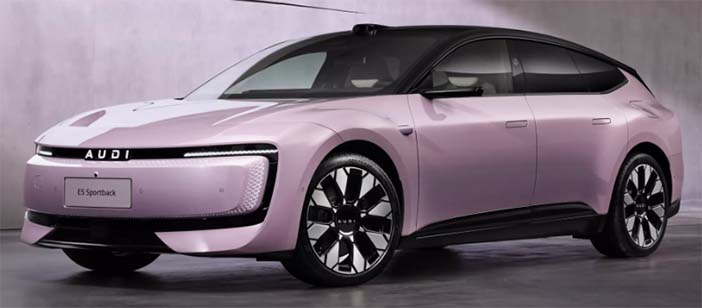
They are not officially sold anywhere else, but European-based importer Auto China has started selling them in limited numbers in Germany. Auto China, which also offers parallel imports of several vehicles from Xiaomi, SAIC and Li Auto, purchased the vehicles in China, ships them to Germany, and homologates them for the local market. This makes them a lot more expensive than they are in China. In fact, Automobilwoche reports that the E5 Sportback costs €59,980, while the larger E7X SUV starts at €72,900. To put those figures into perspective, the E5 Sportback starts at 205.990 yuan ($30,600) in China while the E7X is priced from 269.800 yuan ($40.100), meaning they cost roughly double when imported and sold in Germany by Auto China.
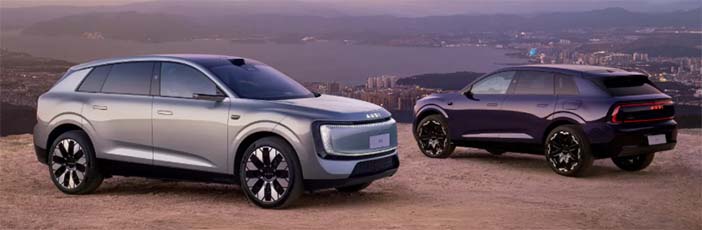
Remarkably, even priced at €59.980 ($70.130) and €72.900 ($85.200), they’re still a lot cheaper than some of Audi’s homegrown products. Perhaps the closest model to the E5 Sportback is Audi’s own S6 Sportback e-Tron, and it starts at €99,500 ($116.300). Whereas the Chinese model has twin electric motors and 776 hp, the S6 Sportback e-Tron tops out at 543 hp. Similarly, the Audi SQ6 e-Tron, which doesn’t appear anywhere near as luxurious as the E7X, is priced from €93.800 ($109.700), making it much more expensive than the imported E7X. But if you live in Germany and are tempted, buying a parallel import has risks. Audi could pursue legal action to stop their sale. In 2023, this is what VW did when a German importer brought in 20 Chinese-market ID.6s with plans to sell them, but after a drawn-out legal process, was ordered to destroy them all. Even if Audi doesn’t move to ban the import and sale of its Chinese models, owners will likely not be offered service or repair support. +++
+++ FORD is cooking up a new generation of models designed specifically for the European palette, and the most exciting of all are destined to have an ST badge affixed to them. As part of Ford of Europe’s renaissance, in which five new models will be launched between now and 2029, Ford knows its success lies in its ability to connect with buyers, and crucial to that is a return to high-performance models that stir the soul. The most exciting is a reborn Fiesta in 2028, based on the Renault 5. While this might sound like an opportunistic chance for Ford to come to market with a new model quickly, it also unlocks a big opportunity for the brand, because it could also underpin a rebirth of the ST. Speaking with Ford’s European general head of product Christian Weingartner, he told: “We have not made any decisions on naming, but it’s very clear that if you talk ‘race to to road’, that we want to have really capable vehicles. To be credible and authentic, there needs to be some kind of performance series of our vehicles; that’s what we’ve got to have”. There’s plenty to work with when it comes to the forthcoming Fiesta ST in this regard, too, because the RG EV Small architecture is already available in a high performance variant in sporty Alpine A290 form, which has a wider track and lower stance than other models on that same platform. While there’s no indication about whether the new Fiesta ST will adopt its own more powerful electric motors, we can use the current A290 GTS variant as a reference. Currently, it tops out at 220 hp and 300 Nm of torque, but with hot new electric rivals such as the Opel Corsa GSE and Peugeot E-208 GTI now pushing out more like 280 hp, Ford will need a more potent set-up to compete. With both Ford and Alpine needing to up their game, we’d suggest a more potent e-motor isn’t off the cards. This performance advantage is also extended to the drivetrain; to support so much power the Stellantis pair also feature a limited-slip differential. However, the Alpine’s wider tracks and larger wheels already form an excellent basis for a new ST, to which Ford will apply its own chassis tuning magic. What’s unlikely, however, are any major styling changes for the ST. Instead we expect the standard Fiesta’s body to be lightly modified, with ST badges and new wheel designs. A further power boost could be found in the application of a second, rear-mounted motor, making an all-wheel-drive Fiesta RS a potential high-performance flagship. Renault’s multi-link rear suspension system could theoretically be arranged to integrate a second motor. Ford’s performance models shouldn’t be limited to just the Fiesta either, as the 3 other models (in this case a new Puma-sized BEV and 2 hybrid models that will effectively replace the existing Kuga and Focus) all share a similar connection to Ford’s high performance heritage. So who knows. A new Puma ST might well also be on the cards, and looking further ahead might this even lead to a new era of Focus ST and RS models? This aligns with plans to integrate Ford’s rally-bred heritage into each of its models. However, this sense of driver engagement and focus on quality engineering will be tangible across more ordinary variants too, as Ford Europe CEO Jim Baumbick told me: “We develop products for targeted customers, so we can actually bring out the attributes that matter most to them. It doesn’t mean that your granny at 93 has to drive a rally car. When you talk to most customers they can’t explain it, but they say it just feels right. It drives well. And that’s the soul of what we’re trying to unlock and what’s special about our cars”. Specific timings and price points are still to come, but with Ford racing to get this new era of European models on sale as quickly as possible, we don’t expect it to be too long after the standard Fiesta’s 2028 launch that we’ll see some tastier models hit the showroom floor. +++
+++ The HYUNDAI MOTOR COMPANY is reviewing a plan to expand the annual production capacity of its Georgia, U.S. factory to up to 800.000 units. Jose Munoz, Hyundai Motor Company’s CEO, stated in an interview that the company is reviewing a plan to increase the annual production capacity of Hyundai Motor Group Metaplant America (HMGMA) in Georgia from the current 500.000 units to between 700.000 and 800.000 units by 2028. Through this, Hyundai Motor Group plans to increase the proportion of locally produced vehicles among those sold in the U.S. from approximately 40% as of 2024 to over 80% by 2029. If HMGMA’s annual production capacity reaches up to 800.000 units, it is expected to become the largest single-site vehicle production base in the U.S., surpassing Tesla and Toyota. Munoz stated: “The U.S. is the most important market in the world, excluding South Korea”, and explained that expanding production capacity is part of the company’s plan to invest a total of 26 billion dollars, approximately 36 trillion Korean won, in the U.S. by 2028. He also cited U.S. president Donald Trump’s tariff policy as a factor accelerating localization. Munoz said, “Tariffs have helped speed up the localization plan”, adding, “Fortunately, we had already started localization efforts before the tariffs were announced, and they are also helping to accelerate the process”. HMGMA is a new factory established by the Hyundai Motor Group in Georgia to target the U.S. electric vehicle (EV) market. Originally built as an EV-dedicated production base, it has expanded its production line-up to include hybrid vehicles in response to slowing global EV demand. It currently produces models such as the Ioniq 5, Ioniq 9 and Kia Sportage Hybrid. Alongside expanding local production, the Hyundai Motor Group plans to increase the proportion of parts sourced from North America to strengthen its supply chain within the U.S. In particular, the company aims to leverage its local production base to expand sales of its luxury brand Genesis in the U.S. The U.S. has established itself as a core market for the Hyundai Motor Group. According to market research firm Mobility Global, the Hyundai Motor Group’s market share in the U.S. rose from 8.4% in 2020 to 11.2% last year. +++
+++ General Motors, Ford and Hyundai have all retreated from JAPAN at one point or another after struggling to persuade car buyers to switch over from the country’s own carmakers. BYD is betting that it can be the first to break that pattern. The world’s largest maker of electric vehicles recently unveiled the Racco, a ‘kei car’ minivehicle designed specifically for Japan’s narrow roads. It attracted more than 1.000 orders in the first few weeks, according to BYD. What sets the Racco apart from the company’s 5 other models in Japan is that it represents something other auto titans never dared to do: target the kei car category, the most popular and uniquely Japanese segment of the market.
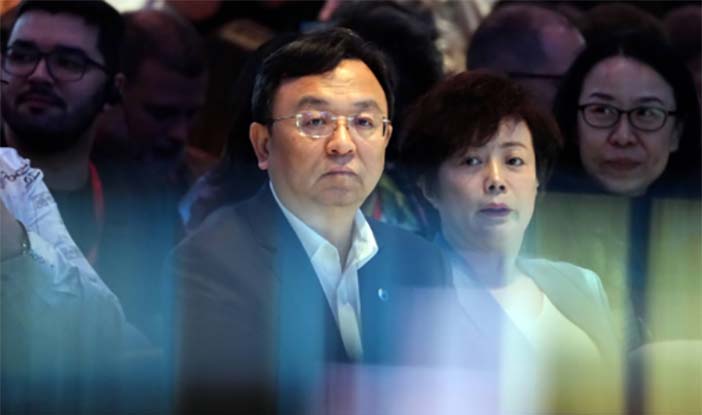
Though the odds are stacked against BYD in Japan, the new effort reflects the ambition behind founder Wang Chuanfu’s declaration that the Chinese carmaker could become the world’s No. 1 automaker within 5 years. It’s also throwing down a challenge on the home turf of Toyota, which currently holds that title and sells more than twice as many vehicles as BYD globally. The push into such a challenging market “enhances brand recognition and reputation globally,” said Yale Zhang, founder of consulting and research firm AutoForesight. “It’s tougher in some markets like Japan and Korea, but consumers worldwide ultimately value the same things: value for money and solid product performance”.
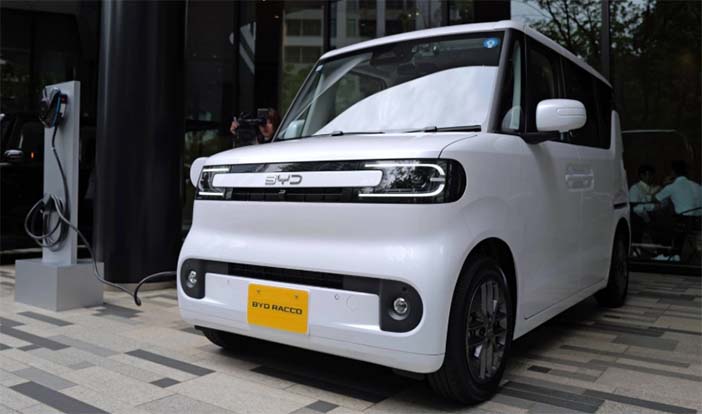
BYD’s boxy vehicle, which debuted in late July and whose name means “sea otter” in Japanese, is going up against Honda, Nissan and others that are stepping up their own EV offerings, taking advantage of government subsidies that give them a potentially significant price advantage. Even so, BYD is betting that the speed and manufacturing efficiency driving its global expansion can crack one of the world’s most entrenched auto markets. “Framing Japan as a marginal opportunity misreads the scale of the segment BYD is targeting”, Satoru Aoyama, an analyst at Fitch Ratings, wrote in a report. BYD’s efforts “reflect a long-horizon brand-building strategy more than a near-term volume play”. More than 1.6 million kei cars and trucks were sold in Japan last year, accounting for more than a third of all new vehicle sales, with Honda, Suzuki and Daihatsu dominating the segment with a combined market share of about 80%. Deliveries rose 7% in 2025, twice the pace of the broader market, providing at least one reason why BYD sees an opening. Standing in the way of BYD are obstacles that include protectionist policies, not unlike those that U.S. automakers faced a generation ago with quibbles over taillight colours and other regulatory hurdles. The Racco’s sticker price is ¥2 million ($12.600), after ¥150.000 in government incentives. But a policy change earlier this year substantially increased subsidies for Japanese, European and American models, while reducing them for BYD, in some cases by more than half. Tokyo residents looking to buy Japanese alternatives (including Honda’s N-One e or Nissan’s Sakura) can tap into more than ¥550,000 in financial support, bringing their effective price tags down to as low as ¥1.2 million. The disparity is threatening to erode BYD’s already slim margins. “Affordability is the No. 1 factor preventing people from buying an EV”, said analyst Taishin Noble. Besides price, Japanese drivers have long preferred domestic cars, as well as hybrids for their range and reliability. The country has also been slow to build out a network of fast-charging stations, leading to range anxiety for would-be EV buyers. BYD also plans to expand its line-up in Japan with the addition of 2 hybrids. It has built 77 sales locations, including 56 official dealerships. Even so, BYD remains a tiny player in Japan, having sold only about 7.400 passenger cars there since entering the market in 2023; a fraction of what Toyota sells domestically in a single month. BYD is aiming much higher, with the goal of amassing 10 times the Racco’s initial batch of orders, according to BYD Japan President Liu Xueliang. “There’s no shortcut”, Liu told reporters in July. “These 10.000 cars aren’t just important for BYD; they’re important for the popularization of EVs in Japan”. Indeed, electrification may be providing a wedge for BYD that other foreign carmakers in Japan never had. GM gave up on selling cars in Japan in 2003 after it failed to attract buyers. Ford completely withdrew in 2016, citing low market share and weak profits. Hyundai exited in 2009 after selling only 15.000 cars, but reentered in 2022 with a focus on EVs. BYD’s edge in EV technology appears to be catching on with some local drivers: it sold 3.742 battery-powered cars in Japan last year, compared with Toyota’s 4.227. Broader demand for EVs appears to be building: Toyota’s BZ4X has posted strong gains, while Honda stopped taking orders for its new kei EV after more than 12.000 customers rushed to buy one. BYD’s modest inroads may also open the door for other Chinese automakers willing to test themselves in Japan. Zeekr, the premium EV brand owned by Geely, showed off its 009 electric MPV at the Japan Mobility Show in late 2025. The ¥13 million model, due to go on sale through a local retailer this summer, will take on popular luxury vans including Toyota’s Alphard and Vellfire, and Nissan’s Elgrand; many of which sell for roughly half the price. Others are following with a more localized approach. EMTA, a joint venture backed by Chery Automobile and Japanese retailer Autobacs Seven, plans to introduce four models by 2029, starting next year with a kei EV. “Consumers will have more options and, in turn, that will push Japanese companies to react”, said Hikaru Todoroki, principal auto consultant at KPMG. “The market won’t expand and the business won’t thrive unless someone takes risks”. +++
+++ MERCEDES-BENZ boss Ola Källenius is clearly proud of the new C-Class Electric. Proud enough to travel from Stuttgart to Helsinki to pop into the launch event and, after spending 20 minutes fielding questions from a buying pack of eager reporters, take me on a private 45-minute drive of the Finnish countryside. He wants to show off this car and is keen for readers of Autointernationaal.nl to understand what it can do. “It’s nice and quiet and feels more like an E-Class”, says Källenius, as we glide along in notable tranquillity. “We’re doing 80 kph now, but if we were on the autobahn doing 200, you’d have the same feeling”. At this point Källenius is interrupted, not by me with a probing follow-up question but by the C-Class itself: “The feeling of driving at high speeds on the autobahn can be exhilarating”. Having his own car vocally interrupt an interview is a first for Källenius, but this surreal moment encapsulates the complex, balanced transition that Mercedes is undergoing, as it adds huge digital capabilities to its vehicles while still maintaining the traditional premium strengths that have underpinned them for 140 years. With its first generation of electric vehicles, Mercedes kept the 2 strands separate, for example selling the EQE beside the combustion-engined E-Class. But the new C-Class and closely related GLC mark a distinct shift in offering you the choice of powertrain, albeit with the ICE and EV versions built on different platforms. “We had buyers enter the brand with those first electric models in the market. They learned to love Mercedes later in their life, maybe”, says Källenius. “The traditional Mercedes customers are now coming into this. But if they still want a high-tech combustion engine, we can do that. It’s not a problem. Customers will decide when to switch at their own convenience”. The introduction of the new MMA and MB.EA electric platforms (which respectively underpin the new CLA and GLA and new C-Class and GLC) has kick-started a rapid rollout of new EVs, along with heavy updates to keep their ICE equivalents in line. Mercedes is midway through launching 40 models in 3 years by the end of 2027. Even for an industry giant, that’s a huge undertaking. “The key is a thought-through architecture strategy”, says Källenius. “If every nut and bolt on every one of those cars was new, you could never do it, but if you have a modular strategy and an operating system platform strategy (the whole brain and central nervous system of the car) you don’t have to fundamentally develop a new each time”. Thus the MB.OS operating system of the C-Class Electric in which we’re currently sitting is also used in the new GLC and CLA EVs as well as the new ICE S-Class and forthcoming ICE C-Class. As Källenius notes, it’s not only Mercedes’ new generation of EVs that will be ‘software-defined vehicles’. Källenius has been chairman and CEO of Mercedes-Benz since 2019, when he took over from the much-admired Dieter Zetsche.
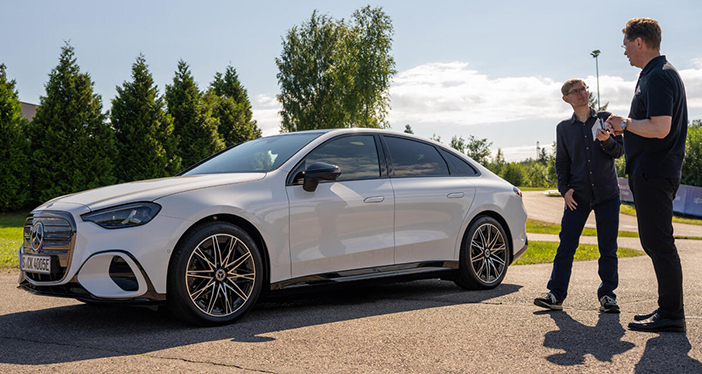
Having worked for the company since 1993, he was an establishment choice, but the Swede was still a notable appointment as the first non-German to lead Mercedes (his wife is German and he now holds dual citizenship). Automotive CEOs usually come from either a business or engineering focus, but Källenius’s 33-year career has spanned every aspect of the firm. “I started my career as a trainee on the management side and meandered over to the engineering side”, he laughs. He initially worked in procurement (“if you work in procurement and supply, you’re like the wingman of the engineers”), eventually being made executive director of operations for McLaren in 2003, when Woking was developing the SLR McLaren. From there he had stints running Mercedes’ Formula 1 engine division in Brixworth and its US arm, then in 2010 returned to Germany to lead Mercedes-AMG. He joined the board of management in 2015, leading sales then engineering before becoming CEO. “I went through production, management and sales and then ended up as engineering director for the whole company”, says Källenius. “But I do believe that fundamentally, if you’re working for a car company, whatever you do centres around the product and the technology. You must have that constant curiosity to look at what’s happening with the product. Technology remains at the centre of Mercedes’ strategy”. Electric cars and software remain hard sells to some car fans, especially the sort Källenius tried to appeal to in his AMG days. So how do you make people who grew up debating V8 and V12 engines excited about improved inverters and faster computer chips? “For traditional car nuts it feels like you’re learning a new language”, he acknowledges, “but are you really? When I was in university, it was: ‘Do you have a 386 or a 486 processor on your massively heavy laptop?’ The technology race has always been there as a combination of hardware and software, but now you have that in cars too, and you’re then talking about: ‘Okay, how many tops [trillion operations per second]do you have?’ Why do you need tops? Well, you need tops to power very sophisticated generative AI-based end-to-end software models, and if you don’t have the ‘horsepower’ to do that, you don’t have the driving features. The horsepower of the digital side is provided by chipsets”. So how much of Källenius’s time as Mercedes CEO is spent debating tops and chipsets and how much is spent sitting, like he is now, behind the wheel of a new car for evaluation? “The board drives and evaluates everything, because at the very end the buck stops with us,” he says. “But I’m the first to admit the excellent engineers we have are better trained than us to do that. It’s not our job to do their job. But we are customers too. When I test a car, I put myself in customer mode. How would I feel if I’d spent €70.000 or so to buy this? Is it really delivering? Then we debate that. The fine-tuning of the chassis and handling and so on is vital, because it’s a Mercedes, right? But now we spent a lot of time working on the UI [user interface]and digital side”. But don’t think that the firm is now so focused on technology that the human element is lost because, well, it’s a Mercedes, right? “It’s a science and an art”. says Källenius. “You can measure everything, such as the hertz frequency of the movement in the chassis, but it’s the experts who ultimately sign off the car and set how it rides and drives. There’s a human component to that: it’s like they have sensors in their bodies somehow that translate into the perfect set-up. Different brands have different characteristics, and Mercedes customers have an expectation to feel safe and in control and comfort but to know they can push it if they want to”. With his experiences at McLaren and AMG, Källenius maintains a particular interest in ensuring that Mercedes continues to deliver when people want to push their cars. He recalls fondly taking part in track days with friends during his 6,5 year stint in the United Kingdom (“my favourite circuit was Goodwood, which is just fantastic to go round”) and is clear that he wants the Affalterbach division to keep growing. “Our intent is to over-proportionally grow the performance side of the business,” he says, something that he’s sure will appeal to, car enthousiasts. AMG is now beginning to develop cars atop bespoke platforms to maximise their performance, albeit using the wider synergies of the company (“the way a climate control system works, do you need an AMG version? No, you don’t”), but Källenius insists that there will remain “cross-fertilisation” between those models and the wider Mercedes line-up. One example of that is the new AMG CLA 45, which features an electric powertrain that can simulate a V8 engine, down to pops and bangs and feedback on the virtual gearchanges. “When I first drove the CLA 45 with that system, I was like a born-again Christian”, says Källenius. “It was the best I’d ever driven: it had all the feeling of a V8 but with more power and torque”. Not that a virtual, electric V8 is about to replace the real thing: while Källenius thinks that the industry has “turned a corner” on the road to electrification, he admits that “the consumer is not quite there yet”. He says that Mercedes “didn’t wobble” from its ultimate goal of becoming electric-only but nor did it abandon its commitment to “high-tech electrified combustion engines”. Another area where Mercedes has maintained a singular focus is in its commitment to keeping its knowledge in-house. Aside from Smart, now a 50:50 joint venture with Geely, the company has eschewed the general industry trend of forming partnerships with other manufacturers. That, says Källenius, is because “if you have the ambition to be a global leading player, you have to know the whole thing. So we have deep partnerships with tech companies and traditional suppliers but we remain the architects of the cars”. Sadly, with Källenius turning the C-Class back into the entrance for the launch venue, it’s time for us to leave this comfortable house on wheels. But, I wonder, with electrification now mainstream and software-defined vehicles on the road, will car development start to slow down soon? “I think it’s going to speed up,” counters Källenius. “With AI, who knows what’s going to happen? And the process of development is also speeding up. “Our company founder Karl Benz once said: ‘The love of inventing never dies.’ It’s like in F1: every time you believe you have found the last nine-thousandths of a second, there’s always a new idea. It just never stops”. +++
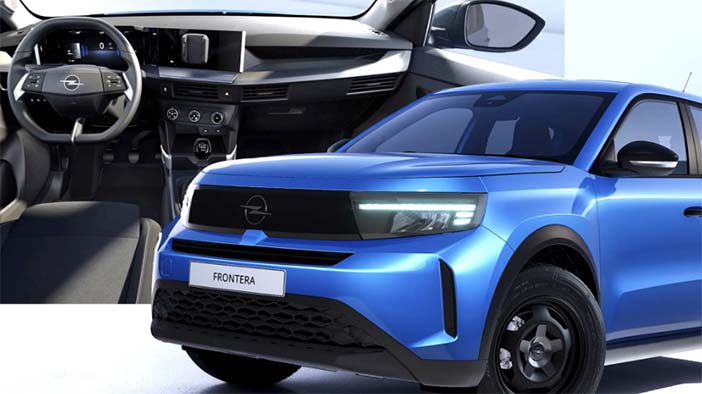
+++ Small hatchbacks are supposed to cost less than the bigger, roomier SUVs sitting beside them on the lot, and in most showrooms they do. OPEL ’s lineup works the other way around. The Frontera Start, a family SUV with no electrification and a stick shift, is now the cheapest new Opel passenger car you can buy in Germany. Before anyone brings up the Rocks, that’s a quadricycle, not a car. Pricing starts at €21.990, which is €2.750 below where the Frontera range used to begin. What makes that number awkward for Opel is where it lands relative to the smaller cars in the same showroom, several of which run an identical drivetrain. The Corsa costs €1,350 more at €23,340 and the Mokka asks a further €5,400 at €27.390. The only Opel that comes in cheaper is the Rocks Electric, a sister model to the Fiat Topolino that’s offered in America, at €8.190 and as noted, Europe registers it as a heavy quadricycle rather than a car. The Frontera Start doesn’t pretend to be anything other than the bottom of the range, riding on 16-inch black steel wheels with black mirror caps and black cladding to match. The one concession is the paint. Instead of the fleet-white default that usually comes with this territory, the standard colour is a glossy Effekt Blue. Inside, the poverty-spec includes a smartphone holder instead of a touchscreen, following the example of the slightly more expensive Frontera Edition. Standard equipment includes a 10-inch digital instrument cluster, manual A/C, a 6-way adjustable driver’s seat, rear parking sensors and lane departure warning. At 4.385 mm long, the SUV seats 5 across 2 rows, with a 60:40 split rear bench and 460 liters of cargo room. The optional Start Comfort Pack throws in a dual boot floor and vanity mirrors on both front sun visors. The non-electrified turbocharged 1.2-liter 3-cylinder engine produces 100 hp, with a 6-speed manual gearbox sending power to the front axle. It joins the existing mild-hybrid 1.2-liter with the 6-speed dual-clutch automatic, and the fully electric variants. Independently of powertrain option, the trim structure of the Frontera comprises the Start, Edition, GS and Ultimate grades. While the entry-level Opel Frontera Start is quite affordable by German standards, it can’t match its twin model. The closely-related Citroen C3 Aircross You starts at €19.190, making it the cheapest Stellantis SUV in the German market. +++
+++ In an exclusive interview, RIVIAN founder and CEO RJ Scaringe has provided new insights into the €5.2 billion joint venture between the American start-up and the Volkswagen Group that will help shape the German giant’s next-generation EVs. The 2 companies announced their partnership in 2024, forming Rivian and Volkswagen Group Technologies (RV Tech). The venture is working to produce best-in-class technologies for future electric cars, utilising Rivian’s industry-leading software and electrical hardware and the VW Group’s massive global scale. More specifically, using its existing technology as a basis, Rivian is working with the VW Group to develop a flexible and streamlined, state-of-the-art zonal electrical architecture, plus new software. These will be deployed primarily on the group’s latest platform, SSP, which numerous brands including Skoda, Cupra, Audi, Porsche and, of course, Volkswagen, are set to use. This new, more consolidated electronic architecture will use fewer control units and less wiring, meaning reduced weight, cost and complexity in new cars. The new tech should make them better at receiving over-the-air updates, which can add more features and value to cars as they mature. BMW has gone down a very similar route with its all-new Neue Klasse generation of EVs. Instead of hundreds of traditional electronic control units, the new BMW iX3 features just 4 central computers, referred to as ‘superbrains’, with its ‘Heart of Joy’ one responsible for every aspect of the driving experience. The Volkswagen ID.Lupo arriving in 2027 is set to be the first of many models to feature Rivian’s tech and while each brand within the VW Group (which also includes Bentley and Lamborghini) is different and wants different things, Scaringe pointed out: “When there are debates or discussions, they’re all in service to make the products better”. He continued: “Oliver Blume (VW Group CEO) is very much a product person, and very much a car enthusiast as well. So it was very helpful that we both saw eye-to-eye and the desire to make excellent products. And then to the extent that we could be helpful in their journey to make excellent products, that was something that was intriguing to both of us… is to say, like, ‘Can your products be even better if we helped?’ And ‘Can we help put more great products into the world?’ ”. He added: “Culturally, I think that’s actually quite helpful that we are not looking at the partnership through the lens of ‘this is just a business deal’. We look at it through the lens of wanting to help create amazing products”.
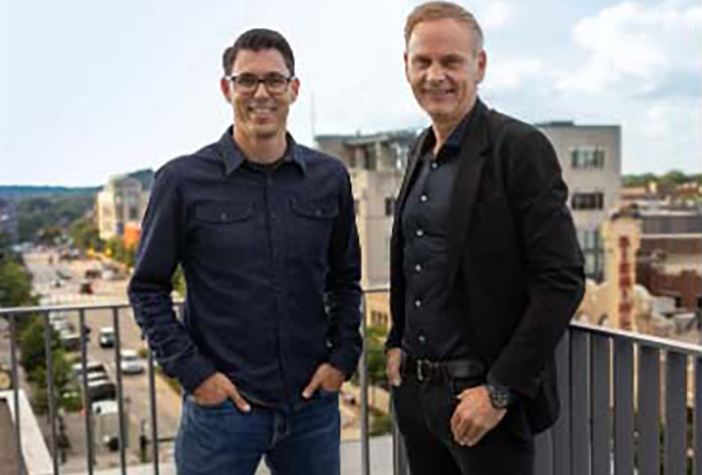
When the deal with Rivian was announced in 2024, Blume said: “We have a clear plan to offer our customers the best products and digital experiences at attractive prices through state-of-the-art development processes, innovative technological approaches, and a competitive cost base driven by synergies”. While the founder of an electric-car company, Scaringe still has 2 old-school speed machines in his garage: a Porsche 993 Carrera 4S and the lesser-known VW Corrado. That was his first car, in fact, and naturally earned him a lot of points with the VW team when he turned up in it to one of the first meetings they had about collaborating. Porsche was the company that inspired Scaringe to create his own car firm, which he did at the age of 26, the day after graduating from MIT (Massachusetts Institute of Technology). Being a lifelong Porsche fan, for him this collaboration is “sort of poetic”. He explained: “Though not planned, that a brand that helped inspire me to build Rivian is a brand that we’re now helping”. +++
+++ TESLA has initiated a large-scale recall in China. The car manufacturer decided to recall 3 million vehicles in China. This follows a directive from the State Administration for Market Regulation (SAMR) regarding safety issues with embedded door handles. Tesla vehicles are equipped with embedded electric door handles. The problem arises when power is cut off during a collision, causing the handles to malfunction, which could prevent occupants or rescue teams from opening the doors, thereby delaying escape or rescue efforts.
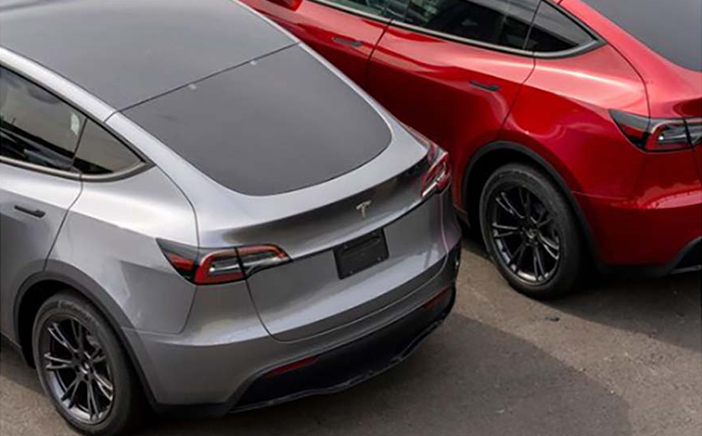
Bloomberg previously reported that at least 15 people died after rescue workers failed to open doors during post-collision fires involving Tesla vehicles. Tesla plans to address the issue through this recall by adding software that automatically lowers windows after an accident and attaching labels indicating the location of emergency manual door-opening devices. The Chinese government banned embedded door handles earlier this year after similar incidents occurred with other electric vehicles, including Xiaomi. Consequently, not only Tesla but also other Chinese electric vehicle brands are conducting recalls related to embedded door handles. The total recall scale involves nine automakers and 4.27 million vehicles, marking the largest recall in Chinese history for a single quality issue. +++