+++ Last week, a strike occurred at the BYD factory in Wuxi, Jiangsu province, in China. Images and short videos circulating online showed a large gathering of employees within the factory compound, with some even lying on the ground, covered by blue sheets placed by the police. According to reports, the main reason for the employees’ discontent was the implementation of a 4-shift system and a 5-day, 8-hour work schedule. This would result in the loss of overtime pay, leading to a significant reduction in their income. The BYD factory in Wuxi was previously owned by the American company Johnson Controls. Last year, BYD acquired Johnson Controls’ factories in Chengdu and Wuxi for a price of 15.8 billion yuan (€2.19 billion). After the acquisition, both Johnson Controls and BYD issued a joint announcement, promising that employee benefits would remain unchanged and, in some cases, even slightly improved. They also assured that severance pay would be provided to laid-off workers. However, it is reported that BYD did not fulfill these commitments, contributing to dissatisfaction among the employees. The employees protested against eliminating overtime, which may seem surprising from an international perspective. While the rest of the world seeks to reduce working hours, Chinese workers are demanding an increase in working time. Why is this the case? Chinese workers do not necessarily enjoy working overtime; they are compelled to do so due to circumstances. Factories often set basic wages just above the government’s minimum wage to keep labour costs low. To make ends meet, employees accept long hours of overtime work since Chinese labour law requires employers to pay 1.5 times the regular wage for overtime and double the wage for weekend overtime. The job postings for the BYD factory in Wuxi in the past 2 months indicated a basic wage of 2.490 yuan ($345), which coincides with the minimum wage in Jiangsu province. Stable overtime hours are necessary to earn a monthly income of 5.000 to 6.500 yuan ($690 to $897) advertised by intermediaries. In electronics factories, a 10-hour workday is considered the minimum, and some factories even require employees to work 12 to 13 hours per day. By cancelling overtime, BYD effectively reduced the maximum monthly income for employees to just over 3,000 yuan, which is seen as a fairly low salary. Currently, BYD has not responded to this incident, and the reasons for the sudden change in the overtime policy remain unclear. However, reducing overtime is a common strategy employed by many companies to force employees to resign indirectly. If companies initiate layoffs, they are legally obliged to provide severance pay. Speculators wonder if these actions reflect possible layoffs in the Chinese auto industry. Reports of worker layoffs by Li Auto surfaced today, supporting this case. +++
+++ As automakers adjust their investment pace due to the impact of the ELECTRIC VEHICLE (EV) market chasm, interest is growing in the increasing orders for equipment from 3 South Korean companies specializing in electrode manufacturing. Electrode manufacturing is the first stage in producing rechargeable batteries, essentially involving the creation of the cathode and anode. According to South Korean financial data provider Sejong Data, PNT’s order backlog for electrode manufacturing equipment reached a record high of 1.8927 trillion won in the first quarter of this year. Similarly, TSI set a new quarterly record with an order backlog of 465.9 billion won, nearly doubling from 232.7 billion won a year earlier. CIS also saw its order backlog increase to 879.6 billion won, up from 768.1 billion won a year ago, despite a slight decrease from the previous quarter’s 899.4 billion won. Order backlogs are a key indicator of future revenue, as there is a time lag before orders are recognized as sales. An industry insider noted, “Electrode manufacturing equipment takes longer to deliver than other equipment, so customer orders come in first. Observing the order trends of these companies can help gauge the sustainability of the EV market chasm”. It typically takes around 2 years to fulfil orders for electrode manufacturing equipment, which is double the time required for other processing equipment. In contrast, other processing equipment companies have seen their order backlogs decline. For example, Hana Technology, which sells assembly process equipment, reported a decrease in order backlog to 372.2 billion won in the first quarter from 392.3 billion won in the third quarter of last year. A-Pro, which supplies equipment for the formation process, also saw a slight decline from 242 billion won to 238.9 billion won over the same period. This trend is attributed to EV manufacturers re-strategizing in response to the chasm. Ford, the second-largest automaker in the U.S., decided to significantly reduce production of its popular F-150 Lightning electric pickup truck. Toyota and Nissan are doubling the incentives for EV sales to dealers in the U.S. to combat slowing sales. Hyundai plans to launch the Casper EV in the second half of this year, aiming to break through with EVs that offer better value for money. Experts believe that EV growth might stagnate until their prices fall to the level of internal combustion engine vehicles, due to delayed interest rate cuts and reduced government subsidies worldwide. There is also talk that most people interested in buying EVs have already done so. The upcoming U.S. presidential election in November, which might see the return of Donald Trump, could also impact the market, as he has voiced intentions to reduce investments in the green industry. Price remains the critical factor. Kim Pil-soo, an automotive engineering professor at Daelim University, stated, “While the industry is making efforts to produce affordable and high-performance EVs, it could take 3 to 4 years to halve the current EV prices through lower battery costs or automated manufacturing processes. Until then, hybrids will likely dominate, with EVs becoming mainstream afterward”. He added that the current growth stagnation is part of a normalization process, following explosive growth driven by early adopters and subsidies. South Korean market research firm SNE Research estimated that the total number of registered EVs worldwide last year was 13.77 million, representing a modest 30.6% increase from the previous year. This growth rate is down from triple digits in 2021 and around 60% in 2022. +++
+++ At a sprawling vehicle test centre in the English countryside, a HYDROGEN powered Grenadier 4×4 made by Ineos Automotive grips steep and rugged tracks, showcasing its off-road capabilities. Making the demonstrator car was “a really obvious thing” to do, the company’s chief executive Lynn Calder told journalists at the unveiling this week. The young, fast-expanding company is part of petrochemicals giant and hydrogen producer Ineos, run by British billionaire and Manchester United stakeholder Jim Ratcliffe. “When we embarked upon the demonstrator project, we saw the opportunity to showcase that we have a completely uncompromised Grenadier in net zero form”, she said at the event called “Road to Decarbonisation”. Calder cautioned it would be some time before the car was available to buy amid a limited offering of other hydrogen-powered vehicles that are helping drive a path towards net zero carbon emissions. Ineos cites the high cost of extracting the Earth’s most abundant element and a lack of hydrogen refuelling stations, especially in the UK, as obstacles to the development of cars deemed greener than popular electric vehicles (EVs). Is the car “for tomorrow? No, because there isn’t infrastructure there”, Calder said. “We will keep it warm, we’ll continue to talk about it, we will see it as part of the future but it doesn’t feel like it’s this decade”, she added. Calder spoke from the UTAC vehicle test centre in Millbrook, a village north of London, where the hydrogen-powered vehicle quietly navigated dusty sharp bends and other obstacles. Hydrogen cars work thanks to the cleanest form of the gas combining with oxygen in a fuel cell to generate electricity. The only waste emitted is water vapour. Hydrogen-powered buses, cars, trucks and vans are all on the market, made by a small number of companies including Hyundai, Renault, Toyota and Opel. With governments pressuring the auto sector to go green, Ineos Automotive plans to launch an electric 4×4 in 2027, the Fusilier, to be sold alongside current diesel and petrol versions of the Grenadier. Speaking against the din of sports cars speeding in the distance, Calder hit out at the British government’s goal of banning the sale of new petrol and diesel cars from 2035. “I don’t think it works, I don’t think it’s achievable, I think we will fail”, she predicted, even after Prime Minister Rishi Sunak pushed back the original 2030 date. The Scottish CEO called it a “pipe dream plan with no strategy around it, no idea how we’re going to get there”. Responding, the Department for Transport said a number of incentives were on offer to enable the transition away from polluting vehicles. It added that demand for EVs was “high”, even if recent data shows evidence of slowing sales in the United Kingdom and abroad. Regarding infrastructure, “there are over 61.000 public charge points across the United Kingdom; an increase of 44 percent since this time last year”, a department spokesperson told. According to consultants LBST, only 921 hydrogen refuelling stations were in operation worldwide at the end of last year. China was out in front with around 200 stations, or about double the amount in European leader Germany. The United Kingdom currently has just 6 stations, even if hydrogen vehicles can offer a longer journey range and are faster at refueling than electric rivals. The country’s road to net zero is clouded somewhat by the outcome of this year’s general election. Polls widely suggest that Sunak’s Conservatives will lose power to the main opposition Labour Party. Labour’s plans for emissions targets have been called into question after leader Keir Starmer ditched its flagship commitment to spend €32 billion a year on green infrastructure if in power. Greenpeace UK’s senior transport campaigner, Paul Morozzo, called on the next government to reinstate the 2030 ban and increase tax on polluting vehicles. He added that it must “get on with delivering a proper network of EV charging points all across the country and get the transition to EVs back on the road”. As for hydrogen, with so little infrastructure, the fuel “isn’t viable or desirable for mass transit” at the current time, he told. +++
+++ KIA will make a comeback at the Paris Motor Show this October after a 6-year hiatus, seeking a bigger footing in Europe’s competitive electric vehicle market. Kia France published a LinkedIn post revealing that Kia will attend the 2024 Paris Motor Show, starting on October 14 at the Paris Expo Porte de Versailles. “Let’s celebrate Kia’s big return to the Paris Motor Show this fall. Novelty, innovation, and mobility will be the key themes of this event. Kia will showcase its latest exclusives and share its future ambitions”, the post stated in French. Hyundai is also reportedly considering joining the event. Kia’s booth will emphasize what the company calls “future mobility” technologies, particularly electric vehicles. Highlighting that this will most likely be the overseas debut of the EV3, a mass-market electric vehicle set to premiere in South Korea this Thursday. The EV4 and EV5 models, aimed at future European markets, will also be showcased. The Paris Motor Show, established in 1898, is one of the world’s top-5 auto shows, alongside those in Frankfurt, Detroit, Geneva and Tokyo. Until 2018, Hyundai and Kia had a consistent presence at the biannual show since Hyundai’s entry into the French market in 1992. However, the 2020 show was canceled due to the Covid-19 pandemic, and both brands were absent in 2022. Industry experts interpret Kia’s return to the Paris Motor Show as a deliberate effort to boost its presence in the European electric vehicle market. Traditional auto shows have seen a slight decline in influence, prompting Hyundai and Kia to previously prioritize events that emphasize technological innovations such as the Consumer Electronics Show. Their absence from last year’s International Motor Show Germany in Munich was in line with this trend, yet their reappearance in Paris signals renewed focus. “Europe is a major battleground for electric vehicles, much like the US, with tough competition among many brands. Kia’s decision to join the Paris Motor Show this year, after skipping the German show last year, shows they’re serious about boosting their presence against rising Chinese competition and strong local players”, an industry insider noted. Europe accounts for about half of the global EV market outside of China. Dominant players include Tesla, Volkswagen, Stellantis, BMW, Mercedes-Benz and Volvo. Chinese manufacturers, particularly BYD, have also been making significant inroads. The expected 100 percent US tariff on Chinese EVs will likely drive more Chinese brands into the European market. While Hyundai-Kia has generally performed well in global EV sales, they have recently seen a slight slowdown in Europe. In the first quarter of this year, Kia reported 44.000 global EV sales, a 7.9 percent increase from the previous year. However, the share of these sales in Western Europe dropped from 44.1 percent to 41.7 percent. Similarly, Hyundai’s share of European EV sales fell by 5.2 percentage points to 10.7 percent, primarily due to declining sales of flagship models like the Kia EV6 and Hyundai Ioniq 5. +++
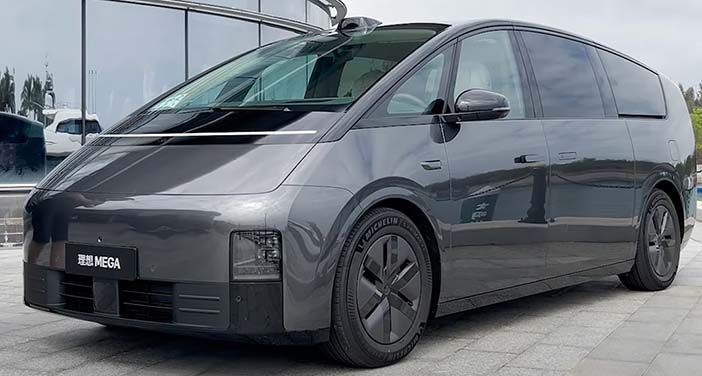
+++ LI AUTO postponed the market launch of its first all-electric SUV untill the first half of 2025. This information was shared by the company CEO and founder, Li Xiang. The delay marks a major strategy shift as the Mega electric MPV didn’t meet sales expectations. Li Auto is a startup founded in 2015. It is a well-known EREV (Extended Range Electric Vehicle) crossovers manufacturer. However, Li announced the transition into the BEV segment in 2023. At that time, Li planned to launch 5 fully electric models until 2025. The company representatives said this shift was caused by the rapid development of DC charging tech, which now allows charging 500 km range in 12 minutes. In March 2024, Li Auto launched its first all-electric model, which appeared to be the Mega minivan. It is a large MPV with dimensions of 5.350 x 1.965 x 1.850 mm and a wheelbase of 3.300 mm. Its powertrain comprises 2 e-motors with a combined power of 536 hp. The 102.7 kWh ternary NMC battery from CATL supplies power to them. The Mega’s range reaches 710 km. Initially, the Mega was launched with a single trim level for 559.800 yuan ($77.350). However, the launch wasn’t successful as Mega’s demand was slower than expected. Previously, Li reported it could sell approximately 8.000 units of this MPV monthly. However, the Mega sold 3.229 units in the first month after the launch and only 1.145 cars in April. As a result, Li Auto revised the estimated sales volume and sliced the price of the Mega by 30.000 yuan ($4.150). Li Auto underestimated the harsh EV market. This miscalculation led to a huge strategy shift for the company. On May 17, Li Auto CEO and founder Li Xiang said during a press conference that the launch of the brand’s first electric crossover is scheduled for the first half of 2025. Previously, this model aimed to start sales this year. Li Xiang explained that this delay is caused by the necessity of installing enough fast charging stations to satisfy the needs of buyers of mid-to-high-end electric SUVs. Secondly, the estimated sales volume of this electric SUV reached 10.000 units per month. According to Li Xiang, the company needs to install at least 500-600 showcase booths nationwide to increase the sales. Without these two requires executed Li Auto will only increase the number of models without raising the sales volume, Li Xiang said. Meanwhile, Li Auto will focus more on its EREV model line. Li Xiang said the recently launched L6 has become a huge success. Moreover, the new pricing strategy has also boosted customer demand for L7, L8 and L9. Li Xiang underlined that the company management is currently satisfied with its sales performance and has no plans to reduce prices in the future. The upcoming Li Auto electric crossover is known by its codename S01. It was spotted in China several times during road tests. Its exterior styling stays in line with the Mega. It has the same sleek body shape and LED strips in the front and rear. Like the Mega, the S01 adopts the 800 Volt architecture that supports 5C charging (5C means the charging power is 5 times the capacity). This SUV will enter the market in the first half of 2025. +++
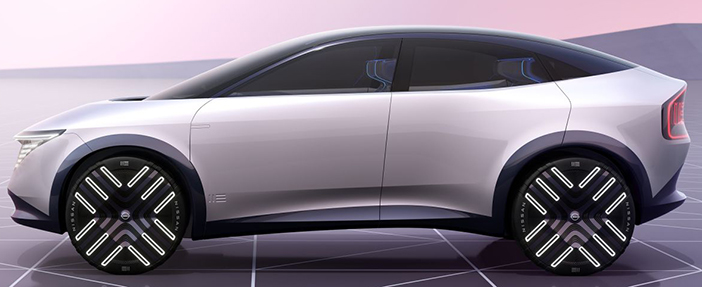
+++ NISSAN ’s British factory is primed to start production of the next-generation Leaf from March 2025 as part of a wide-reaching £2 billion transformation of the Sunderland plant. Morphing from hatchback to crossover, as previewed by the Chill Out concept in 2021 (phto), the Leaf will be built alongside the Juke and Qashqai, as well as their pure-electric successors due in the coming years. The current-generation Leaf ended production in March and work has already begun on incorporating a new battery installation station onto the production line. Production trials will start in August and run for 6 months. If all goes smoothly, the line will be ready to take its first Leaf models from as early as March next year, so the wraps are likely to come off the car towards the end of 2024. Nissan is investing heavily in the future of the Sunderland factory, where it has just started building the facelifted Qashqai, but its commitment to keep building cars in the United Kingdom is “not without its handicaps”, according to regional manufacturing boss Alan Johnson. “We can just about justify continuing operations here, but it is not easy. It’s a real challenge”, he said, citing stringent cost-saving efforts (including a data-driven efficiency push) as a key factor in the factory’s ongoing viability, rather than local incentives. He added that producing electric cars in the United Kingdom “can work” but “only if all the stars align”. “When it comes to competing against other countries, there are a fair number of handicaps”, he said. Johnson referenced the difficulties in optimising supply chains and the lack of “good solid policies” but he said the cost of energy is the most inhibitive factor. “We pay sometimes twice what is paid in mainland Europe”, which drives up production costs and reduces the margin on each car sold, he said. In a bid to combat that, Nissan is ramping up efforts to source renewable energy locally. Currently, 20% of the factory’s energy usage (which totals around 350 MW a week) comes from on-site wind and solar farms. The firm wants to boost this to 100%, but has not given a timeframe for achieving that. Asked why Nissan chose to stick with Sunderland in light of the increased costs, Johnson said: “We are here. We’ve got an asset here. That’s not just facilities. That’s also the people. Therefore, it is in our interest to get the best out of the assets that we have”. He added that although the government did not contribute to the latest £2 billion plant funding package (instead it was funded by Nissan and its partners) some financial support from Westminster had been received, which has “helped get these projects over the line”. The transformation of the Sunderland site, a project called EV36Zero, includes the construction of a second battery factory next door to supply batteries for the next Leaf, and a third gigafactory also planned nearby. They will be run by Envision. Within the factory itself, the former Leaf battery assembly line is being converted for the electric Juke, due in around 2027. Engineering manager Guy Reid told that this is the beginning of a new era for the Sunderland plant, which opened in 1984 to build the Bluebird. “Significant changes are needed to open up a line that has been building combustion-engined cars for over 30 years”, Reid said. These changes include replacing the carriers that transport vehicles across the line because they won’t be able to support the extra weight of EVs. Training the factory’s staff for EV production is another important strand of the investment package. All over the factory, in closed-off areas shielded from view by ‘top secret’ banners, employees are being upskilled in a wide array of different roles, and will then be “drip-fed” onto the new EV lines when they become operational. Plant boss Adam Pennick said: “We have to upskill our whole plant. That creates its own challenges. We can maintain our quality reputation”. The workforce is also in line to be significantly expanded, to cope with a drastic rise in the number of cars built at Sunderland. Projections suggest the plant’s 300.000-unit annual output could double when the new EVs come on stream. Nissan currently has around 7.000 employees in the United Kingdom and claims to support around 30.000 jobs in the wider British supply chain. “These are exciting times for Nissan in Sunderland”, said Pennick. +++
+++ TOYOTA said Thursday that it will resume production of its Prius hybrid car at a plant in Toyota, Aichi Prefecture, central Japan, on June 17 after over 2 months of suspension due to a recall. Dealers nationwide will start accepting requests for repairs associated with the recall on June 14. The Japanese automaker suspended production of the Prius on April 4 due to the risk of doors opening during driving. On April 17, the company reported a recall of 135.305 units to regulators. No accident related to the defect has been reported so far, according to Toyota. Inadequate waterproofing of rear door parts may lead to water leaks and short circuiting, Toyota officials said. Additional waterproof sheets will be installed to solve the problem, they said. +++
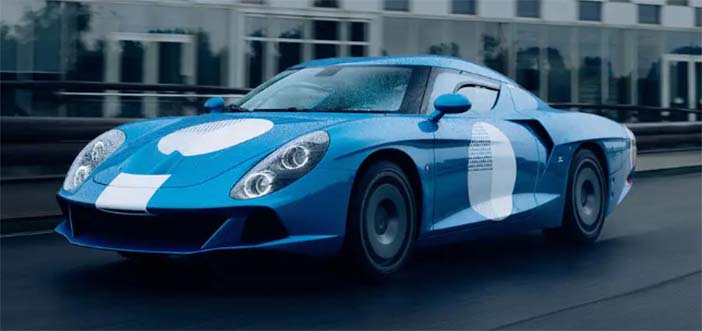
+++ The ZAGATO AGTZ Twin Tail, the famed design house’s modern reinterpretation of the Alpine A220 Le Mans racer, will make its debut at Lake Como, Italy, this weekend. Based on the Alpine A110, it is a 252 hp ultra-lightweight racer for the road, borne out of a joint venture between Zagato and Polish supercar dealer La Squadra. Zagato will build a total of 19 examples, with each taking more than 1.000 hours to assemble. The car is priced from €650,000 (taxes not included), making the Twin Tail one of the most expensive 4-cylinder cars ever to go on sale. It has been coach-built by Zagato predominantly using carbonfibre and features an elongated rear deck that can be removed to allow the driver to switch it between long-tail and short-tail guises; hence the name Twin Tail. With the extension in place, it is 622 mm longer than a standard A110. According to its creators, it is significantly more aerodynamic and stable at high speed. To that end, it uses the base-model A110’s turbocharged 1.8-litre four-pot engine. This gives the Twin Tail a 250 kph top speed and 0-100 kph sprint time of less than 5.0 seconds, Zagato claims. For reference, the standard A110 hits 100 kph in 4.5 seconds and will also do 250 kph. Zagato has yet to publish an official kerb weight, but (given the Twin Tail’s carbonfibre construction) it is expected to be lighter than the A110, which tips the scales at 1.102 kg. Jake Pietzrak, founder of La Squadra, said: “The automotive industry is changing faster than ever before. Electrification increases competition and it’s harder to differentiate products in terms of performance and driving stimuli. Design will take on greater significance, allowing artisan coachbuilders to step onto the stage and deliver unique projects which will separate intrepid brands from the rest of the pack. The AGTZ Twin Tail demonstrates a bold step in this exhilarating new direction”. Twin Tail buyers will be able to configure their cars with a “vast array” of options, including 19 shades of paint, nine liveries, an uprated exhaust and carbon wheels. The car will be shown at the FuoriConcorso event on 25-26 May, ahead of its dynamic debut at an as yet unspecified event. Customer deliveries are scheduled to begin in October. +++