
+++ ALPINE has postponed its launch in the United States following the country’s decision to impose 25% tariffs on cars imported into the country as well as growing uncertainty over EV take-up. Renault chief financial officer Duncan Minto told analysts on the company’s earnings call that it has halted planning for the roll-out. “Considering what’s going on in the US at the moment, I don’t think it’s the right time to be spending on those studies”, he said. +++
+++ The BMW 1 Series will return for a radically reinvented 4th generation within the next 3 years, as the German brand goes against its rivals in committing to its entry-level model. As Mercedes-Benz prepares to retire the A-Class for good at the end of its current generation and Audi winds down production of the A1 and Q2, BMW says its smallest car remains an important part of its model range and a next-generation model will be the entry point into the new-gen Neue Klasse family. BMW will launch this new EV line-up in September with the unveiling of the second-generation iX3 at the Munich motor show, before following that up soon after with the closely related next 3 Series. BMW hasn’t officially confirmed plans for a new 1 Series, but Autointernationaal.nl previously reported it had been green-lit internally and now BMW product boss Bernd Körber has said the hatchback still has a crucial role to play in Munich. “We are a global player and we cover the full portfolio; the entry models have a very important role to play for various reasons”, he told at the Shanghai motor show. “First of all, take markets like Italy and France, where the 1 Series has shares of 20, 30, 40% in some regions: if you want to be a global player, you have to also take care of markets where the share of 1 Series is extremely high, otherwise you run the danger of losing them”. Körber also said that offering a BMW model at a lower price point than the big-selling saloon and SUV models is important in the context of broadening the brand’s reach and diversifying its target market. “The 1 Series is especially important for younger customers. If you want to keep the brand young, if you want to develop customers within your portfolio, the 1 Series is very important”. Finally, he said, remaining in the notoriously challenging and low-margin small car market will help BMW to be as competitive and efficient as possible across all its segments. “You have to stay in the challenge, and it’s a similar story with Mini. A lot of the capabilities in terms of ‘how flexible are you?’ and ‘how cost-efficient are you?’ You gain in competing in the small car segment. Retreating out of the small car segment means you get out of the challenge of being the most cost-efficient player. So for us it has the role of gross volume being relevant in all markets. But it also has a relevance for the brand in terms of younger customers and for the pressure we put on ourselves to find solutions that work in lower-cost segments”. Körber didn’t give any details of the next 1 Series, but it’s expected to arrive in around 2028, with the current car having recently been updated and BMW planning to complete its Neue Klasse roll-out within the next 3,5 years. Like its range mates, the next 1 Series is expected to be offered with a choice of petrol and electric powertrains, meaning it will continue to serve as a rival to traditional ICE competitors like the Volkswagen Golf and Audi A3 while also being put up against new contenders like the Cupra Born and Renault Megane E-Tech. +++
+++ The bosses of Citroën and Dacia have warned that increasingly stringent car safety standards are threatening the affordability of their models, but safety test bodies say the rules are an important indicator for buyers as roads get ever busier and cars become more complex. Citroën’s Thierry Koskas and Dacia’s Denis Le Vot have said that while they accept governmental efforts to improve vehicle safety each year (within the European Union’s GSR2 legislative framework), the higher standards set by testing bodies such as EURO NCAP are out of step with consumers’ expectations. Key to this are the safety test ratings. Vehicles can score up to 5 stars, which, according to Euro NCAP, tell a buyer how safe a car is. Next year, in order to achieve the top rating, a car must show “overall excellent performance in crash protection and be well equipped with state-of-the-art crash avoidance technology”. This includes both passive safety systems (such as airbags, seatbelts and crumple zones) and active ones (advanced driver assistance systems). The rating system is set to be made stricter in 2026. Koskas and Le Vot argue that in order to hit affordable price points, they are not able to fit the expensive “state-of-the-art” safety tech demanded by the highest ratings. For example, Dacia’s new Duster (the cheapest SUV on the market) was given 3 stars by Euro NCAP. “We have nothing against NCAP”, said Le Vot recently, “but when this active safety race for stars came, we were not into that. We were saying at the time: ‘We are not chasing the stars, we are not chasing the stars, we are not chasing the stars’. We care much about passive safety, of course. We follow regulations one by one by one. But this is NCAP (miming a staircase) and this is regulation (miming another below that). So we are more on the regulation-staircase. The level of safety our cars are giving is great. It’s maybe not the high post in terms of a Euro NCAP score, but it’s great”. Koskas agreed: “Our position is very simple: it’s our mission just to comply with regulations that are already at a very high standard. The governments take care of their people; they put what is necessary to them in terms of regulation; and I do not see any need to go further”. However, Euro NCAP board member and Thatcham Research chief technical offi cer Richard Billyeald argues that the higher standards demanded by regulators, and the star ratings that come attached to them, are important to buyers of new cars. “Euro NCAP has always pushed way beyond legislation, and that’s what it’s designed to do”, he said. “Legislation has to be a very low bar: it has to be quite broad and pick up on the fundamentals. Euro NCAP pushes technology. It is about what is possible, what can the technology do to push the safety envelope, to improve things”. Nevertheless, Billyeald agreed that it is more of a challenge for car makers such as Citroën and Dacia that are pushing for a lower price point. He argued that while they can’t fit systems that “have all the bells and whistles”, they could “target safety in different places”, such as in terms of usability. With reference to star ratings, Billyeald added: “I think you do need that simplicity. For example, my mum is not going to buy a car based on detailed tests; she’s going to look at the star rating and inherently know what that means. So I think the concept is absolutely right”. However, the speed at which technology is evolving means cars (like smartphones) are becoming outdated quickly in the eyes of regulators, according to Koskas. This means that unless manufacturers make costly alterations, cars will have their safety ratings reduced. “Look at the previous-generation C3”, he said. “It had a 4-star rating, but now it would be a zero-star car. This does not mean that the car is not safe; it just means the barrier for safety has increased”. Another criticism is how these active safety systems are presented at a user level. For example, Autointernationaal.nl has been critical of some ADAS, especially those that monitor the driver’s behaviour and identify posted speed limits. While new cars are legally required to have these systems fitted, some car manufacturers (including Citroën and Dacia) fit buttons that allow drivers to turn the systems off, if only for the duration of that particular journey. “I would happily make a bet on what percentage of customers press that button”, said Koskas. “I have to confess that every time I drive my ë-C4, I turn it off, because it’s just annoying”. This is something that is understood by the regulators, said Billyeald, and is an area they are working on. “We want drivers to use those systems”, he said. “There’s nothing inherently wrong with the technologies and with the intention of the technologies; it is about how usable they are. So let’s maximise the safety benefits, the driver support, minimise the distraction and the wanting to turn things off”. From January next year, the safety barrier set by Euro NCAP will rise again. The new regulations will expand the current evaluation beyond crash scenarios to include driver engagement, assistance systems and emergency response capabilities. To do this, Euro NCAP is set to introduce assessments across 4 categories: Safe Driving (driver monitoring and vehicle assistance), Crash Avoidance (systems that actively prevent collisions), Crash Protection (occupant safety) and Post-Crash Safety (assessment of eCall emergency response systems). Euro NCAP says these updates form part of its commitment to Vision Zero (a strategy to eliminate traffic-related fatalities) and aim to align safety assessments with the latest advances in vehicle technology. +++
+++ South Korea’s auto giants Hyundai and affiliate Kia have recorded their highest-ever sales in INDIA for the first quarter of this year. India is the third-largest car market in the world, following China and the United States. According to the Society of Indian Automobile Manufacturers (SIAM) on April 13, Hyundai sold 153.550 vehicles, while Kia sold 70.576 units in the first 3 months of the year. Kia’s sales are the highest since it entered the Indian market in 2019. Together, the 2 brands sold 229.126 vehicles, a 1.5% increase from last year’s record of 225.686 units during the same period, with Hyundai selling 160.317 units and Kia 65.369 units. The sales boost is attributed to the popularity of locally made models and the growing demand for SUVs. In the January-March period, SUVs accounted for about 80% of Hyundai and Kia’s total sales, reaching 181.758 units, with models like the Creta, Venue, Sonet, and Seltos making up more than half of these sales. To sustain this growth, Hyundai and Kia have developed long-term strategies for the Indian market. Hyundai acquired a General Motors plant in Pune, Maharashtra, in 2023 and is preparing to begin operations in the second half of this year. Hyundai also became the first overseas subsidiary to list its Indian division, Hyundai Motor India Limited (HMIL), on the Indian stock market. In December, Hyundai and Kia signed an agreement with the Indian Institute of Technology to establish a joint innovation center. +++
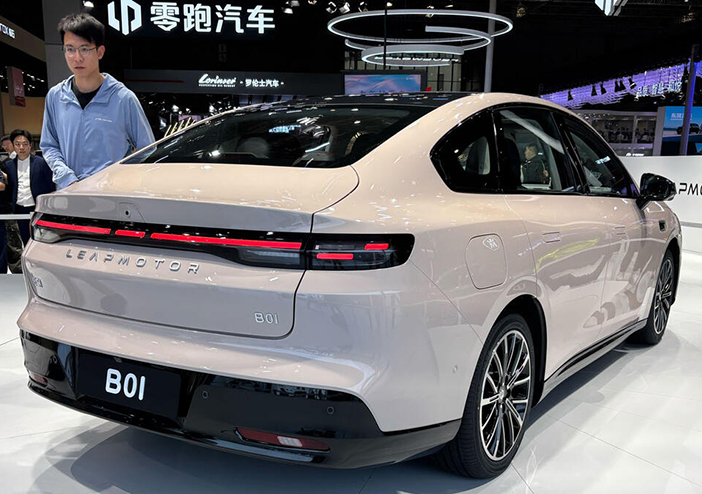
+++ LEAPMOTOR , the Chinese EV maker partnered with Stellantis, has revealed a compact electric saloon aimed at younger buyers. Twinned with the Kia Sportage-sized Leapmotor B10 crossover that’s due in Dutch showrooms later this year, the Leapmotor B01 is a 5-door fastback of a similar size to the Mercedes-Benz CLA. It has only been revealed in Chinese guise so far, complete with roof-mounted lidar sensor, and while Leapmotor has pledged to have a 6-model line-up in Europe by 2027, it is unlikely to bring the B01 here to join the T03 supermini, B10 crossover and C10 SUV. A Leapmotor official told Autointernationaal.nl the company is assessing the viability of small saloon sales in Europe but noted that demand for such cars has fallen in recent years. Technical details are yet to be fully revealed, but Leapmotor touts a “segment-leading” range of 485 km. The battery chemistry and capacity haven’t yet been confirmed, but the B01 owes its long range in part to its sleek fastback silhouette. With a drag coefficient of just 0.197, it’s slipperier than even the Porsche Taycan and Tesla Model S. Speaking at the car’s Shanghai motor show debut, Leapmotor senior vice-president Cao Li said the B01 was designed to respond to “what young consumers really want from a car”. He said that “for young people who perceive taste”, the current offering of similarly sized and priced alternatives in China (predominantly aimed at ride-hailing services) is currently “not enough”. “They want good features and quality – they want it all!” The B01 comes standard with contrasting black trim, sporting-inspired alloy wheel designs, a choice of 2 interior colours, a 14.6 inch touchscreen with over-the-air updates and chrome elements that Leapmotor says are “from suppliers of the same level as Mercedes-Benz”. Other notable features include a 256-colour ambient lighting system, a hidden 70-litre ‘magic expansion space’ beneath the 460-litre boot and a tissue box in the back of the centre console; a nod to the importance of rear seat refinement in China. Confirmation of the B01’s powertrain specifications will be revealed closer to launch, but it has been confirmed to have a single motor on the back axle for rear-wheel drive. +++
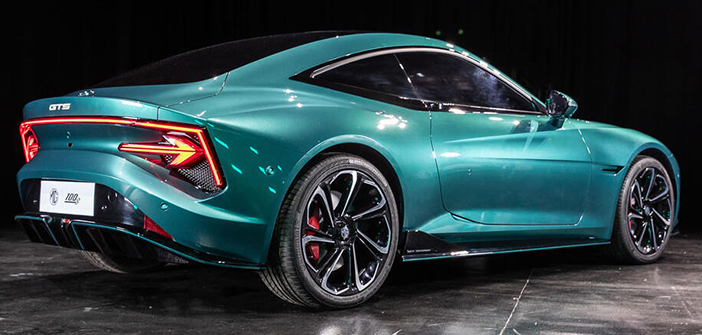
+++ MG has confirmed plans to put the four-seat hard-top version of its Cyberster sports car into production. The fixed-roof Cyberster GTS was revealed as a running prototype at last year’s Goodwood Festival of Speed, but there has been no word on a likely launch date since then, despite suggestions that it could arrive as early as this year. But now, MG has confirmed at the Shanghai motor show that a production version is inbound and could land in time for the 60th anniversary of the original MG B GT in October. Asked for an update on the Cyberster GTS, MG parent company SAIC’s design boss, Jozef Kaban (who was responsible for the concept) would only go so far as to say: “It’s coming”. He cited positive public reaction to last year’s concept as a factor in MG giving the green light to a production version, saying the exposure “made it happen”.
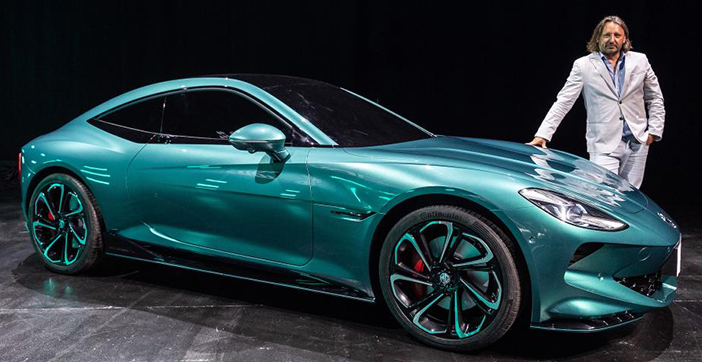
Kaban (photo) was speaking on the sidelines of the unveiling of the new MG Cyber X concept, a brutalist electric SUV that’s set to go on sale as the second model in the enthusiast-focused Cyber model family, alongside the Cyberster. He hailed the effectiveness of the 2-door sports car as a halo model for MG as an incentive to expand that line-up. “It makes you smile”, he said. “It makes you happy the moment you open the doors. You know everybody’s watching. You know you are the star. That’s why we love cars, because you feel that they are there to make you stronger. They make you happy. They make you shine”. A new derivative of the sports car would effectively give MG’s Cyber brand a 3-car line-up, and the dramatic difference in billing between the Cyberster and Cyber X model lines suggests there could be bandwidth between them to expand it further. +++
+++ NISSAN boss Ivan Espinosa has been at the helm for just over 3 weeks and he’s no doubt feeling his first deer-in-the-headlights moments leading this troubled automaker. The company today warned it will post a net loss of as much as ¥750 billion ($5.3 billion) for the fiscal year that ended in March (a record annual deficit) as restructuring charges weigh on the struggling Japanese carmaker. With an aging line-up, Nissan has been discounting its cars in order to avoid building up inventory, but the result is eroding profits. Analysts on average were projecting a loss of ¥112 billion, which itself was worse than Nissan’s prior outlook for a deficit of ¥80 billion. +++
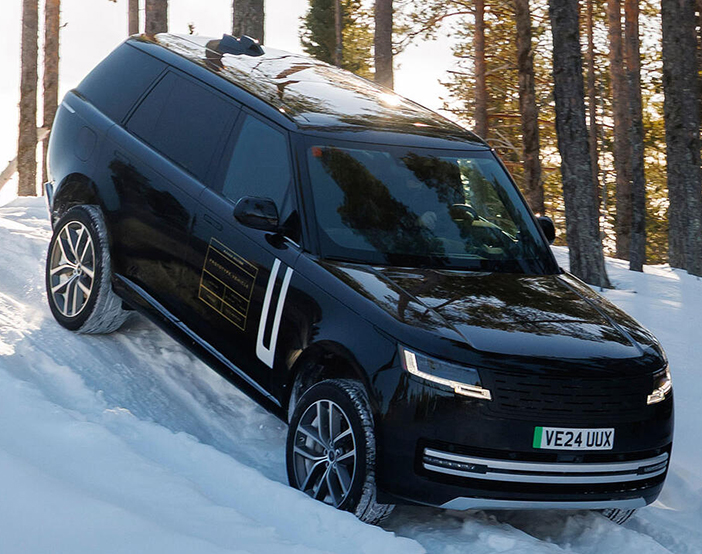
+++ The new RANGE ROVER ELECTRIC has completed a second round of winter testing ahead of its launch. Key aspects put to the test included the EV’s new thermal management system: how well it could heat the cabin and maintain rapid-charging performance in extreme sub-zero temperatures. The prototypes also faced high-angle inclines and declines on frozen surfaces, testing that their one-pedal driving modes (using the motors’ regenerative effect to slow and stop the car while off the throttle) work across a range of terrains. “Rigorous testing procedures in extreme and unpredictable conditions like those experienced in Arjeplog (Sweden) are crucial to Range Rover Electric’s real-world reliability and resilience”, said JLR product engineering chief Thomas Müller. JLR has also confirmed that the Range Rover Electric uses a 117 kWh battery pack designed and assembled in-house, comprising 344 prismatic cells and running at 800 Volt. The firm has yet to detail a range figure, but such a large capacity should comfortably yield more than 480 km between charges. The winter testing comes after prototypes were last year driven in the Middle East in temperatures approaching 50 degrees Celsius. They were sent up Big Red, a 100 meter sand dune in the heart of Sharjah’s Al Badayer desert, to test the EV’s new Intelligent Torque Management system, which replaces a conventional ABS-based traction control system. This is claimed to improve traction control off road by diverting power to each electric motor to reduce torque reaction time from around 100 milliseconds to as little as 1 millisecond. JLR says, after 5 continuous attempts, none of the cars demonstrated any fall in performance. Müller said: “A hot climate is one of the most challenging for any battery-electric vehicle, because of the need to cool the cabin and optimise battery performance at the same time. The additional challenge of driving on sand requires controlled low-speed torque, so our specially developed traction control and thermal management systems work in harmony to ensure power delivery is unaffected. Our tests have shown that in this climate, repeatedly driving the equivalent of 100 metres uphill on fine sand, Range Rover Electric matches the performance of its ICE equivalents; in some instances, even surpassing them, thanks to the introduction of these new features”. Like the cars in the Arctic Circle, this mule is shown completely without camouflage; a decision made to “underline the build quality of the initial prototypes”, according to JLR. Painted all in black and without the contrasting matt trim elements that JLR has previously suggested will mark out the EV powertrain, the prototype looks all but identical to the ICE Range Rover that has been on sale since 2022. JLR said this shows how the prototype’s “modernist design language stays true to the Range Rover bloodline”, suggesting that the Range Rover Electric (as it is officially named) will only be subtly differentiated from the straight-6, V8 and plug-in hybrid derivatives. JLR previously highlighted that this is the first car to use a battery and electric drive unit assembled in-house. Although bosses have yet to give any performance details for the new Range Rover, it has been promised to have the same “go-anywhere” capability as the ICE version, with a pledge that it will offer towing, wading and all-terrain capability that will exceed any other luxury electric SUV, including the ability to wade through 850 mm-deep water. Given the hint that the Range Rover Electric will offer performance “comparable” to the existing V8 suggests a total output close to the 530 hp that model offers. It’s expected to adopt a dual-motor system, which will allow for greater four-wheel-drive ability and systems such as torque vectoring to boost its off-road potential. JLR said its test programme has been adapted to particularly examine the vehicle’s underfloor, battery durability and thermal derating. The Range Rover Electric will be built in Solihull alongside the existing mild-hybrid and PHEV versions. It will initially use batteries from a third-party supplier before eventually switching to packs produced in the new Somerset gigafactory that JLR parent firm Tata is planning. +++
+++ Sales of cars from Chinese brands in the UNITED KINGDOM grew 88% in March, as brands including BYD, MG, Omoda and Jaecoo expanded their footprint there. Chinese brands sold 28.883 cars in March to give them a market share of 7.5%, up from 4.0% in March 2024, according to figures published by the Society of Motor Manufacturers and Traders. In the first 3 months of 2025, the Chinese share was 7.0%. The growth came from newcomers such as BYD, which sold 6.480 cars; up 754% on the year before. +++