
+++ The current generation BMW 5-SERIES was officially revealed a little more than 2 years ago, on 24 May 2023, and in Bimmer land, that means it’s starting to get a little old. BMW likes to put the latest and most advanced technology possible in each of its model updates, so the G60’s now-obsolete rotary iDrive wheel and associated systems are beginning to feel a little “last season”, so to speak. However, despite the fact that BMW’s new Panoramic iDrive infotainment system was revealed 6 months ago, the 5-Series isn’t getting its mid-cycle update, or Life Cycle Impulse (LCI), as early as planned. According to a reliable insider, the G60 LCI will arrive 4 months late: from March 2027 to July 2027. The same report claims that the next X5 (codenamed G65) will be in production until July 2035, which means it will need to satisfy the market for 9 years, while the current 1-Series and 2-Series Gran Coupe will stick around 2 years longer than originally anticipated, until October 2032. Back to SUVs for a second, and the assumption is that the X6 and X7 will have similarly long production cycles. No reasons were given for these extended production cycles, but the ever-changing geopolitical environment may be a contributing factor. The new 5-Series will get the latest infotainment tech, says the forum post, adding that, along with Panoramic Vision, a passenger display will become an optional extra. On the outside, we expect the G60 facelift to wear a new face inspired by the Vision Neue Klasse and Vision Neue Klasse X concepts. The look has already become evident in spy shots of the next-gen M3, as well as the updated G90 M5 seen below, so it’s inevitable that the 5er will make the switch too. Hopefully, BMW doesn’t create a Russian Doll situation with its styling, but we’ll have to wait a little longer to find out. With production only commencing in July 2027, we suspect the reveal will happen at the very end of 2026, if not early in January 2027. +++
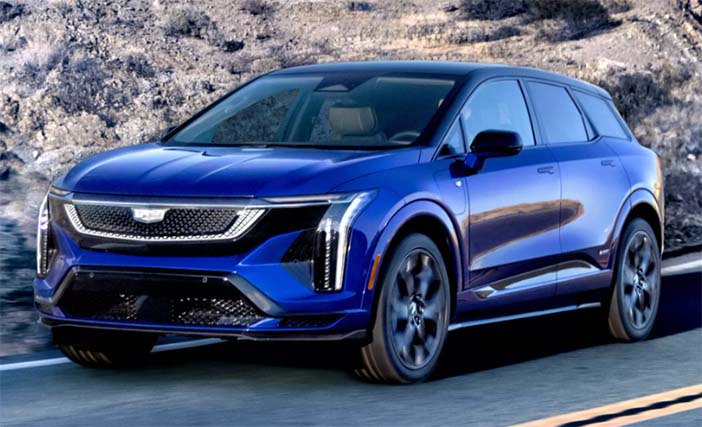
+++ CADILLAC ’s impressive electric vehicle line-up continues to grow as the company has unveiled the Optiq-V. It’s a performance-focused crossover, notable for being the first vehicle from General Motors to have a native NACS (North American Charging Standard) port. This has been long overdue, and it will allow for easy access to Tesla Superchargers. While the NACS port is a welcome addition, the V-Series is all about performance, and the Optiq-V doesn’t disappoint on paper. It features a dual motor all-wheel drive system that produces an estimated 526 hp and 880 Nm of torque. This enables the 2.470 kg crossover to accelerate from 0-100 km/h in 3.7 seconds when using Launch Control. Powering the show is an 85 kWh lithium-ion battery pack that provides an estimated range of 443 km. That’s 43 km fewer than the standard model, and it feels a little underwhelming. On the bright side, a DC fast charger can deliver approximately 113 km of range in as little as 10 minutes. At home, you can expect to get 29 km of range per hour with a 7.7 kW charger or 50 km per hour with an 11.5 kW charger. During a media briefing earlier this month, Lead Development Engineer Alex Doss told us the Optiq-V was designed to be a “canyon carver”. As part of the focus on driving dynamics, the crossover comes equipped with an adaptive suspension, torque vectoring technology, and specially developed tires. The model also sports a customizable V-Mode as well as Brembo front brakes that measure 390 mm. Unfortunately, the Optiq-V eschews the 680 kg towing capacity found on the regular model. Besides an additional 222 hp, the Optiq-V has an aggressive front fascia with a gloss black splitter. They’re joined by body-colour components, a black roof, and a revised intake with a unique mesh pattern. Designers didn’t stop there as the model rides on special 21-inch alloy wheels that feature a satin graphite finish as well as a laser-etched V-Series badge. A closer inspection also reveals a prominent diffuser as well as a unique motif for the rear quarter glass. The Optiq-V will be offered in 8 colors, including Deep Ocean Tintcoat and Magnus Metal Frost, which are V-Series exclusives. Customers can also get a carbon fiber package that includes a front splitter, rear diffuser, and a mid-mounted spoiler. The interior largely carries over as drivers are greeted by a familiar 33 inch display with Google built-in. However, there are several special touches, including a sport steering wheel, carbon fiber trim and V-Series badging. Designers also used blue accents and a patterned fabric, which is woven from yarn made from recycled materials. On the topic of upholstery, the model will be offered with 2 interior themes as well as an Expressive Color package. The latter adds Santorini Blue seatback panels as well as Santorini Blue seatbelts. We’ll learn full details closer to launch, but the Optiq-V comes nicely equipped with a panoramic fixed glass roof and a 19-speaker AKG Studio audio system with Dolby Atmos technology. They’re joined by Super Cruise as well as a host of other driver assistance systems such as adaptive cruise control, forward collision alert, blind zone steering assist, and enhanced automatic parking. The Cadillac Optiq-V is scheduled to enter production this fall, with pricing starting at around €95.000. One of its key rivals will be the forthcoming Tesla Model Y Performance. While that version hasn’t officially debuted, it’s expected to carry a price premium of around €8.000 over the standard AWD model, placing it in the €70.000 range. +++
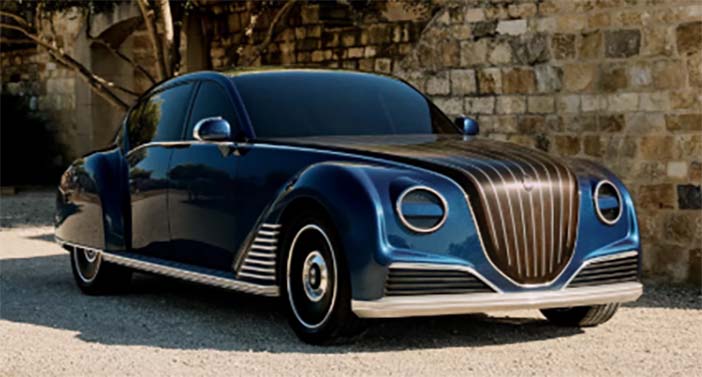
+++ The Cadillac Celestiq is getting some unlikely competition from a new startup called DACORA MOTORS . Unfortunately, the company doesn’t seem that well-versed in the automotive industry as they falsely claimed they’re planning to launch the “first made-in-America ultra-luxury vehicle in nearly a century”. Cadillac would certainly beg to differ, but Dacora Motors’ car is an oddity that looks like someone asked AI to envision what an ultra-luxury Volkswagen Beetle would look like. However, that doesn’t appear to be the case as the company said the car was “designed in collaboration with the legendary Pininfarina Group”. It’s not one of their better designs, but Dacora says the vehicle pays “homage to the sweeping forms of 1930s Streamline Moderne”.The car has a handcrafted wood hood that is flanked by circular headlights. They’re joined by bulging fenders, minimalist wheels and retro-inspired bright work. We can also see a distinctive greenhouse, a sloping rear end, and afterburner-style taillights. Other notable highlights include covered rear wheels and an SUV-like ride height of 191 mm. The minimalist interior eschews plastic for wood, woven wool, and “toxin-free bioleathers”. The company also said they’re “rejecting screen-dominated cockpits” as the “digital display disappears behind a semi-transparent wooden panel” when not in use. The infotainment display, on the other hand, appears to be projected onto wood trim. While the company was vague on important details, they said the interior will be fully modular and can be refreshed seasonally. Speaking of which, the company envisions “twice-yearly drops” that will enable owners to “change interiors like wardrobes: think wool for winter, linen for summer, and limited-edition materials for seasonal expression”. The startup also envisions a modular interior that offers seating for between 3 and 7 people. The 3-seat Executive setup has a rear-lounge configuration with a personal workspace, while the 4-seat Lounge has front and rear captain’s chairs that are separated by custom consoles. Customers can also get dual bench seats and up to 1.143 mm of rear seat legroom. Getting back to the center consoles, the company said there will be versions with a humidor, an integrated espresso machine, and a living bonsai garden housed beneath a glass dome. The company also envisions more traditional setups including a biometric safe and refrigerator. Specifications are about as hazy as a Canadian wildfire, but Dacora claimed the car will have over 800 hp and a range of around 640 km. They also mentioned that the 2,948 kg EV will be able to accelerate from 0–100 km/h in 4 seconds. If you’re not a believer in going fully electric, the company has you covered as they promised to offer an optional hybrid powertrain. However, as you’ve probably guessed, they said virtually nothing about it. Dacora was coy on launch details, but said each vehicle will be handcrafted at their 100-acre Hudson Valley Garage campus in New York. Pricing starts at €650.000, with reservations now open for a refundable deposit of $50,000. That’s significantly more than the aforementioned Celestiq, which starts from around $340.000 before you even touch the options list. Still, Dacora claims to have “reservations already exceeding 150% of its planned first-year production capacity”. However, they didn’t mention numbers and the lack of information isn’t very reassuring. +++
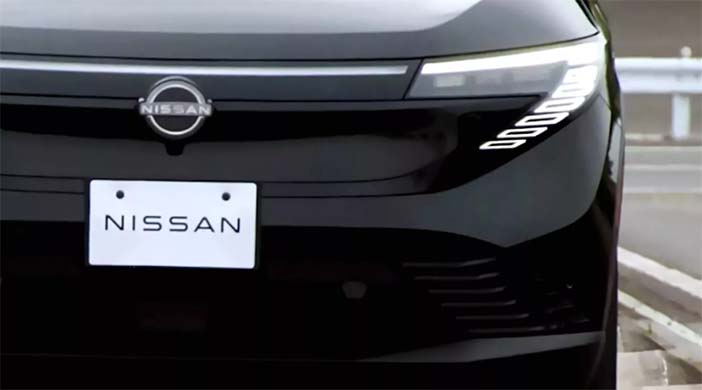
+++ NISSAN has confirmed the specs for the upcoming new Leaf, including a single-motor setup delivering up to 214 horsepower. That figure matches the current Leaf Plus, which also produces 217 hp with its 62 kWh battery pack. So, at least on paper, there’s no noticeable performance upgrade in the new generation. There’s no word on the base model, but in the current cheapest Leaf delivers 150 hp with the smaller 40 kWh battery. Richard Candler, vice president of global product strategy, describes the updated Leaf as offering “a responsive, smooth and confident drive”, adding that every element has been fine-tuned to maximize efficiency. Key design elements include led headlights, 19 inch alloy wheels and an active grille shutter that adjusts for airflow. We can also expect an universal charging port and optional a panoramic roof with an e-Dimming function. The later uses electrochromic technology and an infrared reflective coating, eliminating the need for a physical sunshade. According to Nissan’s design director Nobutaka Tase, the new Leaf will be the most aerodynamic production model the company has ever built, boasting a drag coefficient of 0.25 in Europe and 0.26 in the US and Japan. The slight difference comes down to region-specific tweaks like wheels and mirror designs, with the European version coming out just a bit more streamlined. Underneath, the Leaf shares the CMF-EV platform with the larger Ariya, which means a flat floor and a roomier cabin layout. Nissan also highlighted the new multi-link rear suspension, the improved manoeuvrability and a 66% increase in lateral rigidity compared to the previous generation. Furthermore, the A/C unit has been moved under the hood freeing up more space for the front passenger, and the liquid-cooled battery has a new thermal recovery system for improved efficiency. Candler says the goal is to make the new Leaf a real contender for buyers used to petrol-powered vehicles. This means a sleeker body without giving up on practicality, and ensuring long-distance driving was part of the deal. Target range spans from 300 to 500 kilometers, with the ability to add around 200 kilometers of range in just 40 minutes of charging. I’ll have more details when the full reveal happens on June 18. +++
+++ It’s been a turbulent stretch for Stellantis , and now the automaker is entering a new chapter of leadership. Long-standing CEO Carlos TAVARES (left on the photo) left the conglomerate late last year on the back of controversial cost-cutting measures that upset many powerful figures, the UAW union included. Now, Stellantis is shifting gears under the direction of Antonio Filosa (right on the photo), who’s stepping in as Tavares’ successor. Despite the circumstances, Tavares has publicly called Filosa a “logical” choice for the role. Tavares’ exit wasn’t exactly smooth. In the months leading up to his departure, he faced mounting criticism not just from labour groups and dealership networks, but also from within Stellantis’ own leadership and from political circles. There was growing tension across the board, and some observers noted that his time at the helm appeared to be winding down well before any formal announcement. The UAW even pushed for him to be removed. However, during a recent interview with Bloomberg near Lisbon, Tavares insists he was not fired, but rather chose to leave the automaker after speaking with chairman John Elkann. “I have nothing against anybody”, he said. “Even those who made my life more difficult when I was the CEO of Stellantis. At one point in time there is a crossroad and somebody decides that it’s time to part ways. That’s fine”. Looking back, Tavares acknowledges that he could have done things differently while heading up the company. For example, he was unable to convince dealers in the US to back some of his decisions. “The dealers in the US did not want to support what we were trying to do, which is my responsibility”, he said. “Many things could have been done differently, but that doesn’t matter. The company is profitable”. As it turns out, Tavares probably left at quite a good time. He managed to narrowly avoid having to deal with the headaches from president Trump’s tariff regime, something that Filosa now has on his plate. “Hopefully, he will be properly supported by the board”, Tavares said after Filosa’s appointment. “So let’s see”. Beyond internal politics, the global industry faces larger challenges. Tavares has repeatedly warned about the growing presence of Chinese automakers. Last September, he even suggested that Stellantis should try to “be Chinese ourselves”. He remains sceptical that European brands can offer EVs at prices that rival Chinese competition. Instead, he believes they should focus more on premium segments where they still hold an advantage. As for what Tavares is up to these days, after pocketing $40 million in salary and severance from Stellantis, he’s enjoying life back in his home country of Portugal. He told he still feeds his motorsport habit by hitting the racetrack about once a month, but he’s also putting that hefty pay-out to use. He’s investing in his farm and a handful of hotels. On top of that, he’s eyeing a stake in a small airline and exploring other business ventures in artificial intelligence, and even fashion. “Before, I would be doing 12 things per day”, he said. “Now I do 5. But I do them in a deeper way. And I enjoy it more than before”. +++

+++ TESLA has had a really tough year when it comes to sales. Despite launching an updated version of one of the world’s best selling cars, the Model Y, hyping new features, and promising progress on semi-autonomous tech, the company is struggling to move vehicles. In fact, the latest data paints a grim picture, with only a handful of glimmers of hope scattered around the globe. While Tesla hasn’t officially reported its sales numbers, Tesla Archive on X claims U.S. sales dropped about 11 percent in May, with around 46.000 units sold. Deliveries for the year so far are also said to be down 11 percent. In fact, through the first five months of 2025, Tesla has only sold about 36 percent of the cars it delivered in all of 2024. Not exactly the kind of growth they were hoping for, if these numbers are accurate. Things aren’t looking much better across the pond. In May, Tesla’s sales in the UK plummeted 45 percent. The company sold just 1.758 units; a significant drop from 3.244 in the same month last year. To make matters worse, UK car sales overall were up by 4.3 percent, reaching 144.098 units, and electric vehicle sales saw a 28 percent surge, which means Tesla is losing out big time. At least there’s some good news coming out of Australia. Tesla delivered 3.897 vehicles in May, marking a 9.3 percent increase compared to the same month in 2024 and the highest number in nearly a year. This boost was mainly driven by the updated Model Y, which saw a massive 122 percent year-over-year sales jump in May. That momentum also translated to a massive 675 percent spike over April, when Tesla managed to sell just 500 EVs. Still, zooming out, the picture isn’t quite as rosy, as Tesla’s year-to-date sales in Australia remain down 48.2 percent compared to the same stretch in 2024. Sales in Austria and Norway also looked good last month. In the former, Tesla had its second-best May ever with 643 sales. In the latter, sales jumped by a whopping 213 percent year over year in May. That figure accounts for 2.600 deliveries in the nation during the month. It was such a strong month for the automaker that it outsold the second-best competitor by more than double. Clearly, some countries seem to be moving on from the sales drama Tesla is experiencing. Elsewhere, Tesla isn’t exactly getting a free pass. In Denmark, sales dropped by 31 percent, while Sweden saw an even more staggering 53 percent decline. France and Portugal weren’t much better, with sales down 67 percent and 68 percent, respectively. It’s clear that the Tesla wave is hitting some serious turbulence in key European markets, and the outlook for a quick recovery isn’t great. “Tesla’s strong sales growth in Australia this May is an encouraging sign, driven almost entirely by strong demand for the updated Model Y. But globally, Tesla is still facing headwinds”, Liz Lee, associate director at technology market research firm Counterpoint Research, told. Looking at the data, she couldn’t be more right. +++
+++ Rivian’s collaboration with VOLKSWAGEN might just be one of the most consequential pairings in today’s EV landscape. It brings a much-needed cash boost for Rivian and, in return, gives VW access to some of the most compelling electric vehicle software and zonal architecture currently in development. Now, a key Rivian executive has made it clear that the partnership may be even more pivotal for VW than initially expected. Wassym Bensaid, Rivian’s chief software officer and co-head of the Rivian-VW joint venture revealed that all future EVs from VW will use the same platform as the American brand’s upcoming R2 series. Evidently, the German giant using its partner’s knowhow on EVs is the best way to move forward. “R2 is the platform that will underpin actually all future EV products from VW”, Bensaid said. “It’s really that modular, scalable technology stack that we will take into VW brands. We will do it in a way where we will still allow different brands to express their own identity. Each brand will have its own UI, look and feel, their own suspension tuning, but underneath the guts of the vehicle, will be optimized from the same technology and software architecture”. Importantly, the R2 platform that Bensaid is referring to appears to be limited to the “technology stack” and not necessarily the physical platform itself. VW is already deep into the development of its in-house SSP architecture that has been confirmed to replace the current MEB and is set to be used by the next-generation electric Golf and all-electric T-Roc. At the same time, VW is working with Chinese automaker Xpeng on a separate project. The platform, known as China Electrical Architecture (CEA), is designed to significantly cut costs compared to the MEB. VW expects it to lower production expenses by up to 40 percent, which could be a crucial step in making its EVs more price-competitive in China. “R2 is an evolution of the architecture that we introduced with our R1 Gen2 vehicles, and there’s a ton of lessons learned that went into how we make the R2 from a technology standpoint, from engineering to manufacturing”, Bensaid added. “That is allowing us to really not only make progress, but we’re extremely happy with the maturity of R2 compared to where R1 was”. Production of the Rivian R2 is currently scheduled to begin in the second half of 2026, and it will be followed by the smaller, more affordable R3 lineup. With VW committing to the same software backbone, both brands are banking on the idea that a shared foundation can deliver scale, speed, and flexibility across a wide range of electric vehicles. +++