
+++ BMW M’s signature straight-6 and V8 engines will survive the introduction of the tougher Euro 7 emissions regulations and, the division’s boss claims, with no loss of performance. Although the emissions levels allowed for cars are unchanged from the current Euro 6e regulations, they will be tested over a broader (and harder) range of scenarios said to better reflect real-world driving. They must also remain compliant for 10 years or 200.000 km, twice as long as currently. Brake and tyre emissions will also be monitored for the first time. At the Goodwood Festival of Speed, BMW M CEO Frank van Meel said “the challenge was not so much to make an engine that is EU7 compliant”, but to “keep performance”. He explained: “The whole story is about driving with lambda one [when the air-fuel ratio for combustion is perfectly matched]so you have to keep that, and there’s no cooling. Normally, if you are in high-performance situations, you cool using the fuel. With EU7, that’s impossible, so you need to find different ways of avoiding temperature build-up. “The combustion process has to be improved in regards to heat build-up and also the cooling, and those are the challenges. Of course you can reduce performance to avoid this temperature increase, but you don’t want to: that’s where we started. The new balance of performance is that we drive lambda one, but we don’t want to lose performance”. Van Meel would not be drawn on how M has reworked the engines to achieve this, saying only that it has made some “very interesting” tweaks that it will discuss in detail in due course. “The 6-cylinder in-line engine is our legacy, and the V8 has got a long history in racing, so we intend to keep going”, said Van Meel. Asked whether M would consider downsizing to 3- or 4-cylinder powerplants with increased electrification to reduce emissions, he simply replied: “No”. He added that such engines cannot meet M’s “very specific mindset” for how it wants performance cars to drive, with regard to torque delivery, rev ranges and the weight of its models. “I couldn’t imagine putting a four-cylinder in an M5”, he said. +++
+++ ELECTRIC cars now account for more than 1 in every 20 miles driven in the United Kingdom. New data has also shown that the average EV is now covering almost the same distance annually as its diesel counterpart and more than the average petrol car. Research from the RAC Foundation shows that the average electric car under 3 years old will rack up 10.054 miles per year. That’s much more than the equivalent petrol car, which will typically only cover around 7.585 miles annually. When you compare EVs with diesel cars there’s very little difference. Diesels cover 10.728 each year on average and while this remains slightly ahead of EVs, it’s worth pointing out that ten years ago, most electric cars tended to rack up less than half the mileage of the equivalent diesel. The RAC Foundation’s director, Steven Gooding, said: “Until recently new car buyers, often fleets and businesses, have looked to diesels when they’ve needed something capable of racking up the big miles whilst still offering reasonable fuel economy. Now it seems that fully electric cars are starting to take over where the diesel left off, providing a practical alternative in terms of range and cost per mile, and because of the attractive tax breaks they come with” Gooding explained. All of the RAC Foundation’s data comes from first-time MoT tests which are typically conducted once a car reaches 3 years old. Of course, some of the data will include the likes of emergency services vehicles, as well as taxis, which account for around 5 per cent of the dataset and typically require MoT testing sooner given their higher mileages. Nevertheless, with the average car under 3 years old covering 8.460 miles per year, EVs remain ahead of the pack in terms of long-distances. In fact, despite electric cars only accounting for 3.8 percent of all cars registered in the UK, the RAC’s research suggests that given their high typical mileage, 1 in 20 miles driven in the country are done so in an EV. “Given the fact that new cars generally have tended to run up more miles than older ones and that most electric cars on the road are relatively young”, Gooding continued, “it might not be so surprising that our analysis shows battery-powered vehicles account for a disproportionately large number of miles in use”. Of course, the number of miles driven in EVs in the UK is set to explode over the next few years as we move towards the 2030 ban on the sale of new petrol and diesel cars. The government has also re-introduced a public-funded grant for electric vehicles to help boost sales. The Electric Car Grant will offer up to £3,750 towards the price of a new electric car starting from under £37,000, with the exact amount donated depending how much renewable energy is used throughout the model in question’s production. +++
+++ The Renault Clio is poised to be EUROPE ’s bestseller for the third consecutive month. The Tesla Model Y is making a comeback and jumps to No. 2. The Clio is in position to finish every month of the second quarter at No. 1, but the Dacia Sandero will be Europe’s top-seller in the first half. +++
+++ Former Volvo CEO Jim Rowan (right on the photo), ex-Polestar boss Thomas Ingenlath (left) resurface at a familiar place within the GEELY GROUP . Rowan, who left Volvo in March, is now on board at subsidiary Lotus. Ingenlath is now a Sweden-based senior adviser at the Geely Group. +++

+++ The MERCEDES A-CLASS will remain on sale until 2018. The change comes despite repeated statements from CEO Ola Källenius that the popular hatchback, along with the B-Class MPV, would cease production at the end of 2025, bringing to an end 2 generations of models based on the company’s MFA platform. Mercedes originally touted a future compact car strategy built around 4 new models, all based on the new MMA platform: the CLA, CLA Shooting Brake, GLA and GLB; all of which will offer a choice of combustion and electrified drivetrains. However, Mercedes sources suggest they will now be supported by an upgraded version of today’s A-Class hatchback, of which production is claimed to have been extended by up to 3 years. The decision is understood to have been driven by continued demand for the 7-year-old model, in combination with a slower than expected take up of Mercedes’ newer electric models. Production of the 4-door A-Class ended earlier this year. Production of the A-Class hatchback is now expected to continue beyond the introduction of EU7 emissions regulations in late 2026, although it remains unclear whether existing petrol and diesel engines will be adapted to meet the new standards. The A35 and A45 AMG hot hatches will be taken off sale because their M139 2.0-litre turbocharged engine does not comply with EU7, although there is not currently a time frame on when this will happen. Production is likely to shift to the Kecskemét plant in Hungary, as the Rastatt factory where it is currently produced has been repurposed for production of the new CLA and CLA Shooting Brake. The future of the B-Class remains uncertain, but it looks like Mercedes will stick to its original plan and cease production of the BMW 2 Series Active Tourer rival at the end of 2025. The extension of the A-Class hatchback’s model cycle coincides with a broader reshuffle of Mercedes’ compact car line-up. Following the launch of the CLA, the CLA Shooting Brake is set to go on sale before the end of the year. The EQB will also bow out by the end of 2025. A new generation of the GLB, to be sold with the choice of ICE and electric drivetrains, is scheduled to begin production in Hungary in 2026. The next-generation GLA will follow as the final MMA-based compact model, arriving in late 2026 to replace both the existing GLA and electric EQA. While no successor to the A-Class is planned on the MMA platform, its prolonged production life reflects Mercedes’ need to sustain compact car sales amid a broader shift toward electrification and high-margin luxury segments. In 2019, the brand’s compact car range peaked at 667.000 global sales. In 2024, that figure had declined to 534.800. In a statement, Mercedes-Benz said: “The A-Class continues to enjoy high demand among our customers, and we are currently in the lifecycle of this vehicle. Recently, the series was updated and enhanced with an extensive facelift, making this vehicle even more desirable for our customers. We do not comment on phase-out dates or portfolio decisions”. +++
+++ NISSAN , a automaker facing global headwinds, appears poised to shutter some operations in Mexico as part of its latest cost-cutting efforts. Two people with knowledge of the matter told that Nissan is expected to shut down its nearly 60-year-old Civac plant in south-central Mexico no later than March 2027, the end of the Japanese carmaker’s business year. Additionally, Nissan is expected to dissolve its joint venture with Mercedes after crossover production at the 2.37-million-square-foot factory in Aguascalientes, Mexico, concludes early next year. +++
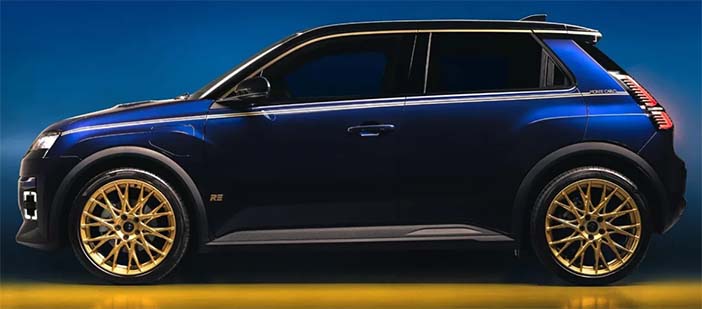
+++ The new RENAULT 5 has received plenty of attention since it returned last year thanks to its retro style, but a coachbuilder has decided the electric supermini could do with some influence from the Clio, too. While the regular Renault 5 EV is dripping in design touches that mimic the original, the Monte Carlo Edition gets plenty of bespoke tweaks. Partnering Dutch car dealer Zeeuw & Zeeuw, Re-volve (a coachbuilder in the Netherlands) has added a Midnight Blue paint finish with a contrasting black roof, plus a gold livery within the grille that flows down the sides and onto the rear hatch, broken up by ‘Monte Carlo’ lettering. Just like the Clio Williams, the Renault 5 Monte Carlo gets gold wheels, plus there’s a neat little gold ‘R5’ emblem on the front wings. The colour theme continues to the cabin where you’ll find black leather and Alcantara upholstery, with stitching in gold as well as a special gold plaque on the centre console displaying ‘Re-volve’ and ‘Monte Carlo’. Unlike the Clio Williams, which gained a more powerful 150 hp 2.0-litre engine and tweaked suspension in the name of rallying homologation, the Renault 5 Monte Carlo Edition comes with the same underpinnings as the regular Renault 5 E-Tech. In fact, it’s not even based on the more powerful 150 hp variant; the model chosen is the 120 hp edition with a smaller 40kWh battery. That means the new car covers the 0-100 kph sprint in 9 seconds flat; 1.2 seconds slower than the Clio Williams in 1993. Only 25 will be built and they’re also only going to be sold in the Netherlands. Prices start from €37.995. +++
+++ The SKODA Elroq and Enyaq are about to get a baby brother: the new Epiq. The small electric SUV is designed to sit underneath its larger siblings and will arrive in 2026. We’ve known the car is coming for some time, having seen it previewed by a concept last year, but we’ve also caught the new model testing on public roads. The styling is also set to further progress Skoda’s ‘Modern Solid’ design language with stacked headlights and daytime running lights. As on the brand’s other electric cars, those lights will be connected via the now-familiar ‘Tech Deck’ face; a gloss-black panel housing many of the car’s sensors and radars for its suite of Advanced Driver Assistance Systems (ADAS). The Epiq was announced in 2024, with Skoda boss Klaus Zellmer saying: “We have listened to our customers and understand they are looking for attractive options, which is why we are expanding our e-mobility portfolio into this popular segment”. The slashes and vents in the test mule’s bodywork and the Jeep-style slotted section in the lower part of the bumper will make production, and set the Epiq apart from its larger siblings. Like the Elroq and Enyaq, the smaller Epiq will feature a clamshell bonnet that wraps around the side of the car to the A-pillars. From the side, we can see the Epiq will have a shorter wheelbase than Skoda’s other SUVs, plus cut-down front and rear overhangs. Its stubbier overall proportions should allow it to slip into the segment currently occupied by budget alternatives such as the Citroen e-C3 and forthcoming BYD Atto 2, as well as more premium offerings like the Mini Aceman and Volvo EX30. The Epiq concept measured 4.1 metres long; significantly shorter than the 4.5-metre Elroq. At the rear, the upright tailgate should help preserve bootspace: Skoda won’t want to sacrifice its reputation for offering clever, practical cars. Indeed, the maker mooted a 490-litre boot when it revealed the concept last year; significantly more than in those aforementioned rivals, and bigger even than the Elroq it’s designed to sit beneath. Whether the designers can make this a reality for the production car remains to be seen, but fitting the car’s electric motor to the front axle may help; the Epiq will share the VW Group’s MEB-Small platform and electrical architecture with the forthcoming Volkswagen ID.2 and Cupra Raval. Design-wise, there’s a good chance we’ll see the Epiq concept’s T-shaped rear light clusters make the cut, alongside the usual lettering and a number plate fixed to the bootlid rather than the bumper. The prototype’s overall proportions, plus its roof rails and sill cladding, lend it that baby-SUV look, although the ride height doesn’t look much taller than average B-segment hatchbacks, allowing minimal structural changes from its VW and Cupra stablemates. While it’s not clear how quickly the car is travelling, it looks to be cornering relatively flat; standing it in good stead for any future RS version. While we’ve not yet been given a look inside the production car, Skoda has hinted that much of what was shown on the concept would be carried over. If this is true, we can expect a large central display with a row of shortcut buttons for things like the ADAS features and drive modes, plus a smaller digital instrument cluster directly ahead of the driver. The steering wheel should get physical switches too, in response to industry-wide negative feedback for capacitive touch-sensitive controls. This being a Skoda, there should be plenty of storage dotted around the cabin, and neat features that align with the brand’s ‘Simply Clever’ marketing messaging. Skoda may also choose to use flashes of colour inside (just as it did on the Epiq concept) to mark this out as the smallest and most youthful of its SUV line-up. As well as its MEB-Small platform, the Epiq will utilise the same choice of 38 and 56 kWh batteries as the equivalent VW and Cupra, with the larger of the 2 units promising up to 450 km of range. VW claims the ID.2 will charge from 10-80 percent in around 20 minutes thanks to a peak charge rate of 125 kW and we expect similar numbers for the Skoda. A variety of motors will be offered, the most powerful of which will be offered with a RS badge on the wings. Volkswagen has confirmed a 225 hp unit for the ID.2, capable of accelerating from 0-100 kph in under 7 seconds. More sedate models will make up the majority of the range, however; 120-170 hp seems sensible for a car of this type, and should allow for a decent balance of performance and efficiency. At the time of Epiq concept’s unveiling, Zellmer described it as “offering a spacious interior within a compact exterior, all at an attractive price”. While still to be confirmed, we previously suggested a starting price of around 25.000 euros. The Epiq will likely join its VW and Cupra counterparts on the production line at the company’s Pamplona site in Spain; the factory is currently being developed to help assemble the Group’s next-generation EVs. The Epiq is set to be revealed towards the second half of 2026, with the brand currently preparing to pull the covers off its new, Octavia-sized EV at the Munich Motor Show in September. However, sales for the small SUV should still commence before the end of next year, slightly behind the ID.2. +++
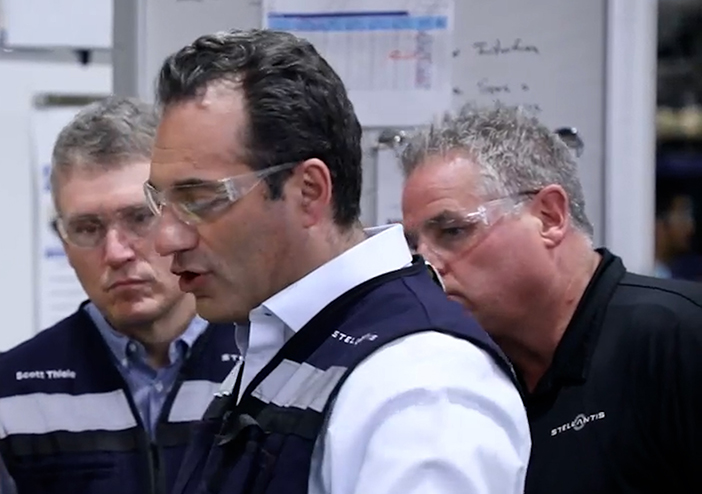
+++ STELLANTIS boss Antonio Filosa made a preemptive strike on Wall Street today, releasing a whole bunch of bad news, led by disclosure of a $2.7 billion net loss for the first half of 2025, before the company reports the full 6-month results July 29. By midday, Stellantis stock was rising, presumably because investors believe Filosa is putting the company’s many financial challenges in the rear view mirror in hopes of showing progress in the second half. In a letter to employees, Filosa, who took charge of the company in late June, said the first 6 months of 2025 had been “tough with increasing external headwinds including tariffs, foreign exchange effects and challenging macro-economic conditions”. “Despite difficulties, it has also been six months of meaningful progress compared to the second half of 2024”, Filosa added, pointing to new product launches and decisions to cut underperforming programs. The automaker’s results were “worse than consensus, but we think poor numbers were anticipated”, Jefferies analyst Philippe Houchois said in a client note. Restructuring steps taken by Stellantis “suggest decisive actions”, Bernstein analysts wrote. And a Bloomberg Intelligence analyst said Filosa is trying to “kitchen sink” the first-half results “to provide a low earnings base upon which to build”, All this suggests Filosa will get at least 6 more months of a honeymoon from Wall Street to show meaningful progress in fixing the automaker. But given the uncertainty of global trade politics, a difficult environment for North American sales and growing turbulence over electric vehicles, Filosa’s (photo) plate is absolutely full and probably overloaded. +++
+++ If you’re after an accurate insight into the winners and losers doing battle in new-car showrooms in the UNITED KINGDOM in 2025, look no further than the industry figures covering the period from 1 January to 30 June. They’ve just been released and, to my mind, reveal crucially important buying trends that indicate the new direction of travel among paying customers in the UK. Like never before, buyers appear to be deserting some traditional brands and countries, and gravitating towards alternative car makers and vehicle-producing nations. Italy is one victim of the shift. Fiat, Abarth and Maserati sales are, respectively, down 24, 55 and 38 percent so far in 2025. True, Alfa Romeo is up 50 per cent, but this is from a very low base. Brits are still buying an average of just 7 Alfas a day. As for French brands, Citroen is down 41 percent, DS 64. Peugeot is doing much better, with a 40 percent rise, Renault is up 16 and Alpine has jumped 49. Sales for South Korea’s Genesis, Hyundai and Kia are rising. But for most Japanese firms, they’re sliding. Only 2 of its small brands, Lexus (up 9) and Mazda (up 34) have improved. Of the Germans, Audi is down 18 percent, BMW 6 and Mercedes 7. But Volkswagen is up 13 and Porsche has improved by 5, thereby overtaking volume brands Citroen, Fiat and Suzuki, with Honda and Seat likely to be passed in the coming months. More importantly as far as Britain and its workers are concerned, the rise and rise of Porsche and its 9.531 sales in the first 6 months of 2025 compares with just 1.725 for arch-rival Jaguar (down 84 percent), which hasn’t sold a single new car for months. Ineos is down 10, while Land Rover and Mini are up 7 and 2 respectively. Low-volume Bentley (up 12) is now the fastest-growing (in percentage terms) British car firm. But the most significant performers in the UK from January to June have been China and its car makers. Dramatic examples include BYD, whose sales are 568 per cent higher than this time last year, thereby enabling it to overtake countless firms from Britain, mainland Europe, South Korea, North America and Japan (Mazda included). Sales for Jaecoo and Omoda have skyrocketed in 2025 from 0 to several thousand each. Also just starting from scratch are Leapmotor and XPeng, who are both already selling hundreds of new models, with sales of thousands, then tens of thousands, planned. Skywell has just landed here, too. And in recent days there’s been official confirmation that the Geely and Chery brands are also en route to Blighty. The next logical step is for China to take over as the nation that tops the UK’s new-car sales chart. With its resources and vehicles at the right retail prices, it’s not a case of if Chinese cars collectively take over as the best sellers in Britain. It’s when. +++