
+++ Automotive insurers in Britain have refuted allegations of profiteering following a massive 50 percent increase in the cost of insuring ELECTRIC VEHICLES in 2023. As a result, drivers in the country are now paying nearly double the insurance premiums compared to owners of internal combustion engine (ICE) vehicles. Insurers respond that there’s little they can do, and that the premiums are determined by claim costs and frequency. They say that accidental damage claims on EVs are 35 percent more expensive than comparable repairs for combustion engine vehicles. Insurance premiums for EVs surged to an average of €1.600 at the end of 2023. Insurers point to several factors contributing to this increase, including the elevated cost of repairs, a shortage of mechanics trained in EV servicing, and extended garage time for these vehicles. “You’ve got length of repair times going up, you’ve got the cost of the component parts going up, and you probably see more EVs written off because residual values are particularly low at the moment”, Carl Shuker, Howden Group Holding’s CEO for the UK and Ireland. The high insurance rates are putting pressure on the EV market, which is showing signs of a slowdown. Europe, including the UK, is experiencing a cost of living crisis, while the growth of charging infrastructure is stagnating. +++
+++ America’s roads may be witnessing improved safety for drivers, but there’s a troubling trend of heightened peril for pedestrians. A recent study not only reaffirms but underscores a strong correlation between the HEIGHT OF A VEHICLE’S HOOD and the likelihood of a pedestrian struck by that vehicle suffering fatal injuries. While previous research has predominantly centered on the overall dimensions of vehicles as a determinant of pedestrian safety, a recent study featured in the journal Economics of Transportation narrows its focus to the height of a vehicle’s hood to evaluate its influence on safety results. This new study, carried out by Justin Tyndall, who serves as an assistant professor of economics at the University of Hawai’i, made use of data provided by Transport Canada, an agency that compiles measurements of different vehicles. The researcher subsequently analyzed this vehicle measurement data in conjunction with crash-related information obtained from the U.S. National Highway Traffic Safety Administration (NHTSA). The height of a vehicle’s hood is important data to consider because weight, which had been used as a proxy for size in other studies, doesn’t do a good job of explaining why certain vehicles are dangerous to pedestrians. While weight is a critical factor in assessing a vehicle’s risk to its occupants and occupants of other automobiles, it becomes less significant when considering pedestrian safety due to the substantial weight difference. Tyndall’s analysis concludes that the height of a vehicle’s hood is a more meaningful indicator of its potential danger to pedestrians compared to weight alone. +++
+++ HONDA has announced that it has begun joint mass production of hydrogen fuel cells with General Motors and plans to sell vehicles equipped with the system both in Japan and in the United States. The automakers aim to lower the price of fuel cell vehicles (FCVs) they plan to sell in the first half of 2024 by reducing production costs. Honda unveiled to the press their joint venture plant with GM near Detroit on January 24. The new fuel cell system measures about 1 meter wide and 70 centimeters deep. They will soon begin mass production of the CR-V, a SUV equipped with the fuel cells at a plant in Ohio. The production cost was reduced to one-third of the previous model by reducing the use of expensive platinum. With improved performance at low temperatures, the car can apparently run without problems even at minus 30 C. Honda expects to produce roughly 2.000 of the fuel cells annually. Tetsuo Suzuki, vice president of the joint venture, said: “We are prepared for mass production in the coming hydrogen age”. The plug-in type FCV can be recharged from a household power source. Honda is considering a lower price than Toyota’s Mirai. Fuel cell technology uses electricity generated from a motor powered by a hydrogen supply and in-air oxygen. FCVs are lauded as the “ultimate eco-car” because they emit only water while driving. It takes only about three minutes to replenish hydrogen in an FCV. Electric vehicles on the other hand often take more than 30 minutes to charge and are vulnerable to cold weather; many EVs in the United States were rendered inoperable during a cold snap mid-January. Honda plans to have all their new vehicles sold worldwide be EVs and FCVs by 2040 and will be the first automaker to mass-produce FCVs in the United States. However, according to research firm JATO, the number of FCVs sold in the United States in 2023 stalled at only about 3.000 units. Sales in Japan between January to November only amounted to about 300 units. FCVs sales in Japan and the United States together accounted for less than 1% of the sales of EVs. On top of this, there were only 160 hydrogen stations in Japan as of 2023. Clarity, a FCV launched by Honda in 2016, saw sluggish sales due to its high price and lack of hydrogen stations. Honda stopped production of Clarity in 2021. The key to how widely FCVs get adopted will likely be the extent to which vehicle prices continue to fall, and infrastructure for the technology continues to improve. +++
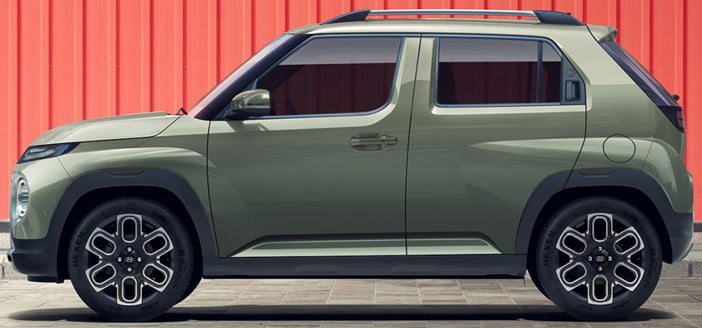
+++ The HYUNDAI CASPER could soon become available in European markets with a new electric powertrain. The crossover-style city car, which is currently sold exclusively in South Korea, has been spotted winter testing in Scandinavia, suggesting it could be completing the homologation process for Europe. Its appearance came days after a French magazine quoted the head of Hyundai France, Lionel French Keogh, as confirming the Casper would arrive in the market by the end of 2024. The publication said the Casper will indeed arrive as an electric car, not offering any of the 1.0-litre three-cylinder petrol engines used in Korea. It added that the car will offer more power than the Dacia Spring, one of Europe’s cheapest electric cars, which produces 65 hp and yields 230 km between charges. The Casper could possibly borrow its electric powertrain from the Kia Ray EV, which is based on the same architecture (as are the Hyundai i10 and Kia Picanto). The Ray packs an 86 hp front-mounted electric motor and a 35.2 kWh battery to muster a range of 200 km. Despite its competitive specification, the Casper will remain priced below €22.000 in the Netherlands. This would position it in direct competition with the new Citroën ë-C3 with 112 hp and a 200 km range, and which costs €24.290 euro in the Netherlands. Hyundai has previously hinted that the Casper could make it to European shores after an electric conversion. However, several key hurdles have thus far prevented it from becoming available outside its home country. Chief among these are the costs of making a small car in Europe; of meeting the EU’s new GSR2 safety regulations; and of providing the equipment levels expected in the region. Moreover, demand for the Casper in Korea alone is almost sufficient to fulfil the capacity of the plant where it’s built. According to data from Hyundai, 45.451 Caspers were sold last year. Nikkei Asia reported in November 2021, when the factory in Gwangju opened its doors, that it had an annual capacity of 70.000. Exporting the Casper to Europe while maintaining sales momentum in its home market would likely require either a significant increase in capacity at Gwangju or an additional production line in Europe. The Nikkei report said that Hyundai planned to expand Gwangju to more than 200.000 cars per year, including EVs. Regardless of which models Hyundai decides to import to Europe, it has previously committed to continued production of small cars. The brand’s European chief, Michael Cole, told in March 2023 that the i10, i20 and i30 were “all still in our plan, even for the next generation”. Cole added that the next challenge is to evaluate smaller EVs, saying: “I believe there’s a market below the Kona and maybe even in more traditional body styles, such as hatchback. It’s in our thinking, rather than necessarily in our long-term plan now. But for the European market, we have to be thinking about that”. Sibling brand Kia has also signalled its intent to offer affordable electric cars for the masses. At its first EV Day event in October 2023, it announced plans to build a new model targeted at European markets, priced at around €30.000 in the Netherlands. Dubbed the EV2, it’s expected to arrive around 2026. Kia CEO Ho-Sung Song told that affordable electric cars were “very important” for the firm, “especially for the European market that is in need of smaller electric vehicles too”.
+++ The HYUNDAI MOTOR GROUP has retained its position as the world’s third-largest automaker for a second year, trailing only Toyota and the Volkswagen Group, based on its 2023 fourth-quarter and yearly financial results. The Korean automotive giant, comprising the Hyundai, Kia and Genesis brands, sold approximately 7.32 million vehicles last year, marking a 6.7 percent on-year increase from 2022. Kia, in particular, hit a record operating margin of 11.6 percent, surpassing traditionally high-profit automakers like Tesla, which reported a 9.2 percent margin for 2023. “Hyundai-Kia’s edge over Tesla in profit margins comes, in part, from its diverse EV lineup, offering double the vehicle choices to meet broader consumer preferences. They are ready with relatively cheaper EVs for the price-sensitive crowd and more beefed up options for the upscale market, unlike other EV makers who’ve been slashing prices to boost their numbers”, said Kim Joon-sung, an automotive analyst at Meritz Securities. Toyota remained the top carmaker, with sales already reaching 10.22 million units from January to November. Volkswagen secured the second position with 9.23 million vehicles sold. Hyundai Motor Group’s immediate competitors for the third position (Stellantis and the Renault-Nissan-Mitsubishi Alliance) have not yet published their complete 2023 results. However, Hyundai Motor Group’s sales for the first three quarters of 2023 already amounted to 5.48 million vehicles, exceeding Stellantis’s 4.8 million. Stellantis also reported a 1 percent decrease in 2023 US sales while Hyundai Motor Group saw a 12.1 percent increase. The Renault-Nissan-Mitsubishi Alliance followed closely with 4.73 million vehicle sales in the first three quarters, with GM at 4.58 million, practically affirming Hyundai Motor Group’s third-place position for 2023. In profitability, operating margins were 9.3 percent for Hyundai, which includes the Genesis brand, and 11.6 percent for Kia, up 2.4 and 3.2 percentage points, respectively, from the previous year. Kia’s operating margin of 11.6 percent was the first time it hit double digits. The company generated a total operating profit of over 11 trillion won ($8.24 billion) in 2023, the highest since its founding in 1944. The Hyundai Motor Group attributed the higher operating margins to increased sales in the US and Europe, a focus on high-margin vehicles (SUVs, electric vehicles and hybrids) and the integration of advanced driving systems across entry-level models that drove up the average selling price. Tesla’s operating margins demonstrated a downward trend throughout 2023, with a significant drop from the first quarter’s 11.4 percent to the fourth quarter’s 8.2 percent. The decline was likely due to aggressive price cuts to stimulate sales and increased investments in capital expenditures as well as research and development. Volkswagen experienced a similar trend, with its operating margin decreasing from 7.5 percent in the first quarter to 6.2 percent in the third quarter, likely impacted by diminished sales of its lucrative Porsche line in the Chinese market. Among its peers, only Toyota achieved a higher operating margin than the Hyundai Motor Group in the third quarter of 2023, at 12.4 percent, bolstered by a stronger yen and a surge in hybrid electric vehicle sales. “Hyundai-Kia is striking a good balance between bolstering immediate sales, for example, with robust SUVs, and preparing for the future with EVs and software-defined vehicles. The next steps are ramping up EV sales and monetizing SDVs”, said analyst Kim. +++
+++ LAMBORGHINI is in the process of updating its model lineup, having already unveiled its plug-in hybrid halo car, the Revuelto. The company has now officially confirmed that the replacement of the Huracan will also be what they call a “High Performance Electrified Vehicle”. This hardly comes as a surprise, but it is nice to get confirmation that their next junior supercar will be unveiled within 2024. In addition, Lamborghini will unveil the much anticipated plug-in hybrid Urus this year. Although it is unclear if those debuts will happen together or at different times, the two new Lamborghini models may be related. Earlier reports suggest that the Huracan successor will ditch the V10, in favor of a 4.0-liter twin-turbocharged V8, just like the one in the Urus. The next Huracan is expected to borrow the electric hardware from its big brother, the Revuelto. This could mean that the Huracan successor will get axial-flux motors from British supplier Yasa, though it’s unclear if it will make use of 2 or 3 motors. Spy photos of the vehicle have revealed that the new model will be similar in scale to the Huracan while incorporating some of the Revuelto’s design cues. The test cars so far feature a rear bumper design that leaves the rear wheels exposed, giving it a purposeful look and helping show off the intricate rear diffuser. +++
+++ Volvo is set to stop funding POLESTAR and is evaluating redistributing its shares in the spin-off company to its shareholders. Electric-only performance brand Polestar was founded in 2017 as a joint venture between Volvo Cars and Zhejiang Geely Holding Group, which also owns Volvo. Currently, Volvo Cars holds a 48.3 per cent stake in Polestar, which in 2022 was listed on the Nasdaq stock exchange. Volvo announced the plan to stop funding Polestar as part of its 2023 financial results. The company is planning to further ramp up its electric car projects in the coming years, including what Volvo boss Jim Rowan called “large-scale investments in the creation and adoption of new technologies and future-fit production facilities”. He added that, as a result, “our focus is on developing Volvo and concentrating our resources on our own ambition journey”. +++
+++ Although the Tesla Model Y was the top-selling vehicle overall in Europe in 2023, the EV market share did not grow in the UNITED KINGDOM for the first time in recent years. It is also noteworthy that the American crossover was the only fully electric model in the top-30 of the continent’s sales charts. That’s particularly relevant here, as studies have found that Tesla cars cost more to fix than most other electric models, which tend to be only marginally more expensive to fix than combustion vehicles. The best-selling cars in the UK for 2023 were: 1 Ford Puma (49.591 units), 2 Nissan Qashqai (43.321), 3 Vauxhall Corsa (40.816), 4 Kia Sportage (36.135), 5 Tesla Model Y (35.899), 6 Hyundai Tucson (34.469), 7 Mini Hatch (33.835), 8 Nissan Juke (31.745), 9 Audi A3 (30.159), 10 Vauxhall Mokka (29.984), 11 Ford Fiesta (27.175), 12 Mercedes-Benz A-Class (26.780), 13 Volkswagen T-Roc (26.305) 14 Toyota Yaris (25.805), 15 Volkswagen Golf (25.625), 16 Toyota Prius (23.905), 17 Citroen (C3 23.115), 18 Peugeot 2008 (22.725), 19 Ford Kuga (22.340) and 20 BMW 1 Series (21.955). +++
+++ VOLKSWAGEN has indicated that it could kill off the all-electric ID.3 when the all-electric next-generation Golf arrives in the market. The company recently unveiled the facelifted Golf and VW’s head of technical development Kai Grunitz has confirmed this will be the final combustion-powered version of the iconic model. While he did not confirm when it will be replaced by the all-electric model, it’s expected that it’ll arrive in 2028 based on the Golf’s traditional 8-year production life cycle. Grunitz described the Golf as “the heart of our brand” and said that it “won’t kill the Golf”, but acknowledged that it will not have enough space in its range to accommodate both the ID.3 and an electric Golf. “There is not enough space to have 2 or 3 different models fitting to the same customer”, Granitz said. “We’ve started to work on a fully electric Golf. We have concrete ideas of how it will look like, but we will see how the market develops. There will be an overlap between the ID.3 and the electric Golf”. There will be plenty to differentiate the next-generation Golf from the ID.3. According to Granitz, it will not be an ID.3 in Golf clothes and unlike the ID.3 which is underpinned by the MEB platform, it will use the marque’s newer Scalable System Platform (SSP). “If we bring an electric vehicle with the name Golf, it has to be real Golf”, he said. “It has to look like a Golf. It has to be affordable like a Golf. It has to be capable like a Golf. And there has to be a GTI. The idea is to have the same electric architecture. Today you have 4 or 5 different architectures. But SSP will be a common electronic architecture for the whole group”. It is not yet clear if the electric Golf will be front-, rear-, or all-wheel drive but it seems most likely that standard and GTI variants will be front-wheel drive while a future electric version of the Golf R could be all-wheel drive with twin electric motors. +++
+++ VOLVO had a record-breaking year in 2023 and today reports the highest full-year retail sales, revenues and operating profit in its 97-year history. A new all-time sales record of 708.716 cars enabled revenues to rise by 21 percent to SEK 399.3 billion for the full year 2023. The underlying operating profit of SEK 25.6 billion, excluding joint ventures and associates, represents an increase of 43 percent compared to 2022. The operating margin excluding JVs and associates came in at 6.4 percent, up from 5.4 percent in 2022. “2023 was a key milestone in our transformation journey”, said Jim Rowan, chief executive. “We delivered a record-breaking year on many levels, reporting the highest retail sales, revenues and profits in our company’s 97-year history. We also took several significant steps forward in our ongoing transformation, while navigating a complex external environment. In doing so, we’ve built a solid foundation for 2024 and the years ahead”. The 2023 results demonstrate Volvo’s ability to maintain premium pricing throughout the year, as well as solid demand for its cars and a robust orderbook, despite ongoing market turbulence. The performance also demonstrates the strength of the company’s electrified product portfolio, which contains both electric cars as well as an extensive range of plug-in and mild hybrid models. These hybrid models represented a significant majority of the company’s total global sales in 2023 and will remain a key element of its portfolio for the coming years. The company sold 113.419 fully electric cars in 2023, an increase of 70 percent versus 2022 and representing 16 percent of its total global sales volume, which was one of the highest among all legacy premium carmakers. Compared to 2022, Volvo increased its global electric market share by 34 percent. Its electric sales share is still based on only 2 fully electric models and does not yet reflect the full potential of the new EX30, EX90 or EM90 (a MPV), all of which will hit the roads in earnest during 2024. During the second half of 2023, Volvo also saw gross profit margins on its electric cars increase fourfold versus the end of 2022 to 13 percent. High lithium prices heavily affected its margins in 2022, but the company saw a clear uptick in the underlying profitability of these cars from the second half of 2023 as lower lithium prices and the effects of increased pricing materialised. The company also benefited from efficiencies from its own investments. While there is still a gap in gross margins on the EVs compared to some of its combustion engine (ICE) cars, this gap is closing. The EX30 is set to deliver gross margins of 15-20 per cent and takes the company closer to that goal. Volvo Cars also expects the upcoming EX90 and EM90 to contribute to closing the gap between EV and ICE margins. 2024 is set to be another big year for Volvo as it continues to boost its product portfolio and accelerate its transformation towards becoming a fully electric car maker by 2030. At the end of the fourth quarter of 2023, the first customers took delivery of the new EX30. This year, Volvo is focused on quickly ramping up production of this car and meeting the strong customer demand, which has exceeded expectations. The company is also working hard to add EX30 production to its Ghent plant in Belgium. In the first half of 2024 the company will start production of its new EX90, with customer deliveries starting soon after. The EX90 represents a significant technology leap with the introduction of Volvo’s next-generation fully electric platform upon which the car is built. As one of the first cars packed with core computing technology, the software-defined EX90 represents a significant paradigm shift for Volvo. It is a car that brings next-generation safety, connectivity, data and software all together in one product, and reaffirms the company’s position as an industry leader in the ongoing technology transition. The EM90, which Volvo revealed in China in November, has also started production. Like the EX90, the EM90 is an important car for China and shows how serious the company is about succeeding in that market and taking market share. Together, these 3 new fully electric cars will significantly expand Volvo’s product offering around the globe and profitably take it into new demographics and market segments that it has not been active in before. On top of that, Volvo will refresh its plug-in hybrid cars, which are an important bridge towards full electrification. Together with its fully electric cars, this creates a broad and attractive portfolio for today’s global marketplace. Volvo expects this will boost growth from 2024 and will significantly increase its share of fully electric cars versus 2023. In addition, the new electric models will help it to further close the margin gap between electric cars and internal combustion engine cars in 2024. In terms of total 2024 retail sales, the company aims for a higher year-over-year growth rate than in 2023. “It is my firm belief that the hard work we have put in during 2022 and 2023 positions us to meet our objectives for the years ahead”, said Jim Rowan. “Our strategy is well defined and unambiguous and is the right one for both Volvo, our customers and the environment. Our results, order book and key performance metrics prove as much, and our customers clearly like what they see”. Volvo is now entering a decisive phase in its transformation journey. Not only will it continue to roll out and ramp up production of the EX30, EX90 and EM90 in 2024, but the company is also significantly ramping up other investments that will help it become a leader in next-generation mobility. In the period up until 2025 Volvo Cars will make the necessary structural and strategic investments that lay the technical foundation for its future success: electrification, software, core computing architectures, advanced connectivity, data capture and analytics, mega casting, next generation e-motor and battery technology, smart cabin technology, and a new advanced manufacturing facility. This will mean a temporary rise in investment levels, yet these strategically crucial investments will drive significant cost efficiencies in Volvo’s next generation of fully electric cars. They lay the foundation for further profitable growth and increased EV margins. The company has a strong balance sheet supporting the transformative investments, with a liquidity position of SEK 75 billion as of year-end 2023, and during the investment phase in 2024-25 it expects the free cash flow generation to be relatively neutral. From 2026 and onwards, Volvo not only expects the level of investments to decline but to reap the benefits of this strategy with higher growth and profitability. It will also at this point generate a strong positive free cash flow. As the company accelerates its transformation, it will put even more emphasis on driving profitable growth over time and prioritizing value over volume. It will double down on internal efficiency, ensure robust capital allocation across our business and capitalize on its phase one investments. Polestar is entering the next exciting phase of its journey with a strengthened business plan and cost actions, added experience to its executive management team and Board of Directors, as well as the imminent rollout of Polestar 3 and Polestar 4. “This combination positions Polestar well for future growth. As we move into the next phase of our transformation, including deploying large-scale investments in the creation and adoption of new technologies and future-fit production facilities, our focus is on developing Volvo and concentrating our resources on our own ambitious journey. We are therefore evaluating a potential adjustment to Volvo’ shareholding in Polestar, including a distribution of shares to Volvo shareholders. This may result in Geely Sweden Holdings becoming a significant new shareholder. Geely will continue to provide full operational and financial support to Polestar going forward, and as a result Volvo will no longer provide further funding to Polestar. We will, however, extend the repayment period for the existing convertible loan by 18 months to the end of 2028. This will be subject to relevant approvals and further information will be provided in due course”, a spokesman said. Volvo’s and Polestar’s strong operational collaboration across R&D, manufacturing, after sales and commercial will continue to the benefit of both companies. In light of these plans, Volvo has decided to clarify its ambitions that were set out at its IPO. The company stands firm on its strategy around electrification and technological leadership, one of the most ambitious in the industry. Yet by clarifying its ambitions with sharpened metrics, it improves transparency and allows for a better follow-up on its progress. The company remains firm on its ambition to report an EBIT margin above 8 percent for 2026, and now do so based on expected revenues between SEK 550-600 billion. This clarified ambition further underlines that Volvo seeks to grow in terms of revenues and value rather than on volume alone, thereby focusing even more on profitable growth. +++